Official Website of Philippine Senator Pia Cayetano

Category: Health

  • COVID-19 an ‘eye-opener’ on the urgency to raise health infra budget

    Senator Pia S. Cayetano stated that the COVID-19 pandemic has revealed the need to address the gaps in the country’s healthcare system, as she pushed for measures seeking to ramp up health infrastructure for the safety and protection of Filipinos.

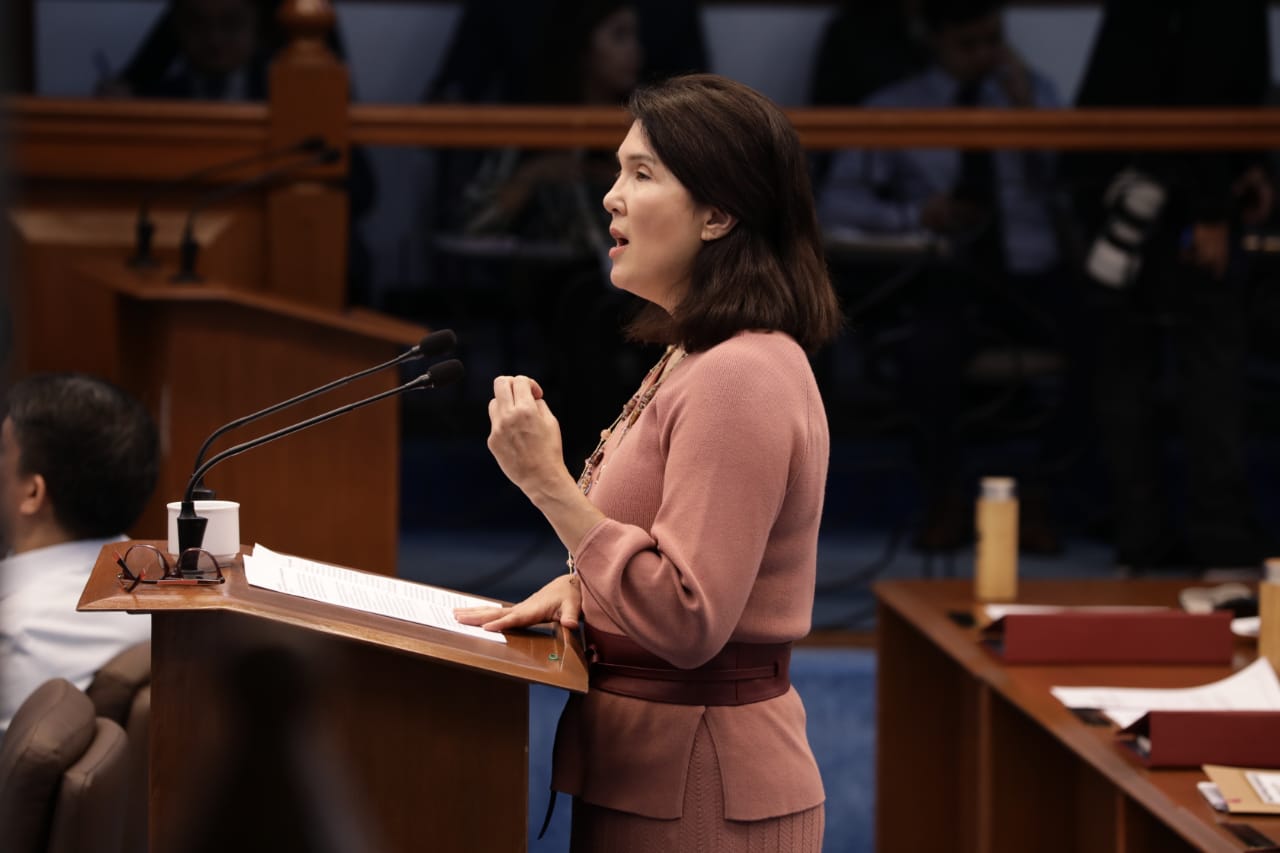
    “COVID-19 opens our eyes and gives us that window of opportunity to provide the necessary funding, attention, and effort that our healthcare deserves,” the senator said during the Senate Committee on Health and Demography’s hearing on Tuesday (May 26).

    “This pandemic has revealed many of the gaps in our system, gaps that have been created because of decades of lack of funding for healthcare,” added Cayetano, who formerly chaired the health panel in 2004.

    The senator expressed hope that the health crisis today would bring forth reforms in the future and push the government to invest more in our healthcare system, particularly to build more adequate health infrastructure.

    “Knowing how open-minded people are now and how much people see the importance of healthcare, there would be a much stronger support for whatever budget we would be proposing,” she stressed.

    Last year, Cayetano filed Senate Bill No. 63, or the ‘Build, Build, Build for Health Infrastructure’ Bill, which mandates the Department of Health (DOH) to identify priority needs for health infrastructure, and establish a long-term plan to provide for health facilities in priority areas.

    Under the measure, a proposed amount of P10 billion shall automatically be included in DOH’s annual appropriation for the next five years for the implementation of the infrastructure plan.

    “My intention [in filing the bill was] very simple, that health infrastructure be included in the flagship projects of this administration in the remaining years that it has, and that this continues throughout the years,” Cayetano said during the hearing.

    She stressed that ensuring adequate funds for health infrastructure is consistent with the newly enacted Universal Health Care (UHC) Law, Goal 3 of the Sustainable Development Goals (SDGs) of which the country is a signatory, as well as the government’s own Philippine Development Plan 2017-2022.

    Meanwhile, the senator pushed anew for the passage of another bill she filed, Senate Bill No. 1442, which seeks to provide for the establishment and operation of additional quarantine stations, grounds, and anchorages in all strategic areas in the country.

    “This is a [Covid-response] measure that also will ensure that we are prepared for future health crises,” stressed Cayetano who now chairs the Senate Committee on SDGs, Innovation, and Futures Thinking.

    She also expressed support for a proposal to authorize the DOH to set bed capacities in various public hospitals. Current regulations only allow the agency to increase bed capacity and improve service capability of hospitals through legislation.

    “I am a big supporter of this, because what I have seen in all the years that I chaired the [Senate] Committee [on Health] was, nauuna po ang mga ospital na may masigasig na congressman o senador na tumutulong. Kawawa naman po ang mga tao o lugar na walang nagla-lobby para sa kanila,” Cayetano cited.

    “Their need for healthcare is in no way diminished by the lack of a piece of paper filed in the House or in the Senate. That’s why I have always believed that DOH should be given full authority,” she further noted.#

    Cayetano’s ‘Build, Build, Build for Health’ bill proposes P10 billion for DOH’s health infrastructure budget over the next five years.
  • Pia files medical reserve corps bill

    Senator Pia S. Cayetano has filed a measure seeking to establish a national reserve force of healthcare professionals that can be immediately deployed in times of disasters and public health emergencies.

    The senator on Wednesday (May 13) filed Senate Bill No. 1527, or the Medical Reserve Corps Act, which shall establish a Medical Reserve Corps (MRC) specifically trained to supplement the country’s human health resources in delivering urgent services to areas affected by disasters and health emergencies.

    “The COVID-19 pandemic has exposed the weaknesses of the country’s healthcare system, among them is the inability to cope with the surge of patients needing medical care due to lack of medically-trained personnel,” Cayetano pointed out.

    “Like a highly-skilled reserve force that has been trained to assist the standing and regular military force as needed, the country can likewise benefit from a similar reserve force for our healthcare system,” she added.

    The MRC will be composed of licensed healthcare service practitioners, medical reservists of the Armed Forces of the Philippines (AFP), public health experts, scientists, and non-medical volunteers trained for health emergencies and other necessary services.

    The medical reservists will be placed under the Health Emergency Management Bureau of the Department of Health (DOH), and will be given compulsory basic training and continuing training programs on responding to different national and local health emergency scenarios.

    Under Cayetano’s proposal, the DOH may enlist the assistance of the AFP in organizing the paramilitary structure of the MRC for its efficient, effective, and swift deployment, and provide further training for medical reservists in disaster and emergency response.

    The medical reservists can be mobilized to conduct contact-tracing and monitor suspected cases during disease outbreaks, help ensure quarantine measures, and provide logistics and manpower support for large-scale disaster and health emergency operations.

    “The MRC may be mobilized partially or in full as may be necessary. All members when called to service shall continue to receive all pay, allowances, and other privileges and benefits from his/her regular employment during the mobilization period,” the bill read.

    SBN 1527 also proposes the establishment of mobilization centers in every province, where MRC members can register for duty. The centers should be adequate enough to house the MRC members, equipment and facilities, and other supplies needed during their period of deployment. #

    File photo: Senator Pia S. Cayetano


  • Pia seeks probe on readiness of PH health system for the ‘new normal’

    Senator Pia S. Cayetano seeks to conduct legislative inquiries into the current state of the country’s public health infrastructure and health service delivery, with the end goal of improving our responsiveness to the COVID-19 pandemic and other future health emergencies.

    The senator on Wednesday (May 13) filed two Senate resolutions urging the appropriate committees to conduct an inquiry, in aid of legislation, on the future of our public health system in preparation for the ‘new normal.’

    Senate Resolution No. (SRN) 403 seeks to assess the capacity of the “public health infrastructure and the accessibility of vital medical equipment and supplies” to respond to the current pandemic and future health emergencies.

    While acknowledging that supplemental measures allowed the government to reinforce the healthcare system for COVID-19, Cayetano noted that mounting cases continue to push our healthcare facilities to their capacity limits.

    “Modeling forecasts show that the number of COVID-19 cases in the country may peak towards 70,000 to 75,000 cases within the next three months,” the senator noted, citing a report by the Department of Health (DOH).

    “Despite having 68 percent of the country’s hospital beds in Level 2 and Level 3 hospitals where COVID-19 patients can be treated… recent estimates [still] show that hospitals in the country fall relatively short from the optimal 42,856 beds, with one hospital bed available for every 1,121 Filipino patients,” she further cited.

    Furthermore, Cayetano mentioned the lack of basic sanitation facilities in the country’s healthcare centers. A 2019 World Health Organization study revealed that four percent of health facilities in the Philippines have no toilets, while 23 percent utilize unsanitary toilets, thus allowing the spread of infection among communities.

    The senator also pointed the need to address lack of access to medical equipment in the country, stating that the ‘new normal’ requires that we have an adequate supply of vital medical equipment and materials to meet both medical and public consumption needs.

    “Recent reports show that there are 1,937 mechanical ventilators for COVID-19 patients, which remains relatively insufficient given the standing 8,361 active cases in hospitals as of 11 May 2020…  The alarming number of COVID-19 cases among health workers [also] highlights the lack of personal protective equipment (PPE)… with hospitals estimated to use an average of 200 to 500 PPEs per day,” Cayetano noted.

    “These aspects of the country’s health system, if remained unchecked amid the projected trends of this virus, may strain our capacity to effectively control and prevent the spread of the disease and to significantly transition to an imminent new state of normalcy,” the senator said, as she pushed to review existing policies on public health infrastructure and access to vital medical supplies, to ensure the country’s healthcare capacity and self-sufficiency.

    Meanwhile, Cayetano also filed SRN 404, calling for a hearing by the Committee on Sustainable Development Goals (SDGs), Innovation, and Futures Thinking, which she chairs, on the effects of COVID-19 on the future of our health service delivery.

    “With the onset of the New Normal, existing practices and systems in health service delivery, such as physical clinics, face-to-face triage, and paper-based prescriptions, may be ineffective in responding to the need for stricter respiratory hygiene and physical distancing measures,” she stressed.

    As such, the senator said different sectors – the academe, private sector, and government – should collaborate to explore possible outcomes, emerging ideas, and innovative opportunities and strategies for a better delivery of health services during the ‘new normal.’

    “We should employ futures thinking as an essential strategy in dealing with this issue. It is a method of informed reflections on the possible futures of various aspects of life,” said Cayetano, who is an advocate for Futures Literacy among Filipinos, especially among policymakers. #

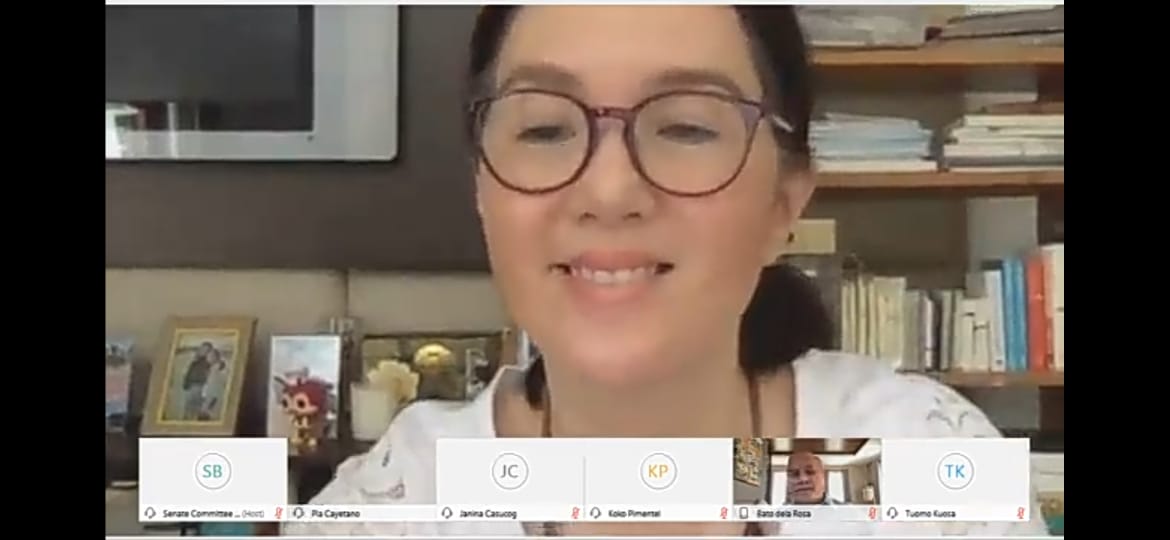
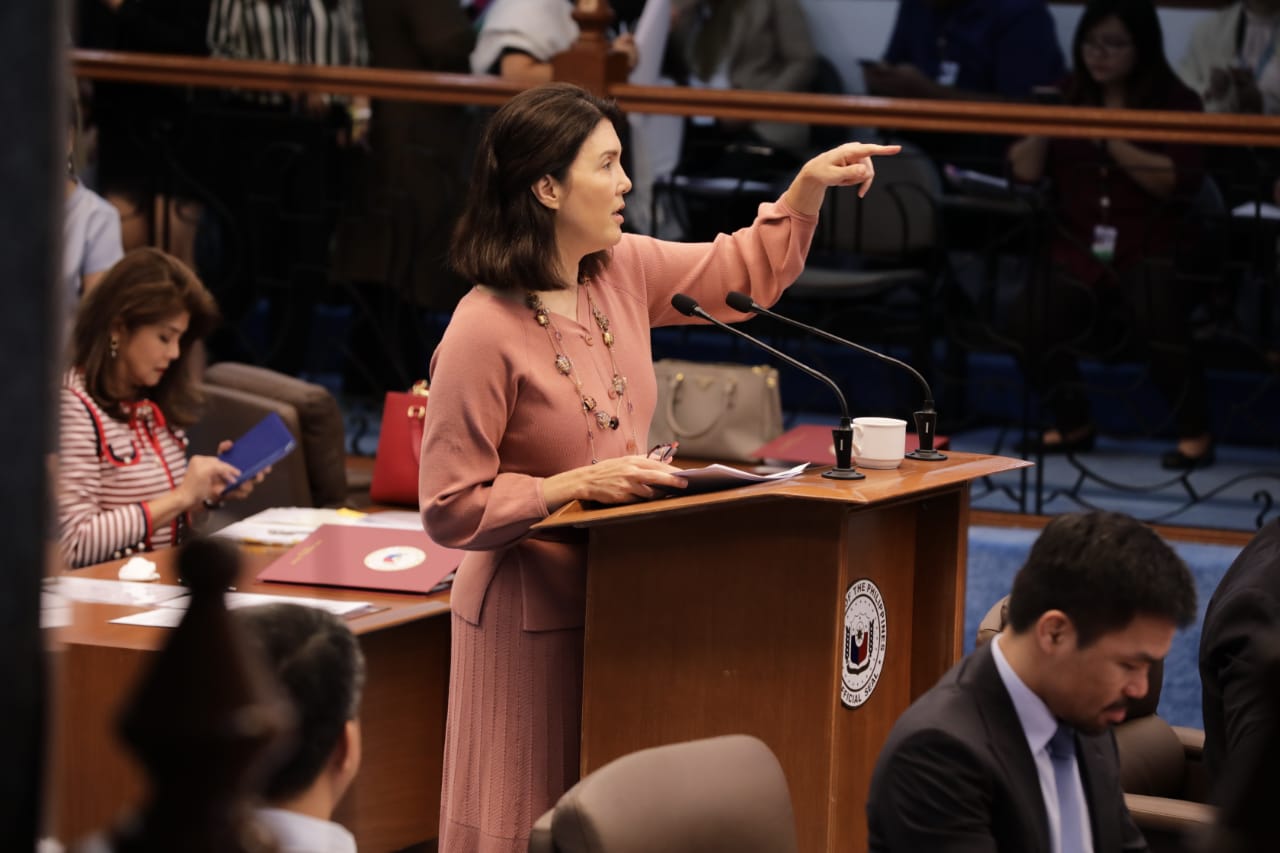
    Senator Pia S. Cayetano, chairperson of the Senate Committee on SDGs, Innovation, and Futures Thinking, presides over the panel’s virtual hearing on the necessary innovations and strategies in adapting to the ‘new normal’ following the COVID-19 pandemic.
  • Pia files Safe Pathways Act to support biking, walking in the new normal

    Senator Pia S. Cayetano says biking and walking as a means of travel are bound to become an integral part of the ‘new normal’ to keep more people safe from COVID-19.

    The senator on Monday (May 11) filed Senate Bill No. 1518 or the “Safe Pathways Act” to create a network of pop-up bicycle lanes and emergency pathways that would connect people to essential destinations during the pandemic, all while ensuring that physical distancing is maintained.

    Cayetano said there is well-founded fear that the cramped buses, jeeps and trains are hot-spots for the spread of COVID-19.  Thus, these “people-oriented and pedestrian-friendly” bike lanes and emergency pathways will help augment the limited forms of transportation and mobility allowed under the community quarantines, and may also be adopted in the long term to help decongest roads and reduce pollution in the country.

    “As our cities see air quality improve during the lockdowns, there’s an incentive not to return to the pre-lockdown air pollution levels,” she said, citing the reported 180% decrease in particulate matter (PM2.5) in NCR since the enhanced community quarantine was imposed last March 16.

    Particulate matter (PM) refers to the mixture of all solid particles and liquid droplets suspended in the atmosphere, many of which are hazardous.

    Overall, Cayetano said walking, biking, and the use of other non-motorized vehicles reduce carbon emissions, use less energy and resources, and provide multiple health benefits that increase people’s quality of life. SBN 1518 particularly promotes the use of these modes of transportation as the primary means of travel in the time of COVID-19.

    “As we adjust to the new normal, it is inconceivable to just go back to the way we were. This health crisis forces us to rethink our way of life and explore changes that will improve our overall health and quality of life. Planning our cities and transport system require a Futures Thinking frame of mind,” said Cayetano.

    Under the bill, the Department of Transportation (DOTr) and the Department of Public Works and Highways (DPWH), in coordination with Local Government Units (LGUs), shall establish pop-up bike lanes with necessary space to accommodate the one-meter physical distancing rule.

    LGUs shall also create designated emergency pathways along local roads that will give pedestrians, cyclists, and other non-motorized vehicle users access to frequented destinations by restricting motorized vehicle passage during peak hours.

    Moreover, adequate parking spaces for bicycles and non-motorized vehicles shall be set up in all public places, government offices, schools, places of work, and commercial establishments, including malls, banks, and hospitals. The private sector is also encouraged to develop infrastructure and programs for the same purposes.

    Lastly, the bill shall mandate DOTr and DPWH, in coordination with appropriate agencies, to prepare the permanent adoption of the established bike lanes, emergency pathways, non-motorized parking spaces, and other appropriate infrastructure, after COVID-19 is no longer a threat.

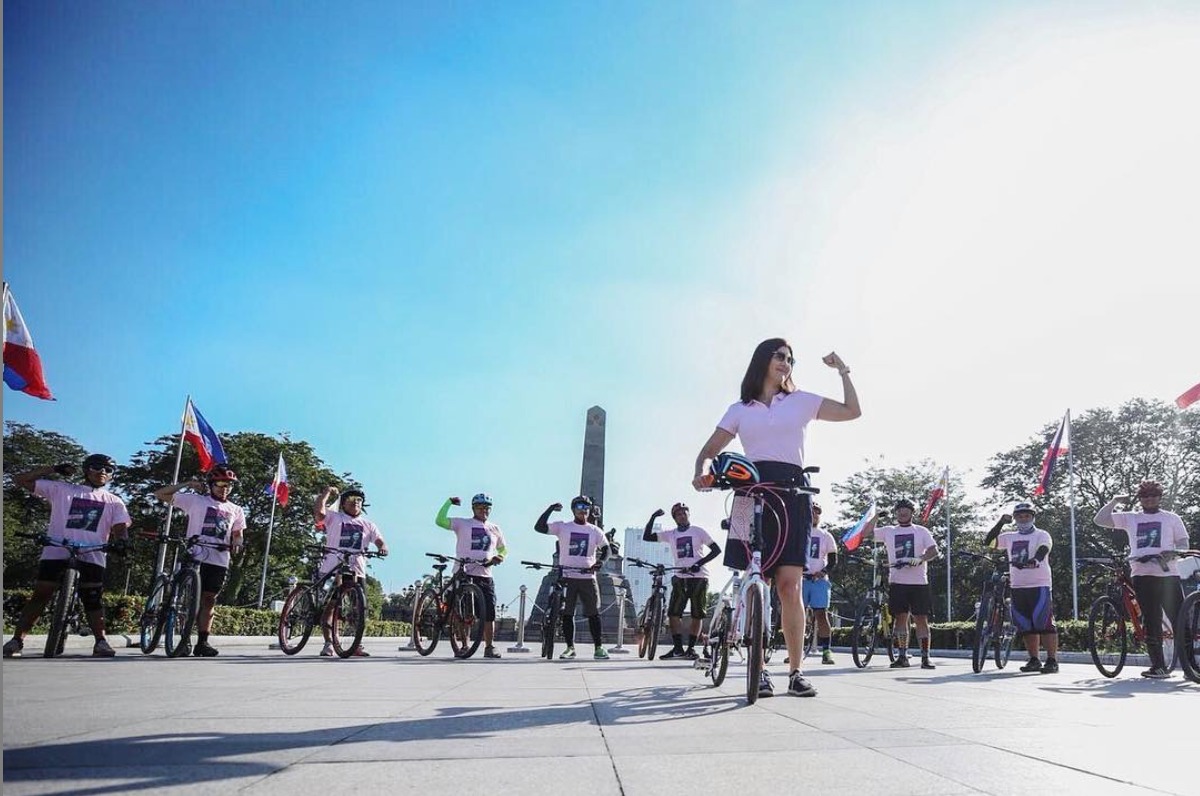
    A biking and fitness enthusiast, Cayetano earlier filed the ‘National Bicycle Act of 2019,’ seeking to institutionalize policies, infrastructure, and facilities to properly integrate bicycles as part of our public transportation system.

    All these efforts are in line with the country’s commitment to the Sustainable Development Goals (SDGs), in particular: SDG 3 (Good Health and Well-Being); SDG 7 (Affordable and Clean Energy); SDG 9 (Industry, Innovation and Infrastructure); SDG 11 (Sustainable Cities and Communities); SDG 13 (Climate Action); and SDG 17 (Partnerships for the Goals). #

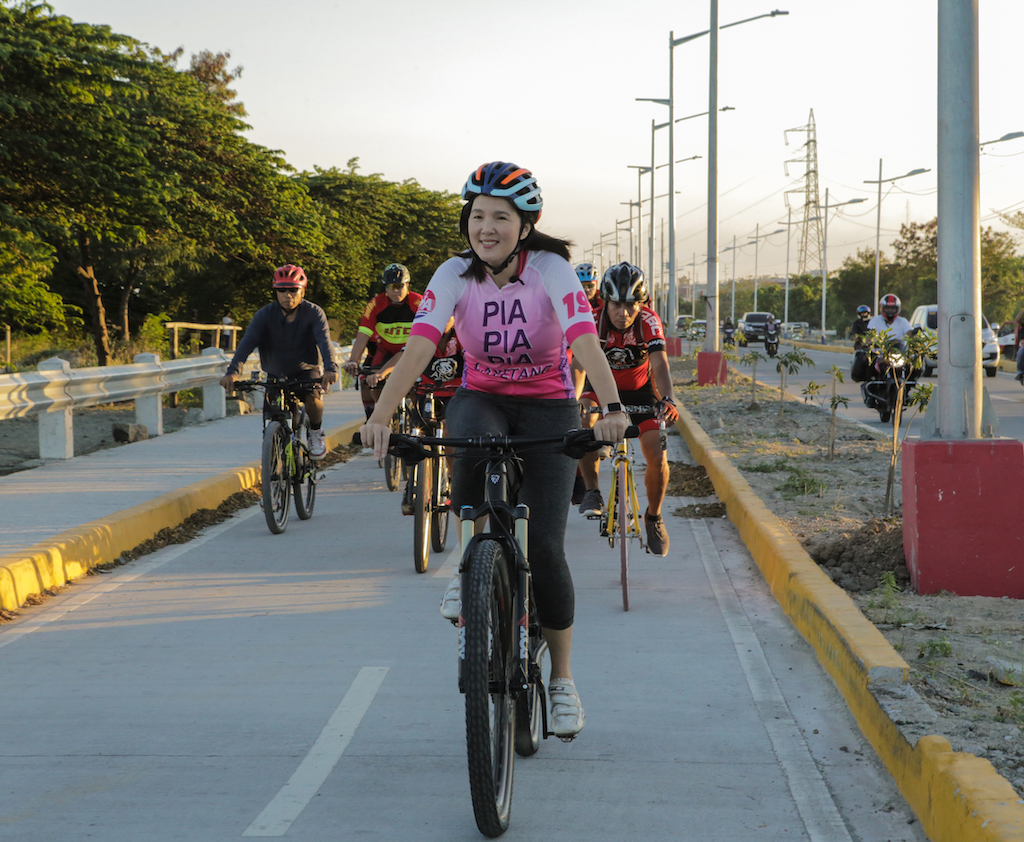
    File Photo: Senator Pia S. Cayetano bikes along the protected bike lane in Laguna Lake Highway (C6). The highway which connects Taytay, Rizal to Taguig City also has a separate protected lane for pedestrians and joggers.
    File Photo: Senator Pia S. Cayetano has always advocated bikers’ safety. She is the author of the National Bicycle Act (Senate Bill No.285), which seeks the recognition of biking as an alternative mode of transportation in government policy and programs.
  • Pia renews call for Build, Build, Build for Health to equip PH for new normal

    As the world faces a health crisis, Senator Pia S. Cayetano is pushing anew for the passage of a proposed measure that seeks to fast track the government’s health infrastructure initiatives.

    The senator filed last year the Priority Health Infrastructure Bill (Senate Bill No. 63), known also as the ‘Build, Build, Build for Health’ Bill, which aims to create a comprehensive and sustainable approach to health infrastructure over the next five years.

    “I filed this in the Senate last year, and the timing for its discussion is perfect now. As we begin a new normal due to the COVID-19 threat, we need to be forward thinking and put health care infrastructure on top of our priorities,” Cayetano stressed.

    Citing the two recent online forums she attended last Thursday (April 23) – the  Asia-Pacific Parliamentarian Forum on Global Health and the World Bank Group’s Virtual Parliamentary Meeting on Pandemics and COVID-19 – Cayetano said “what was emphasized time and again” was the need for countries with less than adequate health care systems to focus on improving the delivery of their basic health care, particularly by addressing the health care needs of infants, mothers, the elderly, and the infirm or sickly.

    “If communities are self-sufficient and can take care of the basic health care needs of their residents, that is already a huge step forward. Then, the next step would be the establishment of specialty medical centers for patients who need to be referred to these specialists,” Cayetano explained.

    “Likewise, it is a good time to redesign our country’s health care facilities, to keep our health workers safe and to address the fear and the reality that these very facilities that are there to provide health remedies are also hot spots for the spread of viruses and germs,” she further noted.

    SBN 63 takes off from the Duterte administration’s ‘Build, Build, Build’ Program for public works and is anchored on the Philippine Development Plan (PDP) 2017-2022 to accelerate human capital development through quality health care services.

    The measure is also expected to put the Philippines on track in attaining its target to provide essential health care for all by 2030 under the United Nations Sustainable Development Goals (SDGs).

    Under the bill, the Department of Health (DOH) shall be assigned to determine priority health infrastructure needs of government hospitals to be integrated in a five-year plan. An annual P10-billion budget shall be allocated for the improvement of health facilities in priority areas.

    “On the other hand, given what we are currently experiencing due to the COVID-19 pandemic, I am hopeful that this amount would be increased tenfold in the succeeding years,” said Cayetano, principal author and sponsor of the Bayanihan to Heal as One Act (RA 11469).

    “Let’s learn from our experiences during this global health crisis. To most effectively protect and promote the health of our people against future crises, we need to revitalize and strengthen our public health infrastructure. This will require political and financial support over time,” she added.

    As former chairperson of the Senate Committee on Health and Demography, Cayetano led the passage of several landmark laws to enhance public health services. Among these are the Mental Health Act (RA 11036), the National Health Insurance Act (RA 10606), the Philippine National Health Research System Act (RA 10532), the Mandatory Infants and Children Health Immunization Act (RA 10512), and the Responsible Parenthood and Reproductive Health Act (RA 10354).#

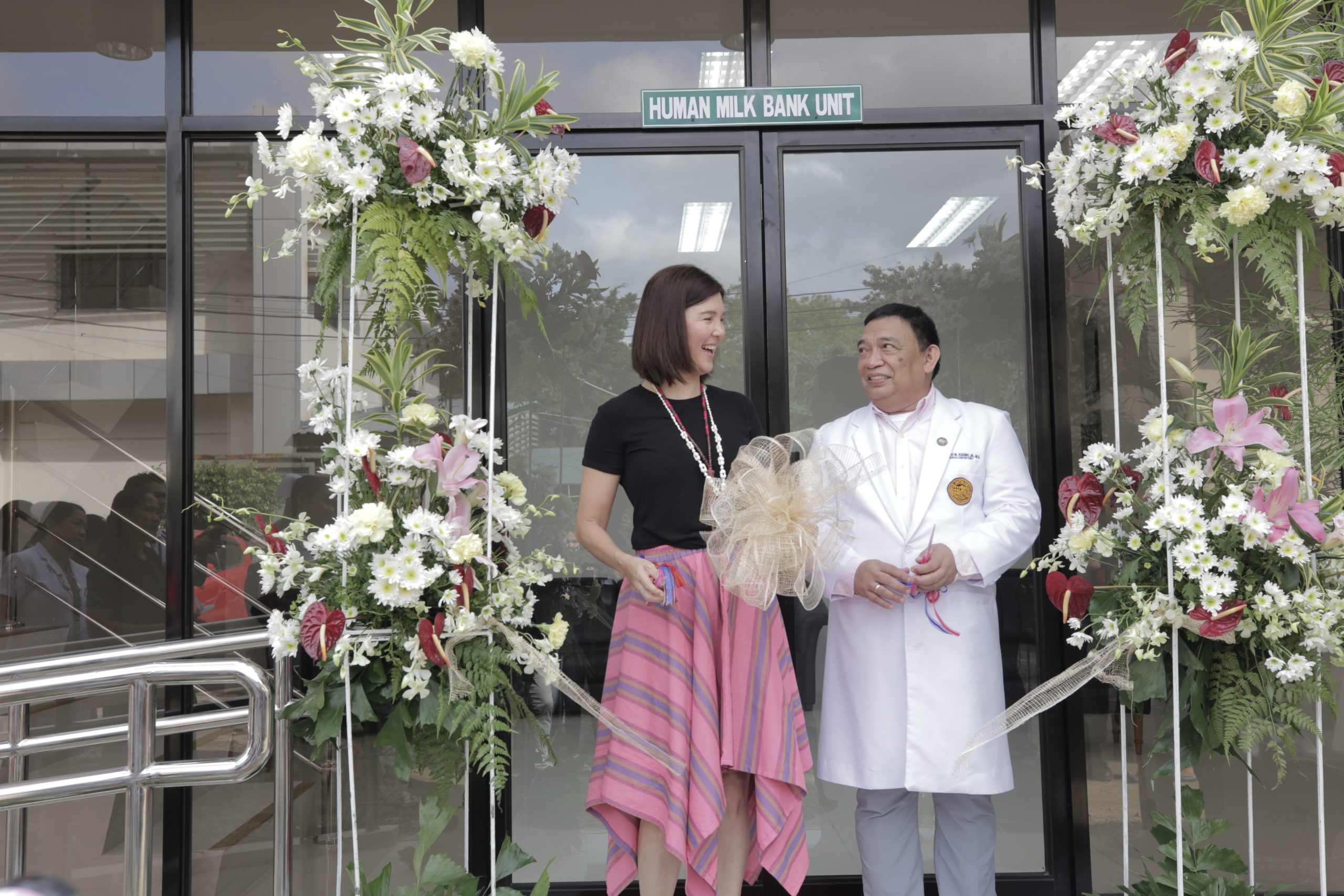
    Senator Pia joins the opening of the Human Milk Bank facility of the Vicente Sotto Memorial Medical Center in Cebu City.
  • Emergency subsidy for 18-M poor families amid COVID-19 quarantine

    The main objective of Senate Bill No. 1418 is to provide immediate assistance to 18 million Filipinos who belong to the poor and informal sectors. They are also the most vulnerable in this time of crisis.

    We need P200 billion to ensure that the most basic necessities are provided to them, including food, medicine, and other subsidies. When we look after them and care for their needs, these people would be encouraged to remain in their homes, not worry where to get their next meal, and be one with our government in fighting the COVID-19 virus.

    The bill also provides emergency funding to allow the government to adopt and implement measures to suppress the spread of the virus. This will be done by expanding access to testing centers, providing adequate support, including PPEs for our health workers, strengthening support to medical facilities, and intensifying public education campaigns on prevention.

    We have the funds. Our economic managers have assured us on this. Some P175 billion cash and its equivalent can be accessed from various GOCC accounts. We also have some P100 billion in various national government agencies’ accounts outside the Treasury Single Account.

    This brings the total amount available – off-budget – at around P275 billion. This can be made available quickly to finance the Emergency Subsidy Program without affecting our national government’s fiscal position.

    The 2020 spending program of P4.1 trillion will therefore remain intact, but we are ready to give the President the power, as needed, to repurpose funds within the General Appropriations Act from non-essential to essential items that are required for fighting COVID-19.

    Other world leaders have already called for urgent emergency measures because this virus has been projected to infect anywhere between 40 percent and 70 percent of the world’s entire adult population. That’s at least three billion people, according to experts at Harvard University.

    It is time to put our political affiliation aside and act together fast. Let us not sit idly and argue endlessly, lest we want COVID-19 overwhelm us. #

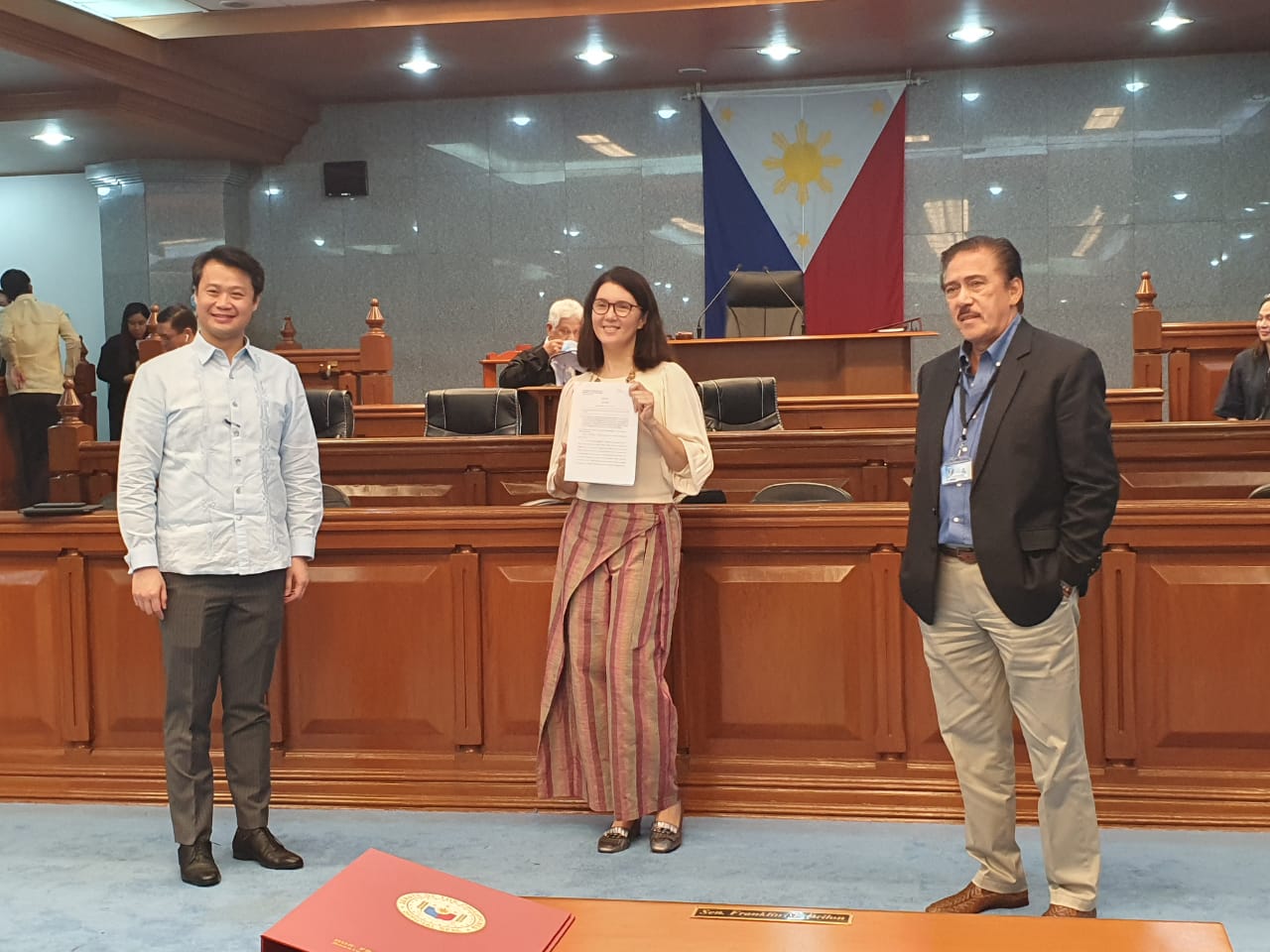
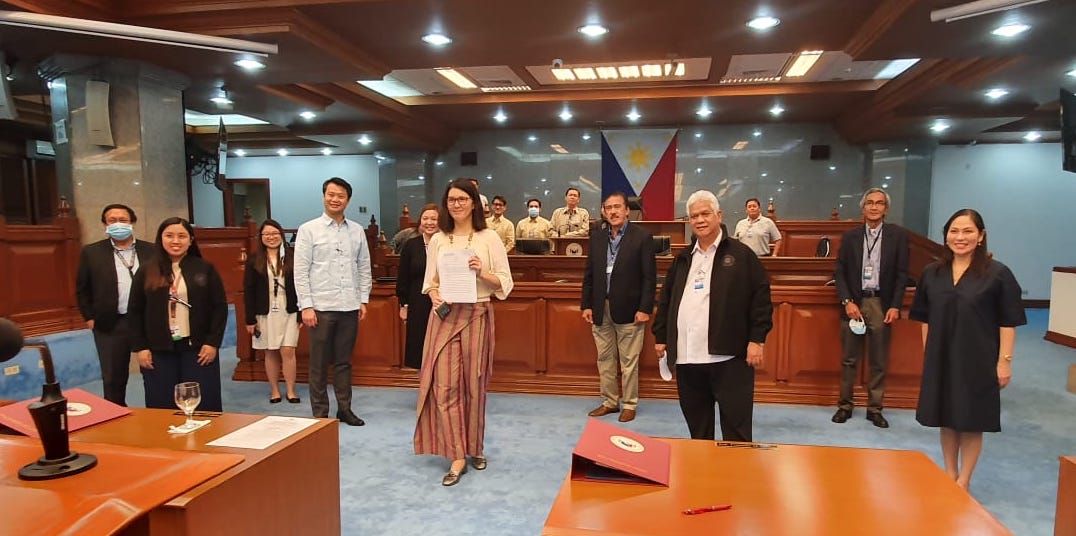
    Passed! SB 1418 principal sponsor Senator Pia S. Cayetano with Senate President Vicente Sotto III, Acting Majority Leader Sherwin Gatchalian, and Senate secretariat officers and staff.
  • Legislation to outline PH action vs COVID-19

    A report to the people

    By Senator Pia S. Cayetano
    Chair, Ways and Means
    Chair, Sustainable Dev’t Goals, Innovation, and Futures Thinking

    On Saturday, March 21, I went to Malacañang to discuss the urgent legislation needed in the time of COVID-19. A lot of people live day-to-day and the loss of income hits them the hardest.

    We will work towards legislation that will make available P200 billion, mostly as financial assistance to the 16 million families – mostly coming from the informal sector like street and market vendors, agri workers etc., to allow them to buy food and other essentials.

    We also discussed the funds available for medical supplies and equipment.

    We ended the day with hope knowing that we can beat COVID-19 if we all work together. God bless and protect the Philippines and our people.

    View from where I sat: Social distancing was observed as the panel from the Executive Branch, led by Executive Secretary Salvador Medialdea and Finance Secretary Carlos Dominguez III discusses the proposed Bayanihan to Heal as One Act with the Legislative panel represented by Senate President Vicente Sotto III and House Speaker Alan Cayetano.
    Executive-Legislative Meeting in Malacanang
    Discussing the proposed bill to outline government’s comprehensive action vs COVID-19 with Senate President Vicente Sotto III.


  • We can beat viral diseases with right info, policies

    In June 2012, almost eight years ago, I sponsored the National Liver Cancer and Viral Hepatitis Awareness and Prevention Act, with the primary objective of spreading awareness on liver cancer and viral hepatitis. In that bill, we declared January as the Awareness Month. And today, that is Republic Act No. 10526. This [speech] is a few days delayed because it is actually February 5, but it is my solemn and personal duty to help create and steer awareness on this very deadly virus.


    Hepatitis B is a potentially deadly virus and the leading cause of liver cancer, liver disease. Per the WHO, about 8.5 million Filipinos are living with Chronic Hepatitis B virus, so for a visual, my dear colleagues, consider that similar to the number of OFWs we have. I am equating them with OFWs. I am simply saying that in terms of number of people who are living with chronic Hepatitis B, ganoon karami ‘yun. WHO’s 2019 shows that 1 in 10, so a tenth, of Filipinos have Chronic Hepatitis B. Hepatitis is a silent killer. It has no symptoms but quietly damages the liver. In fact, what is sad here is that it’s known to hit you at the prime of your life, the productive stages of your life, usually someone in their 40’s. when they are fathers and mothers of their families, when their children are fully dependent on them.


    WHO data show that hepatitis caused 60 percent of liver cancer ailments in the Philippines in 2019. Many of you will recall that my father was a senator. He was at the prime of his life. He was 68 years old, I think 67, when the Hepatitis B virus that he had at that time mutated and there is no medication for that mutated virus. There is one in the US, but by the time it literally arrived here via FedEx, his liver was very damaged, and it was no longer of use to him. Thus, he was told he needs a liver transplant. And we did that in the United States. My brother Lino, who is now Mayor of Taguig City was my dad’s surprise donor. My dad did not know that Lino was his donor.


    So, we had that liver transplant in 2003, and those who are not familiar with liver cancer, with liver transplants, Lino lived with a third of his liver, because he gave two-thirds of his liver to my dad. And that is possible. Interestingly enough, four months after his liver transplant, Lino and I ran a duathlon. We were told he was the first liver donor who was able to do such a physical feat. Sadly, although the procedure was very successful, and if you look at the color of my dad there [gestures to screen visuals] versus the picture before that, he was healthy and he was recovering. But apparently, some of the cancer cells might have been microscopic size, and they were probably in other parts of his body, so he was eventually diagnosed with stomach cancer and that’s the cause of his death.


    Fast forward, I became a senator in 2004 and at that time, my dad had just passed away, and it was one of my passions, one of my personal convictions, that I would also help spread information about this virus. I found out that the budget allotted for Hepatitis B vaccination was about to run out because at that time it was sponsored by UNICEF. And without a budget coming from Congress, the children, the millions of children that were now vaccinated by the funding of UNICEF would run out. So, by our initiatives, along with a lot of medical practitioners and advocates, we were able to eventually include this as part of the regular budget of the DOH. And then, eventually, we were able to pass a law where we provided more details on the importance of the Hepatitis B vaccination that must be administered within 24 hours of birth, because the most common mode of transmission is from mother to child. So, if a child, a baby is vaccinated within 24 hours, they get that immunity. My dear colleagues, there is so much more that we can do to save lives against these diseases. Per UNICEF’s 2018 report, the proportion of Filipino children aged 12 to 23 months who received basic vaccinations including Hepatitis B dropped from 77 percent in 2013 to 70 percent.


    My dear colleagues, you will recall that for the past decade, we are already around 90 percent. And in previous deliberations in the Senate floor, including the one I had with the Senate Minority Floor Leader, we established the fact that our vaccination rates have gone down, and it includes Hepatitis B and many others. The percentage of children with no vaccination also rose from 4 percent in 2013 to 9 percent in 2017. And that is why you will also see the rise in the case of polio.


    There was a case reported in the papers two weeks ago about a child who was immunized with the polio vaccine, and yet got polio. What I want to emphasize, because I didn’t find the explanation of DOH to be as clearly as it could have been, the herd immunity that was created when there is a high level of vaccination does not work if there is a low level of vaccination. So, itong bata, kahit pinabakuna siya ng nanay niya, ‘yung mga classmate niya, mga kapitbahay niya, hindi nabakunahan. Siya ngayon, with poor health, kapag hindi maganda ang kalusugan natin, tayo ang pinaka-vulnerable. Kahit napabakunahan, wala nang herd immunity. Kaya naman, vaccination for all is very, very important.


    I will now stress that this is part of our commitments under our objectives to have sustainable development in our country, including the achievement of the Sustainable Development Goals. Goal Number 3 is to ensure healthy lives and promote wellness for all ages. This includes ending the epidemics on AIDS, tuberculosis, malaria, and neglected tropical diseases, and combating hepatitis, waterborne diseases, and other communicable diseases. It also includes reducing by one-third premature mortality from non-communicable diseases through prevention and treatment, and through the promotion of mental health and well-being.


    So, my dear colleagues, there is so much for us to do, but with increased awareness, and the right information, because just the other day also, I read that the WHO has issued a statement that we are also in the epidemic situation on the spread of wrong information. So, the spread of wrong information is just as deadly as the spread of the virus itself. That’s why I emphasize increased awareness with the right information, and implementation of our policies and our laws with the help of everyone. Mr. President, I believe we can beat viral Hepatitis and other communicable diseases including the novel coronavirus.

    Cayetano: World Health Organization data in 2019 data show that 1 in 10 of Filipinos have Chronic Hepatitis B. Hepatitis is a silent killer.
    Cayetano: The spread of wrong information is just as deadly as the spread of the virus itself.
  • Sin tax to go a ‘long way’ in protecting people’s health, welfare

    Speech of Senate Ways and Means Committee Chair Senator Pia S. Cayetano on the Bicameral Conference Committee Report on Sin Tax

    Mr. President, as Chairperson of the Senate contingent to the bicameral conference committee that discussed the proposed sin tax reform measure, I now have the privilege to report to you the approved bicam version of our bill.

    These are now the rates that the bicam committee adopted:

    For fermented liquor, the specific tax rates will be raised to P35 in 2020, P37 in 2021, P39 in 2022, P41 in 2023, and P43 in 2024, with a 6 percent indexation in the following years.

    For distilled spirits, the specific tax rates will be raised to P42 in 2020, P47 in 2021, P52 in 2022, P59 in 2023, and P66 in 2024, with a 6 percent indexation in the following years. There will also be an ad valorem tax rate of 22 percent beginning next year.

    For sparkling and still wines, the fixed tax rate will be P50, with a 6 percent indexation in the following years.

    For heated tobacco products or HTPs, the tax rate will be P25 in 2020, P27.50 in 2021, P30 in 2022, and P32.50 in 2023, with a 5 percent indexation in the following years.

    For salt nicotine, the tax rate will be P37 in 2020, P42 in 2021, P47 in 2022, P52 in 2023, with a 5 percent indexation in the following years.

    For free base vape products, the tax rate will be P45 in 2020, P50 in 2021, P55 in 2022, P60 in 2023, with a 5 percent indexation in the following years.

    These rates are expected to generate P22.2 billion worth of revenues from alcohol and e-cigs during the first year of implementation, minus the VAT exemption on specific prescription medicines (P5.2 billion), which will bring the net incremental revenues from the measure to P17.1 billion.

    Mr. President, I would like to put on record that as Chair of the Senate Ways and Means Committee, I had pushed for substantially higher sin tax rates under our Committee Report to meet the funding requirements for universal health care. Moreover, it is my firm belief that taxation can be an effective tool to deter the consumption of products that are deemed harmful to our people’s health. All this, while balancing the interests of the various industries involved.

    But we also recognize that as a bicameral body, Congress works on the principles of fair, democratic deliberations and consensus building. Having said this, I thank my fellow legislators for their input and cooperation, which will now pave the way for the ratification of this meaningful measure. I remain confident that, albeit lower than what we originally proposed, the revenues to be generated under this sin tax measure would go a long way in protecting our people’s health and welfare.

    Note: As manifested on the floor during Wednesday’s session (Dec. 18), the speech was not read by Senator Cayetano and was inserted into the Senate records.

    Senate Ways and Means Chair Pia Cayetano confers with members of the House panel during the bicameral conference meeting on the Sin Tax Bill. (L-R) Deputy Speaker (DS) Deogracias Victor Savellano, DS LRay Villafuerte, Rep. Jack Duavit, Rep. Estrellita Suansing, and House Ways and Means Chair Joey Salceda.
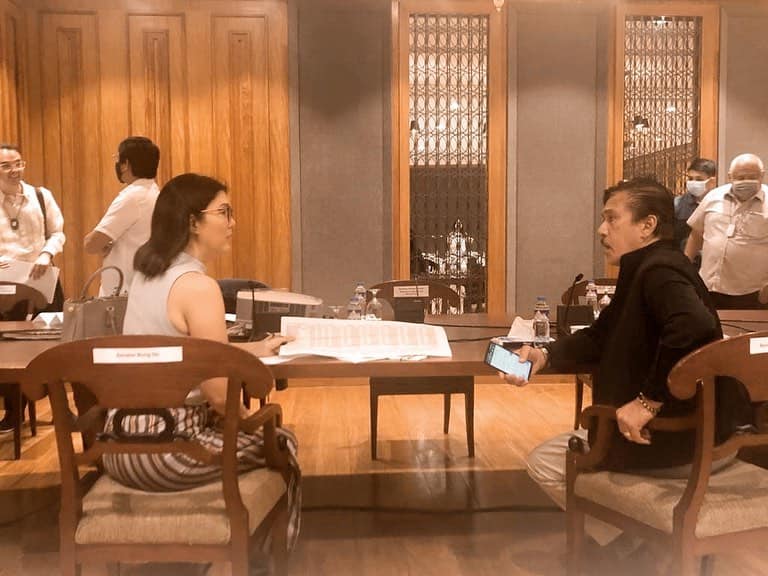
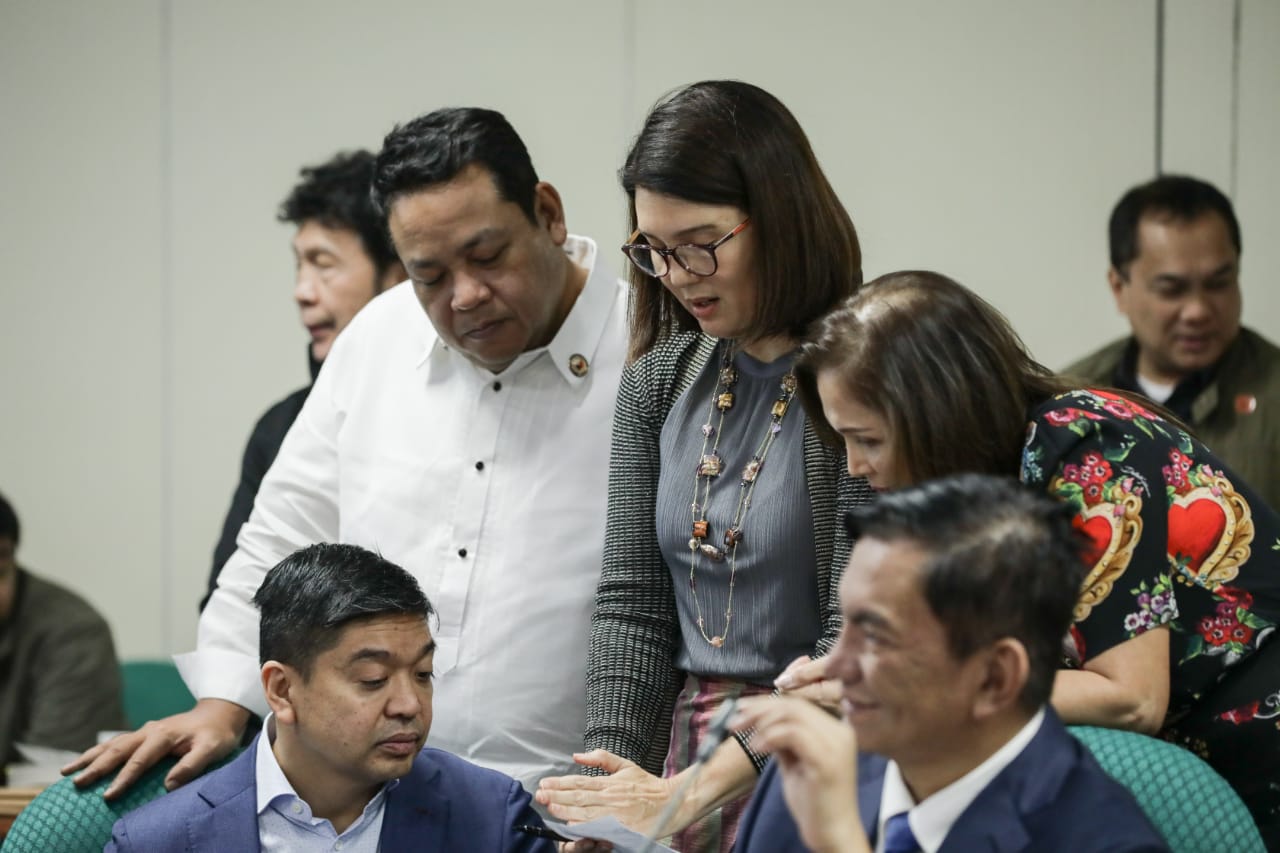
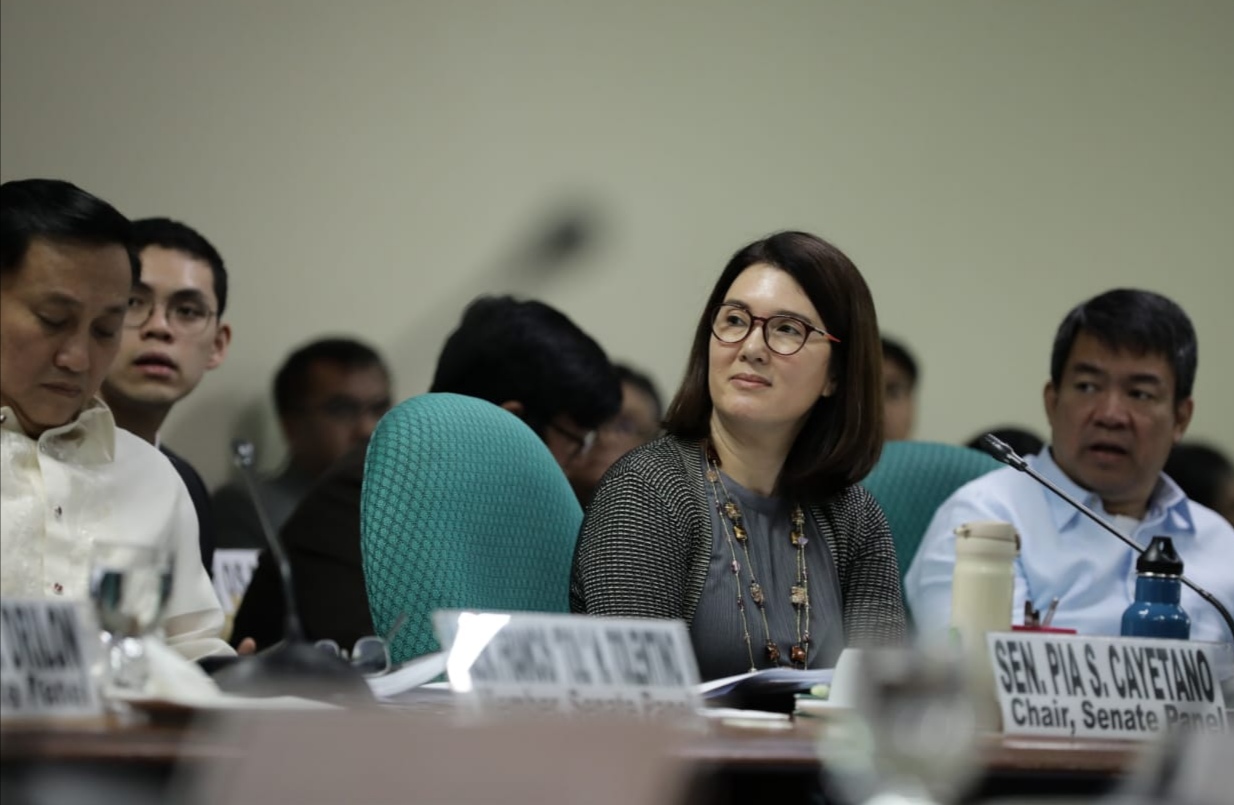
    Tax sin products for people’s health: Senator Pia S. Cayetano with fellow bicam panel members Sen. Francis ‘Tol’ Tolentino and Sen. Aquilino ‘Koko’ Pimentel.
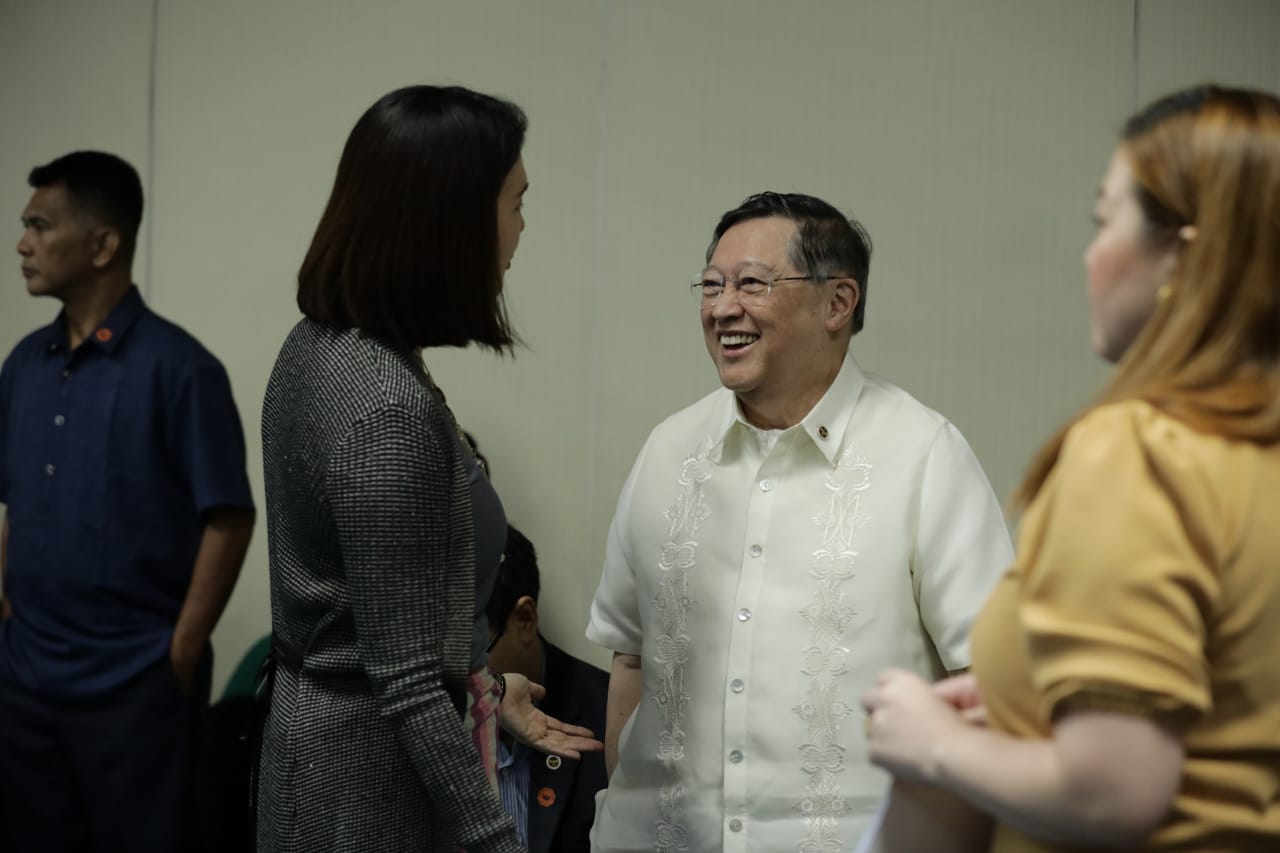
    Senate ways and means committee chair Pia Cayetano greets finance secretary Sonny Dominguez, who made a surprise visit at the bicam meeting and watched the proceedings from the sidelines.
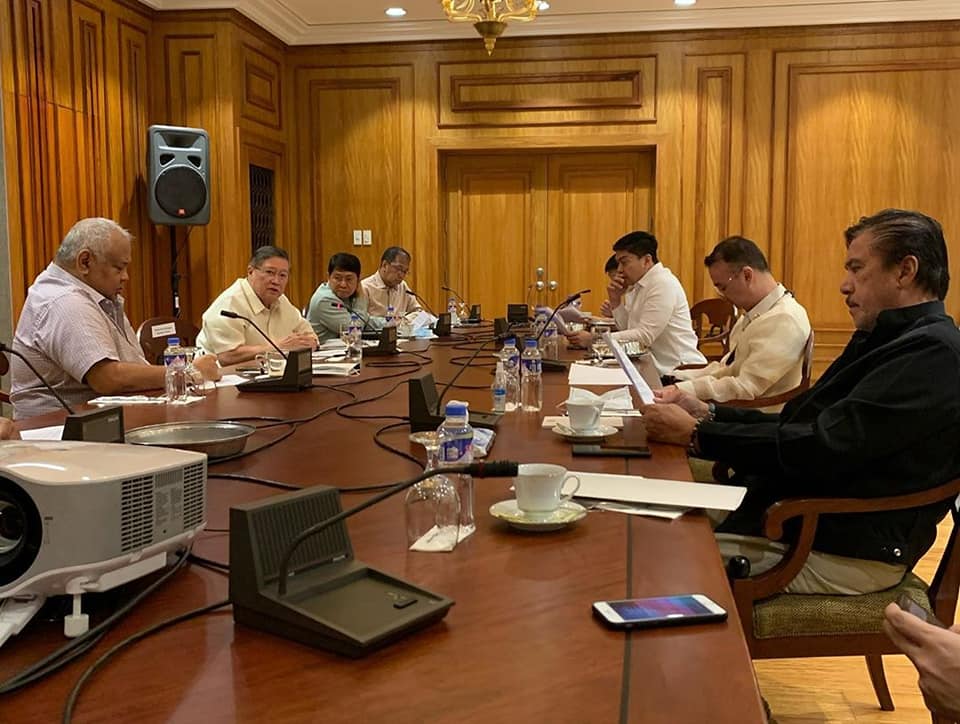
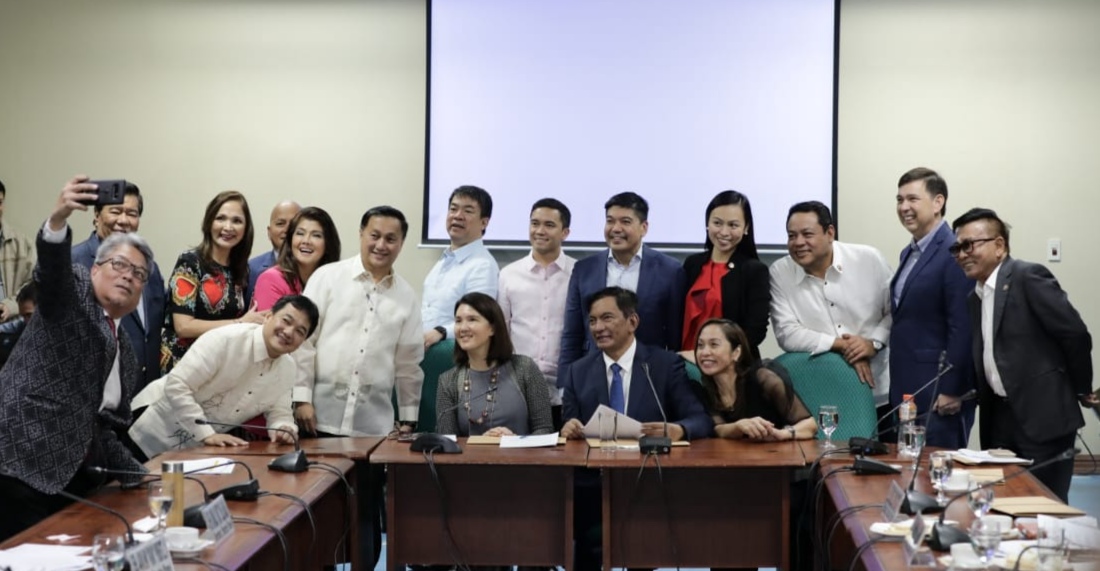
    Bicam bill is signed! (L-R, 1st row) Deputy Speaker (DS) Deogracias Victor Savellano, DS Raneo Abu, Sen. Francis Tolentino, Senate WAM Chair Pia S. Cayetano, House WAM Chair Joey Salceda, Rep. Sharon Guarin (L-R, 2nd row) Senate Minority Leader Franklin Drilon, Rep. Estrellita Suansing, Sen. Ronald ‘Bato’ Dela Rosa (partly hidden), Sen. Imee Marcos, Sen. Aquilino ‘Koko’ Pimentel, Rep. Jose Antonio Alvarado, DS LRay Villafuerte, Rep. Sheena Tan, Rep. Jack Duavit, Senate President Pro Tempore Ralph Recto, and Rep. Teodorico Jaresco, Jr.
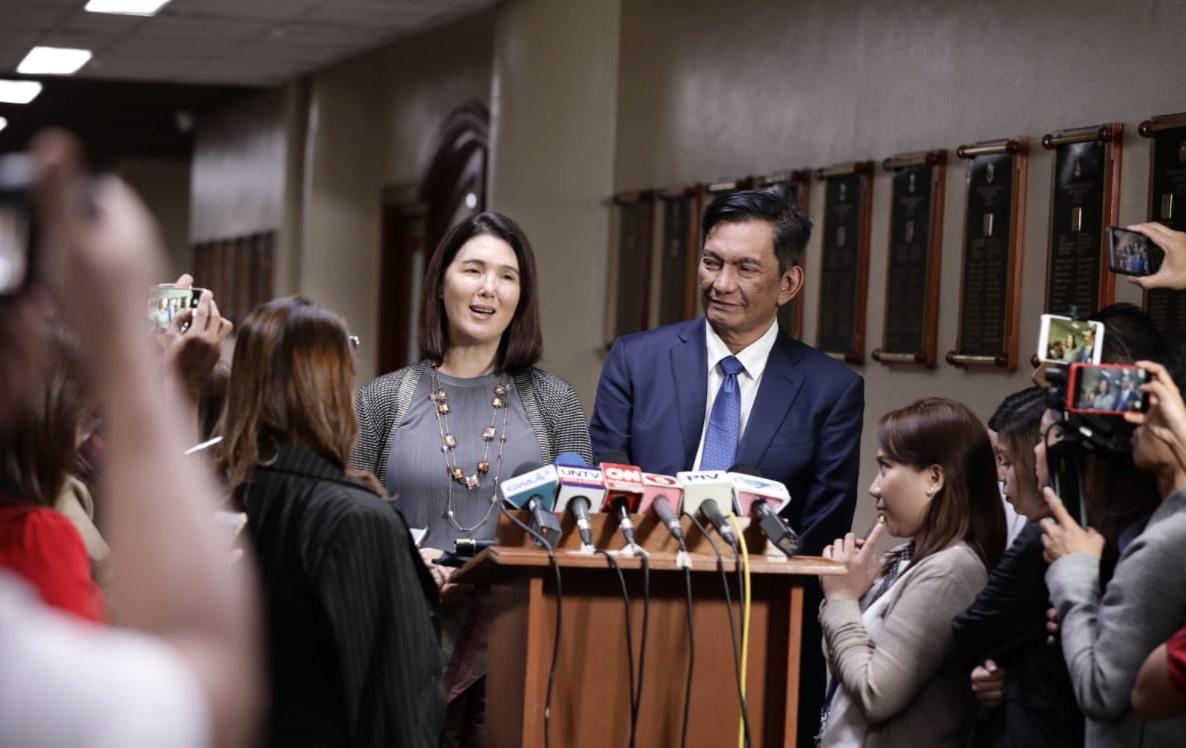
    Standing tall: Joint press conference by Senator Pia S. Cayetano and Albay Rep. Joey Salceda, Ways and Means chair of the Senate and House, respectively, to announce the bicam approval of the sin tax bill.
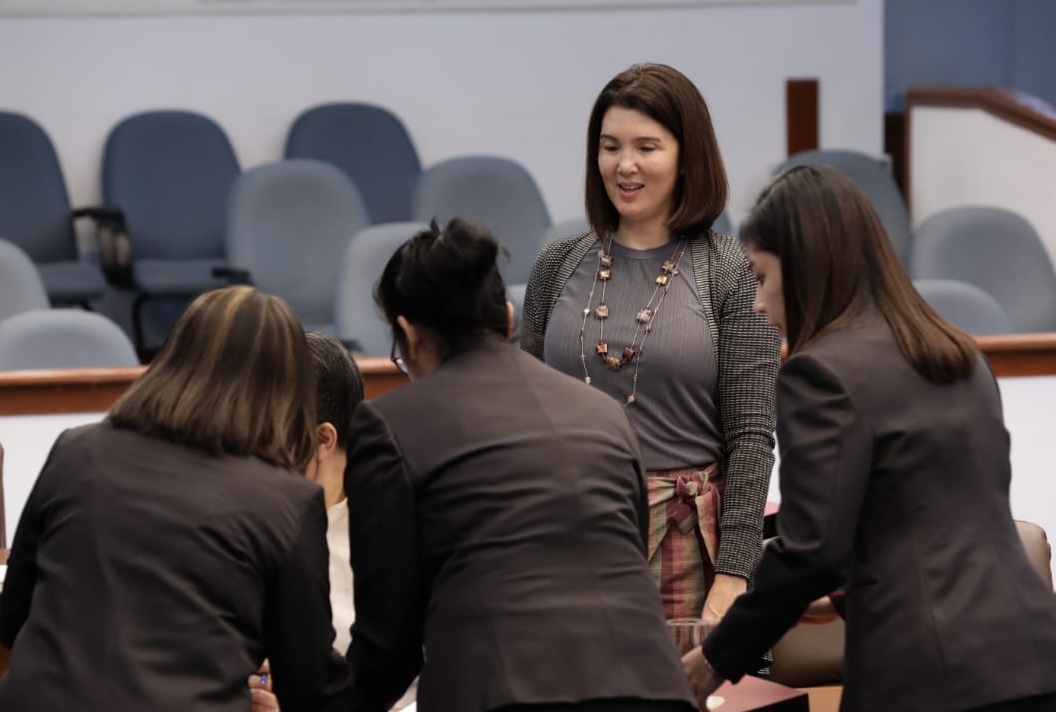
    Hands-on: Senator Pia Cayetano watches as Senate plenary pages facilitate the signing of the bicam committee report on the sin tax bill among the senators.
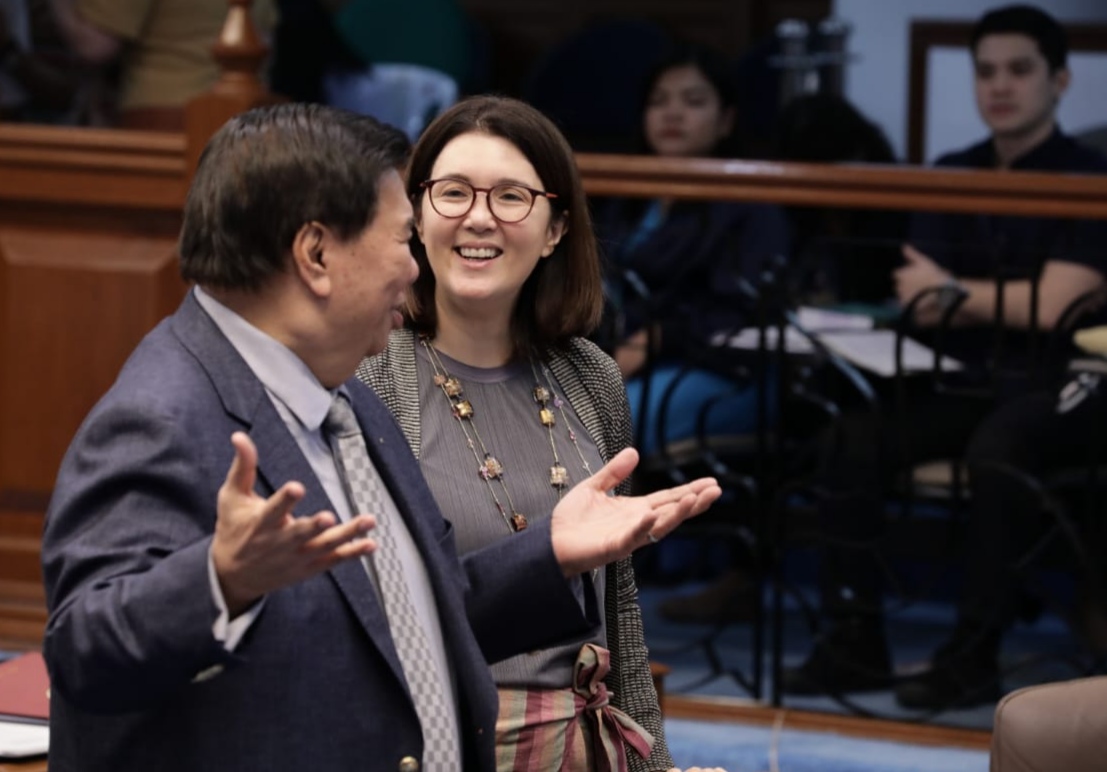
    Light moment with Senate Minority Leader Franklin Drilon. Both senators were instrumental in the passage of the 2012 Sin Tax Bill (RA 10351).
    Despite lower-than-desired rates, Senator Pia Cayetano believes that the 2019 sin tax measure would still go a ‘long way’ in protecting people’s heath and welfare.
  • Pia: My work continues to tax e-cigarettes for public health

    Transcript of interview with Senator Pia Cayetano on President Duterte’s directive to ‘ban’ e-cigarettes 

    Question (Q): What happens to the sin tax bill following the order of the President to ban vapes?


    Sen. Pia: The way I look at it is my work continues. Because our President has really just expressed – from my understanding – his disappointment and exasperation with the e-cig industry. And that’s why he made that statement na “i-ban na yan.”


    Because actually, all this time, he was waiting for all of us to do our job. And my job is to use taxation as a tool to protect the citizens, and of course, there’s also a fundraising measure as far as DOF is concerned.


    But we have to understand the background. The background is, DOH issued an Administrative Order regulating e-cigarettes. And they said it in my hearing, they said it in consultations na ayaw ng mga industry ang AO na yan. The industry players said that they were not happy with that AO.


    In fairness, there were also some industry players who said that they are happy to be regulated. Meanwhile, some of these people went ahead and filed cases to prevent FDA and DOH to regulate them. And these courts issued a TRO. So ngayon, we have products that are clearly harmful to the public [that are not being regulated]. We can debate and we can discuss it longer. But there is no doubt. I don’t know anyone in the business who will say safe na safe ito. There are health hazards there. And they are unregulated. Eh ‘di nabwisit si Presidente, so ang basa ko sa kanya, “Ah ganun ha? Ayaw niyo magpa-regulate, i-ban ko na lang kayo.”


    And that’s how I feel also. Ayaw niyo magpa-regulate? Eh ‘di lumabas na kayo sa bansang ito. We’re willing to, and that was the direction that I was going. Taxation to me is just a means, a tool to help make these products that are harmful less accessible to the vulnerable, especially the youth.


    Pero, meron din akong draft bill to regulate vaping and ecigs, etc. na ready rin akong isalang at i-defend as soon as mapasa ko na itong taxation portion. Kasi nauna lang naman yun because meron lang talaga tayong hinahabol na timeline.


    Q: How will the ban affect the revenue generation of DOF?


    Sen. Pia: Well, it’s very small compared to the overall collection. That is because e-cigs is still not widespread. It’s a new product. Bago lang yan. Ako nga hindi ko alam na may ganyang product until like a year ago na nakita kong may ganun.


    So it will not contribute greatly immediately. I remember, DOF had said at some point, kung walang mako-collect diyan, okay lang kasi DOF recognizes that health comes first.


    But I also understand that the President has also clarified his statement and I just have to push through with my part of the job. My job is to pass the taxation measure whether or not there’s an EO that comes out, if something comes out tomorrow, whether it’s a total ban or regulating, I have to be ready. Because this taxation measure has to be of a more or less permanent nature.


    Paano kung temporary lang ang ban, tapos walang taxation measure in place? So I have to have that in place. And just to clarify also, there is actually a taxation measure in place. This was the law that was already passed last June towards the end of the 17th Congress [Republic Act 11346]. So that will be the one that will come into effect in January if I don’t push through with this measure and there is no ban.


    So I have to push through in anticipation. I cannot assume na mato-total ban yan. I have to still do my job.


    Q: Legally speaking, is the EO powerful enough to stop the entry of vape products and use, etc.?


    Sen. Pia: You have to recognize, first of all, like I mentioned, again let’s go back.


    DOH issued an AO. DOH time and again, and FDA, has the power to protect the public from health risks. That is their inherent power. Kung lahat na lang ng risks, let’s say itong sa polio, aantayin nila ang legislature, mahirap yun. There are parts of the work of the Executive that require immediate action.


    So, DOH cannot always be waiting for the legislature to pass something. It is inherent in the Constitution, Article II Section 15 says that it is the State’s duty to protect the people’s health.


    So may powers and responsibility ang DOH diyan and that goes without saying ang DOH naman is just an arm of no less than the President. They are under the President, so the President will also act that way.


    But, I am not going to debate right now what is covered by the legislative powers and the executive powers. For me, you look at it on a case-to-case basis. Right now, the regulations that are supposed to protect the people from the harmful effects of e-cigarettes, vapes, heated tobacco products, otherwise known as HTPs, has been TRO’ed.


    Kung ako din ang Presidente, sasabihin ko sa kanila, “Ah ganun, ni-TRO niyo yung aking health arm? ‘Di sige, i-ban ko na lang kayo.”


    Q: Just to be clear, the bill you will push is just to regulate e-cigarettes or to institutionalize banning?


    Sen. Pia: Right now, on the floor is the taxation measure that you know. So as of now, as of the past few months, I was pursuing, I was going along the lines of the direction of the Executive, which is to highly regulate.


    The President and even DOF Secretary, DOH, have been very clear that there are harmful effects of ecigs. And I myself went to WHO and have confirmed this. Everything I heard in the hearings were confirmed during my trips abroad that we are dealing with a harmful product. So it must be regulated. And as I said, taxation is a means to regulate it for health purposes.


    Meanwhile, for the health side, there are bills – I looked at it, I am actually vice chair of the Committee on Health and as you all know, an advocate for health. There are pending bills but I intend to file a bill, which I believe is more comprehensive and is more reflective of the need to highly regulate a product that poses a health risk to the Filipinos.


    Wala pa ang bill na yun. It’s in the drafting stage. And if you recall, I’ve been busy as the chair of the Committee on Ways and Means, but my interest is always health. So my trip to WHO has given me more knowledge.


    Actually, during the budget, I was reviewing that bill on the side. I’d say it’s about 90% complete. I just really wanted a few more revisions. But I’ll be ready to file that anytime.


    Q: The filing will come after the taxation measure passes?


    Sen. Pia: Hindi naman. If may time naman ako to finalize that bill, I will file it. And that bill, as I said in answer to your question, is going along the direction of highly regulating.


    Si Senator Tolentino, whom I worked very closely with – he was in WHO – is for a total ban. Kasi for me, it’s a thin line. Ang aming understanding of the health risk is exactly the same. It’s more of the appreciation of what would work better in our country, a total ban or highly regulating [these products]?


    Part of me wants total ban. But the other part of me is okay with highly regulating. And this is where I want to share this conundrum that I face, because here you have industry players saying, “I-regulate niyo kami, mas gusto naming ma-regulate para ma-weed out natin ang mga fly-by-night diyan and those that might produce products that don’t comply with the safety standard.”


    But meanwhile, ni-TRO naman nila ang pagre-regulate ng FDA and DOH. ‘Di ngayon, unregulated. Paano ba yun?


    Q: Can you be more specific, ano ang ibig sabihin ng “to highly regulate”?


    Sen. Pia: What I mean by saying ‘highly regulate’ is, it can be sold but there are many -not just guidelines, but there are many dos and don’ts. And those dos and don’ts, I will enumerate.


    But offhand, you cannot sell to the youth and, in this case, I have expanded it to young people. Because ang brain, there is evidence that shows that the brain continues to develop until 25 years old. So at the age of 19, hindi ka na [minor], pero ang brain mo and decision-making skills mo are still very susceptible to persuasion, to advertisement and all that. So, that’s one way of regulating – that you ban the youth and even young people.


    Advertising, you highly regulate that. You either totally ban or you only allow it in limited spaces. So that’s what I mean, maybe we can have a separate discussion on that. But I am giving you a glimpse of what I mean by highly regulate. And even the places where you will sell.


    I’d love to give you this example. In the United Kingdom, where they actually allow e-cigs to be sold freely, the reason for that is because their cigarettes are highly regulated. You cannot enter a store and see cigarettes anywhere. So nag-drop na ang consumption ng youth nila.


    So now, with the e-cig business, it appears that their youth is not vulnerable to it the way the youth in the US is. Because there are no cigarettes around. You can’t enter a store and find it. In fact, I wanted to make a point of buying, I kept forgetting because every time I enter a convenience store, you won’t see it.


    So ang cigarette industry nila – I’m referring to cigarette industry – is highly regulated. And this allowed them to now look at what e-cigs can do for them. They are not allowing it na walang regulation, ha? Kasi for them, it is still a harmful product. Pero medyo liberal sila in allowing it as an alternative to cigarettes.


    Q: So the direction towards eventually banning the selling of e-cigs in convenience stores will be part of the bill?


    Sen. Pia: If you ask me, it should be included in the debates, because it’s a harmful products. And all across the world, connected pa rin kasi yan sa cigarettes. So, cigarettes in other parts of the world, very regulated na ang kanilang pagbebenta.


    So si e-cigs, saan pumapasok diyan? Eh parang tayo, nafa-fast forward. Hindi pa nga natin totally nare-regulate ang cigarettes, nandito na si e-cigs.


    So gusto ni e-cigs, “Huwag niyo naman kami masyadong i-regulate, ang cigarettes nga hindi niyo nire-regulate.” That’s not an excuse, eh ‘di i-regulate kayo pareho ng mas matindi. Dapat naman talaga ma-regulate silang pare-pareho.


    Q: Does the order to ban e-cigs have an effect on the President’s directive to certify the sin tax bill as urgent?


    Sen. Pia: No. I don’t believe so, because like I mentioned, the President is very vocal about his concerns, ang ideas niya, he will really just say it. So my understanding is, just like me, when he says, “I-ban na lang yan,” it’s because of the facts that he’s faced with. It’s because of the annoying reality that these people don’t want to be regulated and then there are courts that actually felt that the business interest of these vaping companies are more important than the welfare and health of the Filipinos.


    It boggles my mind. At si Presidente din, takang taka kung bakit ganyan sila magdesisyon. ni-TRO nila ang Department of Health and FDA.


    Q: Will the sin tax bill be approved before the year ends?


    Sen. Pia: I hope so. I have been having more detailed discussions with my colleagues. And I have expressed the request of DOF that we expedite this. So napapag-usapan na yan. And I have requested na magkaroon ng caucus right after the budget and that we prioritize the debates. Kasi ready naman ako.


    Q: Does the caucus have a schedule already?


    Sen. Pia: Sinabi ko naman kay SP [Senate President Vicente Sottto III] na gusto ko sana mag-caucus right after. Syempre, ayaw ko naman makagulo dahil hilong hilo na kaming lahat sa long hours ng budget. But hopefully. Kasi period of amendments na lang naman kami. So kung masisingit ko yun during one afternoon, para ma-explain ko na and ma-discuss din itong effects ng ban, baka iba-iba din ang ideas nila.


    Ako, I want to say that tuloy natin ito. Kasi it’s just a question of rates. I don’t think anyone is not for taxing these sin products, it’s just a question of rates. So I wanna just sit down and discuss with them, “Saan tayo ngayon?” kasi ako, I stand by the rates that I propose.


    Thank you! #