Official Website of Philippine Senator Pia Cayetano

News

  • “The Most Powerful Investment We Can Make” — Sen. Pia Cayetano Welcomes AHEAD Grant for Healthcare Students

    “The Most Powerful Investment We Can Make” — Sen. Pia Cayetano Welcomes AHEAD Grant for Healthcare Students

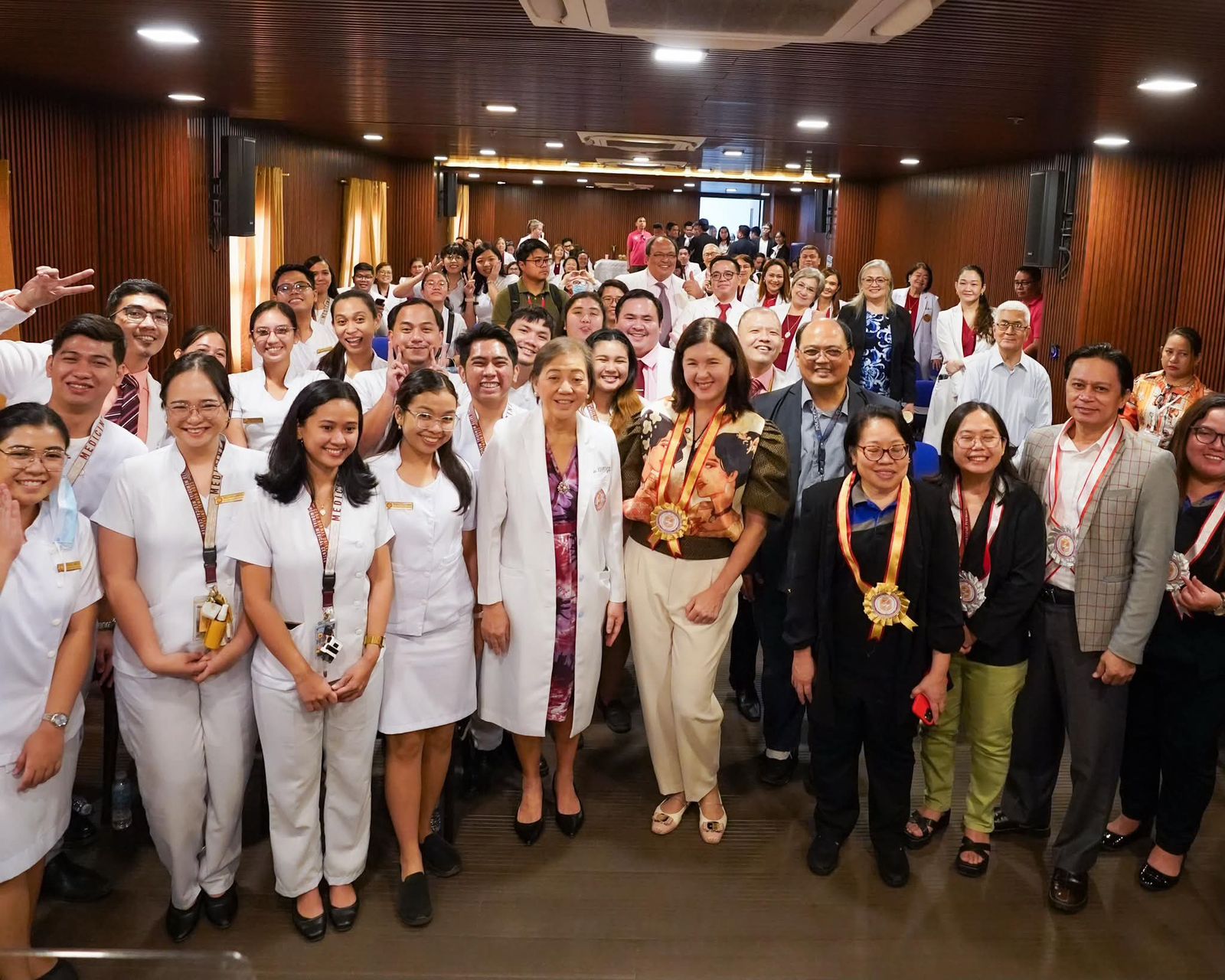
    Senator Pia S. Cayetano welcomed the launch of the Commission on Higher Education’s (CHED) Allied Health Experiential Assistance for Deserving Students (AHEAD) Grant, which will provide financial assistance to around 19,000 healthcare students completing their mandatory clinical and field-based training nationwide.

    “This is exactly the kind of investment we need to make for our future. The most powerful investment we can make for our country is in our education and healthcare sectors, and this program does both at once,” Cayetano said. “I am happy to see that our efforts to strengthen healthcare education are bearing fruit for our students and for the Filipino people.”

    As Senior Vice-Chairperson of the Senate Committee on Finance, Senator Pia Cayetano has long championed the expansion of medical and allied health education. She consistently lobbied for the rightful share of education and health in the national budget, as well as funding for the Doktor Para sa Bayan Act. These efforts helped lay the foundation for programs like the AHEAD Grant, which provides more opportunities for aspiring healthcare professionals to pursue their education and serve Filipino communities.

    Cayetano noted that the AHEAD Grant directly addresses a long-standing burden on healthcare students, many of whom come from families that struggle to afford the cost of clinical training on top of regular tuition.

    “We cannot build a strong healthcare system without first investing in the people who will run it,” she said. “Every health worker who graduates because of programs like this is one more person who will serve Filipino families in their most vulnerable moments. There is no quick fix, but every step we take toward making healthcare education accessible is a step toward a healthier Philippines for all of us.”The grant covers students enrolled in priority allied health programs including nursing, medical technology, physical therapy, occupational therapy, pharmacy, radiologic technology, respiratory therapy, nutrition and dietetics, speech-language pathology, dental medicine, optometry, and veterinary medicine, all tied to the Human Resources for Health Philippine Masterplan 2020-2040.


    ”The Most Powerful Investment We Can Make” — Sen. Pia Cayetano tungkol sa AHEAD Grant para sa mga Healthcare Students

    Mainit ang naging pagtanggap ni Senadora Pia S. Cayetano sa paglulunsad ng Allied Health Experiential Assistance for Deserving Students (AHEAD) Grant ng Commission on Higher Education (CHED), na magbibigay ng pinansyal na tulong sa humigit-kumulang 19,000 healthcare students na kumukumpleto ng kanilang mandatory clinical at field-based training.

    “This is exactly the kind of investment we need to make for our future. The most powerful investment we can make for our country is in our education and healthcare sectors, and this program does both at once,” sabi ni Cayetano. “I am happy to see that our efforts to strengthen healthcare education are bearing fruit for our students and for the Filipino people.”

    Bilang Senior Vice-Chairperson ng Senate Committee on Finance, matagal nang isinusulong ni Cayetano ang pagpapalawak ng medical at allied health education. Patuloy niyang ipinaglaban ang nararapat na bahagi ng edukasyon at kalusugan sa pambansang badyet, gayundin ang pondo para sa Doktor Para sa Bayan Act. Ang mga pagsisikap na ito ay nakatulong sa pagtatayo ng pundasyon para sa mga programang tulad ng AHEAD Grant, na nagbibigay ng mas maraming pagkakataon sa mga nagnanais na maging healthcare professionals na ituloy ang kanilang pag-aaral at maglingkod sa ating mga komunidad.

    Para kay Cayetano, ang AHEAD Grant ay tumutugon sa matagal nang pasanin ng mga healthcare students, kung saan ang marami sa kanila ay nagmumula sa mga pamilyang nahihirapang bayaran ang gastos ng clinical training bukod pa sa regular na matrikula.
    “We cannot build a strong healthcare system without first investing in the people who will run it,” sabi pa niya. “Every health worker who graduates because of programs like this is one more person who will serve Filipino families in their most vulnerable moments. There is no quick fix, but every step we take toward making healthcare education accessible is a step toward a healthier Philippines for all of us.”

    Ang nasabing grant ay para sa mga estudyante na naka-enroll sa mga priority allied health programs, kabilang dito ang nursing, medical technology, physical therapy, occupational therapy, pharmacy, radiologic technology, respiratory therapy, nutrition and dietetics, speech-language pathology, dental medicine, optometry, at veterinary medicine, na lahat ay sumasailalim sa Human Resources for Health Philippine Masterplan 2020-2040.
  • “Victory for Health and the People” — Sen. Pia Welcomes Return of PhilHealth Funds

    “Victory for Health and the People” — Sen. Pia Welcomes Return of PhilHealth Funds

    Senator Pia S. Cayetano welcomed the return to PhilHealth of the 60 billion pesos, which was previously transferred to the National Treasury, calling it “a victory for health and for the Filipino people”.

    This comes as PhilHealth confirmed that the funds have been returned, in line with the recent Supreme Court (SC) decision voiding the transfer of PhilHealth’s supposed excess funds to the national treasury, and directing that PhilHealth funds must be used exclusively for health services.

    “This is a victory not for any single individual, but for every Filipino family that depends on PhilHealth for access to medicine, treatment, hospitalization, and preventive care,” Cayetano underscored.

    As Senior Vice-Chairperson of the Senate Committee on Finance and one of the principal voices during the health budget deliberations, Cayetano repeatedly questioned the removal and transfer of PhilHealth funds throughout the 2025 and 2026 budget discussions, including during plenary debates and Bicameral Conference Committee deliberations.

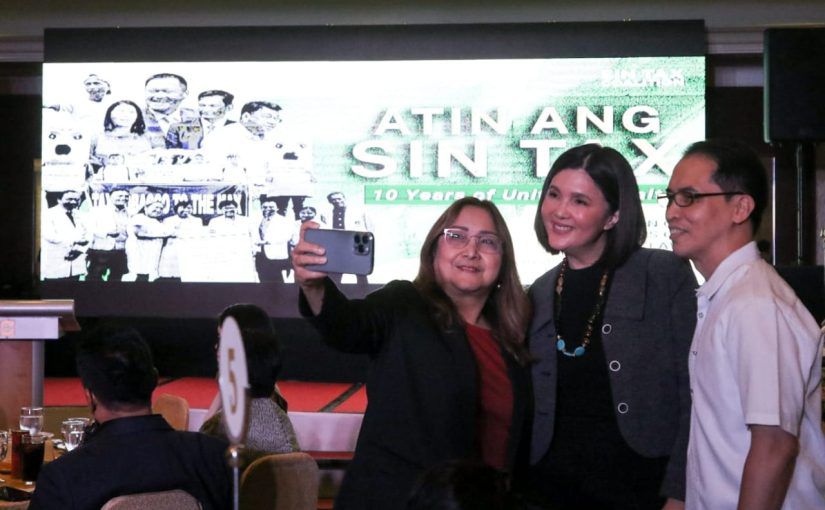
    From the outset, she maintained that the Universal Health Care Act and the Sin Tax laws clearly mandate that these funds be used exclusively by PhilHealth. Cayetano is the principal author and sponsor of the Sin Tax Reform Act of 2020, which raised excise taxes on alcohol and e-cigarette products and mandated the earmarking of a portion of the revenues in support of the implementation of Universal Health Care. During her interpellations, Cayetano highlighted the widening gap between revenues legally earmarked for PhilHealth and the amounts actually transmitted to the agency.

    She emphasized that the issue was never merely about accounting or bookkeeping, but about public trust and the State’s obligation to uphold the right to health.

    “PhilHealth funds exist for the health of the Filipino people and cannot be used for any other purpose,” Cayetano reiterated. “The law is clear. These funds are meant to strengthen healthcare benefits, improve systems, expand access, and ensure better service delivery for our people.”

    “PhilHealth must ensure that these funds are used strictly in accordance with the law – to address the urgent health needs of our people,” Cayetano said. “The SC decision is a clear reminder that healthcare funds are not excess funds. They are lifelines for millions of Filipinos. And the agency has a duty to see that every peso serves its true purpose.”

    ”Victory for Health and the People” — Ayon kay Sen. Pia tungkol sa Pagbabalik ng Pondo ng PhilHealth

    Magandang balita para kay Senador Pia S. Cayetano ang pagbabalik sa PhilHealth ng 60 bilyong piso na dati ay inilipat sa National Treasury, na tinawag niyang “a victory for health and for the Filipino people”.

    Ito ay kasunod ng kumpirmasyon ng PhilHealth na naibalik na ang pondo, alinsunod sa naunang desisyon ng Supreme Court (SC) na nagdeklara ng kawalang-bisa sa paglipat ng sinasabing excess funds ng PhilHealth sa national treasury, at pagdedeklara na ang pondo ng PhilHealth ay dapat gamitin nang eksklusibo para sa serbisyong pangkalusugan.

    “This is a victory not for any single individual, but for every Filipino family that depends on PhilHealth for access to medicine, treatment, hospitalization, and preventive care,” binigyang-diin ni Cayetano.

    Bilang Senior Vice-Chairperson ng Senate Committee on Finance at isa sa mga pangunahing sumuporta sa health budget, ilang beses na kinuwestyon ni Cayetano ang pag-alis at paglipat ng pondo ng PhilHealth sa 2025 at 2026 budget, maski sa mga plenary debates at Bicameral Conference Committee deliberations.

    Noon pa man, iginiit na niya na malinaw sa Universal Health Care Act at Sin Tax laws na ang mga pondong ito ay dapat gamitin nang eksklusibo sa ilalim ng PhilHealth. Si Cayetano ang principal author at sponsor ng Sin Tax Reform Act of 2020, na nagtaas ng excise taxes sa alak at e-cigarette products at paglalaan ng bahagi ng kita rito para sa pagpapatupad ng Universal Health Care.

    Sa kanyang mga interpellation sa 2026 budget, binigyang-diin ni Cayetano ang lumalaking agwat sa pagitan ng mga kitang legal na nakalaan para sa PhilHealth at ng mga halagang aktwal na naipadadala sa ahensya.

    Binigyang-diin niya na ang isyu ay hindi lamang tungkol sa accounting o bookkeeping, kundi tungkol sa tiwala ng publiko at obligasyon ng gobyerno na itaguyod ang mas magandang serbisyong pangkalusugan.

    “PhilHealth funds exist for the health of the Filipino people and cannot be used for any other purpose,” binigyang-diin muli ni Cayetano. “The law is clear. These funds are meant to strengthen healthcare benefits, improve systems, expand access, and ensure better service delivery for our people.”

    “PhilHealth must ensure that these funds are used strictly in accordance with the law—to address the urgent health needs of our people,” pahayag ni Cayetano. “The SC decision is a clear reminder that healthcare funds are not excess funds. They are lifelines for millions of Filipinos. And the agency has a duty to see that every peso serves its true purpose.”

  • Senator Pia Cayetano Backs CHED’s Call to Defer Tuition Increases, Urges HEIs to Prioritize Student Welfare

    Senator Pia Cayetano Backs CHED’s Call to Defer Tuition Increases, Urges HEIs to Prioritize Student Welfare

    Senator Pia S. Cayetano expressed strong support for the Commission on Higher Education’s (CHED) call urging Higher Education Institutions (HEIs) to defer planned tuition increases, emphasizing the need to protect Filipino families already grappling with rising costs of living.

    “I fully support CHED’s call for universities to hold off on tuition increases. Many families are already struggling with rising costs across the board. We must ensure that education remains accessible, especially during these challenging times,” Cayetano stated.

    The Senator, who serves as Senior Vice Chair of the Senate Committee on Finance and has handled the education budget for six years, stressed that accessible education is fundamental to breaking cycles of poverty and ensuring intergenerational equity.

    Cayetano noted that the government has been working to strengthen support for higher education through the Tertiary Education Subsidy and increased funding for State Universities and Colleges. She emphasized that private institutions play a vital role in keeping education within reach of Filipino families, and expressed hope that, in this challenging time, they can work together with the government in exploring ways to ease the burden on students while sustaining the quality of education they provide.

    Cayetano also commended CHED for maintaining an open dialogue with institutions while balancing the need to ensure that students and their families are not overburdened during this time. “I appreciate that CHED is engaging with HEIs on this matter. It’s important that we balance the operational needs of institutions with the capacity of families to afford education.”

    The Senator called on higher education institutions to explore alternative means of addressing operational challenges without passing the burden to students and their families. She emphasized that investing in education is investing in the nation’s future, and accessibility must remain a priority.

    “Education is the great equalizer. We cannot allow it to become a privilege that only the wealthy can afford,” Cayetano concluded.


    Sen. Pia, Suportado ang Panawagang Ipagpaliban ang Tuition Hike

    Sinusuportahan ni Senador Pia S. Cayetano ang panawagan ng Commission on Higher Education (CHED) sa mga Higher Education Institutions (HEIs) na ipagpaliban ang planong pagtaas ng matrikula, habang binibigyang-diin ang pangangailangang protektahan ang mga pamilyang Pilipinong nahihirapan na sa mabilis na pagtaas ng pang-araw-araw na gastusin.

    “I fully support CHED’s call for universities to hold off on tuition increases. Many families are already struggling with rising costs across the board. We must ensure that education remains accessible, especially during these challenging times,” pahayag ni Cayetano.

    Si Cayetano na nagsisilbing Senior Vice Chair ng Senate Committee on Finance at humawak ng badyet sa edukasyon sa loob ng anim na taon, ay nagpaliwanag na ang accessible na edukasyon ay susi sa pagwakas ng kahirapan at pagsisiguro ng intergenerational equity.

    Binanggit ni Cayetano na nagsusumikap ang gobyerno na palakasin ang suporta sa mga programa sa higher education sa pamamagitan ng Tertiary Education Subsidy at pagtaas ng pondo para sa mga State Universities and Colleges. Binigyang-diin din niya ang mahalagang papel na ginagampanan ng mga pribadong institusyon sa pagpapanatiling abot-kaya ang edukasyon para sa mga pamilyang Pilipino. Nanawagan si Cayetano na magtulungan ang pribadong sektor at ang gobyerno upang pagaanin ang pasanin ng mga estudyante, lalo na sa panahon ngayon.

    Pinuri rin ni Cayetano ang CHED sa pakikipag-dayalogo sa mga HEIs habang binabalanse ang pangangailangang tiyakin na ang mga estudyante at ang kanilang mga pamilya ay hindi lalong mahirapan sa kasalukuyan. “I appreciate that CHED is engaging with HEIs on this matter. It’s important that we balance the operational needs of institutions with the capacity of families to afford education.”

    Hinimok ng Senador ang mga HEIs na humanap ng alternatibong paraan sa pagtugon sa mga hamon sa kanilang operasyon nang hindi ipapasa ang pasanin sa mga estudyante at kanilang mga pamilya. Naniniwala si Cayetano na ang pamumuhunan sa edukasyon ay pamumuhunan sa kinabukasan ng bansa, at ang accessibility ay dapat manatiling priyoridad.

    “Education is the great equalizer. We cannot allow it to become a privilege that only the wealthy can afford,” pagtatapos ni Cayetano.

  • Pia Cayetano Urges Great Caution on Full Online Classes, Warns CHED of Impact on Students and Learning Gaps

    Pia Cayetano Urges Great Caution on Full Online Classes, Warns CHED of Impact on Students and Learning Gaps

    Statement on the Commission on Higher Education’s (CHED) policy allowing  higher education institutions (HEIs) to shift to 100% online classes amid the fuel and power crisis

    Families are experiencing difficulties because of the ongoing global fuel and power crisis. These are not easy times, and government agencies, including our education institutions, are being asked to adapt quickly.

    CHED’s move to allow schools to shift to 100% online classes is clearly intended as a temporary solution to ensure learning continuity while supporting energy conservation efforts.

    As Senior Vice Chairperson of the Senate Committee on Finance, where I handled the education budget for six years, and as a former EDCOM II Commissioner, I feel strongly that we must approach this challenge with great caution.

    Recent assessments show that learning gaps remain a serious concern across the education system, and with any shift in modality, we must first ensure that our students are truly learning. 

    We cannot ignore the risk that prolonged or widespread reliance on fully online modalities may further widen existing learning gaps, especially for students who may not have equal access to technology, stable connectivity, or a conducive learning environment at home.

    Moreover, there is a real concern that what is intended as a temporary measure may gradually become normalized. We saw this emerge after the pandemic, when emergency learning modalities persisted longer than necessary. We must be vigilant to ensure that this does not happen again.

    We also cannot forget that face-to-face learning remains essential, not just for academic outcomes, but for discipline, engagement, and overall development. This is why we must carefully balance the need to respond to the crisis with our responsibility to protect our students’ learning experience.

    I urge CHED and all HEIs to establish concrete benchmarks, including measurable learning outcome indicators and a defined review timeline, so that this policy remains a genuine emergency measure and does not quietly become the new standard.

  • Cayetano Hails Camago-3 Breakthrough as Major Step Toward PH Energy Security

    Cayetano Hails Camago-3 Breakthrough as Major Step Toward PH Energy Security

    Senator Pia S. Cayetano welcomed the successful drilling of the Camago-3 gas well, calling it a breakthrough for the country’s energy security and local energy production. “This comes as a source of hope and opportunity, especially at a time when the conflict in West Asia continues to threaten global fuel supply and drive up energy costs,” she said. “Every move toward strengthening our own energy sources is a step toward protecting Filipino families from unpredictable costs.”

    As Chairperson of the Senate Committee on Energy and the author and sponsor of the Philippine Natural Gas Industry Development Act, Cayetano noted that the Camago-3 development is a direct result of the policy framework the law put in place. The measure mandates comprehensive downstream natural gas planning, promotes investment, and prioritizes indigenous natural gas to reduce import dependence and help moderate power costs over time. “This is exactly what the NatGas Law was designed to make possible,” she said.

    Cayetano further explained, “Locally sourced gas is more affordable. And with a stable domestic supply, we can achieve more reliable and – potentially cheaper– electricity for our homes and businesses. That’s what matters most to our people.”

    As Chairperson of the Senate Committee on Sustainable Development Goals, Innovation, and Futures Thinking, Cayetano has long argued that energy security is not a reaction to crisis but a product of deliberate, futures-oriented thinking. Strengthening indigenous energy supply, she has consistently maintained, is inseparable from the country’s commitments on affordable and clean energy, climate action, and inclusive development.

    Cayetano: Ang Tagumpay ng Camago-3 ay Malaking Hakbang Tungo sa Energy Security ng Pilipinas

    Pinuri ni Senadora Pia S. Cayetano ang matagumpay na drilling ng Camago-3 gas well. Itinuturing niya itong isang makasaysayang tagumpay para sa seguridad ng enerhiya ng bansa at lokal na produksyon ng enerhiya. “This comes as a source of hope and opportunity, especially at a time when the conflict in West Asia continues to threaten global fuel supply and drive up energy costs,” aniya. “Every move toward strengthening our own energy sources is a step toward protecting Filipino families from unpredictable costs.”

    Bilang Chairperson ng Senate Committee on Energy at may-akda at sponsor ng Philippine Natural Gas Industry Development Act, sinabi ni Cayetano na ang pag-develop ng Camago-3 ay direktang resulta ng mga polisiyang nakalatag sa ilalim ng nasabing batas. Ang batas na ito ay nagmamandato ng komprehensibong pagpaplano para sa downstream natural gas, nagtataguyod ng pamumuhunan, at pag-una sa indigenous natural gas upang mabawasan ang pagdepende sa imported na gasolina at matulungang mapababa ang gastos sa kuryente. “This is exactly what the NatGas Law was designed to make possible,” aniya.

    Paliwanag pa ni Cayetano, “Locally sourced gas is more affordable. And with a stable domestic supply, we can achieve more reliable and potentially cheaper electricity for our homes and businesses. That’s what matters most to our people.”

    Bilang Chairperson ng Senate Committee on Sustainable Development Goals, Innovation, and Futures Thinking, matagal nang pananaw ni Cayetano na ang energy security ay hindi lamang isang tugon sa krisis kundi produkto ng maingat na pagpaplano. Para sa kanya, ang pagpapalakas ng ating sariling suplay ng enerhiya ay kasama sa ating mga pangako bilang isang bansa, para sa mas abot-kayang at malinis na enerhiya, climate action, at inklusibong pag-unlad.

  • PHOTO: Bicam Day 2

    PHOTO: Bicam Day 2

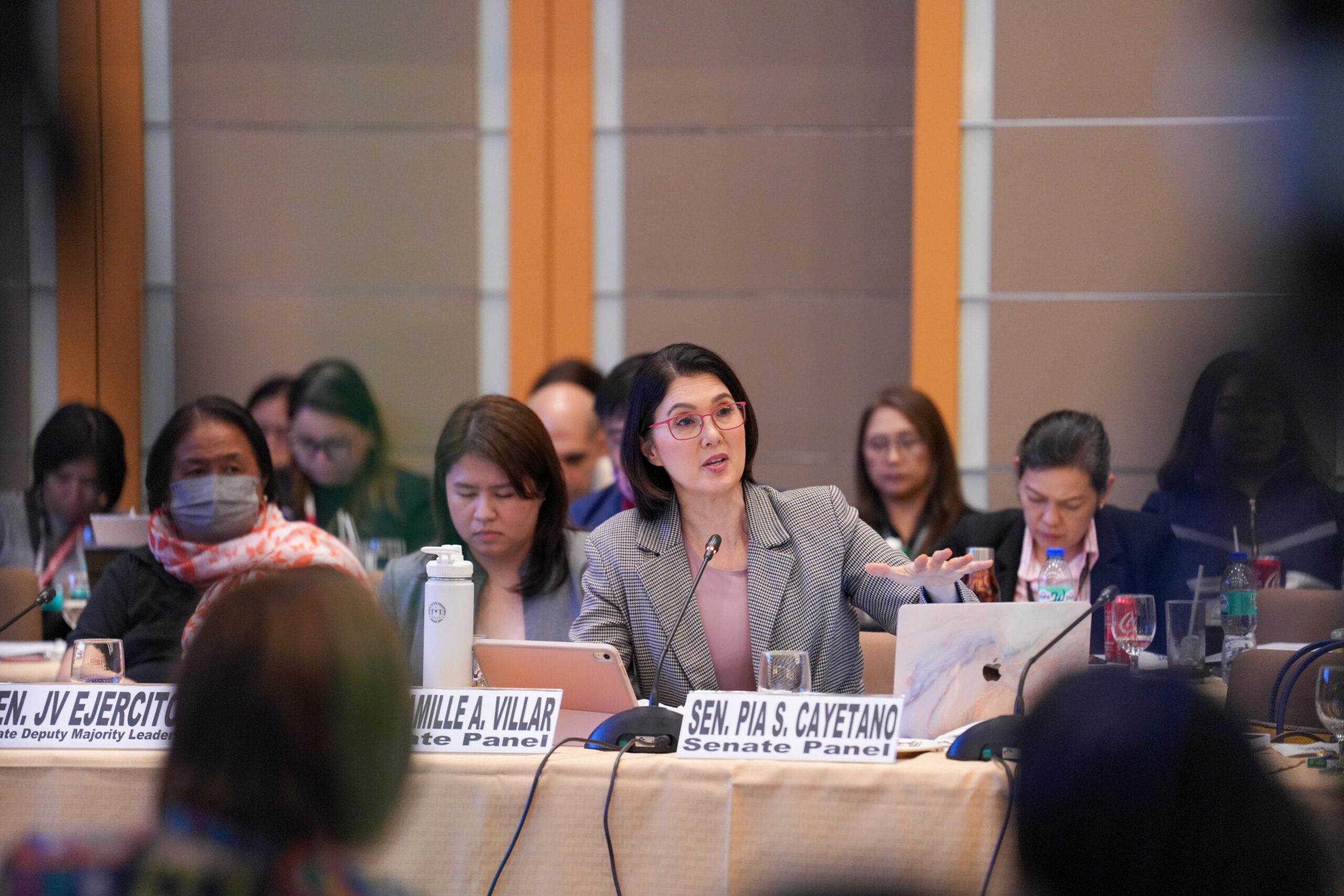
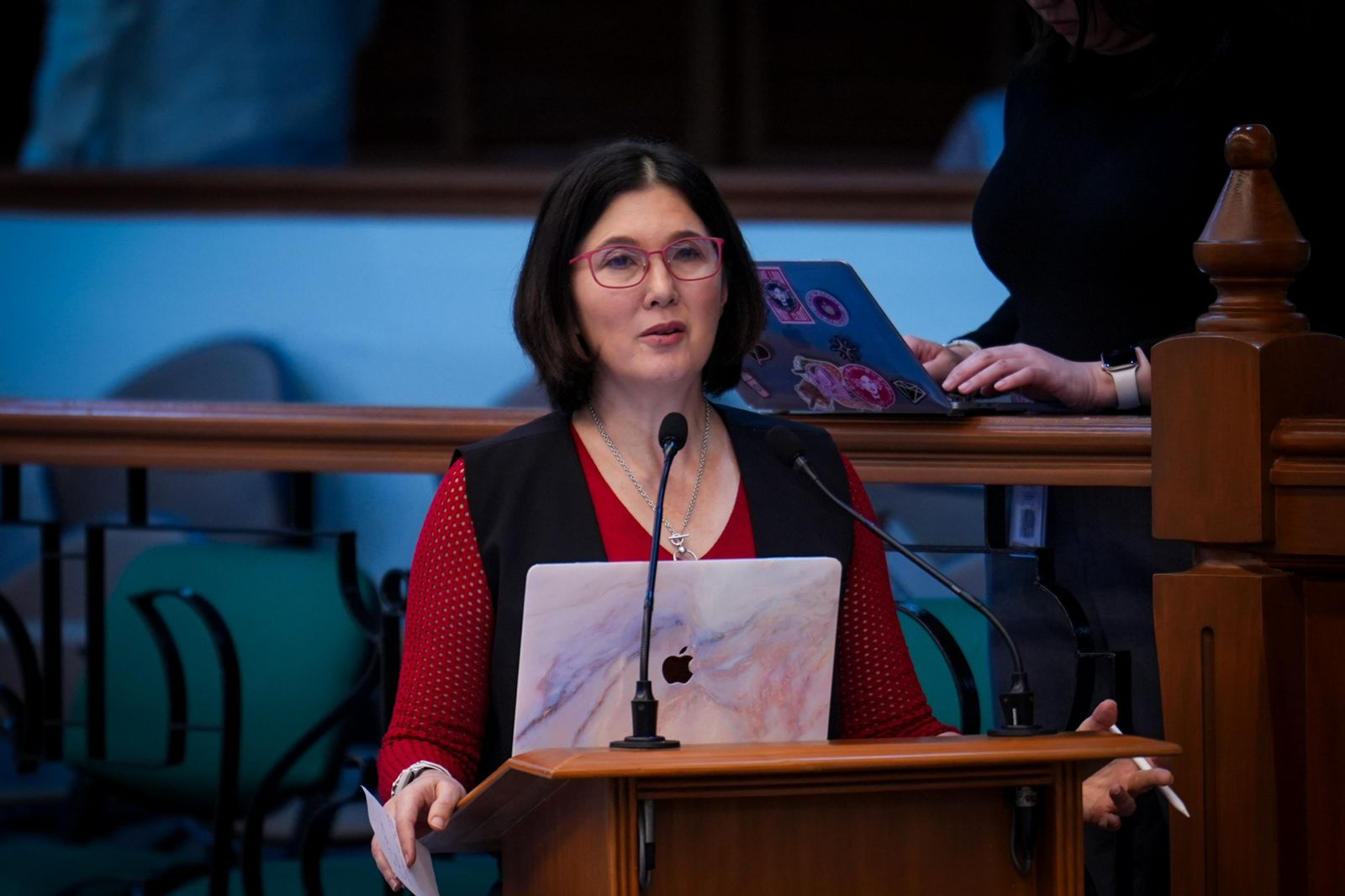
    Senator Pia S. Cayetano warned that reversing the Senate-approved reduction in the Department of Public Works and Highways (DPWH) budget without clear explanation risks undermining public trust. Speaking during Day 2 of the Bicameral Conference Committee deliberations on the 2026 budget, she stressed that “this is a trust issue”.

    Cayetano said the Senate cut followed the President’s directive, DPWH inputs, and the government’s anti-corruption stance, adding, “we cannot just say na ibabalik yung presyo.” She cautioned that “simply putting back that budget sends the wrong message,” noting that unfinished projects can be continued in phases. “Kung kinulang, e di next phase two,” she said. “Perishable ba yan?”

    Cayetano reiterated that she is “always willing to listen” and change her mind if presented with facts, but said it is difficult to reverse course when this was already clearly communicated to the public, as she appealed to DPWH to help by clearly explaining any policy shift.

  • PHOTO: Day 1 of the Budget Bicam

    PHOTO: Day 1 of the Budget Bicam

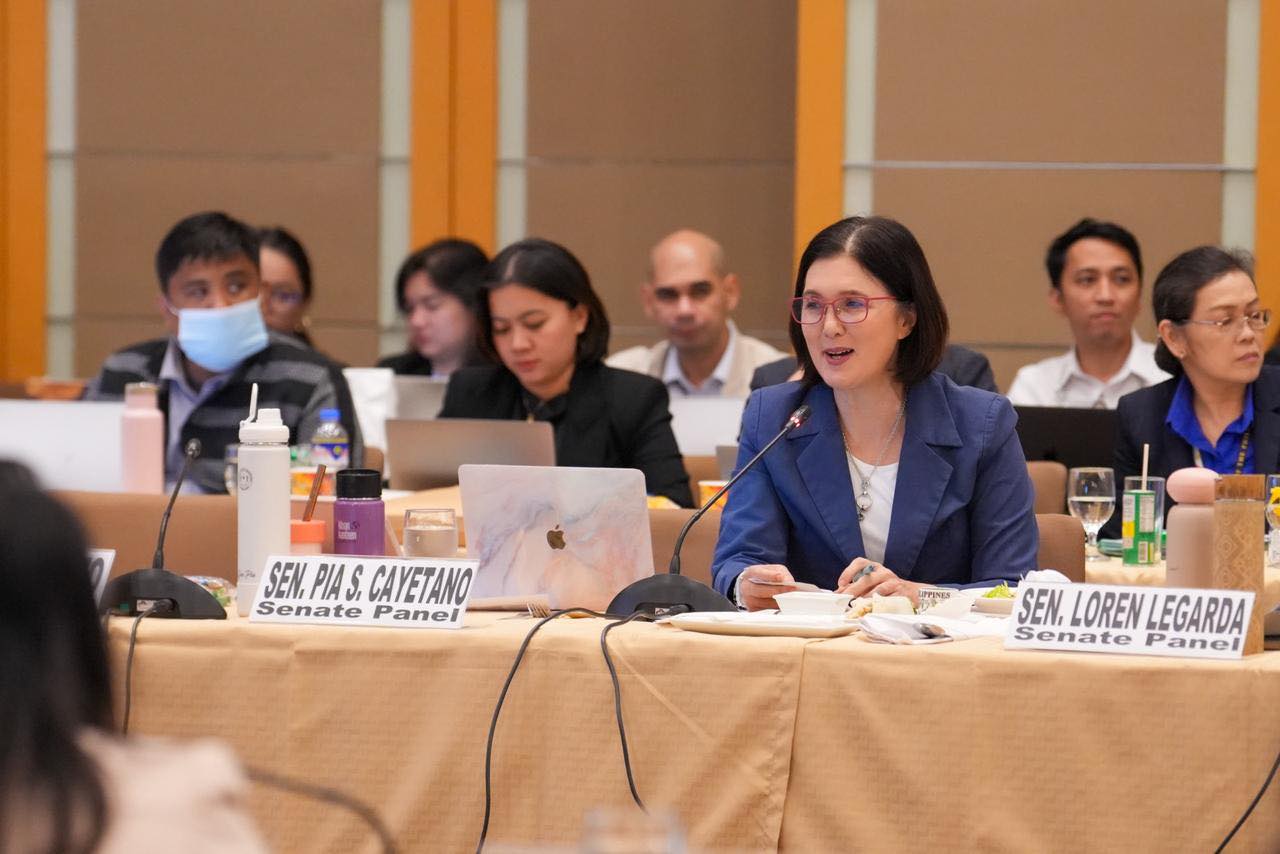
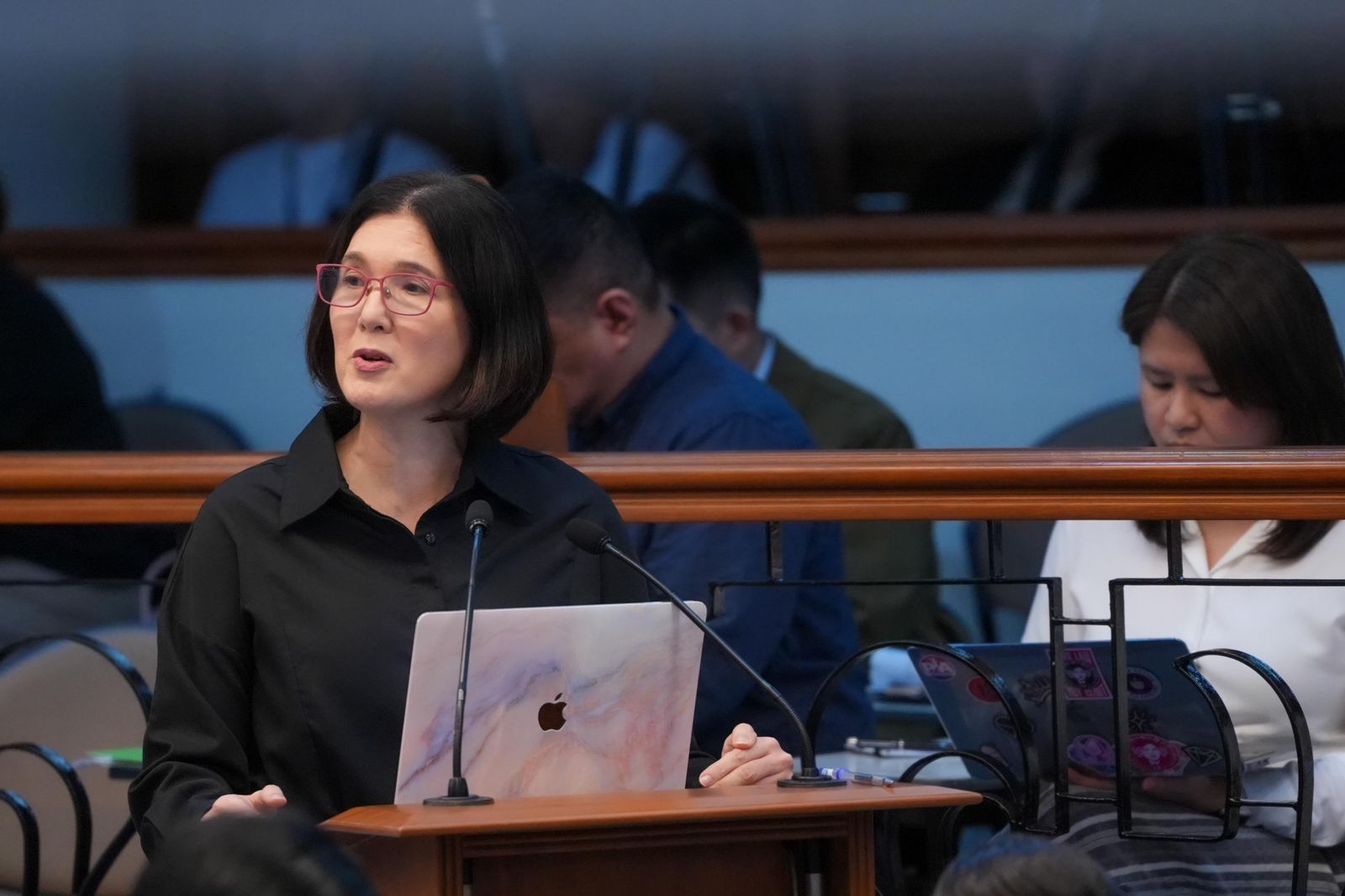
    During the Bicameral Conference Committee meeting on the 2026 national budget, Senator Pia S. Cayetano pressed the Department of Health over the lack of clear data on stalled and non-functional HFEP projects and reiterated the urgent release of legally earmarked PhilHealth funds. She also highlighted the nationwide shortage of health workers and flagged billions in unremitted sin tax, PCSO, and PAGCOR revenues, warning that these funding gaps continue to undermine healthcare delivery.

    On the discussion of farm-to-market roads, Cayetano raised reservations over the proposed expansion and transfer of implementation from the DPWH to the DA, cautioning that when agencies change direction, “we start small so that we have less errors,” adding that while she is “willing to give DA the benefit of the doubt,” she cannot support a large-scale rollout amid unresolved risks, saying, “I cannot stand to see corruption continue to happen.”

  • NEWS RELEASE: Zero-Balance Billing only possible with fully funded PhilHealth — Cayetano

    NEWS RELEASE: Zero-Balance Billing only possible with fully funded PhilHealth — Cayetano

    Senator Pia S. Cayetano stressed that the highly-publicized Zero-Balance Billing (ZBB) policy might just work as intended should the billions in legally earmarked PhilHealth funds be properly allocated to the agency.

    “If PhilHealth were given every peso intended for it, the promise of Zero-Balance Billing would not be limited to a few hospitals. It could be a real, functioning guarantee for every Filipino patient,” Cayetano said.

    Her statement follows the Supreme Court’s ruling on the illegal transfer of P60 billion in PhilHealth funds to the National Treasury in 2024. Explaining her reservations during the third reading of the 2026 GAA, Cayetano said, “This is not a matter of an unfunded law. This is earmarked. So saan napunta yun? What is clear is that the Sin Tax Reform Act of 2019 (RA 11346) earmarks the proceeds of the sin tax for Philhealth. If this is not delivered to Philhealth, I do not want this body to be complicit in this act.”

    The Senator said that while the Supreme Court’s ruling is a welcome correction, it also highlights a deeper problem: even with the ruling, much remains to be fixed both in the budget and in the way the budget is put together.

    During the 2026 budget deliberations, she presented the deficits in sin tax allocations earmarked for PhilHealth from 2023 to 2026, amounting to ₱129.96 billion:

    • 2023: ₱83.9B was earmarked, only ₱79B appeared in the GAA (₱4.9B deficit)
    • 2024: ₱79.01B was earmarked, only ₱40.28B made it to the GAA (₱38.73B deficit)
    • 2025: ₱69.81B was earmarked, but the bicameral conference committee removed the allocation entirely (₱69.81B deficit)
    • 2026: ₱69.78B is earmarked, but only ₱53.26B is in the NEP (₱16.52B potential deficit)

    Cayetano also pointed out that ₱106.95 billion in PCSO and PAGCOR revenues were legally intended for PhilHealth between 2019 and 2025, on top of the ₱60 billion covered by the Supreme Court ruling. “These gaps are not technicalities,” she said. “They are the reason ZBB has not become fully operational.”

    PhilHealth has estimated that it needs at least ₱147 billion more to subsidize indirect contributors and achieve ZBB coverage across DOH hospitals, specialty institutions, and LGU facilities.

    “We cannot celebrate the Supreme Court ruling and then continue underfunding PhilHealth in the very same budget cycle,” she said. “If we want Zero-Balance Billing to work, we must restore every peso legally intended for the health of our people — and fix the process that keeps taking those pesos away.”

  • PHOTO: Sen. Pia supports Proposed Philippine Geriatric Center

    PHOTO: Sen. Pia supports Proposed Philippine Geriatric Center

    Senator Pia S. Cayetano expressed her full support for the proposed Philippine Geriatric Center Act, affirming that “establishing a center that would recognize the importance of healthy aging is a good thing.” She conveyed her readiness to help strengthen the bill’s vision so that its objectives translate into meaningful care for seniors across the country.

    Drawing from international models such as the Dementia Village, Cayetano outlined the direction of her potential amendments, building on the bill’s mandate to train healthcare professionals, social workers, and volunteer organizations amid a severe shortage of geriatric specialists. She emphasized the need for a well-planned, state-of-the-art center supported by a “battalion of trained personnel,” along with compassionate features such as spaces where families can stay close to their elderly loved ones.

  • PHOTO: Sen. Pia explains vote on 3rd Reading of 2026 Budget

    PHOTO: Sen. Pia explains vote on 3rd Reading of 2026 Budget

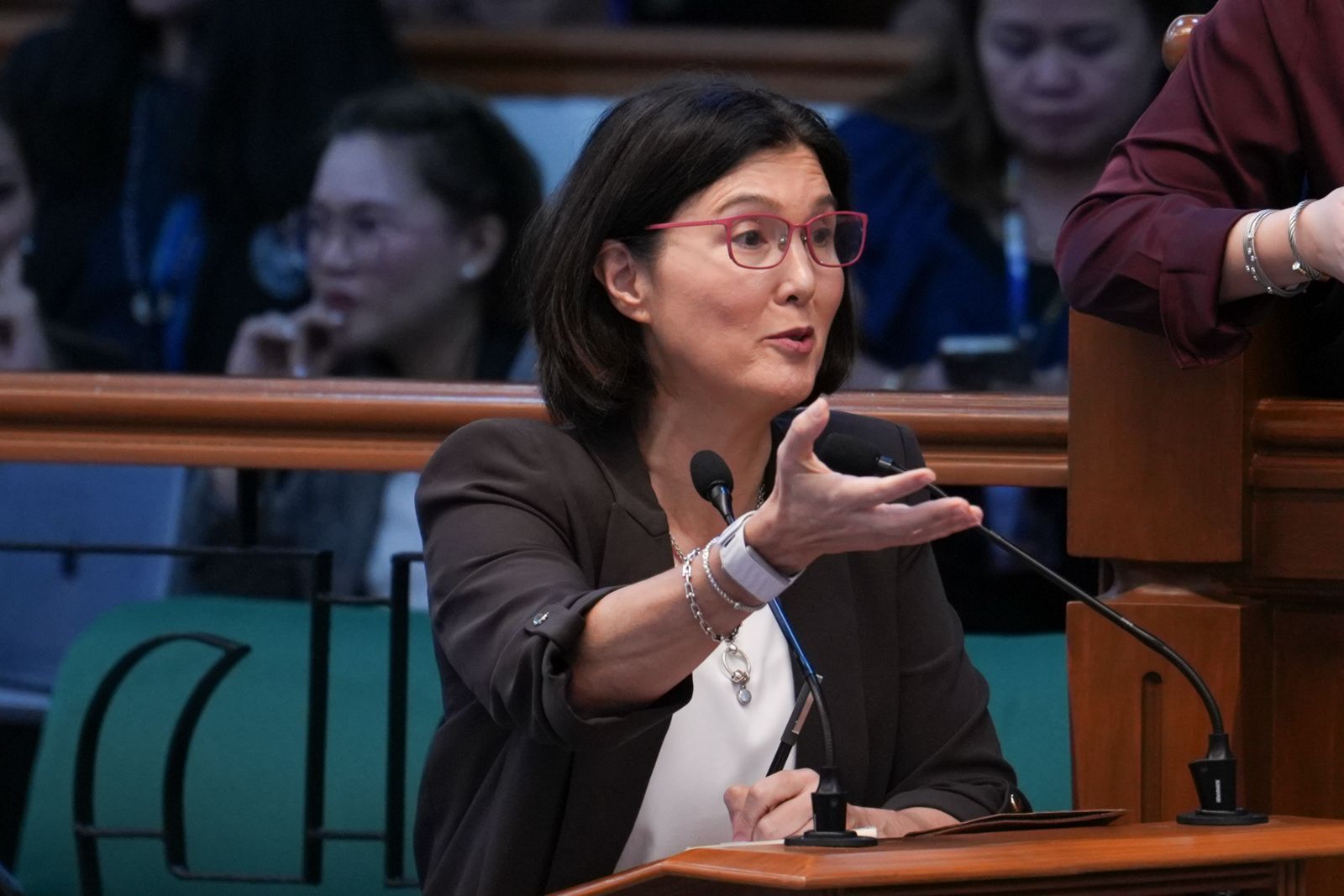
    Senator Pia S. Cayetano voted yes with reservations on the 2026 General Appropriations Act, warning that billions in legally earmarked PhilHealth funds from sin taxes, PCSO, and PAGCOR remain withheld, diverted, or unaccounted for. She said she is “not happy with the failure to provide the earmarked funds that should have been delivered to PhilHealth,” citing the P16.52-billion sin tax shortfall for 2026 as a clear legal violation: “This is not a matter of an unfunded law. This is earmarked. So saan napunta yun?” She added that withholding the full P69.78-billion allocation means “we are allowing the P16.52 billion deficit to be parked somewhere else… That is not allowed.”

    She also noted that from 2019 to 2025, “PhilHealth’s share is P106.95 billion. Zero ang na-remit,” and that the amounts listed in the 2023 and 2024 GAA were “never released,” reflecting “a concerted effort to disregard this law that we passed.”

    Cayetano urged strong action in the bicam, stressing that “this amount has no right to be sitting in another agency,” and cautioned that achieving Zero Balance Billing, especially in LGU hospitals, depends on releasing these funds because “dapat makagamit din sila ng PhilHealth zero balance billing. Kasi may pondo naman na hindi nire-release.”