Official Website of Philippine Senator Pia Cayetano

News

  • Pia pushes for sustainable cities, transportation

    A green, bikeable, and walkable Metro Manila? It can be done!

    Senator Pia S. Cayetano is pushing for two measures that she hopes would augur the transformation of Metro Manila and other urban centers in the country into sustainable cities and communities. 


    Cayetano’s Senate Bill No.65, the ‘Sustainable Cities and Communities Act,’ envisions urban centers and human settlements that are ‘inclusive, safe, resilient, and sustainable,’ in line with the country’s commitments under Goal 11 of the United Nations Sustainable Development Goals (SDGs).  

    The bill tasks local governments to ensure public access to social services, preferential use of renewable resources, efficient waste management systems, as well as reliable mass transport, among others.

    Under the measure, the National Economic and Development Authority (NEDA) shall set targets based on key indicators to determine whether a city or community has fully transitioned into a sustainable city or community.

    The NEDA indicators shall measure how local governments units (LGUs) are managing urban population living in slums, public transportation access, sustainable urbanization rate (ratio of land utilization to population growth rate), and urban planning. 

    The targets would also factor in the performance of local governments with respect to cultural heritage protection, disaster preparedness, pollution control, and solid waste management. 

    The bill assigns the Department of interior and Local Government to provide technical assistance to LGUs, while NEDA would come up with an incentive system for local governments that are able to meet their sustainable development targets.

    On the other hand, Cayetano’s Senate Bill No.66, or the ‘Sustainable Transportation Act,’ seeks to promote mobility options to serve the people’s changing needs, such as walking, biking, and efficient mass transportation. 

    The bill pushes for sustainable and alternative modes of transport, not just to reduce greenhouse gas emissions, but also to cut time and travel costs, and to promote an active lifestyle among citizens. 

    It mandates the Department of Transportation (DOTr) to come up with a Sustainable Transport Action Plan that shall lay down the roadmap for national and local transportation systems to be adhered to in all levels throughout the country. 

    Some highlights of the Sustainable Transport Action Plan are as follows: 

    -Installation of walkways;

    – Designation of bike lanes and provision of bike racks and parking spaces;

    -Public transportation as primary mobility option to the general public;

    – Establishment of a ferry system; 

    – Commissioning of a bus rapid transit system; and

    – Travel demand management programs (which includes promotion of car pooling and telecommuting programs). 

    Known as a biker and fitness enthusiast, Cayetano said it is high time to revisit our way of thinking and lifestyle in order to safeguard people’s health and the environment. 

    She cited the successful rehabilitation of Boracay and current efforts to clean up urban sidewalks, waterways, and public places of obstructions by newly elected mayors of Metro Manila as encouraging signs that urban renewal is possible.

    “We need political will at the local level to enforce laws and ordinances to put our cities in order, but it’s also the task of government to set an overall vision to achieve sustainable cities and communities. And so we hope to provide that vision with these two measures,” Cayetano concluded. #

    Senator Pia S. Cayetano at the bike lane along Laguna Lake Highway (C6) in Taguig City: It’s the task of government to set an overall vision to achieve sustainable development.
  • Full implementation of RPRH Law pushed on World Population Day

    The full and intensified implementation of the Responsible Parenthood and Reproductive Health Law (RPRH Law) is necessary to ‘empower’ the Filipino population and help bring down poverty levels in the country.

    This was emphasized by Senator Pia S. Cayetano on Thursday, World Population Day (July 11), a global observation meant to raise awareness on population issues and finding solutions related to population growth.    

    The principal sponsor of the RPRH Law, Cayetano said previous delays in enforcing the landmark measure have hampered government efforts to maximize gains from economic development and effectively redistributing available resources to benefit the population. 

    But she noted how the situation has changed under the administration of President Rodrigo Duterte, which has placed the National Program on Population and Family Planning (NPPFP) as a major component of its poverty reduction strategy. 

    First introduced through the RPRH Law, the NPPFP seeks to avert unwanted and unplanned pregnancies by giving Filipinos universal access to reproductive health and family planning information, devices, and services. The NPPFP also aims to empower couples and women to attain their ideal number of children through responsible parenthood.   

    “From his very first State of the Nation Address, President Duterte has indicated strong political will to fully carry out the RPRH Law as part of his administration’s socio-economic reforms to address poverty,” Cayetano pointed out.

    “The full and intensified implementation of the RPRH Law, in partnership with sound economic policies and effective management of our human resources would be the key drivers in attaining sustainable and inclusive growth in the second half of President Duterte’s term,” she added.  

    Cayetano noted that the President has backed up his first SONA by directing all government agencies to implement the RPRH Law to attain zero unmet need for family planning, and by providing sufficient budget to attain NPPFP’s goals.

    The Philippine population is expected to hit 109 million by the end of 2019, according to projections of the Commission of Population. The country currently has the highest fertility rate in Southeast Asia at 2.7 per woman, and has one of the region’s fastest-growing populations, with an annual average growth rate of 1.6 percent. 

    On the other hand, the National Economic and Development Authority (NEDA) is targeting to increase modern contraceptive rate to 65 percent and lower fertility rate to 2.1 average children per woman by 2022. 

    Under the Philippine Development Plan 2017-2022, NEDA seeks to reap economic benefits from a young, healthy, well-educated and highly skilled working-age population, and ultimately reduce poverty incidence to 14 percent by 2022 from 21.6 percent in 2015. #

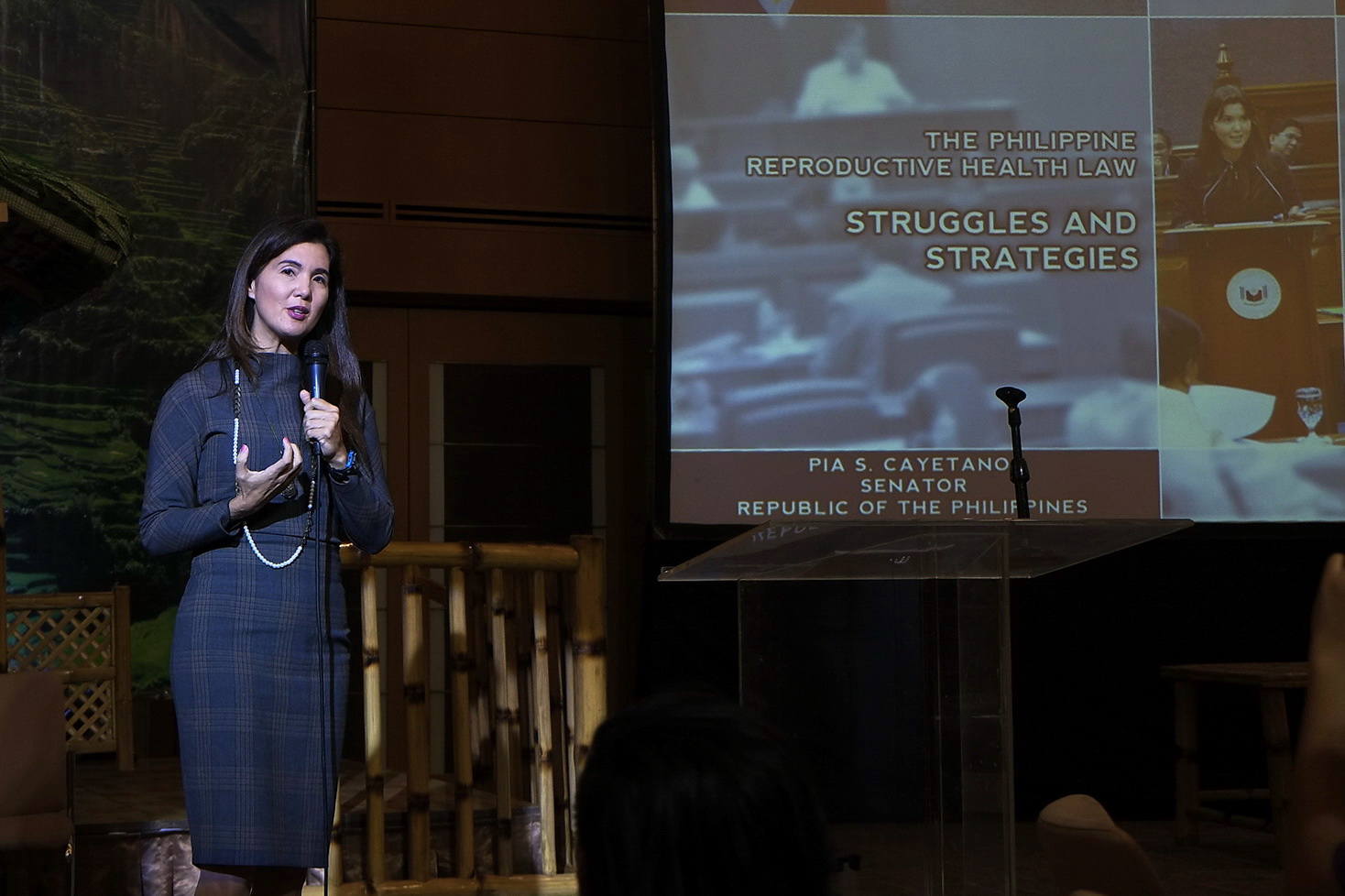
    File photo: In a forum, Senator Pia Cayetano recalls the struggle that advocates went through to pass the Responsible Parenthood and Reproductive Health Act.

  • Bill filed to accelerate health infrastructure program

    As the Philippine economy continues to expand, so does the demand for better public health services from the growing urban and rural population. To meet this increasing need, Senator Pia S. Cayetano has filed the “Priority Health Infrastructure Act.”

    Known also as the ‘Build, Build, Build for Health’ Bill, the measure aims to create a comprehensive and sustainable approach to health infrastructure over the next five years. 

    The proposal takes off from the government’s ‘Build, Build, Build’ Program for public works and is anchored on the Philippine Development Plan (PDP) 2017-2022 to accelerate human capital development through quality health care services. 

    The measure is also expected to put the Philippines on track in attaining its target to provide essential health care for all by 2030 under the United Nations Sustainable Development Goals (SDGs). 

    The Department of Health (DOH) shall be assigned to determine priority health infrastructure needs of government hospitals all over the country to be integrated in a five-year plan. An annual budget of P10 billion is allocated for the improvement of health facilities in priority areas.

    As the government has made considerable progress to improve health care in the past years, most notably with the passage of the Universal Health Care Act, serious challenges remain in the absorptive capacity of the nation’s public health system, Cayetano stressed. Twice as many households seek health care in public health facilities compared to private health facilities.

    “To most effectively protect and promote the health of the population, the nation’s entire governmental public health infrastructure must be revitalized and strengthened. This will require political and financial support over time,” Cayetano said on the necessity of the bill’s passage.

    For the 18th Congress, the senator has filed related measures on health care, including the bill establishing Specialty Centers in DOH Hospitals and Medical Centers, as well as the bill mandating the appointment of at least one midwife for every barangay.

    The former chairperson of the Senate Committee on Health and Demography, Cayetano led the passage of several landmark laws to enhance public health services. 

    Among these are the Mental Health Act (RA 11036), the National Health Insurance Act (RA 10606), the Philippine National Health Research System Act (RA 10532), the Mandatory Infants and Children Health Immunization Act (RA 10512), and the Responsible Parenthood and Reproductive Health Act (RA 10354). #

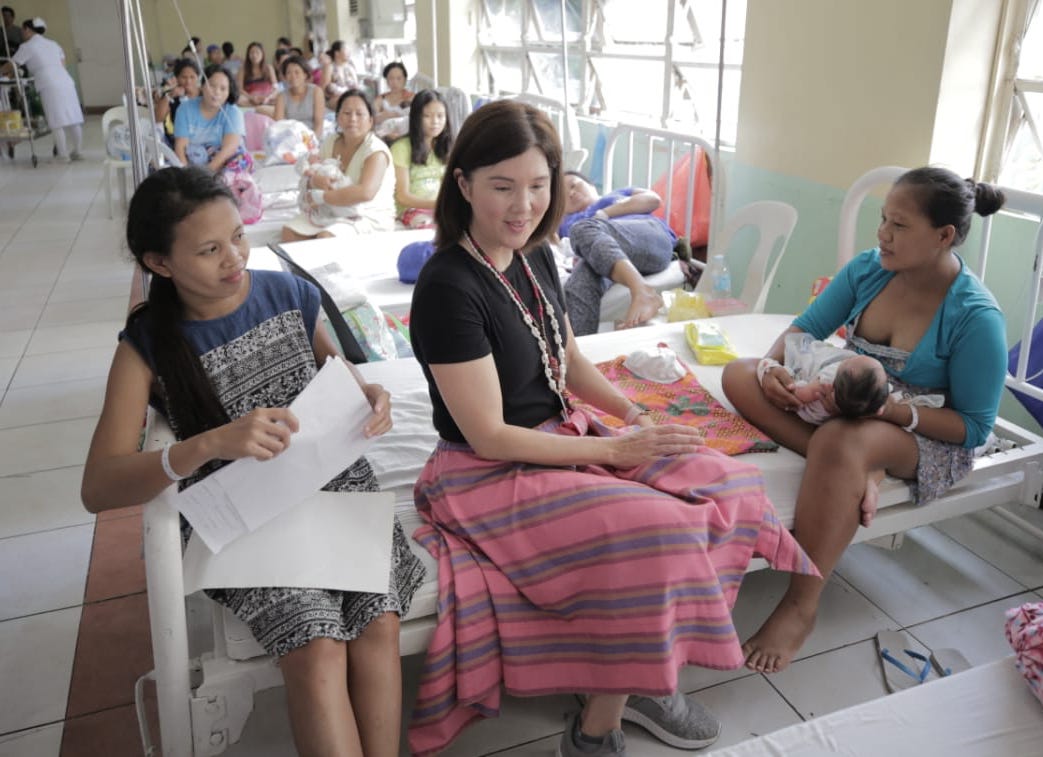
    File photo: Then Deputy Speaker Pia Cayetano visits mothers at the Maternity Ward of Vicente Sotto Memorial Medical Center in Cebu. (February 2019)
  • Second batch of bills filed to advance PH development goals

    Senator Pia S. Cayetano on Monday (July 8) filed ten more bills in the Senate to support the Duterte administration’s efforts in attaining the country’s sustainable development goals. 

    The returning senator said her second batch of bills reinforces her vision of helping the country meet its targets in line with the Philippine Development Plan (PDP) 2017-2022 and the United Nations’ (UN) Sustainable Development Goals (SDGs).

    In pursuit of Goal 3 of the SDGs, which is to ensure healthy lives and promote the wellbeing for all, Cayetano is pushing for programs to provide better healthcare services and facilities to Filipinos, particularly on reproductive, maternal, newborn, and child health. 

    These include three bills seeking to provide one midwife in every barangay; establish specialty centers in government hospitals and medical centers; and the promotion of Folic Acid food fortification and supplementation.

    Furthermore, the senator filed measures aimed at upholding the country’s commitment to Goal 13 of the SDGs, which is to implement policies towards climate change mitigation.

    Among these is the bill establishing the Department of Disaster Resilience, which will become the country’s primary agency in charge of responding to disasters and mitigating its impacts.

    Other pro-environmental bills filed by Cayetano include the proposed ‘Sustainable Forest Management Act,’ which provides for the conservation of the country’s forest lands and resources; and the ‘Bicycle Act of 2019,’ which proposes to recognize bicycles as an alternative and sustainable mode of transportation.

    Apart from these, Cayetano is pushing for the ‘Tulong Puhunan’ bill to institutionalize nationwide microfinance programs for the development of Micro and Small Enterprises (MSEs). This is in line with Goal 8 of the SDGs – to promote sustained, inclusive, and sustainable economic growth and decent work for all. The measure is also inspired by the success of the Presyo Trabaho Kita (PTK) program, a brainchild of the senator’s brother, Taguig Representative Alan Cayetano, which helps provide seed capital to people’s organizations across different sectors nationwide. 

    “Let this be a testament of our continued commitment to achieve the collective aspirations of Filipinos, as embodied in the government’s ‘Ambisyon Natin 2040’ vision, where every family enjoys ‘Matatag, Maginhawa, at Panatag na Buhay,’” the senator stressed.

    Cayetano likewise filed pro-youth and -family measures during the second week, including the Magna Carta of Student-Athletes; Increasing the Maximum Value of the Family Home; as well as an Act Instituting Absolute Divorce and Dissolution of Marriage in the Philippines.

    “My objective is to keep championing the rights and welfare of every member of the family. This has been my fight ever since. Hopefully, with the help of our colleagues in Congress, our legislative action plans can help us attain our shared vision for a better country,” the senator concluded. #

  • Pia files ‘Build, Build, Build for Education’ Bill

    Following the economy’s gains from the government’s accelerated infrastructure program, also known as ‘Build, Build, Build,’ Senator Pia S. Cayetano is pushing for a similar initiative to fast-track the progress of quality tertiary education in the country. 

    Cayetano has filed the Priority Infrastructure for Public Higher Education Institutions Act, which she called the ‘Build, Build, Build’ Program for Education Bill.

    The yet-to-be-numbered bill maps out a five-year priority infrastructure plan, with a fixed budget of P10 billion, for the improvement of facilities in State Universities and Colleges (SUCs). 

    The Commission on Higher Education (CHED) will be tasked to identify the priority infrastructure projects based on the needs of the 112 SUCs across the country.

    Cayetano said the government has made notable strides towards giving Filipinos better access to education, especially with the passage the Universal Access to Quality Tertiary Education Act that grants free tuition to students in SUCs.

    However, she lamented that while students have been accorded free tuition, a great number of SUCs in the country still “grieve for educational infrastructure.” 

    “Thus, there is a need to enact a law ensuring that the facilities made available to students are well-equipped and of high quality,” said Cayetano. 

    “Classrooms remain overcrowded and hallways are still being used as classrooms in many SUCs. There is also a shortage of Science and Computer laboratories. These conditions are not optimal for learning and likewise for teaching. Poor educational infrastructure impedes the intellectual growth and health of the youth,” she added. 

    Cayetano said the bill was a fulfillment of her campaign promise to push for a measure that would allow Filipino graduates to be more globally competitive and job-ready. 

    The bill is expected to boost the country’s efforts to ensure quality higher learning and upgrade its education facilities by 2030 under its Sustainable Development Goals. It also seeks to help the government meet its objectives under the Philippine Development Plan 2017-2022, particularly on improving the quality of higher and technical education for global competitiveness. 

    Other education measures that the senator has filed so far in the 18th Congress include the Inclusive Education for Children and Youth with Special Needs Bill, Educational Roadmap Bill, as well as the measure providing for additional support and compensation for educators in Basic Education. 

    The former chairperson of the Senate Education Committee, Cayetano authored laws in previous Congresses promoting the welfare of Filipino students, namely the Unified Student Financial Assistance System for Tertiary Education or Unifast Act (Republic Act 10687), Iskolar ng Bayan Act (Republic Act 10648), Ladderized Education Act (RA 10647), Open Distance Learning Act (RA 10650), and Open High School System Act (RA 10665). #

    File photo: Then Deputy Speaker Pia S. Cayetano (in blue) sits down with students of Pangasinan Sate University in San Carlos City.
  • Pia files first 10 bills in support of PH development goals

    Returning senator Pia S. Cayetano has filed her first 10 bills in the Senate with the aim of fulfilling her campaign promise to champion legislation that will help achieve the country’s development goals. 

    Her proposed measures, Cayetano stressed, are anchored on the government’s Philippine Development Plan (PDP) 2017-2022, as well as the Sustainable Development Goals (SDGs) adopted by the United Nations (UN) Member-States, including the Philippines, in 2015.

    The PDP 2017-2022 is the first medium-term plan launched by the National Economic and Development Authority (NEDA) under the Duterte administration, leading to a vision known as “AmBisyon Natin 2040,” where Filipino families are seen to enjoy a “strongly rooted, comfortable, and secure life” in 25 years.

    The SDGs, meanwhile, are a collection of 17 global goals set by the UN General Assembly, with strategies geared towards improving health and education, reducing inequality, spurring economic growth, and addressing climate change.
    In line with these goals, Cayetano filed her first batch of bills in the Senate and plans to file more measures in the coming weeks to address challenges hindering sustainable and inclusive growth for the country. 

    Furthermore, she vowed to continue focusing on her long-time advocacies as a legislator, including education, health, women and family welfare, and sustainable communities.

    Among Cayetano’s priority measures are:

    1. Alternative Child Care Code of the Philippines 

    2. Educational Roadmap Act 

    3. Priority Health Infrastructure Act (Build, Build, Build for Health)

    4. Priority Infrastructure for Public Higher Education Institutions Act (Build, Build, Build for Education)

    5. Sustainable Cities and Communities Act

    6. Sustainable Transportation Act

    7. Act Recognizing the Foreign Decree of Termination of Marriage

    8. Amendments to the Family Code of the Philippines (to ensure the equality of men and women under the laws of marriage and family relations) 

    9. Inclusive Education for Children and Youth with Special Needs Act

    10. Act Providing for Additional Support and Compensation for Educators in Basic Education (Teachers salary increase)


    “We already have a set of goals that we envision for future generations of Filipinos. What we need is a comprehensive action plan to ensure that our goals will be met,” Cayetano said.

    “For my part, I will continue what I started since my first term as a legislator and push for more laws to empower Filipinos through education, proper healthcare services, children and family welfare policies, and sustainable development,” the senator concluded.#

  • Pia grateful to President Duterte for support

    A few days before the upcoming mid-term elections on May 13, senatorial candidate Pia S. Cayetano expressed her gratitude to President Rodrigo Roa Duterte for his show of support for her bid to return to the Senate. 

    “Napakahalaga ng endorsement ng ating Pangulo. It has a great impact and it is very personal to me,” the congresswoman said in a radio interview in Davao City on Thursday (May 9).

    Cayetano shared that her close relationship with the President dates back to the first time she ran for Senate in 2003, during which she sought the support of the then Davao City Mayor, who was also friends with her late father, former Senator Rene Cayetano.

    “[President Duterte] had always supported me as a senator. I also used to visit him in Davao to seek his advice on relevant issues, and he would share with me his perspective as a mayor,” Cayetano noted. 

    “Kaya tuwing sinasabi niya na maayos ang trabaho ko, it really means a lot to me dahil alam kong alam niya ang aking trabaho,” she added.
    President Duterte had expressed his support for Cayetano’s senatorial bid on several occasions, stressing that the lady lawmaker has legislated “so many good things for the Filipino people.”

    He also said that it was Cayetano who asked him to sign into law the 105-Day Expanded Maternity Leave Act for the benefit of working mothers. Cayetano was among the proponents of the bill in Congress.

    “The President knows that I am happy with the enactment of this landmark measure. I am very grateful that he appreciates my work for Filipino women,” the Taguig representative said.

    “If given the chance, I will continue to look for more solutions to address the concerns of Filipino families throughout the country,” Cayetano concluded. #

    Senatorial aspirant Pia S. Cayetano thanking President Rodrigo Roa Duterte for signing into law the 105-Day Expanded Maternity Leave Act. #
  • Alternative to 5-6: Pia backs microlending program for informal sector

    Nacionalista Party Senatorial aspirant Pia S. Cayetano is proposing to institutionalize a nationwide microlending program that would give poor Filipinos better access to capital to start or sustain their own livelihood.

    Cayetano was in the province of Albay on Monday (May 6), where she attended the Bicol Agri Fiesta 2019 in Camalig, Albay.

    In an interview with reporters there, the congresswoman said she wants to promote the country’s agriculture sector by providing agri-workers with better assistance and more economic opportunities.

    Together with her brother, former Foreign Affairs Secretary Alan Peter Cayetano, Pia launched the Presyo, Trabaho, Kita (PTK) program in 2013, which provides seed capital for micro businesses and members of the informal sector. 

    The microlending project has so far granted low-interest loans to 218 organizations of farmers, fishermen, market vendors, PUV drivers, and small-scale workers, including three organizations in Albay.

    Citing the success of PTK, Cayetano said she wants to institutionalize a similar microfinance program nationwide, which will assist various cooperatives and provide low-interest loans to their members.

    “The PTK program is our way of helping more and more Filipinos become self-sufficient,” she stressed.

    “Nakita namin ang tagumpay ng mga beneficiaries namin sa PTK kaya balak pa namin silang dagdagan, at nag-iisip din kami ng paraan para ma-institutionalize ito,” she added.

    The senatorial candidate further noted that the program could be one way to fulfill the administration’s goal of eradicating usurious loan systems rampant in the informal sector, such as the ‘5-6’ money lending scheme.

    “Sa totoo lang, napakahirap para sa ordinaryong Pilipino na umutang sa bangko. Ang oras na para sana sa kabuhayan nila ay nabubuhos pa sa pagpunta sa bangko at pag-ayos ng requirements. Sa PTK, maaari na silang dumeretso sa kanilang kooperatiba upang makakuha ng pondo at di kumapit sa sistemang 5-6,” Cayetano concluded.#

    Senatoriable Pia S. Cayetano visits market vendors and beneficiaries of the Presyo, Trabaho, Kita (PTK) program at the Legazpi City Public Market in the province of Albay on Monday (May 6).PTK
  • Expanded Maternity Leave best Labor Day gift for working moms

    Senatorial aspirant Pia S. Cayetano on Wednesday (May 1) welcomed the full implementation of the 105-Day Expanded Maternity Leave (EML) Law, following the signing of the measure’s Implementing Rules and Regulations (IRR) on May 1, Labor Day. 

    The principal author and sponsor of Republic Act No. 11210 or the EML Law, Cayetano attended the Ceremonial Signing of the IRR in San Fernando, Pampanga, where she talked about the vital role of women as mothers and as members of the country’s workforce.

    “Women play a dual role in our society, hindi lang trabaho sa opisina kundi trabaho sa bahay at pag-aalaga ng pamilya. Therefore, being a mother is something that we need to compensate,” the congresswoman stressed.

    The ceremonial signing was part of the 117th Labor Day Celebration spearheaded by the Department of Labor and Employment (DOLE), with the theme “Pagpupugay sa Manggagawang Pilipino.”

    “Magandang balita ito dahil ibig sabihin ay tuloy na tuloy na and ready to be implemented ang Expanded Maternity Leave Law. This is a great gift to working mothers this Labor Day,” Cayetano said.

    On the other hand, the Taguig representative clarified that the law’s effectivity already started as early as March, 15 days following its publication in the Official Gazette.

    “The good news is, hindi lang May 1 ang effectivity kung hindi noong March pa. Kaya sa lahat po ng mga nanay na nanganak simula noon, 105 days na ang maternity leave credits niyo,” Cayetano explained.

    A known women’s advocate, Cayetano had been fighting for the law’s passage since her term in the Senate. 

    She believes that working mothers should be allowed more than 60 days to recover from childbirth and also to take care of their newborn babies.

    “Women who are given enough time to take care of their families are also more likely to be productive at work. Kaya ibigay na natin sa mga working mothers ang 105 days maternity leave para pagbalik nila ay mas makapag-focus sila sa trabaho,” she noted.#

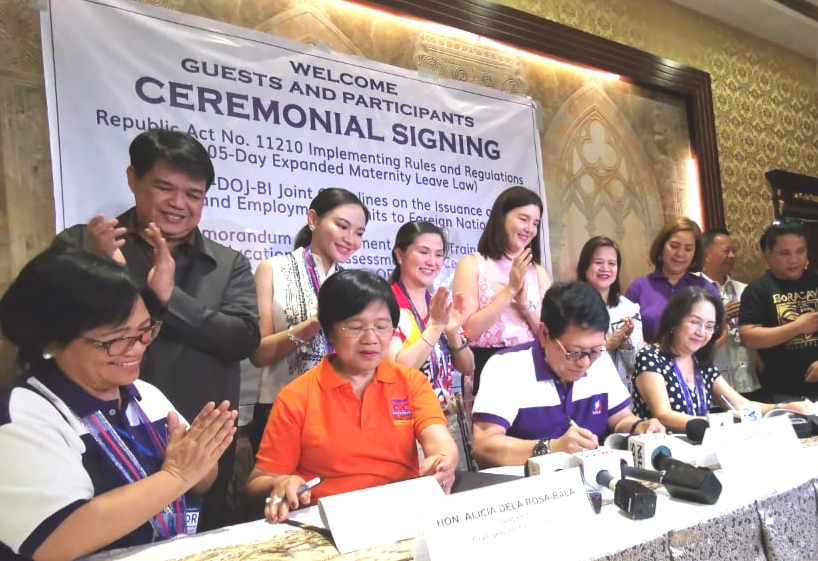
    Senatoriable Pia S. Cayetano (in pink) applauds the signing of the Implementing Rules and Regulations (IRR) of the 105-Day Expanded Maternity Leave Law, of which she was the principal author and sponsor.
  • Let’s make our graduates job-ready – Pia

    In line with this year’s celebration of Labor Day, Senatorial aspirant Pia S. Cayetano vowed to continue fighting for measures that will improve the quality of education in the country and make Filipino graduates job-ready. 

    The congresswoman was in San Fernando Pampanga on Wednesday (May 1) to attend the 117th Labor Day Celebration spearheaded by the Department of Labor and Employment (DOLE).

    During her speech, Cayetano stressed the importance of allocating more budget for the improvement of the Philippine education system in order to prepare young Filipinos to be competitive members of the workforce.

    “I will continue to fight for us to put in more budget for education because the demands that will be put on our labor force will be very high,” she said, particularly stressing Central Luzon’s great potential to be a center of economic growth in the country, owing to the region’s continued infrastructure developments.

    On this note, Cayetano said the government and the private sector should work together to ensure that the youth are ready to take on the challenge of meeting the demands of booming industries.

    “We already have free tertiary education. But the question is, how well does our quality of education compare to our Asian neighbors,” she noted.

    “That is where my education advocacy comes in, because free education alone is not enough. It is our collective responsibility to help young people get the opportunities that they deserve,” she added.

    The Taguig representative urged the Department of Education (DepEd), Technical Education and Skills Development Authority (TESDA), local government units (LGUs), and other concerned agencies to make sure that their Senior High School (SHS) Programs are really training students to be hireable.

    She also pushed for the proper implementation of Republic Act 10687 or the Unified Student Financial Assistance System for Tertiary Education (UniFAST) Act, of which she was an author.

    “I am delighted that one of my laws has already been implemented, which is the UniFAST law. Through this, government can give up to P60,000 worth of financial assistance to poor and deserving students,” Cayetano said.

    A known advocate of the youth sector in Congress, Cayetano authored more laws promoting the welfare of Filipino students, including the Iskolar ng Bayan Act (Republic Act 10648), Ladderized Education Act (RA 10647), Open Distance Learning Act (RA 10650), and Open High School System Act (RA 10665), among others. #

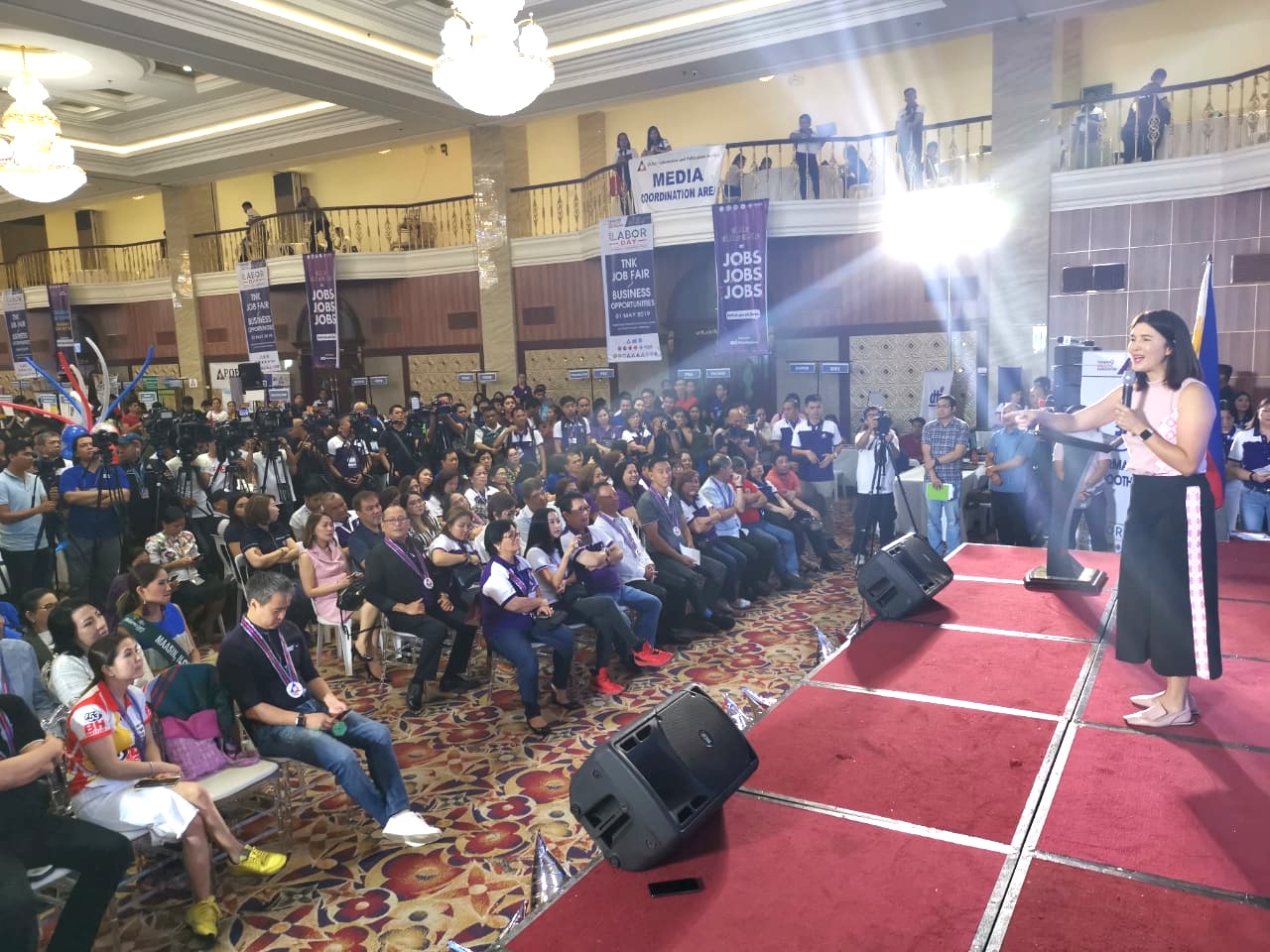
    Senatoriable Pia S. Cayetano speaks before guests and officials present at the 117th Labor Day Celebration spearheaded by the Department of Labor and Employment (DOLE), held in San Fernando, Pampanga on Wednesday (May 1).