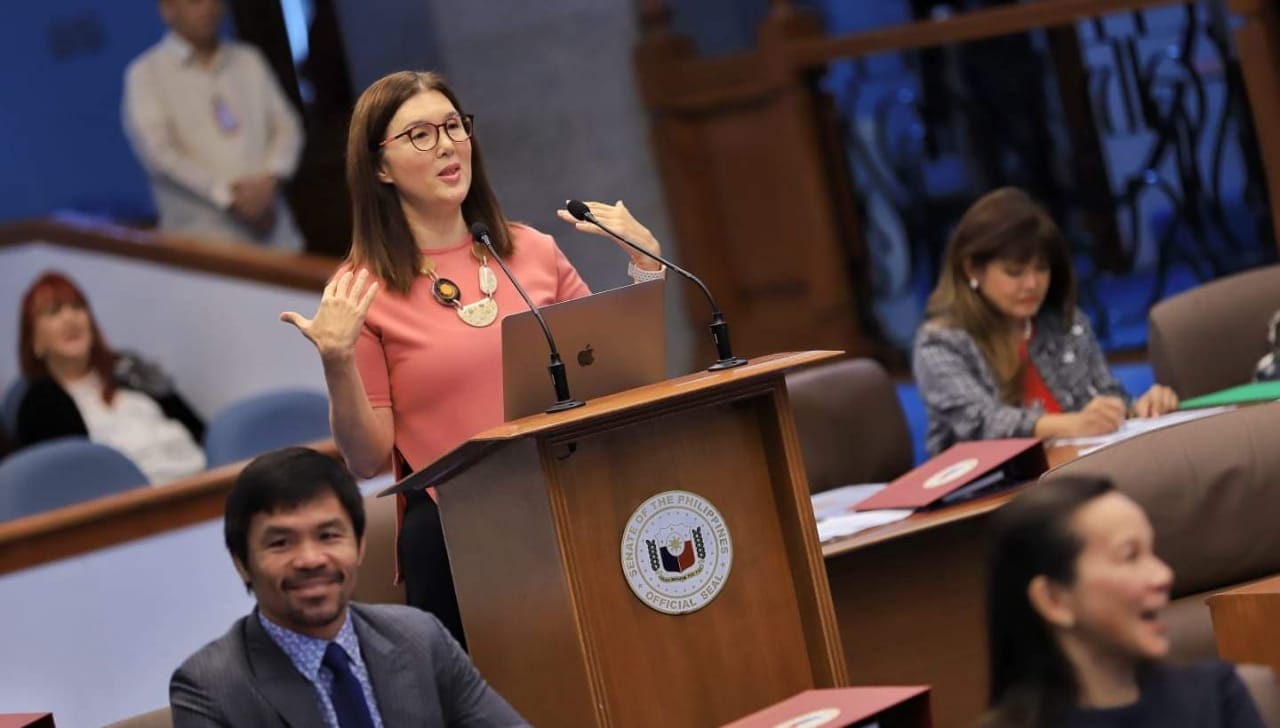
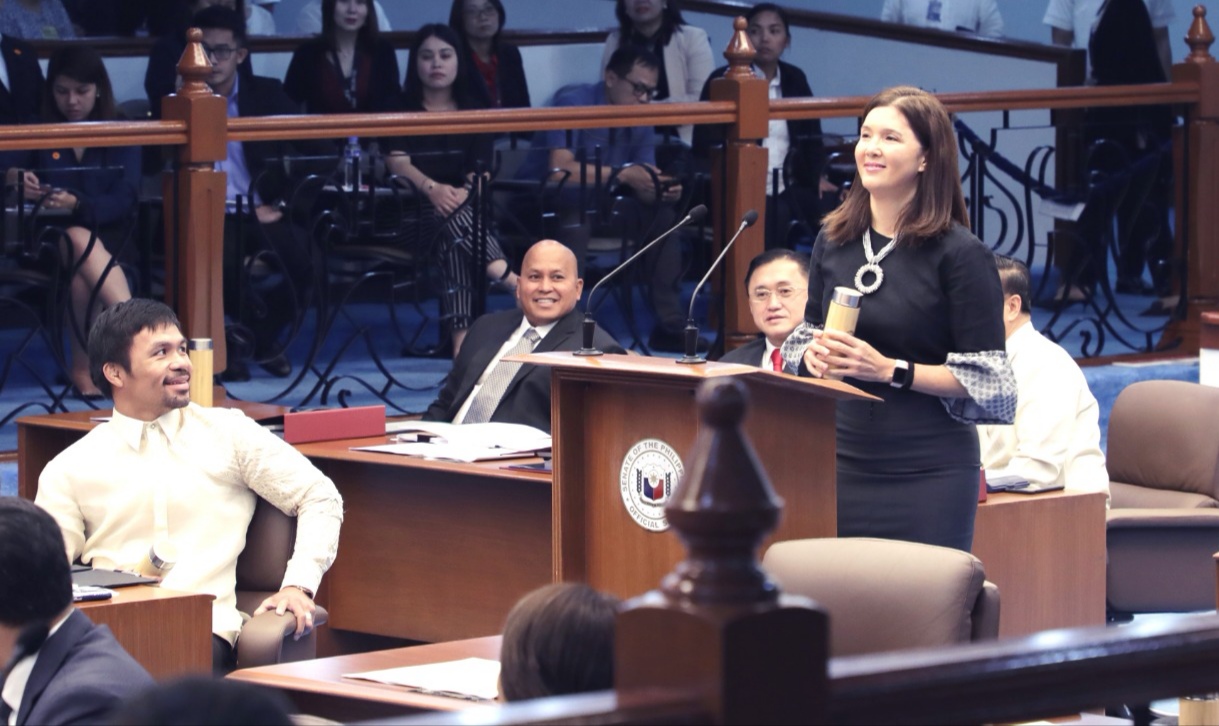
Senator Pia S. Cayetano on Wednesday (August 7) urged the health department to take advantage of available resources to strengthen its information drive on the importance of government’s expanded program on immunization (EPI).
The senator said this during the first public hearing of the Senate Committee on Health and Demography, and amid the Department of Health’s (DOH) declaration of a national dengue epidemic in the country.
Cayetano lamented that the recent outbreak of diseases in the country was caused by the decline in people’s confidence in vaccines.
“I had the opportunity to talk to barangay health workers all over the country. And the biggest problem [they mentioned] is that the mothers were scared. [They] refused to have their children vaccinated with measles and many other vaccines because of the [Dengvaxia scare],” she said.
The principal author and sponsor of the Mandatory Infants and Children Immunization Act (RA 10152), Cayetano stressed the need to properly inform Filipino families about the importance of vaccination in saving their children’s lives.
To help restore people’s trust in vaccines, she urged the DOH and other concerned agencies to find more creative and aggressive ways in promoting the government’s immunization program.
“We have a budget through the Sin Tax Reform Law (RA 10351), which we passed years ago for health promotion. I may not have seen it, but I would like to see really exciting and engaging infomercials, cartoons, or even dramas, that would help mothers appreciate the importance of vaccination,” Cayetano said.
“We passed the law precisely because we wanted to ensure that the budget moving forward would include [sufficient funds] for vaccinations… The budget for health promotions is there, let’s really make this engaging,” she added.
‘Improving children’s health increases chances vs dengue, other ailments’
Meanwhile, Cayetano said another critical part of preventing outbreaks like dengue fever in the country is for the government to improve Filipino children’s health and nutrition.
“At the end of the day it is the immune system [that needs to be strong]. The first thing we can do is to make sure our children are healthy enough,” the senator said.
The DOH pointed out during the committee hearing that one in three Filipino children remains stunted. The department said this figure has not improved in the last 15 years.
“To bring up the level of health of every child is the first thing we can do to help them fight the [dengue] battle. That is our long-term solution. We can’t wipe out dengue in a day or in a year. But we can make our children healthier with more resources,” Cayetano stressed.
The senator then called for a strengthened implementation of the government’s programs on children’s health and nutrition, which she said also forms part of the country’s commitment to the United Nations’ Sustainable Development Goal to ensure healthy lives and promote well-being for all.
The DOH for its part reminded the public to follow the “4S strategy” against dengue, which stands for “search and destroy” mosquito-breeding sites, “self-protection measures” like wearing covered clothes and using mosquito repellent, “seek early consultation”, and “support fogging/spraying” in hotspot areas. #
Senator Pia Cayetano: We can’t wipe out dengue in a day or in a year. But we can protect our children with more resources poured into health promotion.
In keeping up with this year’s Breastfeeding Awareness Month celebration, Senator Pia S. Cayetano called on concerned government agencies to ensure the proper implementation of laws that promote breastfeeding practices among Filipino mothers.
“I am duty-bound to do my part in promoting breastfeeding, being the author of the Expanded Breastfeeding Promotion Law, together with the late Senator Ed Angara,” Cayetano said in her privilege speech on Tuesday (August 6).
The senator was referring to Republic Act No. 10028 or the “Expanded Breastfeeding Promotion Act of 2009,” which she championed during her first term as senator. The law requires the establishment of Lactation Stations in public places, government facilities, and private offices.
Ten years into the passage of the measure, Cayetano stressed that more needs to be done to fully promote the practice of breastfeeding, especially among working mothers. She said agencies tasked to implement the law should step up to properly enforce it.
“My call to action is for the Department of Health (DOH) to ensure that all sectors are compliant with RA 10028. We should direct all hospitals, health institutions, and even industries manufacturing and distributing formula milk, to follow regulations set by the law,” she said.
The senator also urged the labor department and the Civil Service Commission (CSC) to strictly monitor if private companies and government offices are following requirements in setting up Lactation Stations and providing Lactation Breaks for nursing employees.
“I have women who message me on social media [complaining] that their bosses are not giving them time off to breastfeed. But that is required by the law. We need the [concerned government agencies] to step up on this,” Cayetano said.
“We also need all employers to be mindful of [our breastfeeding law] because otherwise, we would not set up the environment for successful breastfeeding,” she added.
Furthermore, Cayetano called on local government units (LGUs) in the country to abide by the provisions of another law, which requires that breastfeeding areas be set up in evacuation centers in times of calamities.
“Breastfeeding stations must be present during disaster risk situations. It is required that every LGU provides the support that a breastfeeding mother and family needs,” she said.
Republic Act 10821 or the Children’s Emergency Relief and Protection Act, which Cayetano sponsored, requires that transitional shelters provide mother- and child-friendly spaces, including maternal, newborn, and infant care rooms where moms can feed their babies in private.
Lastly, the senator reminded employers of provisions of Republic Act 11210 or the “Expanded Maternity Leave Law” on granting working mothers 105 days of paid maternity leave.
“This law complements our breastfeeding measures, because one of the biggest deterrents to women continuing to breastfeed is when they go to work and get separated from their children,” said Cayetano, one of the bill’s principal authors in the 17th Congress. #
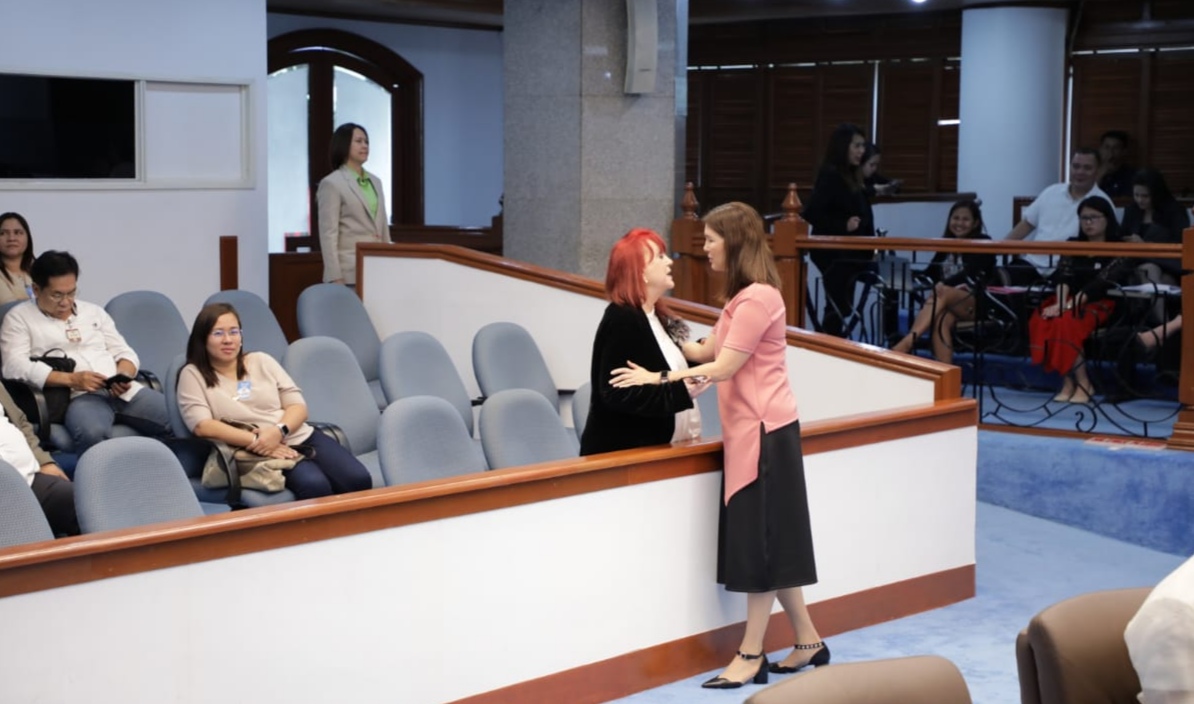
Senator Pia Cayetano delivers a privilege speech on breastfeeding month. Behind her in the VIP gallery is the senator’s mother, Sandra Schramm Cayetano, who supported the Taguig lawmaker in her struggles as a young breastfeeding mom. (Senate PRIB)
As chair of the Senate Ways and Means Committee, it is my job to present to my colleagues all the information they need to make an informed decision on the priority tax reforms of the Duterte government.
I believe that the 15-18 months timetable projected by Finance Secretary Carlos Dominguez III will give our committee and my colleagues reasonable time to study and vote on the four priority measures*.
This would require regular hearings and consultations with our economic managers, tax experts, and all concerned sectors. The process would be tedious, but I have been preparing myself for the challenge of getting the job done.
On the other hand, I don’t want to give my colleagues the impression that I am rushing them. Having said this, I am aware that the Department of Finance team has made themselves available for senators who would want to have access to relevant data and technical information.
I have started consultations with the DOF, and I plan to hold an organizational meeting next week, now that the members of the Committee have been nominated and approved in plenary. #
*Statement in reaction to Finance Secretary Carlos Dominguez III’s projection that it would take the House and Senate 15-18 months to deliberate and vote on four tax reform measures of the Duterte government for the 18th Congress:
Comprehensive Tax Reform Program Package 2: Comprehensive Income Tax and Incentives Reform Act
Package 2+ Sin taxes for universal health care
Package 3 Real property valuation reform
Package 4 Passive income and financial intermediary tax
Ways and Means Committee Chair Sen. Pia Cayetano: I have been preparing myself for the challenge of getting the job done.
Mr. President, I believe in the 12 years I was in the Senate, I think without miss, I delivered a speech on breastfeeding every August. And the reason for that is because August is Breastfeeding Month.
Thus, I am duty-bound to do my part in promoting breastfeeding, being the author of the Expanded Breastfeeding Law, together with the late Senator Ed Angara.
But the question that I’d like my colleagues to ponder is this. Why do we need to promote something that is so natural that is a biological function of every mother?
The reason for that is because over the decades, we have lost the breastfeeding culture, especially among mothers who work outside of the home, and there has also been a lot of misinformation on breast milk alternatives, which has resulted in sickness and death among our infants.
A little bit of history, Mr. President. Obviously, women breastfed from the time of Adam and Eve. However, around the time of the Industrial Revolution, there was a major shift in the traditional woman’s life. They left their homes to join the workforce. Working hours and hours, half a day, and many of them living away from home.
This caused the separation of the mother from her child, interfering with breastfeeding. The result was many babies fell sick and actually died. There were no studies to determine, to tell what were the acceptable alternatives to breast milk. Thus led to the invention of formula milk.
And for a while, this was seen as a suitable alternative to breast milk for mothers. In fact, it became very lucrative because the demand of working mothers grew and for long, formula milk was even touted as the best food for babies. They would say that it makes babies grow stronger, grow taller, become smarter, etc. etc.
Well over the decades, this was proven to be false. There is no formula or milk substitute that can provide the nutrients or immunological benefits that breast milk can provide. I repeat, there is no other product than the mother’s milk. Anyone else who says so is lying.
I am now going to take the opportunity to greet a soon-to-be father, Former Congressman Samsam Gullas, who’s behind me, to remember that. Because the next part of my speech is about being a very supportive breastfeeding husband or father.
Anyway, the advertisements and commercials supporting formula milk led many mothers to believe that in fact they could give their [babies] this formula milk, and their babies would be healthier. The most affected always are the poorest of the poor, because they had very little money to spend, they would buy formula, and then they would even use it not within the prescribed manner of using it. They would dilute it with more water because they didn’t have the money to pay for all that formula milk. And thus, their baby would even get more malnourished.
And during times of disaster, Mr. President, I’ll talk about this a little bit more. When formula milk was made available, without access to clean water, babies even got diarrhea and some would even die. So, this led to the passage of EO 51, which regulated the promotion and advertising of breast milk substitutes. That was before I became a senator, Mr. President.
Meanwhile, I became a working mother myself, and from my own research, wala pa hong internet noon, so I bought books and I read on these books. I realized, I learned that breast milk was best for babies. I breastfed my three children, and indulge me, Mr. President, as I share this story. My mom, who happens to be in the audience today, she actually surprised me, I did not know that she would be here. So that’s my mom, over there. Mom, can you stand up?
For those of you who were colleagues of my father, now you know where my brothers and I get most of our wisdom from. Our mother. Anyway, my breastfeeding story. My mom was my invaluable partner in my breastfeeding journey. I lived in a two-bedroom house in Taguig with my brother, Alan, now the Speaker of the House. I lived in one room with my husband, and he lived in his other room by himself, as far as I know.
Meanwhile, because I was breastfeeding night and day, my mom would come over and sleep in our house, and she would sleep in Alan’s room and get my baby at any hour of the night so that I could have a little but of sleep. And thus, Alan technically also witnessed and was a partner in my breastfeeding journey.
I had a very similar experience with my second child. It was not an easy experience in both cases, because I was a working mom, I had to stay up all night. I am not one of those mothers who had an oversupply of milk. I cried in the first two months of breastfeeding my baby. It was painful, I had no sleep, I went to work and had to budget my time, carrying what looked like a briefcase, but was actually a breast pump.
Come my third child who is actually in the picture on the wall, my third child was Gabriel. He was born with a cleft lip and palate and he also had many other conditions brought about by his condition, which is called Trisomy 13. Thus, he could not really suck well and so I breastfed him through a tube that went all the way down to his stomach.
So that was my breastfeeding experience. Every mother has her own story to tell.
Fast forward, I became a senator, and I was approached by many advocacy groups asking for help in promoting breastfeeding. And this gave me the opportunity to work with the late Senator Ed Angara, wherein we passed the Expanded Breastfeeding Promotion Law in 2009.
This law required that we set up Lactation Stations in the workplaces, and in places frequented by women. So gentlemen, if you go with your wives to SM or other malls, please do me a favor and ensure that you see a breastfeeding center. I mentioned SM because to be fair to SM, they even put up the lactation stations before it became a law. So… Yes, that is part of it. Senator Gordon pointed it out something that I will actually talk about.
The law also required that we require doctors and health workers to talk about it, because surprisingly, we met a lot of mothers who said their doctors never talked about breastfeeding with them. Whether it was the OB-Gyne or the Pediatrician. I’d like to believe that since we passed this law, which has been 10 years, this has been improved.
It has also required that this be part of the Curriculum. What we want to see is that, when children read books, they see pictures of a breastfeeding family, and not a family that has a baby being fed through a bottle. Because we want to promote a breastfeeding culture.
Now to complement this law, and to also help in ensuring its implementation, I did my little share of talking to health workers, talking to mothers, visiting hospitals, encouraging LGUs to put up milk banks. And this is where the birthday celebrant, Senator Dick Gordon, comes in. Senator Dick Gordon is a proponent of blood-letting. I am a proponent of milk-letting. It is very similar… and let me get there. He is also a proponent of milk… breast milk promotion, because as the Red Cross chair, they require that our disaster centers are breastfeeding-friendly.
So for those who don’t know what a breast milk… a milk bank is, what a milk-letting activity is, it’s similar to blood-letting where you ask people to volunteer. In this case, these are mothers who are actually breastfeeding and have milk to share. And they pump their milk and they donate it. And it will be put in a storage for mothers who would be needing it for their babies in the future.
Fast forward, was the Maternity Leave Law, which we all passed just recently. And this law complements the breastfeeding laws that I mentioned because one of the biggest deterrents to women continuing to breastfeed is the fact that they go to work and they’re separated from their children.
So, for those gentlemen here who will have women in your workforce who will be breastfeeding, please, not I encourage you, but I remind you that it is the law to allow them to have time to breastfeed. Sadly, our law only provides for 40 minutes, which is actually not enough, for those gentlemen. I know Joel was a supportive breastfeeding husband, so was Sonny. I don’t know the rest, but whoever else was, thank you for that.
You know that 40 minutes in a workday is not enough to breastfeed. So I encourage you to be even more supportive than that. My staff who do not know that I am about to call their attention. My Chief of Staff, DG, who disappeared. My Personal Assistant, Claire. They both breastfed their babies while working for me.
On the Senate Lactation Room When we first launched it, we had a tarpaulin, because when hearings start, we were very pleasantly surprised that visitors, our resource persons who would come, were very happy that we have a Lactation Room that they can visit. So let’s make them know that by putting up the proper signage so that they know that the Senate is breastfeeding-friendly.
And I also had the privilege, Mr. President, of setting up the same in the House of Representatives when I was there over the last three years.
So my call to action, Mr. President is simply that DOH ensures that all the sectors are compliant, hospitals, health institutions, and even the industries that manufacture and distribute milk formula, that they follow our rules and regulations; the Department of Labor, that they ensure that the private companies are following the requirement that Lactation Stations are set up within their offices…
I have women who message me on Twitter and Instagram that their boss is not giving them time off to breastfeed, so that is required by the law. So we need DOLE to step up on this. The Civil Service, to ensure also that our government agencies are also compliant. We should take the lead.
I’d like to point out that the Senate is very small compared to the House of Representatives. When I went there, that was one of the first things that I did, to check where the Lactation Station is. And in a setup like that, although the law does not dictate how many meters away that Lactation Station should be from a woman’s office, the fact that the House of Representatives is an entire complex, Mr. President, to walk from your office to the next building would already use up the remaining minutes you have to breastfeed.
So we need employers to be mindful of this, because otherwise, we do not set up the environment for successful breastfeeding.
My final call to action is for the LGUs. as our colleague, Senator Gordon, said, breastfeeding must also be present in disaster risk situations, in evacuation stations, the picture I have there is actually my sister-in-law, Fille, who breastfed three of her babies, she’s there to give support to the evacuation center that was set up by my brother, Mayor Lino Cayetano. And again, this was compliant with the law and it is required that every LGU provides the support that a breastfeeding mother and family needs.
So I end my privilege speech. Thank you so much, Mr. President, to our colleagues, who listened to this. For those who have been here for 12 years, for listening to me on this topic, for 12 years. Thank you very much. #
*Privilege speech delivered on the Senate session on Tuesday, August 6, 2019.
Senator Pia: “We need employers to be mindful of [the law allowing paid lactation breaks for nursing employees], because otherwise, we do not set up the environment for successful breastfeeding.”
Senator Cayetano: Dear colleagues, I’d like to commend everyone. There is no plastic bottle on our tables today. Congratulations, I know that’s an effort. We all have the right to drink water, of course, or whatever beverage of choice. But you make an effort because of our collective desire to use less plastic.
So kung kulang pa yung binigay ko sa inyong bamboo bottle, hingi kayo kay Ralph sa next batch, para mauwi niyo, para magamit niyo.
Anyway, so my manifestation, Mr. President, is on a similar note. In 2010, my office, along with an NGO called Mother Earth, initiated with the Senate recycling, reusing, and the establishment of an MRF. An MRF is a Material Recovery Facility.
And, to cut a very interesting story short, we were able to cut in half our garbage in one month. This is around 2011. That is the MRF that we put up. [Points to a photo of the Senate MRF flashed on the monitor] So they collect, they segregate, etc. and the garbage delivery went down from once a week to every other week, which is half.
But this information I have was in, 2011, so that was the 15th Congress, if I am not mistaken. We don’t have new data and so my request would be for the Secretariat to update us on how much garbage we [generate] and what are we doing to recycle it.
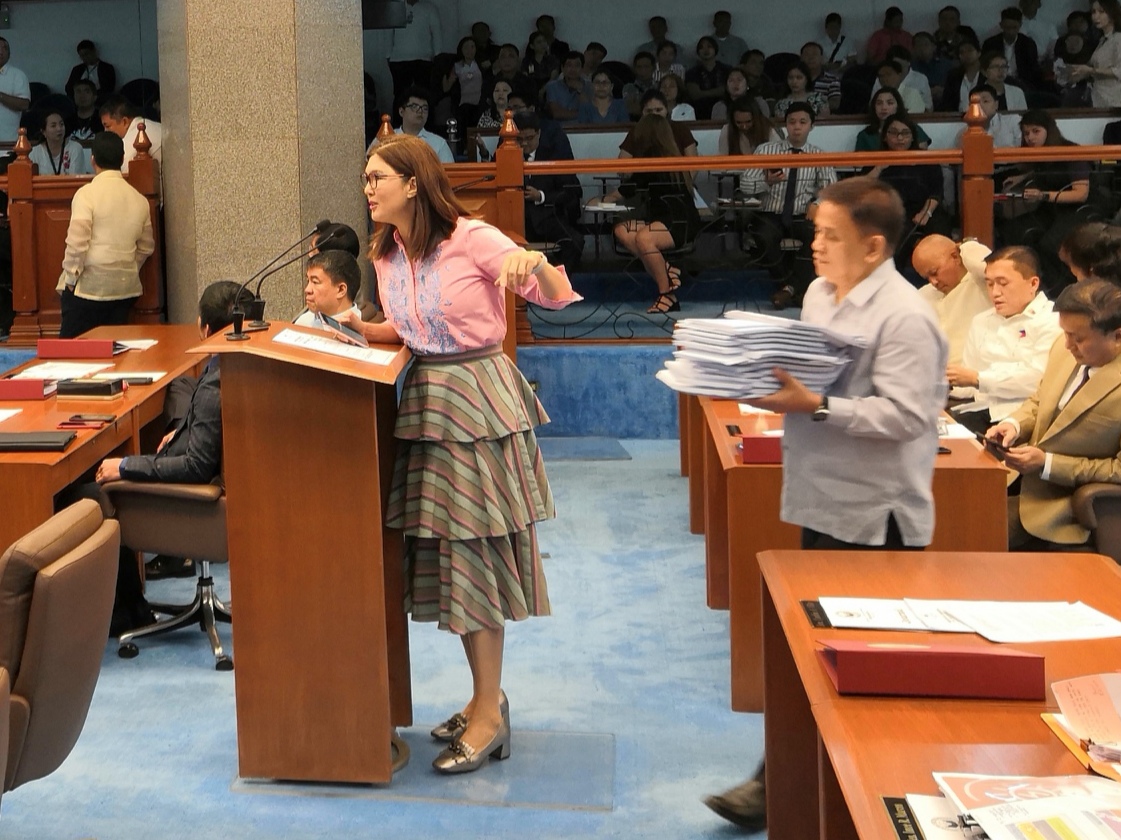
To give our colleagues an idea of how much paper we are currently using, I have asked my staff to put together [gestures to show pile of paper consisting of agenda, order of business, journal and other documents issued per senator per wek] – this is what we consumed in one week. This is… each pile is one senator. This is not even what you consume in your office, with the papers. But this is what the Secretariat produces for us. This is the reference of business, the agenda, the journal.
So on that note – thank you – My proposal the last time was that, it’s a personal choice to decide, if there are things that you can forego. Like for example, in my case, I am willing to look at the agenda on my laptop, I am willing to look at the reference of business on my laptop as well. I am old-school so a lot of the bills, I want to put it on hand-written notes, so there are some things that I can’t forego. But it’s just that we talk about it and we decide for ourselves and collectively what we are willing to do.
We need to lead by example, Mr. President. And that’s why I bring it up to all of us. Just for the body’s information, that was 90 pages per senator, produced by the Secretariat for us, not even counting whatever you produce in your own offices.
So that is my manifestation, Mr. President, that the Secretariat update us on the status of our MRF, the status of the collection. By the way, our garbage collection bill went down, because we only had to have it collected every other week. But again, this is outdated information because this is a few years back.
So may we ask the Secretariat to update us in the next few days of weeks? [Senate President Sotto responds]
SP Sotto: I am informed that the Secretariat will be ready to inform us on this matter by tomorrow.
Senator Cayetano: Thank you. And on that note, Mr. President, I also suggest that perhaps we can also have our own Senate app, because you can easily do a PDF of the reference of business, but it’s not always the easiest way to make your notes or to comment. But if we have our own app, exclusively for the senators, the staff, and the Secretariat, you can actually use something as basic as Google Documents wherein you can put your comments to share with your staff. Something again that I would just like the Secretariat and the leadership to consider.
Thank you very much, Mr. President!
*Manifestation delivered at the Senate session on Monday, August 5, 2019.
Senator Pia Cayetano demonstrates how much paper is distributed per senator in a week, as she appealed to her colleagues to consider going digital to help reduce the volume of paper waste generated by the Senate.
Senator Pia S. Cayetano on Sunday welcomed the passage of a law establishing a national vision screening program for kindergarten pupils, as she stressed that early treatment of eye problems will lead to better learning among the youth and a sustainable future for the country.
President Rodrigo Roa Duterte signed Republic Act 11358 or the ‘National Vision Screening Act,’ which seeks to establish a National Vision Screening Program (NVSP) under the Department of Education.
“I thank the President for signing this relevant measure, which came just in time for Sight Saving Month,” said Cayetano.
The senator first authored and sponsored the bill in the Senate during the 16th Congress and re-filed the same measure in the House in the 17th Congress. The latter became the base bill for the law signed by the President.
Cayetano said RA 11358 can help fulfill government’s commitments to the United Nations’ (UN) Sustainable Development Goals (SDGs), particularly Goals 3 and 4 of the SDGs.
Goal 3 calls on nations to ensure healthy lives and promote well-being for all ages, including the provision of essential services based on tracer interventions, like vision screening.
Goal 4, on the other hand, urges nations to promote lifelong learning opportunities for all. This includes initiatives to put the development of young children on track in health, learning, and psychosocial well-being.
“Good vision is vital for our children’s learning,” Cayetano said, emphasizing how the law’s objectives and the two SDGs are interrelated.
She said poor vision at childhood greatly affects a student’s performance in school, and so “ensuring the full well-being of our children is the first step to enable them to reach their full potential and grow up as productive members of society.”
Prior to the law’s passage, Cayetano has already spearheaded a pilot vision screening test for kindergarten pupils in Taguig City in 2016. The vision-screening was conducted in partnership with the Taguig city government and the UP Manila Philippine Eye Research Institute (PERI).
One hundred fifty (150) pupils aged five to six at the EM’s Signal Village Elementary School underwent a simple vision-screening test, about 15 of whom were found to have vision problems and in turn received immediate and proper treatment. #
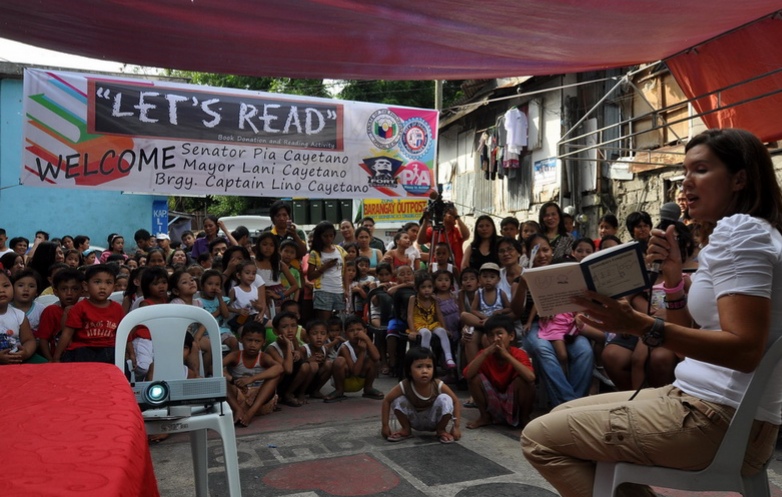
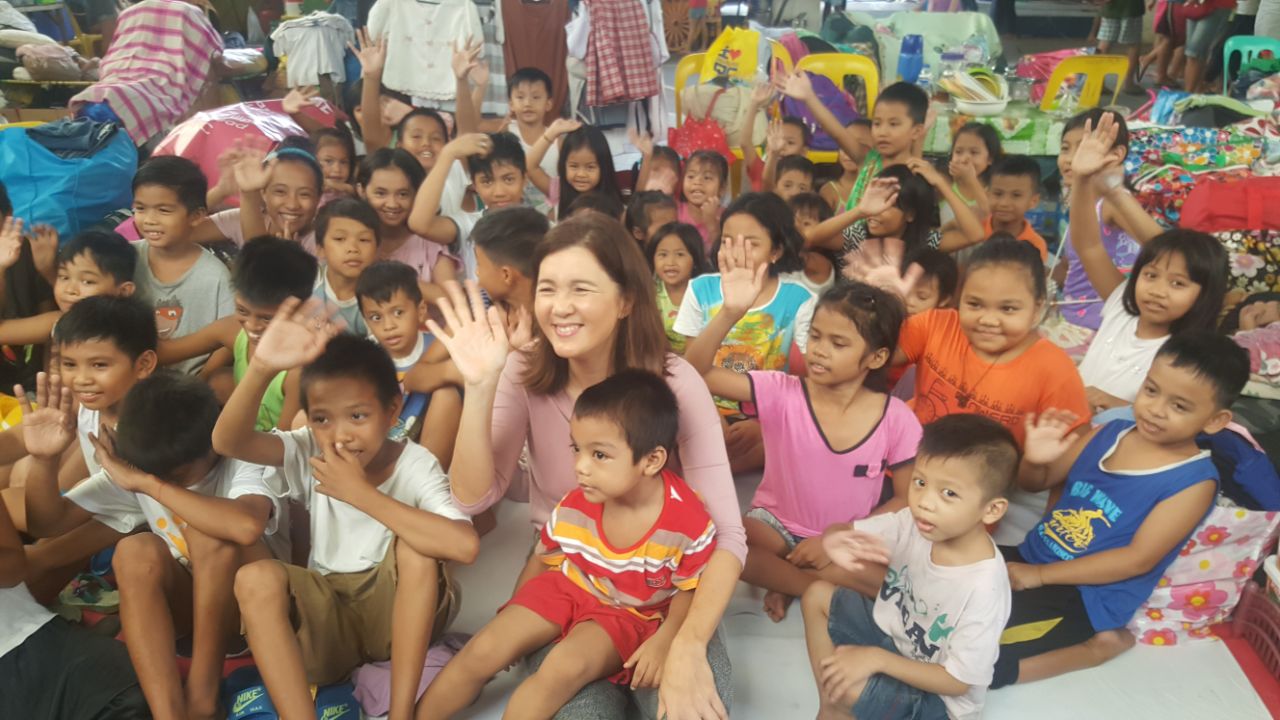
Senator PIa Cayetano leads a reading session for pre-school children and their mothers in Brgy. Fort Bonifacio, Taguig City. (file photo)Senator Pia Cayetano with young children at an evacuation center in Quezon City. (file photo)
Senator Pia S. Cayetano called for the cooperation of all sectors in supporting the culture of breastfeeding among Filipina mothers to ensure the health of succeeding generations of young Filipinos, which she said is vital to achieving the country’s Sustainable Development Goals (SDGs).
A staunch breastfeeding advocate, Cayetano authored the Expanded Breastfeeding Promotion Act of 2009 (RA 10028) which mandates paid lactation breaks for nursing employees in the workplace, and the establishment of breastfeeding rooms in public places, like shopping malls, government facilities, and transport hubs such as airports, seaports, and bus stations.
“Breastfeeding safeguards the well-being of babies and mothers. It ensures a healthy future for the child, positively affects the mother’s health, and thus enables the family to be better members of the community,” the senator said on Breastfeeding Month which is celebrated in August .
“The gains we’ve made since the passage of RA 10028 ten years ago are the results of our social investments in breastfeeding. We should press on in helping mothers breastfeed and educating them on its importance,” she added.
“I know it is not easy, especially for working mothers because I also breastfed my children. I’ve become an advocate ever since,” shared the senator, who worked as a corporate lawyer prior to entering politics in 2004.
“Our objective is to create a favorable environment for Filipina mothers to fully embrace breastfeeding, especially among young and new mothers,” Cayetano said, adding that this would require cooperation from both government and the private sector.
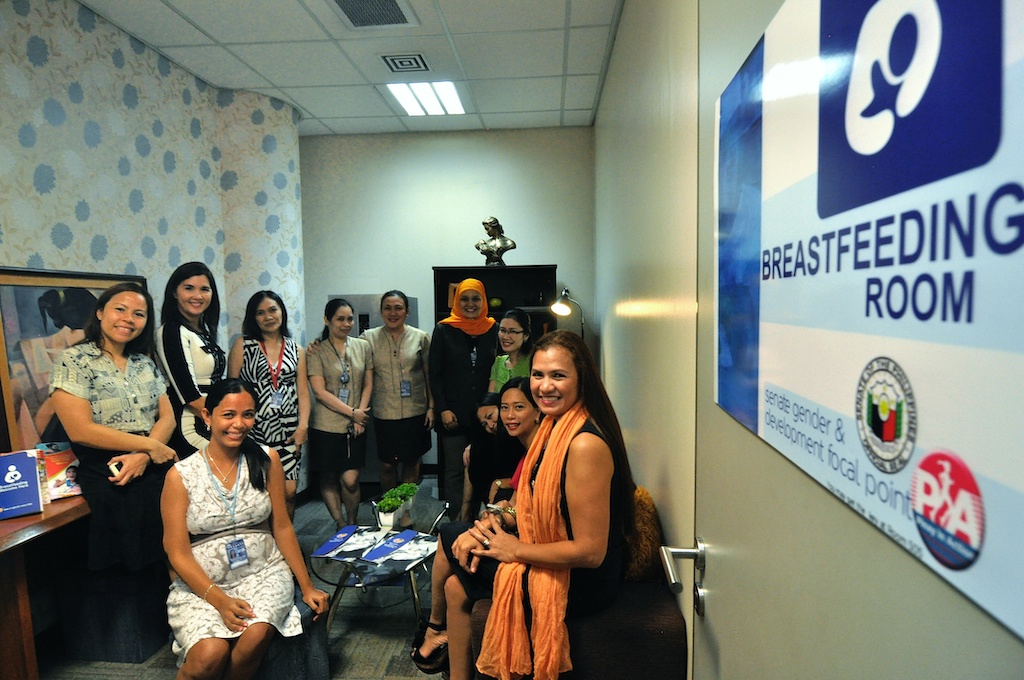
To ensure that Philippine Congress itself complies with the law it passed and become ‘breastfeeding-friendly’ institutions under RA 10028, Cayetano personally worked for the establishment of lactation rooms for nursing employees in both the Senate (in August 2014) and the House of Representatives (in March 2019).
Cayetano also helped set up human milk banks in Taguig City and Cebu City, and sponsored breastfeeding seminars and milk donation campaigns in various places across the country as part of her Pinay In Action (PIA) advocacy.
The senator said the social benefits from supporting breastfeeding should bring the country closer towards achieving Goal 2 (“achieve zero hunger”) and Goal 3 (“ensure good health and well-being”) of the United Nations’ Sustainable Development Goals.
She noted that even the United Nations Children’s Fund (UNICEF) recognizes the vital role of breastfeeding in achieving the UN’s 2030 Agenda for Sustainable Development. UNICEF notes that breastfeeding can help achieve many of the 17 SDGs, including the goals on health, poverty, hunger, education, gender equality, and sustainable consumption.
“We need to take stronger initiatives to build on our gains. Let’s always remember that a healthy community is a sustainable community. If we want to achieve our sustainable development goals, let’s first make our babies and mothers healthy,” Cayetano concluded.#
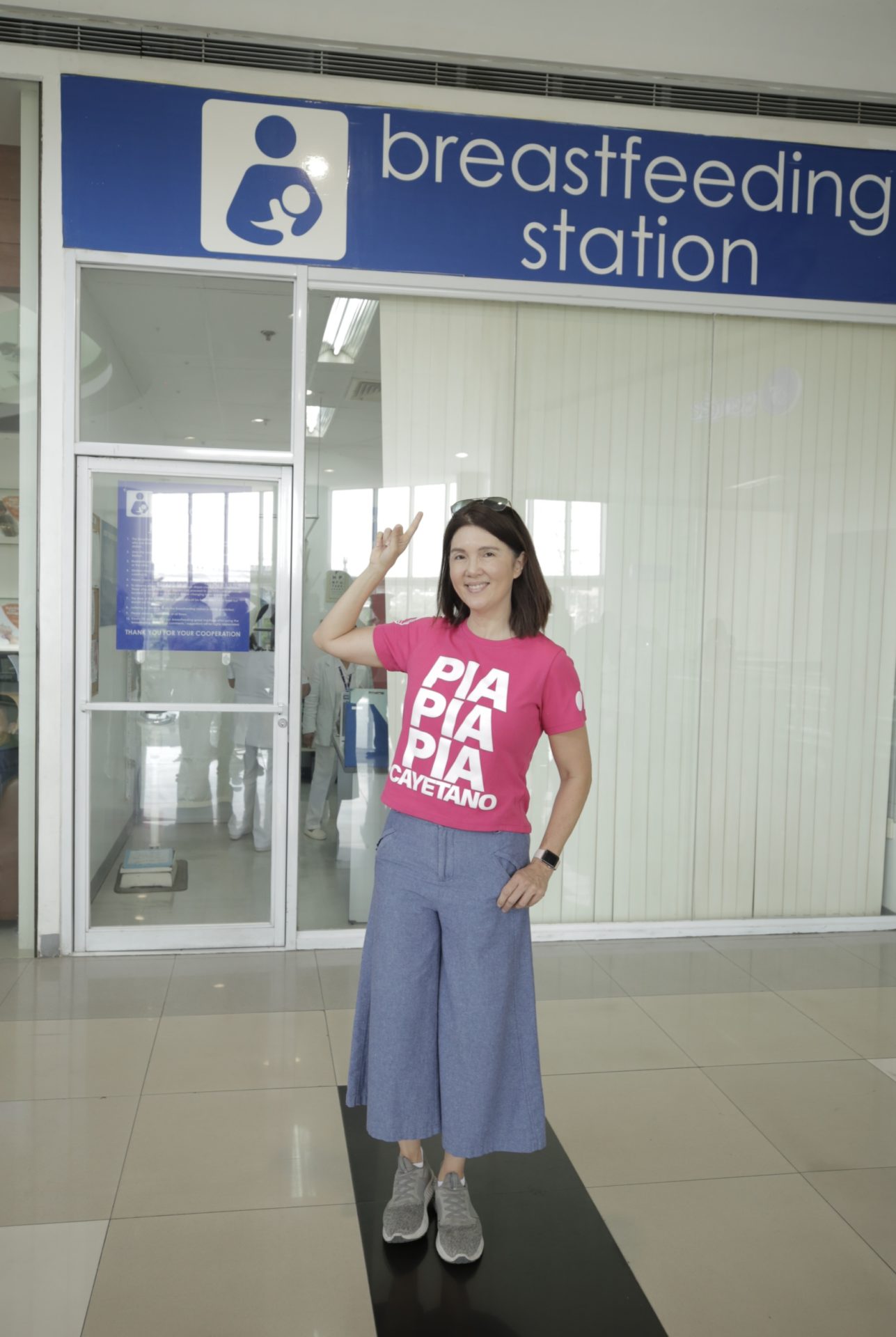
Standing proudly in front of a breastfeeding room at a shopping mall in Cavite. The establishment of lactation stations in public places is one of the highlights of Cayetano’s Expanded Breastfeeding Promotion Act (RA 10028).Breastfeeding-friendly workplace: Senator Pia Cayetano with breastfeeding employees at the lactation room that Cayetano helped establish at the the Senate in 2014.
Reporter: Ma’am, ‘Yung una po muna, hingi lang pong reaction dun sa biro ng Pangulo kahapon na, “When will your dynasty end?”
Sen. Pia: Yeah, so first of all, biro nga ‘yun, ‘diba? So biro ‘yun, so if you ask me, biro. So I’ll leave it at that, kasi there are more important issues there. And that’s the TESDA App that was just launched [in Taguig City], which I feel is so interesting. And I think we should draw attention to what the important issues are, not a joke.
But on that note, that is also something that I’m always willing to talk about. Kasi when you talk about dynasty, I always ask, let’s talk about governance. And I think with all due humility, the President’s high regard for our family, for my brother, is evident in no less than his being his endorsed Speaker.
So, we’re so proud… I call on everyone to judge the new Speaker on the work that he will do. I’m so excited to be back in the Senate. I’m so excited for the work that I have to do as the new Chair of the Committee of Ways and Means and Chair also of the Committee on Sustainable Development.
So, we want to be judged on the work that we do. That’s an open book, and we want to really do the kind of job that will make the Filipinos proud that they elected us. Let’s make it clear, we were elected.
Reporter: Ma’am, does it also mean that you as part of the Senate or Congress will not support the Anti-Political Dynasty Bill?
Sen. Pia: No. I’ve always said and you can always just refer to my statements on this. I always have an open mind on any issue that is brought on the floor. That has always been the position I’ve taken.
I may have biases, so when you look… I did a quick scan on the political dynasty bills, and there are different definitions of political dynasty. So… it’s my job to have an open mind and to look at it.
Reporter: ‘Yung Dissolution of Marriage Bill niyo po, can you explain lang, divorce po ba ito? Ano po ang mga magiging changes nito compared sa annulment?
Sen. Pia: That’s a very good question. And I think ang question niyo should be directed at those people who do not like the term “divorce.” You should ask them what they mean by dissolution of marriage versus divorce because I do not know.
I humbly have to say that I do not know what the difference is, but as one of the authors of the bill in the House of Representatives, I believe it was entitled, “Divorce and Dissolution of Marriage” precisely to address the discomfort that some had with the term, “divorce.”
But if may difference ‘yun, the title is there… But ako naman, as the author here also in the Senate, happy naman ako to listen to any and all concerns. I’m just happy that it’s being discussed.
For the record, there are three kinds of bills that were filed in the House. And I’ve refiled so far two of them – the Absolute Divorce or Dissolution [of Marriage], that’s one. And then the other one is the Foreign Divorce, which is actually already an existing form of divorce, actually the only form of divorce recognized in our Family Code.
We just fine-tuned some details, which we were told for the last almost decade na it becomes a stumbling block for making that provision in the existing Family Code easy to use. It’s become very cumbersome for people to use because of lack of clarity. So ‘yun lang ‘yung sa Foreign Divorce.
Reporter: Ma’am, sa dissolution of marriage, paano siya naiba sa annulment, ma’am?
Sen. Pia: If you look at Article 36 on Annulment, the only ground there is the psychological incapacity. That is the existing ground that we have under our Family Code. So the grounds for divorce that I filed, there are more grounds. Some of them are similar to the grounds for legal separation. So that’s the easiest way.
You know what, I’d be very happy to have a forum on this and to answer more questions, kasi well it’s something that I’ve really worked on and I really believe in, so I’m happy to answer questions para walang… para people would understand, parang FAQs.
Reporter: Why do you think is it time for the Philippines to legalize divorce?
Sen. Pia: My answer to that is based on scientific evidence. We went to three countries, [for consultations held by] the House of Representatives, where we had a lot of kababayans.
I would say it’s partly because of that one bill, that is on the Foreign Divorce, because we have so many kababayans who are married to foreigners. But we also realized that so many of our kababayans are married to Filipinos and therefore, their need would be a regular divorce or dissolution of marriage.
And so we went to Hong Kong, Malaysia, and Japan, and we had hearings in the House and I have met with so many groups espousing divorce, and the stories are so sad. I hear one story, I think, “Wow, this is the worst,” and then I hear another story, it’s about mostly women – but of course it applies to both – women who after their husbands have left them, beaten them up, had another family, had other wives, they’re still supporting that man. Because under the law, they are required to support the man.
And even – in this particular story – even her grown children were saying, “Nay, iwanan mo na si Tatay.” Eh pero she feels that she has a legal obligation, a moral obligation, until ma-divorce ‘yun. Baka sabihin niyo, ba’t hindi annulment? Eh kasi sa annulment, some of them don’t want to avail of it, because wala naman daw silang psychological incapacity to fulfill their obligations. Pinaninindigan nila na hindi sila pasok doon.
You can… As soon as we start discussing this, I know that my Facebook will be flooded with questions on divorce. Kahit anong topic ang pag-usapan, laging meron pa ring bumabalik sa divorce. And all over the country, during the campaign, I was asked repeatedly about it…
Reporter: Have you looked at the chances here in the Senate?
Sen. Pia: I haven’t really bothered. As you know nga, the committees that I will be chairing this Congress are new to me. So, dun ako naka-focus. I haven’t really had time. It’s just that I’ve also read what you’ve read na most people tend to be open-minded because they’ve also heard stories of people they know, people who come to them. So I’d like to believe, I’d like to hope that people would have an open mind.
And what I always reiterate, for those who are against it, you don’t have to avail of it. For those who are against it, in your own church, in your own religious organization, you can continue to believe what you want to believe. That is your supreme right. And never ko po aapakan or never ko… Wala ho akong karapatan na kwestyunin ang paniniwala ng mga tao when it comes to spiritual and religious reasons.
But when it comes to legal, it is my obligation to have an open mind and pass laws that will be applicable to all Filipinos who want to avail of it. Kasi remember, this is a kind of law that is not mandatory, this is a kind of law people can avail of. ‘Yun ‘yun eh, may difference ‘yun.
Reporter: So parang it’s a privilege?
Sen. Pia: Let’s say it’s an option. Baka mamaya may legal implication pa ‘yung privilege. It’s an option.
Reporter: Sorry ma’am, additional grounds, irreconcilable differences, ano pa ‘yung mga possible grounds?
Sen. Pia: Give me time na balikan ko ‘yun, kasi ganun ako eh. Move on na ako sa ibang bills after napasa ‘yun sa House. I was hoping napasa na ‘yun sa [17th] Congress. Let me just go back to it and then I’ll discuss it further.
Reporter: Last na po, aside from the grounds, what else are the advantages of divorce over annulment? Kasi sabi nila may annulment na nga bakit pa may divorce?
Sen. Pia: Ah hindi. Kasi if you look at our provision on Annulment, any law student can tell you, we have one article on it. That’s it. One article – Article 36. There’s actually no provisions on support, they just use by analogy other provisions on support. There are no provisions on the procedure, so the bill that we filed, the bill that is the product of the House…
I’ll reiterate ‘House,’ kasi I was in the House of Representatives, lagay niyo na lang ‘yun as background, baka malito ang ibang tao na what I’m talking about na bill na na-hear, that was while I was in the House. This is a product of lengthy discussions and so there’s a lot more details in it, including support, including what is known in other countries as alimony, napag-usapan din ‘yun kasi issue ‘yun. Some believe na in other countries, dahil sa walang forever, pero ‘yung support may forever. So mabigat daw, mabigat.
So we had long discussions about that, and we tried to look for middle ground na there would be, if I remember right, please let’s confirm it lang, three years of support for the spouse who was dependent on the working spouse. Kasi ‘yung objective nga is mag-move on ka na, try to get gainfully employed also, give that person enough time to also gainfully…
But I wanna have an open mind about it if kailangan longer, kasi the objective din naman is to not abandon the spouse who dedicated their life to being a homemaker, whether it’s a man or a woman, it applies both ways.
But kaya ko rin naisip na hindi rin tama na ‘yung forever kasi paano kung ‘yung breadwinner, katulad ng mga na-meet ko na OFW? Tapos 20 years na siyang nagtatrabaho dun, sinusuportahan niya ang asawa niya, and then worst case, ‘yung asawa niya na nambabae na nagkaanak na sa iba, baka siya pa magbibigay ng support forever because siya ang technically working, you know what I mean?
So you have to weigh these things. Sasabihin, yeah, pero si mister naman sa bahay ‘yung nag-aalaga ng mga anak, pero nangaliwa din siya. So iba-balance mo rin lahat ‘yun eh. So, I can’t pretend that there’s a simple, easy, hundred percent fair, but we have to do our best.
Reporter: ‘Yung finile niyo po, that was the same bill that was passed in the House last [17th] Congress?
Sen. Pia: Yes, but I’m very open pa to even making my own amendments to it.
Reporter: So kung ano ang pumasa sa House, ‘yun ang ni-refile niyo?
Sen. Pia: Oo, kasi you have to remember, that was a product of members of the House. Eh nandito na ako [Senate, 18th Congress], so kapag nandito naman ako, minsan naman nagkakaroon din ako ng bagong ideas, and then syempre… Ano naman ‘yun, kumbaga free for all ulit.
[Inaudible question]
Sen. Pia: Ay tapos na siya, pasado siya [by the House in the 17th Congress]. Oo, walang nangyari dito [sa Senate in the 17th Congress].
[Inaudible question]
Sen. Pia: That’s a good question, I have to say that it’s kinda my observation also, I don’t know kung may survey talaga. But it’s kinda my observation pagka ganun, ‘yung mga babae, “Yes!” Ta’s ‘yung mga lalaki, “‘Wag na ‘yan…”
Reporter: Pero do you find it a relief na ‘yung mga [inaudible – senators] most of them at least open to discussion?
Sen. Pia: Ganito, sa dami ng trabaho ko, kasi nga ‘yung mga bagong committees ko, and again, I have to emphasize ‘yung Committee on Sustainable Development, andaming sakop nun, syempre happy ako kung kahit anong bill na sinusulong ko maraming support, dahil mababawasan din ‘yung trabaho ko dahil wala na ako masyadong kukumbinsihin. So I’m always happy naman na open-minded, or may support, or willing to discuss, I’m always happy. Thank you!#
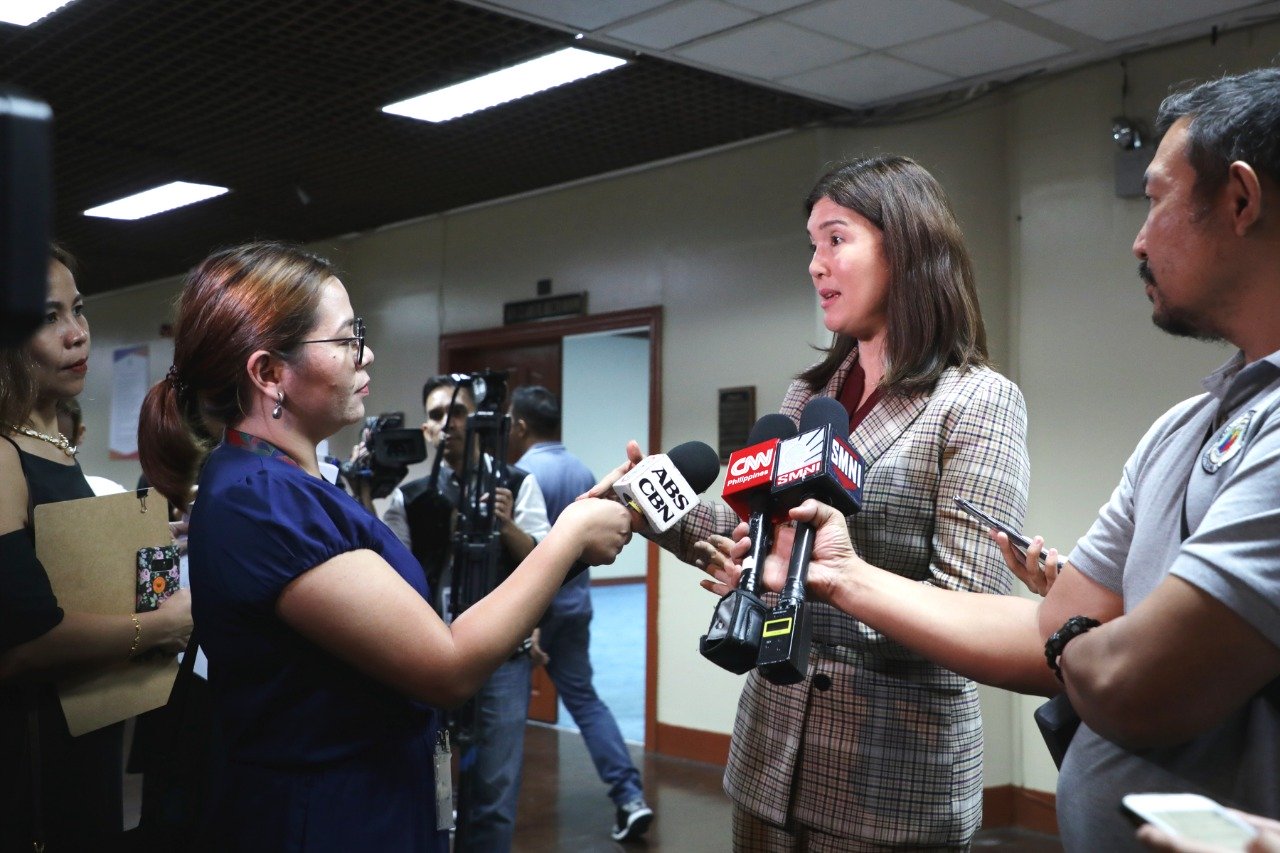
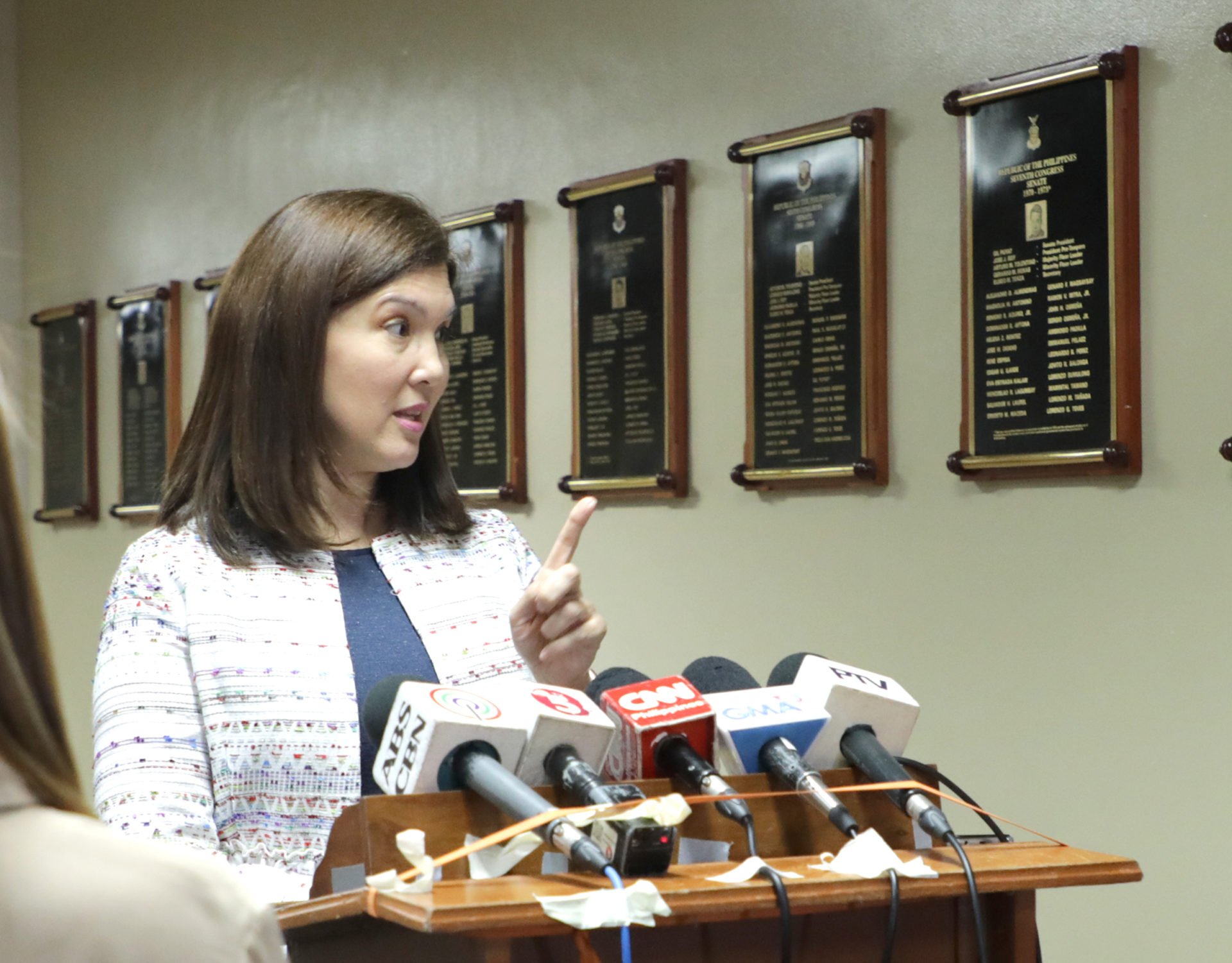
Senator Pia Cayetano answers questions from the Senate media.
In past Congresses, I focused on the delivery of social services like education and health. Now, I have the opportunity to continue this advocacy from a finance perspective.
As chair of the Senate Ways and Means Committee, I look forward to working with our counterparts in the House of Representatives and our economic managers led by the Finance Department in exploring ways to fund social services for our people.
I have started consultations with the DOF and soon will conduct hearings, open to all sectors. Our goal is to ensure steady, sustainable development to uplift the lives of the Filipino families.#
Senator Pia S. Cayetano
Chair, Senate Committee on Ways and Means
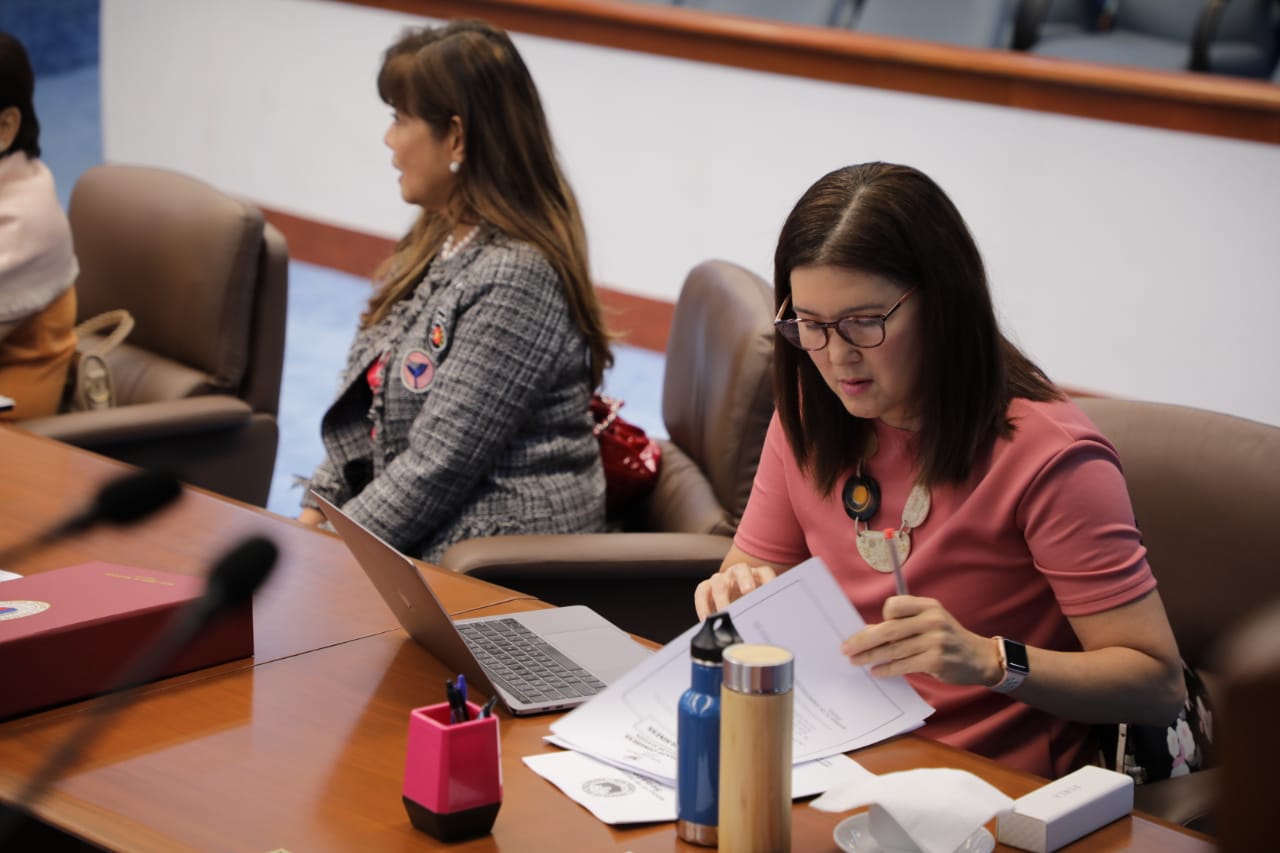
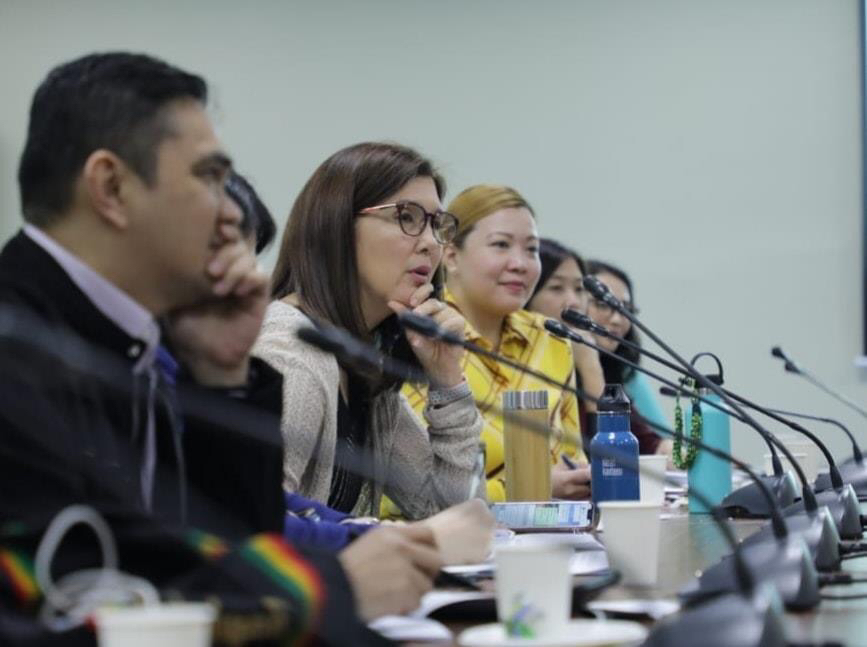
Senator Pia Cayetano leads a consultation with officials of Ways Ways the Department of Finance to discuss the government’s priority tax reforms.
Consistent with the celebration of ‘Plastic-Free July,’ Senator Pia S. Cayetano has called on the Senate to do its share in supporting the global movement to ditch single-use plastics and reduce plastic pollution.
In a brief manifestation during Monday’s session (July 29), Cayetano reiterated her plastics-free advocacy by urging fellow senators not to contribute to the generation of plastic wastes in the country.
She enjoined her colleagues to adopt a policy of prohibiting PET bottles in plenary or during Senate hearings.
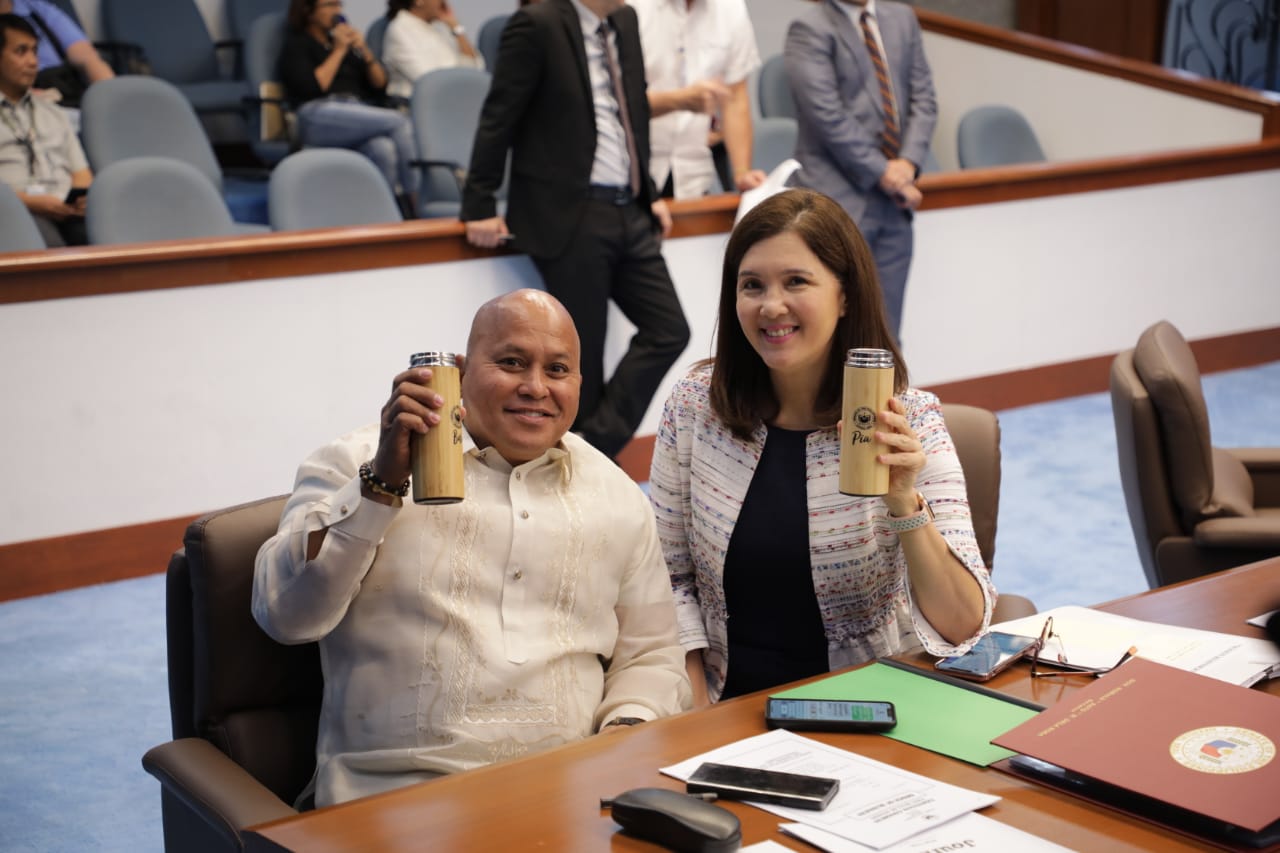
As an alternative to plastic, the senator had bamboo tumblers distributed to her colleagues in the session hall.
This was not the first time that Cayetano made an appeal to the Senate to be more environment-conscious in the conduct of its duties.
In 2012, Cayetano wrote a letter to the Senate Secretariat suggesting that water dispensers be set up in the Senate halls, instead of distributing bottled water during session and public hearings.
“This was adopted at that time, but I don’t really know what happened in the (last) Congress because I wasn’t here. So may I propose that we adopt it once again, especially since it is July, which is No-Plastic Month,” Cayetano told her colleagues.
“To help support my colleagues in shifting to a more sustainable way of drinking water or whatever beverage you prefer, I am giving all of you bamboo tumblers, which you can use in lieu of single-use plastics,” she added.
In 2011, Cayetano also requested the establishment of a Materials Recovery Facility (MRF) and enforce a ban on plastic bags within the institution’s premises. This resulted in a 50-percent reduction in the solid wastes generated by the Senate during that year.#
Senator Pia Cayetano asks the Senate to reduce its plastic waste, starting with ditching the practice of distributing PET bottled water during hearings and sessions. With Senator Ronald ‘Bato’ dela Rosa holding up the reusable bamboo tumblers that Senator Pia Cayetano gave out to her colleagues in lieu of plastic bottled water distributed in plenary.