Senator Pia S. Cayetano today said raising the compensation of teachers is the best affirmation of government’s high regard for the country’s educators and their contributions to nation-building.
The senator issued the statement in time for National Teachers’ Day, which is being observed on October 5 (Saturday).
A staunch education advocate, Cayetano authored Senate Bill No. 70, or the ‘Additional Support and Compensation for Educators in Basic Education Act.’
The measure proposes a salary increase of P10,000 per month for public school teachers, locally-funded teachers, and non-teaching personnel of the Department of Education (DepEd).
The salary hike shall be granted over three years in three tranches, starting with a P4,000 monthly pay hike on the first year, an additional P3,000 per month on the second year, and a final increment of P3,000 per month on the third year.
The bill is currently being deliberated with similar measures by a technical working group under the Senate Committee on Civil Service, Government Reorganization and Professional Regulation.
“Raising the compensation of teachers affirms the dignity of the teaching profession. This will not only improve their lives, but also inspire them to further improve,” she explained.
“We have so many hardworking teachers who deserve more support. Also, we can still do better to make the teaching profession more attractive to the best and brightest,” she stressed.
“I want to be able to leave that kind of legacy to our children – that they can go to any school in the Philippines, and get the best education possible because they will be mentored by intelligent and dedicated teachers,” she added.
Cayetano pointed out that empowering teachers to successfully fulfill their role in society is part of the country’s commitments to the United Nations’ Sustainable Development Goals (SDGs).
Goal 4 of the SDGs particularly states that by 2030, the supply of qualified teachers in the country should have substantially increased.
Apart from the salary adjustment, Cayetano’s bill seeks to grant public school teachers the following benefits: Medical allowance, a yearly bonus based on the Magna Carta for Public School Teachers (RA 4670), and additional compensation from local school board funds.
The former chair of the Senate Committee on Education, Arts, and Culture, Cayetano has championed the passage of landmark laws that enhanced public education in the country, including the National Teacher’s Day Act (RA 10743), Unified Student Financial Assistance System for Tertiary Education or UniFAST Act (RA 10687), Open High School System Act (RA 10665), Open Distance Learning Act (RA 10650), Iskolar ng Bayan Act (RA 10648), and Ladderized Education Act (RA 10647).#
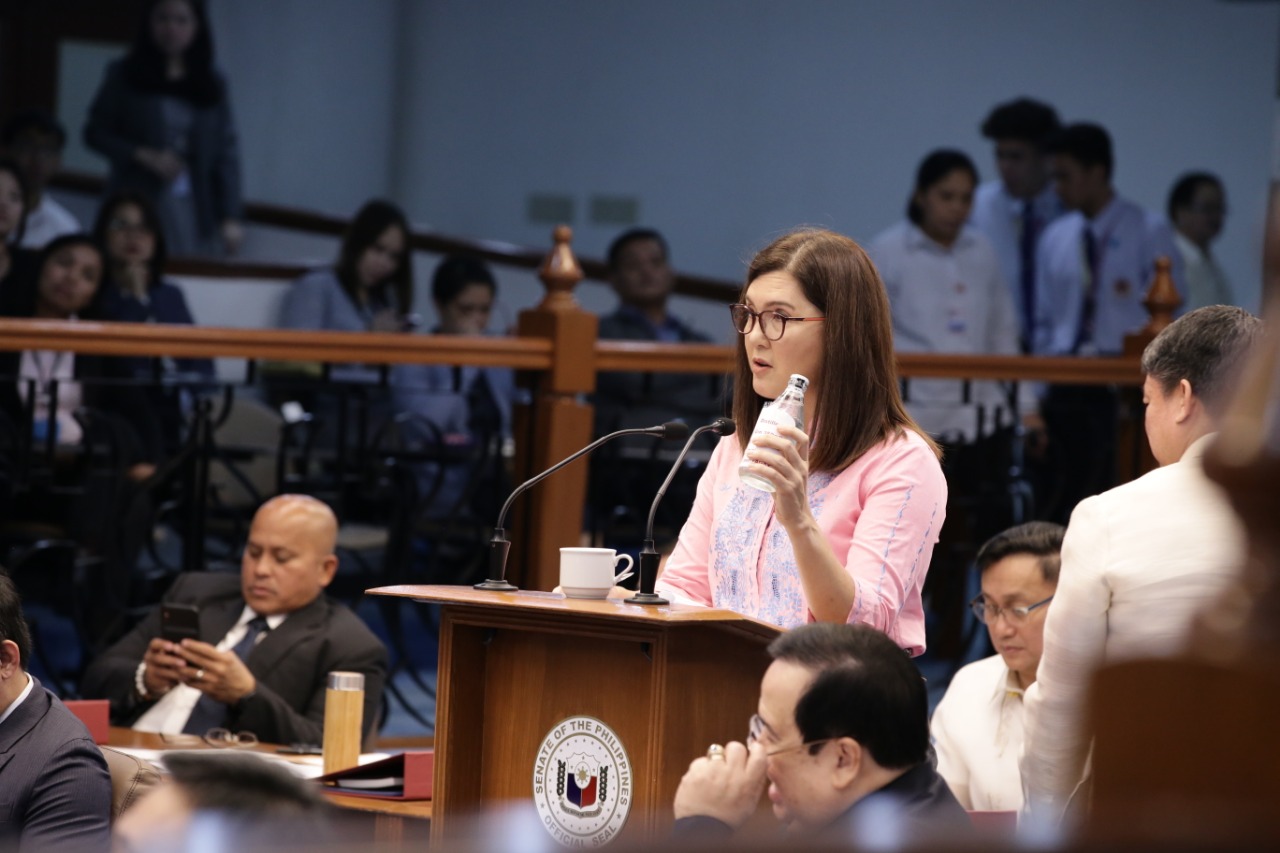
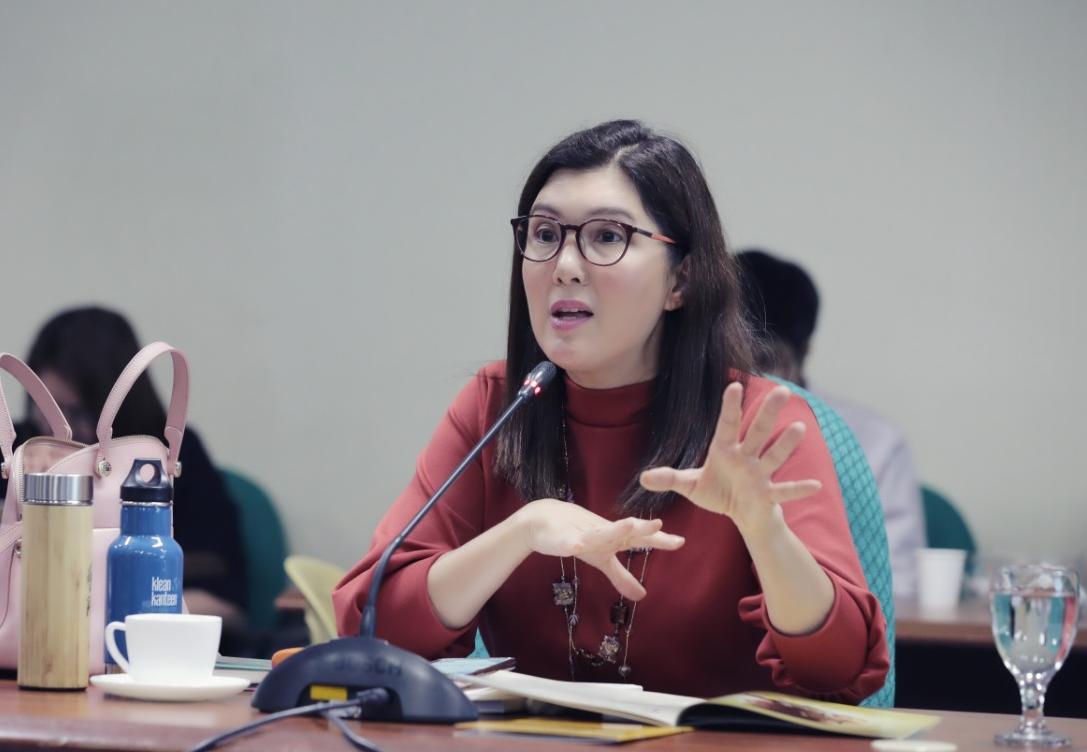
Senator Pia Cayetano: “We have so many hardworking teachers who deserve more support.”
Amid rising concerns in many countries about the health risks of electronic cigarettes and vapes, Senator Pia S. Cayetano reiterated that Congress has the jurisdiction to impose higher taxes on these products as a means to regulate their use.
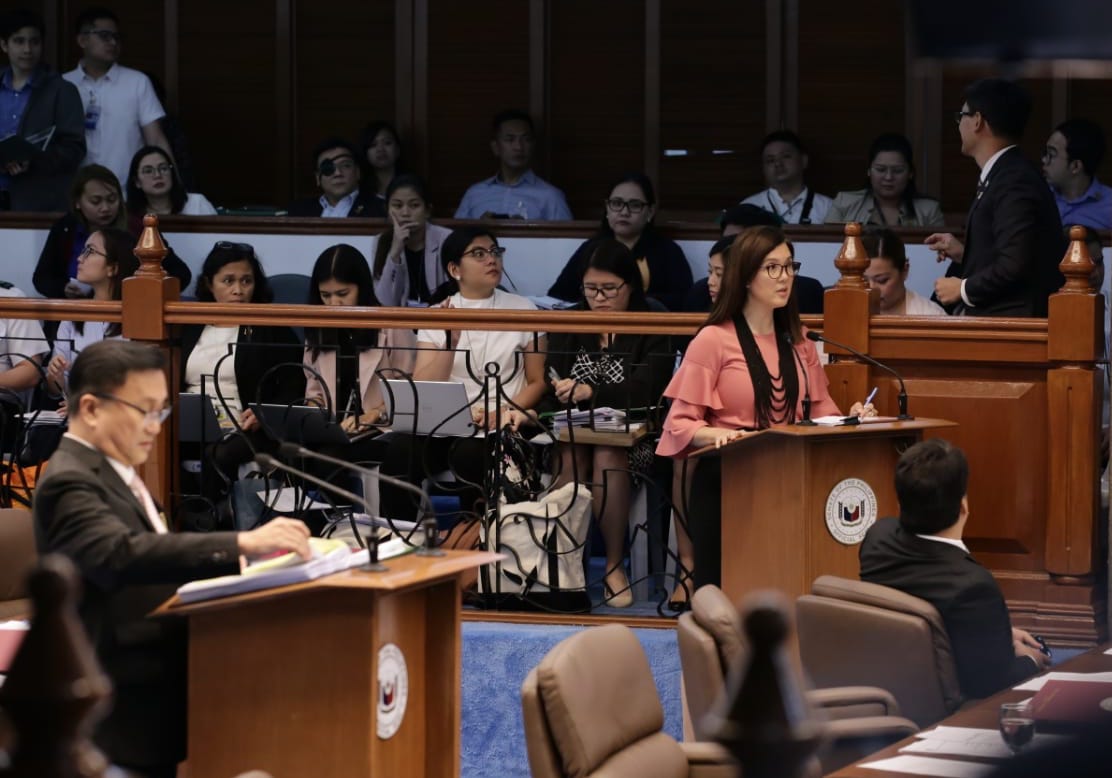
The chairperson of the Senate Committee on Ways and Means, Cayetano made the assertion at the start of plenary debates on Senate Bill No. 1074, which seeks to raise ‘sin’ taxes on alcohol and vaping products.
Responding to the questions of Senator Francis Tolentino, Cayetano clarified that Congress has already imposed taxes on e-cigarettes since the enactment of Republic Act 11346 earlier this year.
Tolentino had asked Cayetano whether Congress can impose a tax on e-cigarettes, even if these products have yet to be given certification by the government through the Food and Drug Administration (FDA).
“As to whether we can tax a product that’s not been given permission to be sold, let me point out that under RA 11346, we (lawmakers) have already taxed e-cigarettes,” Cayetano noted.
“So this committee is not proposing a new kind of tax. It’s already recognized by Congress under its jurisdiction. This committee is just increasing that tax,” she added.
Cayetano pointed out that taxation is “just one tool” that would help curb these new kinds of vices. She said other pro-health initiatives should be put in place to complement the sin tax bill.
“Taxation is not the end-all, be-all. So we must help our health department come up with measures to provide a health approach to the problem of smoking and drinking,” she said, while expressing her plan to push for additional regulatory measures on e-cigarettes.
The senator said she is in the process of drafting a bill mandating the government to “look into the harmful effects of e-cigarettes,” which shall be referred to the Committee on Health.
She also intends to draft a measure that would regulate the marketing and ban the advertising of e-cigarettes in the country.
“Exposure to these products will be dangerous because the science is not yet clear about its dangers. I’m concerned for the young people in general as these products can easily entice them,” she explained.
“Our goal is to reduce people’s consumption of these sin products, on top of generating more revenues to finance our Universal Health Care program,” she stressed.
A total of 42 countries worldwide have already banned the use of e-cigarettes, while 10 countries banned the use of heated tobacco products (HTPs) due to growing evidence that such products are dangerous to people’s health.
Earlier this year, the FDA gave manufacturers, importers, and retailers of e-cigarettes three months to register and comply with specific regulations before they could sell their products legally.
These include a license to operate and the issuance of a certificate of product registration. The three-month period is set to end this October. #
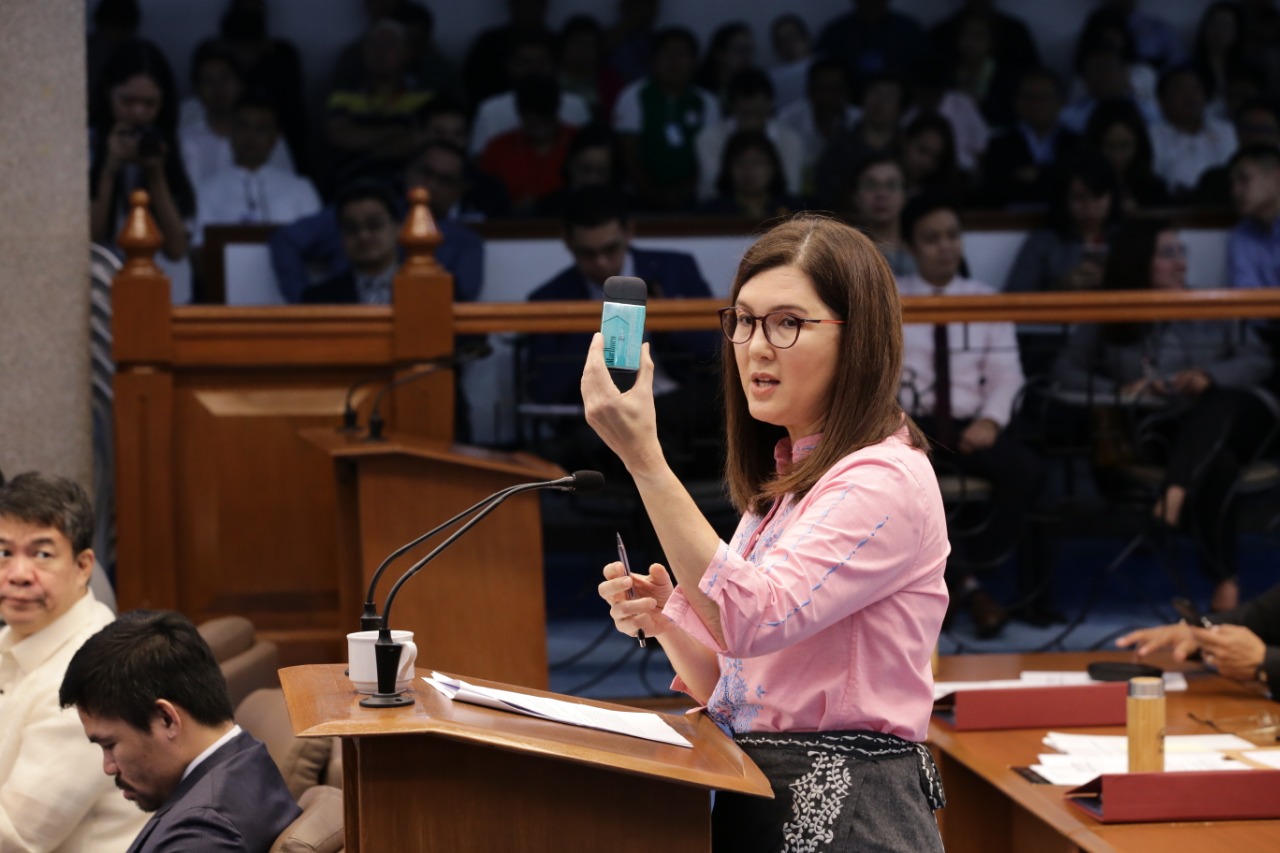
Senator Pia Cayetano: Taxation is “just one tool” to help curb new kinds of vices. She said other pro-health initiatives should be put in place to complement the sin tax bill.
Co-sponsorship speech of Senator Pia S. Cayetano on Senate Bill No. 1086, establishing a Philippine High School for Sports
Mr. President,
This is a happy day for me because I drafted and filed this bill 9 years ago. I was so much younger then and ran so much faster. But so did the presiding officer.
It is no secret that I am a believer in sports, and I believe that sports can change lives. I am proud to be a member of a Senate where majority of the members include sports in their lives:
Needless to say, Sen. Manny Pacquaio is considered as one of the greatest professional boxers of all time.
Senator Manny Pacquiao is the only boxer in history to win world titles in eight different weight divisions.
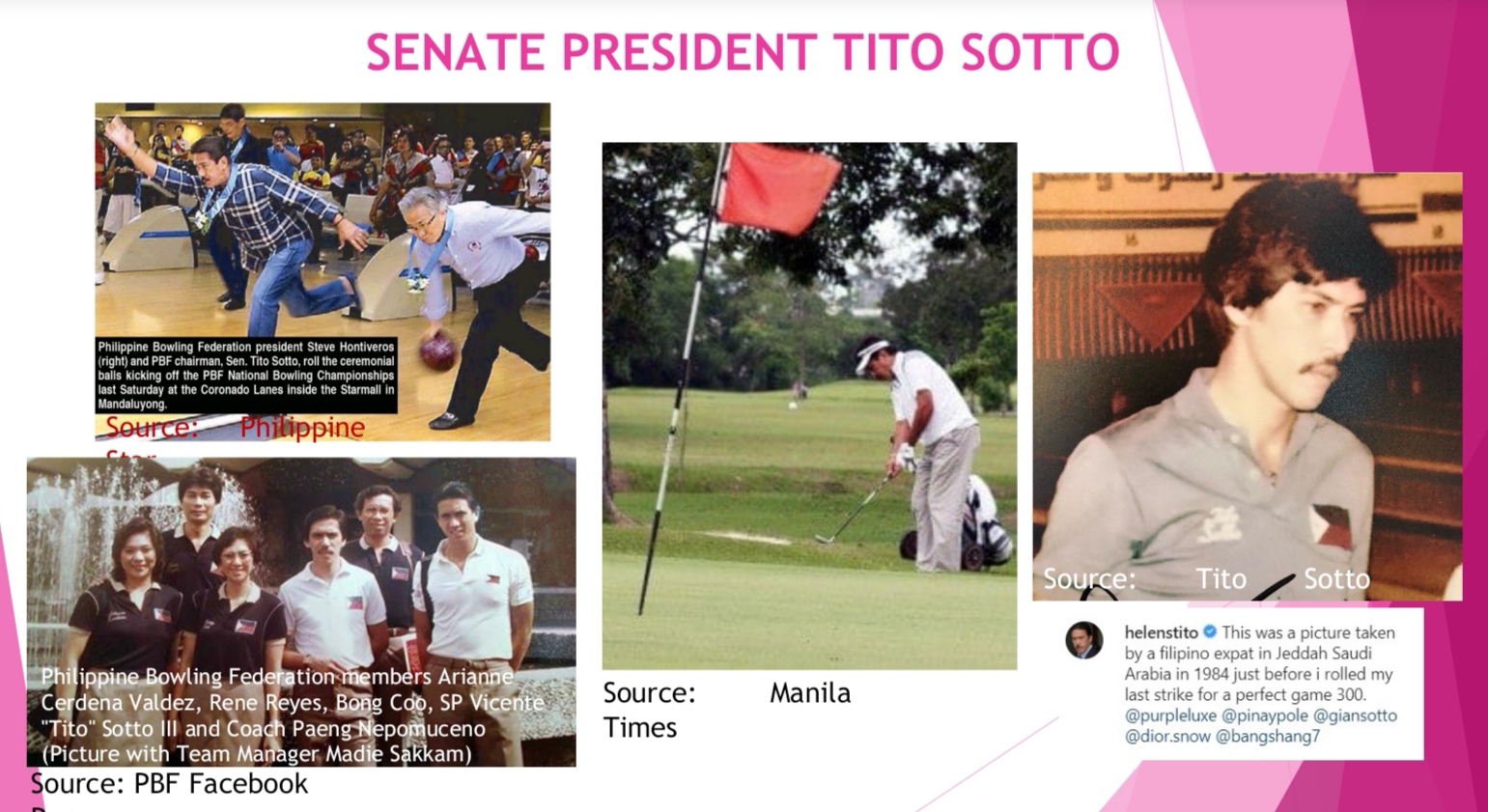
The Senate President, Philippine National Team in bowling, garnered gold several times, and currently is a golf enthusiast who still continues to win tournaments.
Senate President Vicente Sotto III was a 7-time member of the Philippine bowling team. He competed twice in the World Cup and was an international gold medalist in ten pin bowling.
Our Majority Floor Leader, Migz, National Champion and 1989 World Champion. I saw the video and I wish we could play it. But please interpellate me later on so I can play that World Championship… the winning moves. I think a few kilos lighter.
Senate Majority Leader Migz Zubiri was a world Arnis champion.
And then we have our “never say die” basketball players. Sen. Joel Villanueva, a UST Growling Tigers UAAP champion 1994-1995 and Philippine national team.
Senator Joel Villanueva played for the UST Growling Tigers champion team and the Phllippine national basketball team.
And then Senator Sonny Angara, who is part of the Senate Defenders – that is the official name of our basketball team.
Senator Sonny Angara plays for the Senate Defenders. The team actively competes in inter-government agency basketball tournaments, such as the UNTV Cup.
Sen. Bong Go, who brings serious professionalism to the games that he plays with the likes of my brother. He was part of the roster of the Muntinlupa Cagers in the Maharlika Basketball League, a pro league started by Sen. Manny Pacquiao.
A known supporter of sports in Davao City and national athletes, Senator Bong Go was part of the Muntinlupa Cagers’ roster in the Maharlika Pilipinas Basketball League (MPBL).
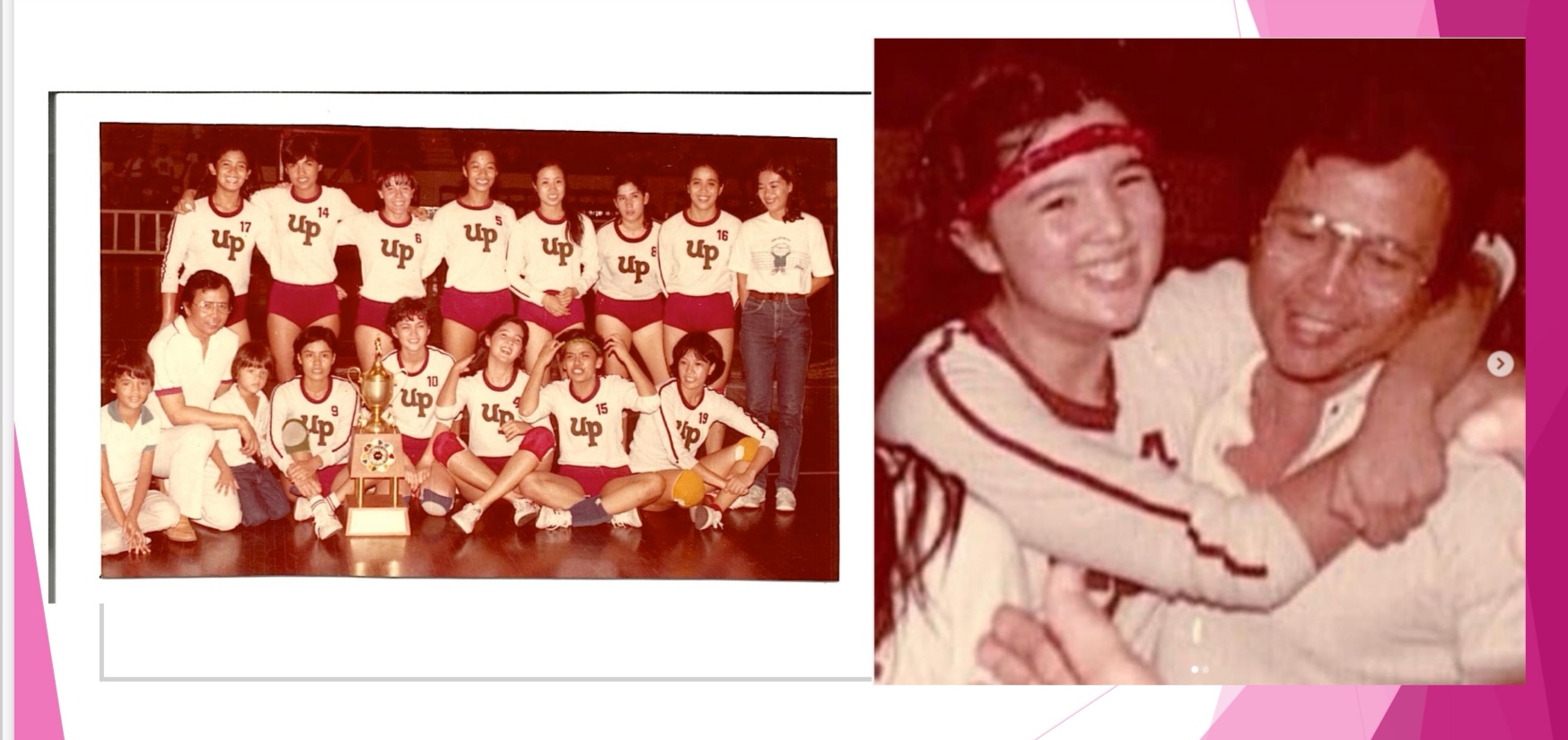
Sen. Kiko Pangilinan, my batch mate in UP, we were both UP volleyball Maroons. And he was also a track and field runner – a track runner.
Senator Francis ‘Kiko’ Pangilinan was a track athlete and volleyball player for the University of the Philippines Fighting Maroons.
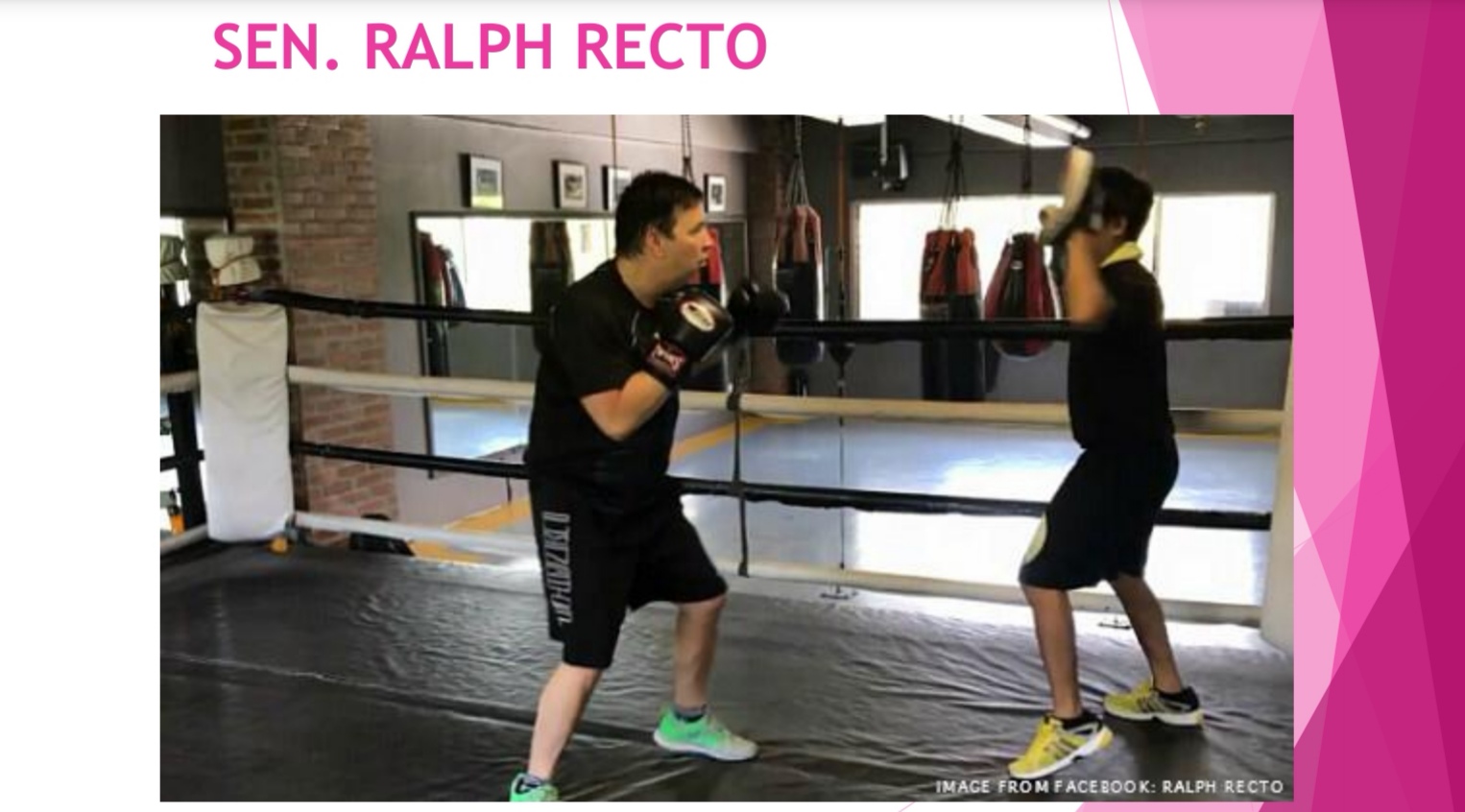
Next is Senate President Pro Tempore Ralph Recto, I approached him to ask for a picture. That is actually not his main sport but that is his current sport. Correct? Am I correct? But his sport as a young athlete included soccer, swimming, and taekwondo.
Young Senator Ralph Recto played football, swimming and taekwondo. His current sport: Boxing.
So again, please interpellate me so that I can put the pictures – the appropriate pictures of Sen. Recto while I am defending this bill.
And then our main sponsor, Sen. Sherwin Gatchalian. That was the… I actually failed to get the full description, but the picture speaks for itself.
The principal sponsor of SBN 1086, Senator Win Gatchalian, played basketball in high school at Grace Christian School and in college at Boston University.
And yours truly, a UP Maroon and National Team Player for Volleyball as well.
Senator Pia Cayetano was part of the last UP Lady Maroons squad to win a UAAP championship. She also played for the Philippine National Women’s Volleyball Team.
Anyway, so now that I have put you all in a better mood, the sad reality we face. Mr. President, is that many of our young athletes who show talent are usually forced to choose between an education and sports. That window where they can shine as an athlete is not open for a long time. They must take advantage of that moment in time. And if they miss it, the moment is gone.
Because of that, some choose to give up schooling, others give up their sports. Those who give up schooling take a huge risk. Betting on sports alone for your future is a shot in the dark. Not everyone gets to be a Manny Pacquiao. After their moment in the lime light, without an education, they have little to fall back on.
I’d like to share another story, which is the story of many athletes today. One of my lawyers, Joei Gana-Teves – she made it to the Philippine volleyball youth team. But her teacher did not believe in sports and considered her absent every time she attended practices and threatened to fail her when she had to leave for one week to participate in the Asian youth games.
She then made a choice to go to the games and was very much impressed but at the same time saddened that other countries like Singapore and Malaysia, had a national sports high school where they were able to study and do the sport they love at the same time.
But this need not happen, Mr. President.
In countries that take sports seriously, they start at a young age. Those who show talent are given the chance to train with the best coaches and with equally talented and driven athletes. They are able to do that because they have sports centers all over the country and they have sports schools – high schools and universities. National sports schools and universities.
I had the privilege of visiting some of these sports high schools in Germany and Spain. The young athletes were able to focus on their sport but at the same time continue their studies.
Fast forward, and obviously, Senator Bong Go and I have the same source. We both have visited New Clark City. This was very early in 2018, when we did some groundbreaking. This is the initial stages of the construction.
Construction of New Clark City Athletics Stadium started in 2018.
Fast forward, not even two years later. This is the New Clark City today….
The New Clark City Athletic Stadium. (September 6, 2019)
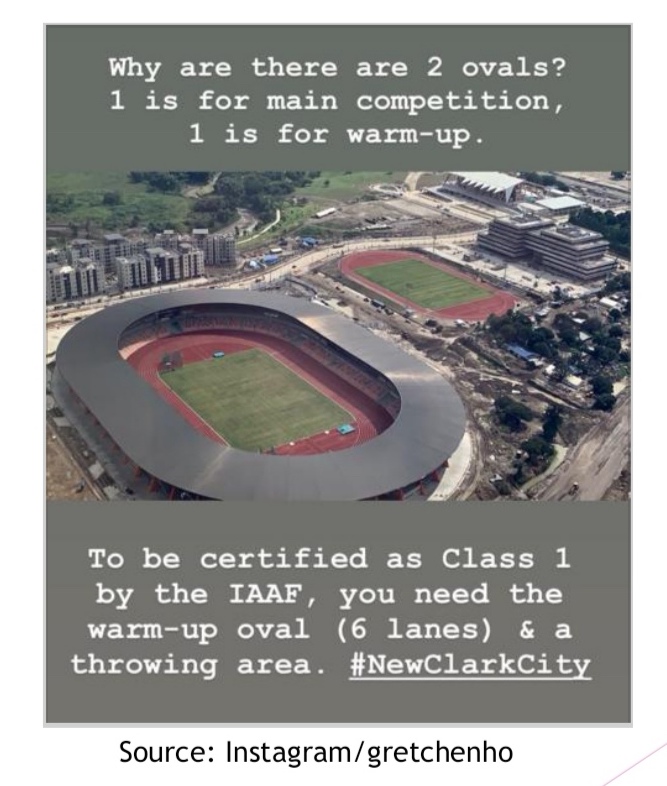
This aerial photo was actually taken from Gretchen Ho. I borrowed that from her. If you look at the main circle, that is the stadium, and the track in the middle is the main track. You will wonder, why is there another track on the upper right side. Well that is the practice track, the warm up track. That is required to have that Class 1 certification.
And, if you look at the next picture I am about to show, so this is the picture of the actual track and stadium, the next picture. Okay, the one on the right is an actual requirement also to get that Class 1 certification. It is an 80-meter indoor track where you warm up just before your event is called. So you have those two warm up tracks in addition to the main track. That is air-conditioned by the way.
I happened to visit a few weeks ago, and those are national track athletes that I was running with.
This is the swimming pool. Take note, that is an 8-lane, 50-meter pool. But that is just the warm up pool. The main pool is 10 lanes and has a bigger capacity. And then on the right side is the diving pool. So together, this is also a world-class certified aqua center, the only one in the country.
This is the dormitories, the same photo that Sen. Go showed you. We actually have the national triathlon team and the national track and field team living in these quarters now. And pretty soon, this will be the home of the Southeast Asian Games athletes who will come here to participate in December.
New Clark City is a sustainable city that will house our athletes for the SEA Games. And this is also where this sports school will be built.
It is envisioned that the students will have access to vocational, sports, and academic tracks so that each of them can still fulfill their own dreams.
Mr. President, Senate Bill 506, which I filed, is considered in this Committee Report. However, my version, Mr. President, specifically has a provision that says that the track will not be limited to sports. Because there are athletes who dream to be other things, to be more than athletes. They can be an athlete and they can have other professions as well.
Just because I am only familiar with the UP graduates, I use them as an example. Mr. President, UP has produced, among others, two summa cum laude graduates, one with a BS in Math, summa cum laude, and another one with a BS in Sports Science who went on and is currently in her third year in med school with PGH UP College of Manila. They did this while being in the varsity of UP. The BS Math major was a Judo player, and the other one was a volleyball player.
Assuming that there was a high school for sports when they were younger, it would have been really sad if we limited them to a sports program, because clearly, they had the ability and the desire to do something else as well.
And that is why we are also pushing for programs beyond sports to be offered for Senior High here. Mr. President, I call on your support dear colleagues. Let us help make these individual dreams come true and at the same time build a nation of winners.
Thank you. #
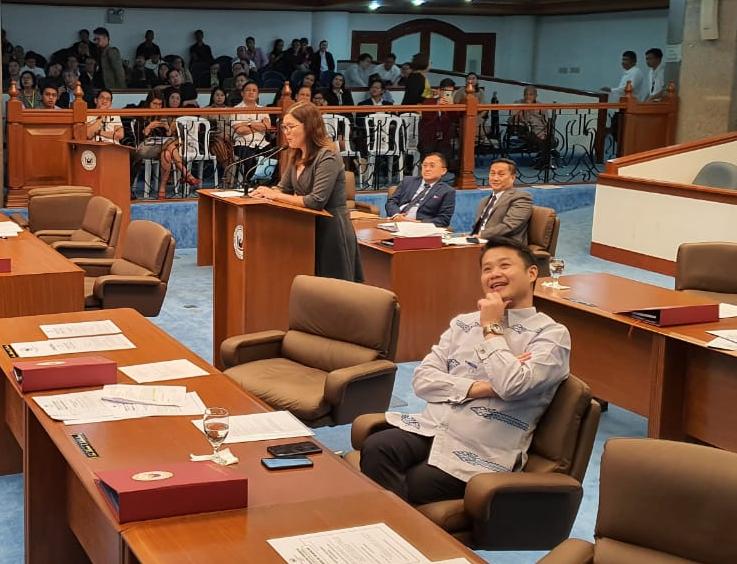
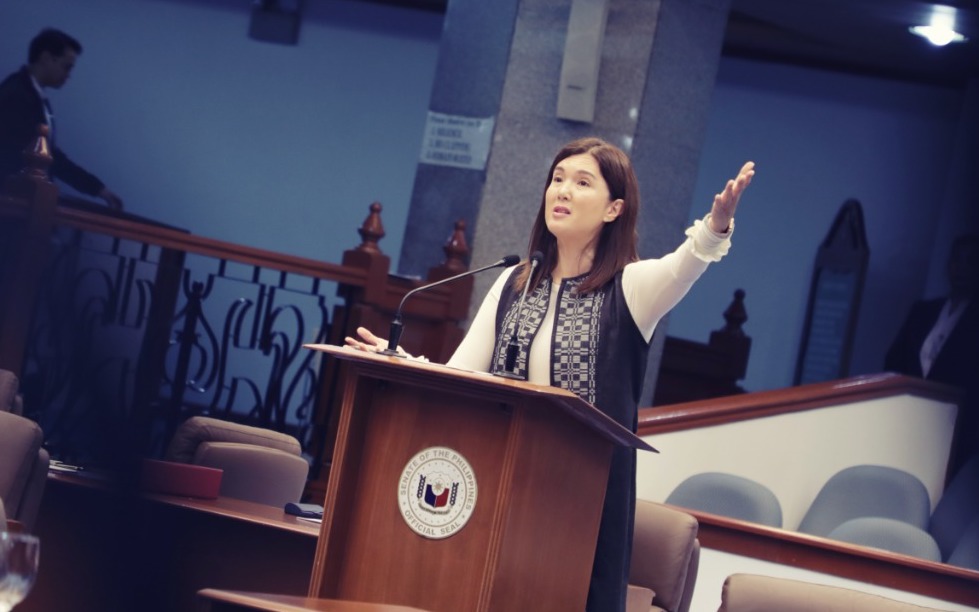
Senator Pia Cayetano delivers her co-sponsorship speech of the bill seeking to establish a Philippine High School for Sports. She showed throwback photos of senators competing in their favorite/chosen sports – to the delight of her colleagues.
The Senate Ways and Means Committee, under the chairmanship of Senator Pia S. Cayetano, has presented to the plenary Senate Bill No. 1074 seeking to increase excise taxes on sin products, with the objective of augmenting funds for universal health care and protecting citizens, particularly the youth, from the harmful effects of drinking and electronic cigarettes.
Delivering her sponsorship speech on Wednesday (September 25), Cayetano stressed the need to impose “significantly higher” tax rates on alcohol, e-cigarettes, and heated tobacco products (HTPs) in order to safeguard Filipinos’ health and wellbeing.
Cayetano’s committee is proposing the following excise tax rates for the different types of alcohol products:
Distilled spirits: an ad valorem tax of 20% and a specific tax of Php 90 per proof liter on Year 1, to be increased by Php10 every year until Year 4, and by 10% every year thereafter.
For fermented liquor and alcopops: a specific tax rate of Php 45 per liter on Year 1, to be increased by Php10 every year until Year 4, and by 10% every year thereafter.
For wine products: a specific tax of Php 600 per liter for sparkling wines and Php 43 per liter for still and carbonated wines, to be increased by 10% every year thereafter.
The Ways and Means Chair explained that the specific tax rate on distilled spirits was raised to Php 90 because they have the highest alcohol content among the different types of alcohol products, and as such are the most harmful to people’s health.
Furthermore, the Committee proposed to tax e-cigarettes, HTPs, and vape products the same rate as conventional tobacco products.
The Committee proposed to tax HTPs at P45 per pack of 20 in 2020, increasing such rate to P5 per pack per year like regular cigarettes. For vape products, the recommendation is to tax those containing freebase nicotine at P45 per 10ml or a fraction thereof; and those containing nicotine salts at P45 per 1ml or a fraction thereof.
Alcohol
In pushing for higher taxes on alcohol, Cayetano said there is “glaring evidence” that the excessive use of such products endangers people’s health.
“Alcoholism is associated with at least 39 main diseases, including liver cirrhosis, cancer, pancreatic disease, hypertensive disease, tuberculosis, diabetes, and even behavioral and psychotic disorders,” she said, citing a report by the Global Burden of Disease Study.
Also, World Health Organization data revealed that in 2016, 4,431 per 100,000 population of Filipinos died from liver cirrhosis; while 16,418 died from hypertensive diseases; and 8,526 from tuberculosis.
“All of which were due to the excessive use of alcohol,” Cayetano pointed out.
“The impact of our problem on alcoholism is not felt by the drinker alone,” she further stressed, adding that excessive drinking is also a common cause of road crashes and a contributor to family violence.
The senator lamented that, with these products becoming more accessible to vulnerable sectors, there is a risk that these numbers and incidents would continue to grow. Hence, the need to increase their prices and make them less affordable.
Cayetano said the measure seeks to address the high drinking prevalence among Filipinos, who on average are already consuming 11 liters of hard alcoholic beverages per year. This is higher than the global and ASEAN averages of below 10 liters.
“Global champion na po tayo, sa inuman. But that is not something we should be proud of,” the senator said, adding that the prices of alcohol in the country should not be so cheap as to allow Filipinos, especially the young people, to easily have access to them.
E-cigs and HTPs
“For the sake of our children, we must regulate and tax e-cigarettes at parity with regular tobacco products. Other countries are already doing this. We should at least keep pace. Vaping is not cool when it leads our kids to the path of new addictions,” Cayetano said about e-cigarette products.
The senator questioned the position of manufacturers and distributors who claimed that e-cigarettes are a viable and less harmful alternative to conventional smoking.
“The industry claims that it is a safer product but medical experts have pointed out that safer does not mean safe or risk-free. We have already seen and heard an avalanche of news of people who died because of lung failure in the United States – people who were consistent users of these vape products,” she said.
“Thus, Mr. President, this representation asks that we err on the side of caution,” she added during her speech.
Apart from the sin tax bill, Cayetano said she plans to file more measures seeking to address the country’s problems associated with alcoholism and the dangers of vaping among the youth.
“This Committee is tasked with the taxation of these products. But this, in no way, limits DOH [Department of Health] and Congress to undertake steps to protect the health of the people,” she said.
“We remain cognizant that taxation is just one tool and that a comprehensive strategy is necessary. We urge DOH [Department of Health] to work with our medical community on this through aggressive interventions and policies.” #
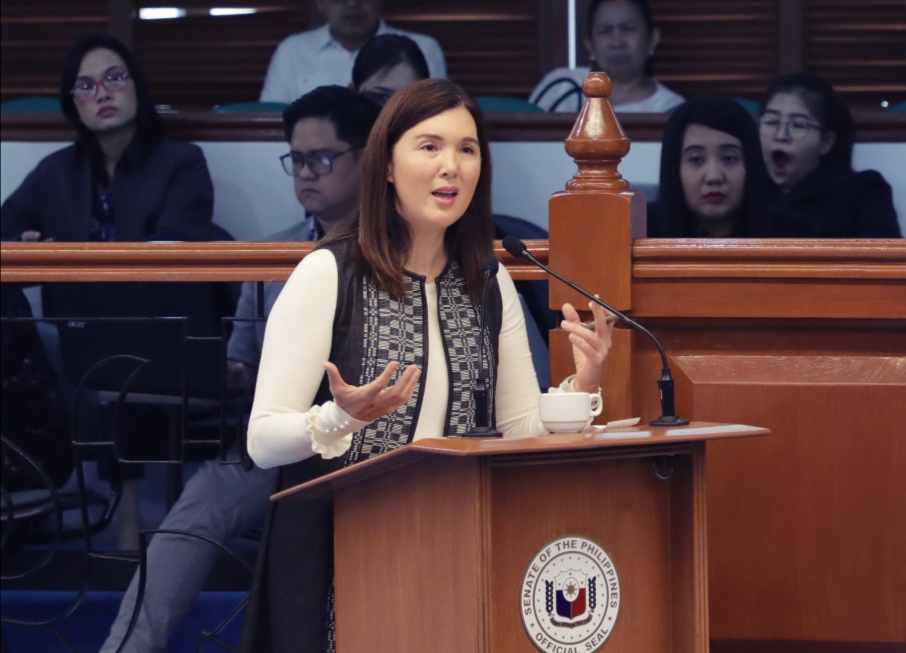
Senator Pia Cayetano: “Global champion na po tayo, sa inuman. But that is not something we should be proud of.”Senator Pia Cayetano: “For the sake of our children, we must regulate and tax e-cigarettes at parity with regular tobacco products.
Senator Pia S. Cayetano is strongly urging health officials to step up their efforts in convincing Filipino mothers to have their kids vaccinated, following the health department’s declaration of a polio epidemic in the country.
The principal author and sponsor of the Mandatory Infants and Children Immunization Act (RA 10152), Cayetano expressed alarm that the Philippines has lost its polio-free status.
The senator made the call after the Department of Health (DOH) reported that a 3-year-old girl from Lanao del Sur was recently diagnosed with polio, marking the return of the dreaded illness to the country after two decades.
Exactly a month ago (August 19), Cayetano delivered a privilege speech in the Senate to call attention to the risks brought about by the country’s deteriorating vaccination rates, particularly for the poliovirus.
In her speech, she said if mothers continue to refuse having their children immunized, the spread of the virus could just be “a snap of a finger away.”
“Since the year 2000, we have already been declared polio-free. My children grew up at a time where there was no more polio. After 19 years, it’s so sad that this (disease) may actually come back,” she stressed.
“All these diseases have already been eradicated or are close to being eradicated because we’ve had a successful vaccination program throughout the decades. But now, mothers are suddenly not bringing their children to the health centers to be vaccinated,” she added.
As early as the 2019 campaign period, the senator has been going around the country reminding health workers on the ground to educate mothers about the importance of vaccination.
“Because of the (dengue vaccine) scare, ang conclusion ng mga nanay ay masama na ang lahat ng bakuna. But time and again, we kept on repeating that this is not true,” she said.
Cayetano called upon the DOH and local government officials to conduct more enticing information drives to keep promoting the government’s immunization program.
“As public servants, we are tasked to ensure that the welfare and health of our children are properly protected. So if we need to shake things up a bit, I think we really should,” she said, reiterating her call a month ago.
“We deprive the life of these children – a life that could be spent climbing trees, playing sports, or enjoying other physical activities – if we let their mothers disregard the importance of vaccination,” she added.#
A month ago, Cayetano delivered a privilege speech in the Senate to call attention to the risks brought about by the country’s deteriorating vaccination rates, particularly for the poliovirus. Cayetano called upon the DOH and local government officials to conduct more enticing information drives to keep promoting the government’s immunization program.
The Senate Finance Committee has approved on Thursday (Sept. 19) the proposed 2020 budget of the Commission on Higher Education (CHED) and 110 State Universities and Colleges (SUCs) in the country, following a subcommittee hearing led by Vice Chair Senator Pia S. Cayetano.
With the approval, CHED’s P40.78-billion proposed allocation for next year will be submitted for plenary deliberations, along with the P49.46-billion proposed budget for the 110 SUCs.
The committee, on the other hand, deferred the approval of the proposed P15.40-billion proposed funding for the University of the Philippines (UP), pending the institution’s submission of required documents to the committee for review.
Cayetano, the panel’s vice chair, has expressed commitment to review the major cuts in the higher education sector’s proposed funding, with the goal of finding a way to bridge the gap, which CHED officials pegged at P11 billion.
“The biggest concern of CHED and SUCs is that they have at least P11 billion [budget cut] that is meant to finance [various education programs]. Ito ang hahanapan natin ng pondo,” the senator said in an ambush interview after the hearing.
“These are [for] students who have previously been awarded scholarships, and then may incoming graduates din na mag-aavail [ng scholarships], so may shortage tayo diyan,” she further explained. Cayetano said she is already looking into possible sources for the additional funding, among which are unobligated funds from the agencies’ 2019 budget.
“Ang ine-expect kong makuha doon sa mga hindi nagamit, mga unobligated [funds] nila is around P8 billion,” she said, clarifying that the amount is still subject to verification.
“We consider our human resources as the most important resource that we have. So their education is very important. I already have the source for funding. We just have to rationalize and prioritize projects,” she added.
The senator further pointed out that the country can still do better in terms of financing the education sector. She cited that the government is spending only 3.9 percent of its gross domestic product (GDP) on education, lower than the six-percent recommendation of the United Nations.
“Our Constitution requires that we prioritize education. Nasusunod naman natin na the biggest agency that receives funding is education. [But] if you compare our spending with other countries, medyo talo tayo. Mas mataas ang spending sa atin ng Laos at Vietnam,” Cayetano noted.
Furthermore, she clarified the status of UP’s budget, which the committee has deferred. “On UP, humingi kasi ako ng development sa status ng projects, because a big portion of the higher education budget goes to UP. And I have been a big supporter [of UP’s budget] for many years,” the senator asserted.
“I just want them to properly explain to me what these programs are, the projects, the timelines, the status, so that tuloy-tuloy naman tayong makatulong sa UP at responsible naman tayo sa paglagay ng pondo,” she added.
During the hearing, Cayetano also vowed to provide additional government support in accelerating infrastructure development for SUCs. She filed Senate Bill No. 64 or the “Build, Build, Build” for Higher Education bill, which lays down a five-year capital outlay plan for state-run higher education institutions.#
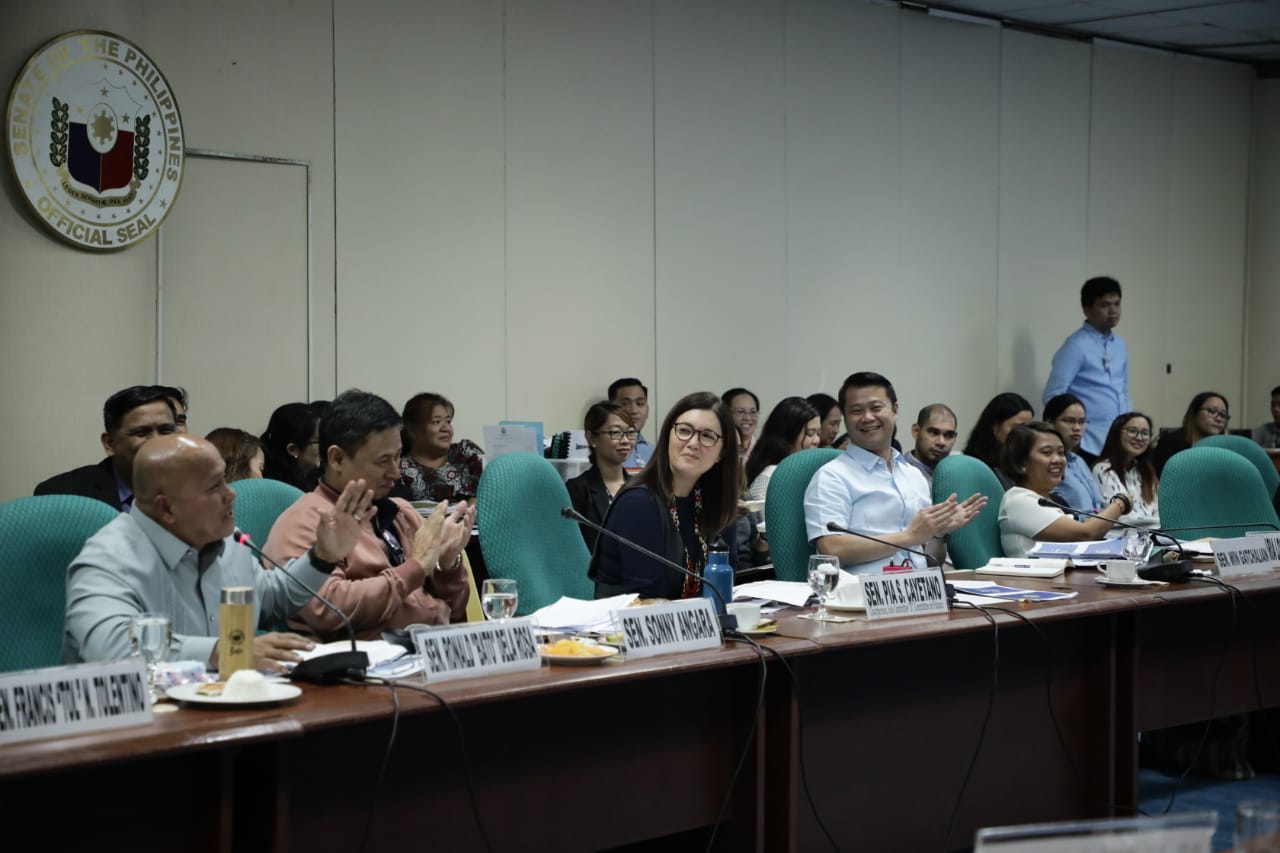
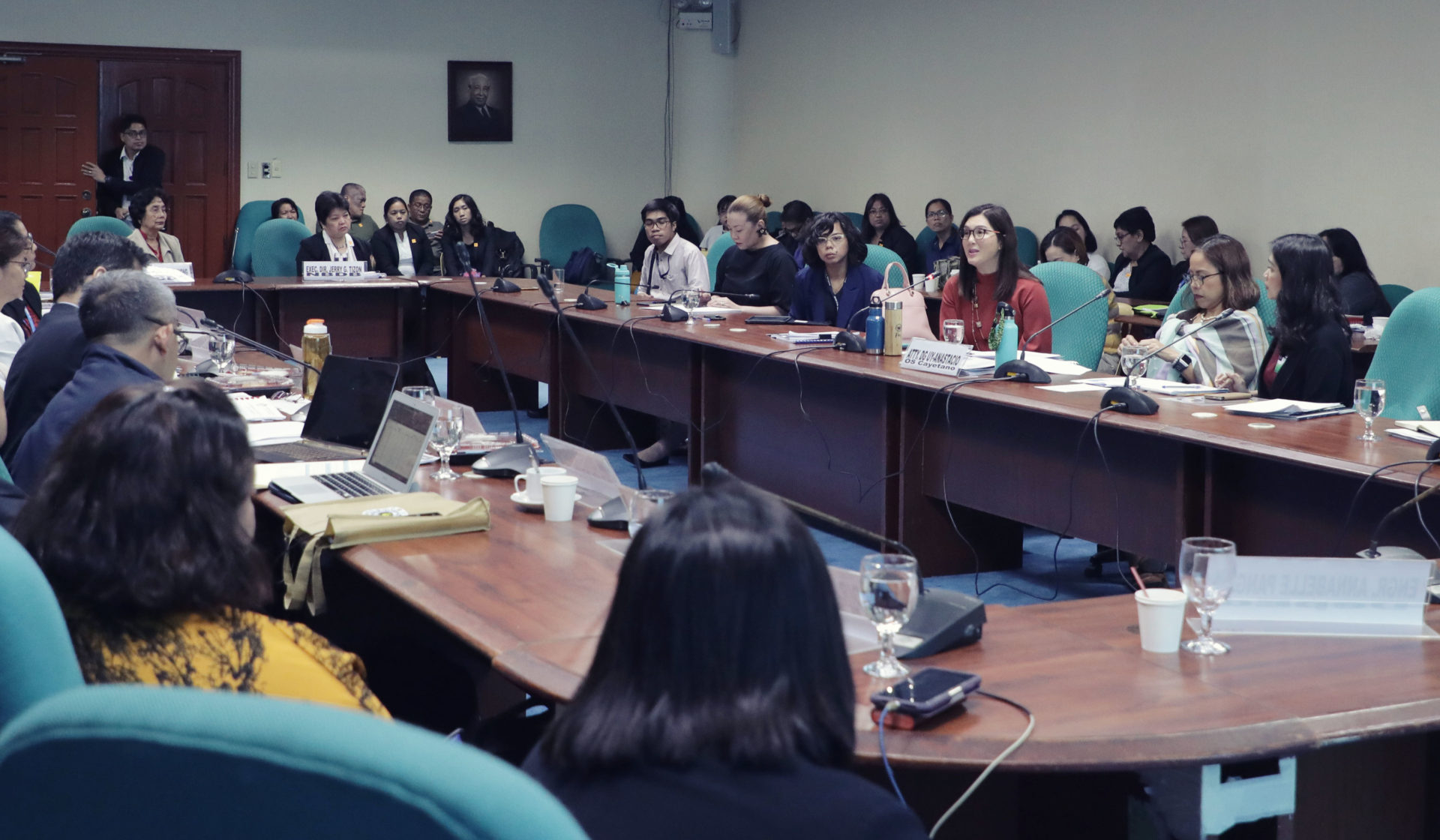
Light moment at the finance committee hearing as senators applaud a manifestation of Senator Ronald ‘Bato’ Dela Rosa.Senate finance committee vice chair Pia Cayetano has vowed to review major cuts in the higher education sector’s proposed funding, which CHED officials pegged at P11 billion.
Transcript of interview with Senator Pia S. Cayetano, Senate Finance Committee Vice Chairperson. Topic: Budget hearing for the Commission on Higher Education and (CHED) and State Universities and Colleges (SUCs)
Q: Ma’am, please give us an overview of the hearing and your thoughts tungkol sa budget ng SUCs, ano ang next step ng committee?
Senator Pia S. Cayetano (SPSC): Of course, budget, finances ang pinag-uusapan. And the biggest concern of CHED and the SUCs is that they have at least P11 billion that is meant to finance yung education – kumbaga, sa madaling salita, parang scholarships ng mga bata – na na-cut, na nabawasan.
So, P11 billion yung hahanapan natin ng pondo. These are students who have previously been awarded scholarships and then may incoming din na mga graduates na mag-aavail, and may shortage tayo diyan.
We need to address this because we consider our human resource the most important resource that we have. So their education is very important.
And let me put on record that if you compare our spending with other countries, medyo talo tayo. Our Constitution requires that we prioritize education. Totoo naman, nasusunod naman natin na biggest agency that receives funding is education. However, the recommendation of the UN is 6 percent. And we are only spending 3.9, almost 4 percent. Mas mataas ang spending sa atin ng Laos at ng Vietnam. At alam mo talagang itong mga bansang ‘to, naghahabol, diba?
So dapat tayo, huwag lang din tayong kampante. Kailangan mag-invest pa rin tayo sa education sector.
I also took note and pointed out that the SUC presidents and CHED also have a role to play. They have to be able to submit all the requirements to prove the funding is properly used.
But on that note, I am happy that I had 5 or 6 other colleagues who all support education. So I am hoping that they will support my initiative to put in more funding for education in general, capital outlays of the SUCs, and the funding of the education itself through scholarships and grants.
Q: Ma’am, yung P11 billion, may idea tayo kung saan pwedeng i-source out?
SPSC: Pwede naman nating… ang proposal ko nga is tingnan yung doon sa mga hindi pa nagamit nila na budget, yung unused portion nila, and they will give me the final amount. Kasi, meron nung 2018 na nalipat nila sa 2019. Pero ‘pag may natira pa doon, dahil may 2019 budget din, baka pwede tayong kumuha doon.
Q: Hopefully, sapat na po ‘yun…
SPSC: Well, I don’t know kasi P11 billion yung total, and ang ine-expect kong makuha doon sa mga hindi nagamit, mga unobligated nila is parang P8 billion lang.
Mga P8 billion is what I hope to get, but that’s subject to verification nila na hindi nagamit yung P8 billion na yun.
Q: Ang hindi na-submit ng UP, ano po ang mga kulang pa nila?
SPSC: Marami, humingi kasi ako ng development sa status ng mga projects, kasi syempre malaking part ng budget [ng SUCs] ang UP, malaki talagang portion of the higher education budget goes to UP. And I have been a big supporter for many years.
I just want them to properly explain to me what these programs are, the projects, the timelines, the status, so that tuloy-tuloy naman tayong makatulong sa UP. Yun lang naman ang sa akin, so that responsible naman tayo sa paglalagay ng pondo.#
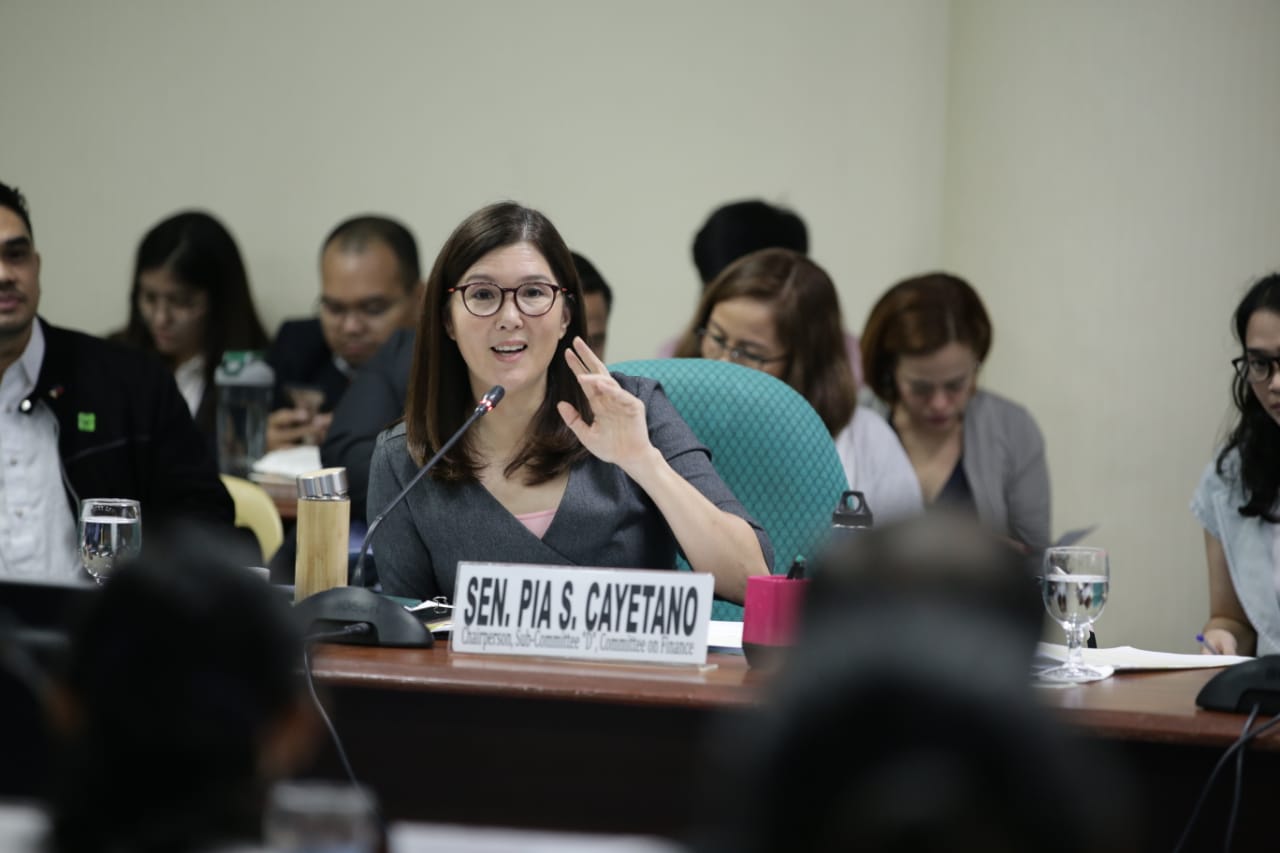
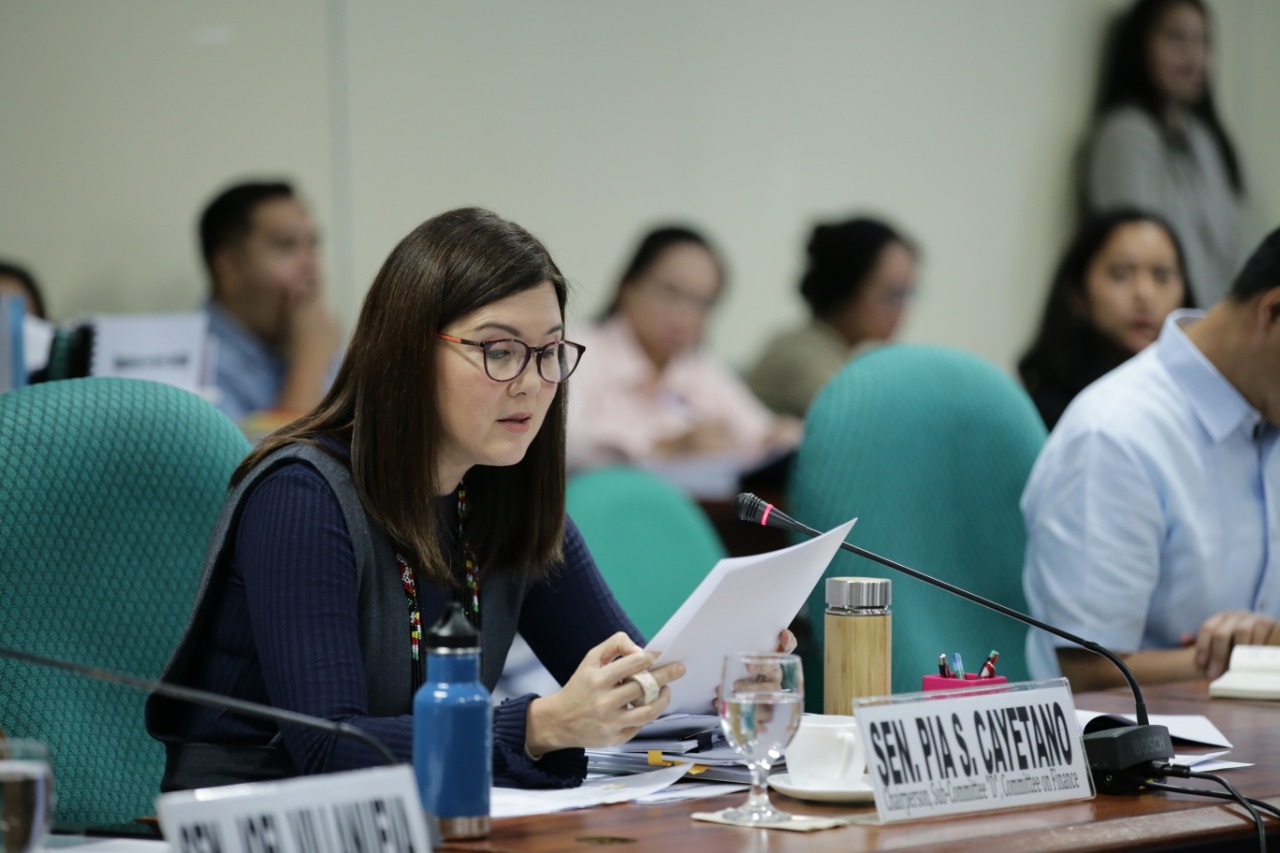
Senate Finance Committee Vice Chair Pia S. Cayetano leads the subcommittee hearing that discussed the proposed 2020 budget for the Commission on Higher Education (CHED) and State Universities and Colleges (SUCs).
The Senate Finance Committee has approved on Thursday the proposed P551.72-billion budget for the basic education sector for 2020, following the hearing of Subcommittee ‘D’ led by Senator Pia S. Cayetano, the panel’s vice chairperson.
The budget for the Department of Education (DepEd) and its attached agencies, which increased by 3.79% from 2019’s P531.57-billion budget, will now move to the plenary for deliberations.
The attached agencies of DepEd include the Philippine High School for the Arts, National Council for Children’s Television, National Book Development Board, National Museum, and Early Childhood Care and Development Council.
“We are happy to support your budget. I also thank DepEd for acknowledging my observation to create an office on innovation and futures thinking for education,” said Cayetano, who also chairs the newly created Senate Committee on Sustainable Development Goals (SDGs), Innovation, and Futures Thinking.
During the budget hearing, DepEd Secretary Leonor Briones showed support for the proposal to create a separate committee on innovation and futures thinking in order to confront new trends in the sector.
Cayetano for her part expressed hope that, after receiving the lion’s share of the P4.1-trillion national budget for 2020, the agency would be able to address concerns involving the country’s public education system.
Among which is the need to improve the teacher-to-student ratio in public schools in the country, by hiring more teachers and adopting learning innovations to oversee the development of students.
“To address the issue of classroom sizes and the lack of learning resources, I want to start the discussion on blended learning,” the senator said, referring to the education style where students are taught through traditional face-to-face teaching, as well as via electronic and online media.
“I am a proponent of multilevel classrooms. I am also a proponent of personalized education… I have yet to go to a public school where the materials available are overflowing,” she added.
The senator then encouraged DepEd to ensure the full delivery of services under its DepEd Computerization Program (DCP), which gives both public school teachers and students access to multimedia tools and technologies to promote digital literacy.
“There are many ways to teach a child. We can make it more exciting,” Cayetano said, adding that technology-based blended learning could enable teachers to attend to the needs of each child in their class.
Meanwhile, the senator also urged the agency to step up in improving the quality of the country’s public educators.
She cited Finland as a model for education reforms, noting that all Finnish teachers have master’s degrees.
“We should be looking at similar targets. We could [allot] a fund and divide it geographically to provide Filipino teachers with scholarships,” Cayetano suggested.
“What I recommend is to have in-house training, as well as scholarships for international training. So that in the coming years, we will have more quality teachers,” she added.
Finally, the senator pushed anew for the improvement of Filipino youths’ English proficiency to make them more job-ready and globally competitive.
“I want to make sure we have a strategic program on [English proficiency] because [this is] our edge among other countries. English competence should not be set aside just because we are teaching [children] in the mother tongue,” Cayetano stressed. #
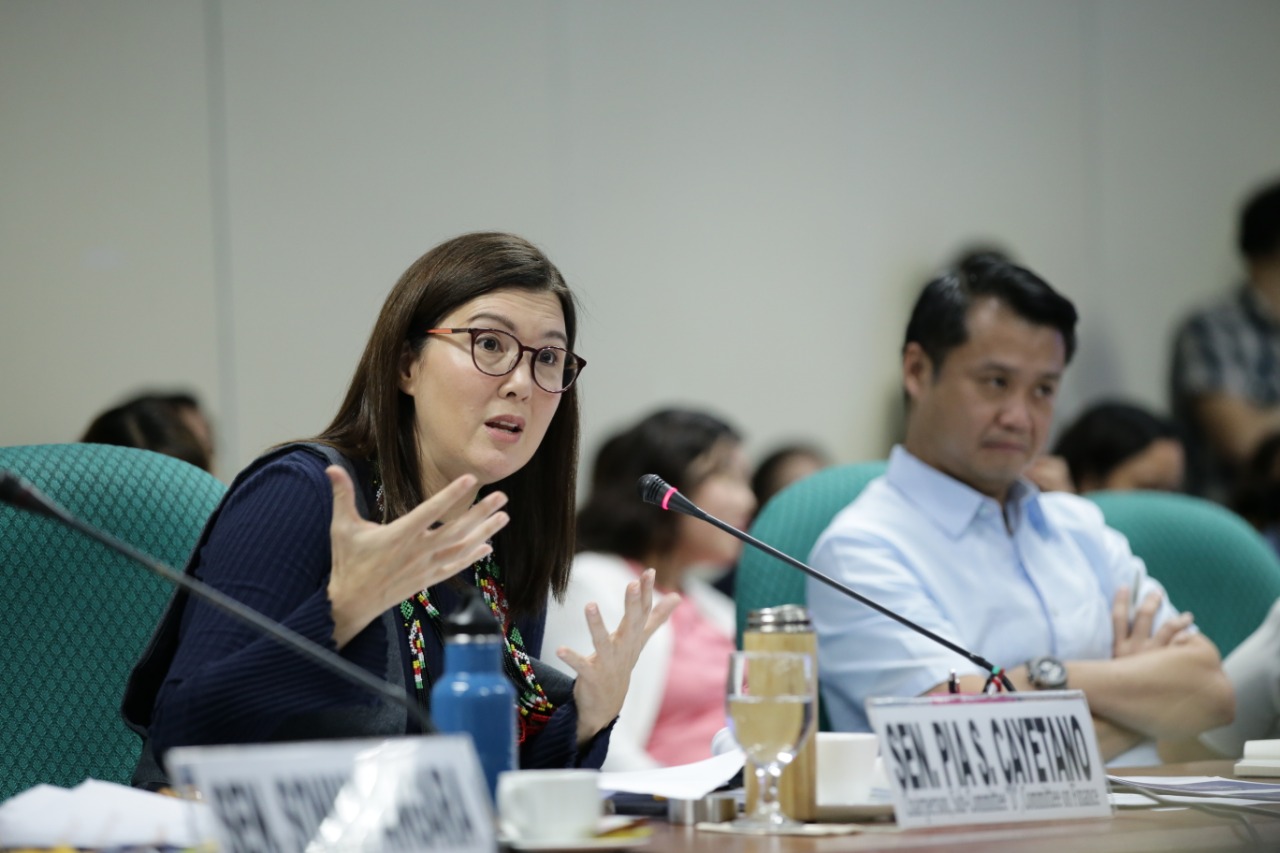
Senator Cayetano expressed hope that, after receiving the lion’s share of the P4.1-trillion national budget for 2020, the agency would be able to address urgent concerns involving the country’s public education system.
“If we could save one life just by listening, then by all means, we should be all ears.”
Senator Pia S. Cayetano had this message for the entire Filipino community on the observance of this year’s World Suicide Prevention Day on Tuesday, September 10.
Cayetano said the annual event sheds light on the need to address high suicide rates across the globe by providing mental health patients with better support and reinforcement.
According to the World Health Organization (WHO), one person dies of suicide every 40 seconds. The Philippines in particular has one of the highest cases of depression in Southeast Asia, affecting more than three million Filipinos.
Moreover, the WHO said suicide is the second leading cause of death among young people aged 15-29 years.
“We have to step up our policies on suicide prevention if we want to protect our youth and guarantee a better future for them. Sometimes all it really takes to save a life is to listen and offer them support,” the senator said.
Cayetano pointed out that in previous years, mental health conditions such as depression were not even covered by our health insurance system.
“Now, we actually have a stronger law on mental health. I hope this boosts our efforts in taking care of our people’s emotional, psychological, and social well-being,” added Cayetano, who authored Republic Act 11036 or the Mental Health Act of 2019.
RA 11036 mandates the establishment of a more holistic approach to mental healthcare in the country by incorporating comprehensive mental health services into the Philippine national health system.
Cayetano stressed that a vital component of the law is ensuring that patients suffering from mental illnesses will have proper access to helplines and support groups that can help them cope with their conditions.
“It’s so important for us to continue taking action in responding to the needs of Filipinos in mental health crises. We can do this by giving them a safe space where they can get proper information and counselling, and more importantly, where they can feel that they are not alone,” she said.
The senator then called on the Department of Health (DOH) to make sure that their suicide prevention hotlines are always available for those who need help.
The DOH recently launched its own National Center for Mental Health (NCMH) crisis hotline, which can be reached at 0917 899 8727 (USAP) and 989 8727 (USAP) operated 24/7.
“I believe that in every call received by these ‘USAP’ hotlines, one person’s life can be saved. And so I encourage our health department to make sure that such initiative is sustainable,” Cayetano said. #
Sen. Pia S. Cayetano: The World Suicide Prevention Day sheds light on the need to provide mental health patients with better support and reinforcement.