Official Website of Philippine Senator Pia Cayetano

News

  • Active mobility, sustainable transport modes pushed

    To make the country’s transportation system truly sustainable, policies promoting alternative means of mobility like walking and biking should be complemented by efficient mass transport systems.

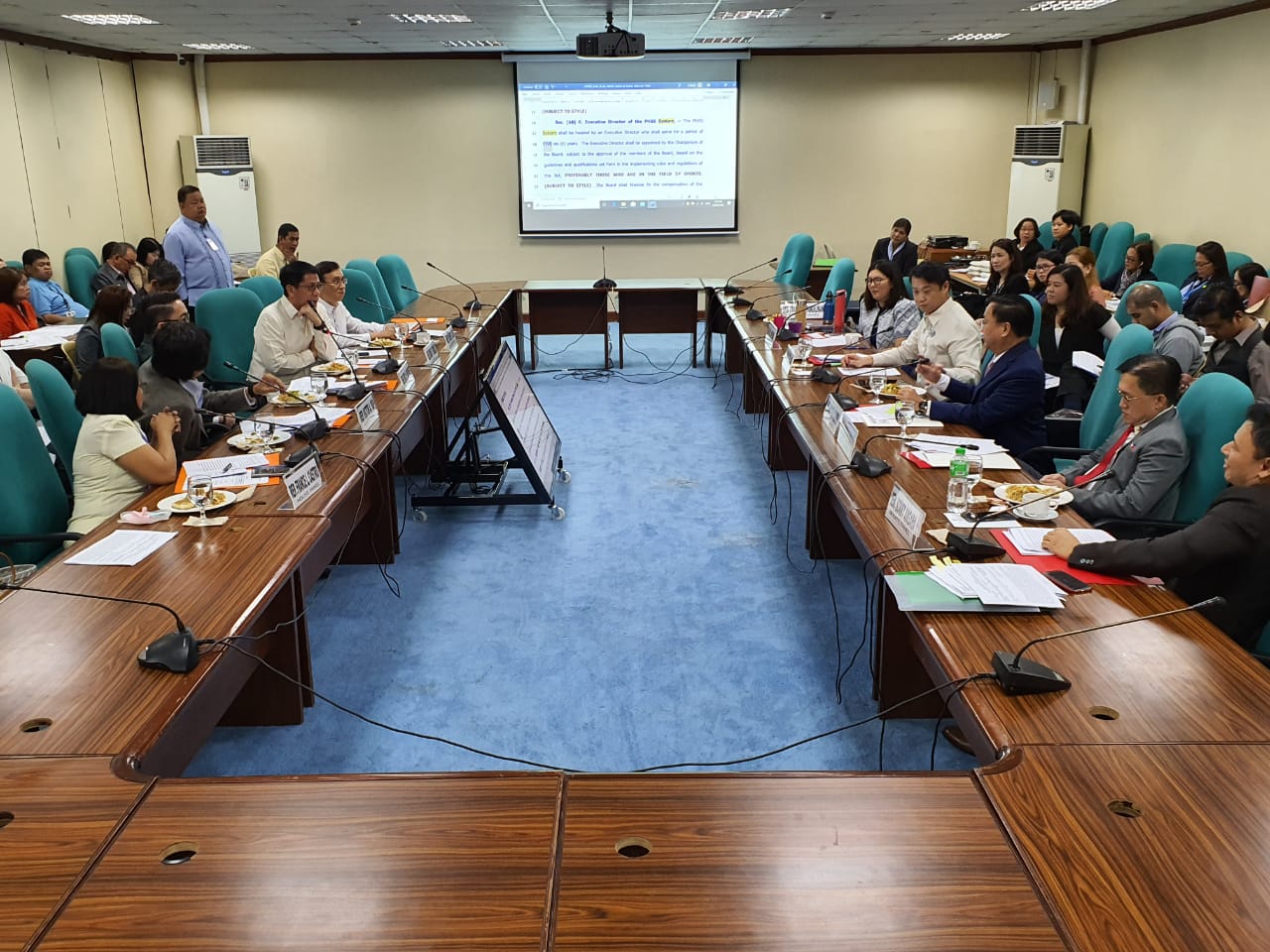
    Thus said Senator Pia S. Cayetano, chairperson of the Senate Committee on Sustainable Development Goals (SDGs), Innovation and Futures Thinking, at the continuation of the joint Senate hearing on proposals seeking to establish sustainable transportation systems in the country.

    “Aside from promoting bikes, we will really need to prioritize [long-distance travels], because naka-tie up talaga itong lahat. Inasmuch as I am a biker by practice, we also need to complement this with other sustainable modes of mass transportation,” she explained.

    “These include the bus rapid transit (BRT), integration of our railway systems, and the use of ferries on major waterways like Pasig [river] and Laguna [lake]. Hindi pa natin nama-maximize ‘yun,” Cayetano pointed out.

    At the hearing held on Tuesday, the Department of Transportation (DOTr) presented its proposed projects on sustainable transport, including low-carbon, modern urban transport systems, the EDSA Busway and Greenway projects, establishment of bike lanes, bike sharing in local communities, and the Cebu BRT project.

    In response, Cayetano urged DOTr to come up with a comprehensive plan and timeframe for all transport-related programs, including their respective budget proposals, to ensure that such initiatives will be in line with the SDGs and AmBisyon Natin 2040.

    “I’d also like to see the plans of PNR (Philippine National Railways), the complete plans for MRT, LRT – anything that has to do with the shift towards sustainability, I’d like it to be presented.”

    “At this point in time, we are way past the examples… We really need [the projects] to be rolled out. And we need the support of DOF (Department of Finance) and NEDA (National Economic and Development Authority). I need them all to be on board… When I sponsor this measure, I [should] know what is already happening and what still needs to be pushed,” the senator stated.

    Meanwhile, Cayetano also stressed the need to have better collaboration among agencies in government to make sure all factors related to sustainable transportation, including the health, environment, and energy aspects, are well taken into account.

    “We need to tie this in to the recommendations of other experts para makita talaga natin… what is the ill effect of being stranded in traffic for so many hours… on mental and physical health… on pollution caused by our usual urban transportation. Those are all factors that we’d like to put numbers to,” she said.

    “That is precisely why the Senate came up with this Committee… so that agencies can have one [panel] overseeing the overlapping issues. That’s also why it is so crucial to me that the Department of Health and the Department of Environment and Natural Resources weigh in on these bills… I really want to bring into the picture [the impacts of transportation on health and the environment].” #

  • Pia seeks budget anchored on programs promoting SDGs

    Senator Pia S. Cayetano is urging the country’s top economic planning agency to come up with specific budgetary targets anchored on helping the  government achieve its Sustainable Development Goals (SDGs). 

    The Chair of the Senate Committee on SDGs, Innovation, and Futures Thinking, Cayetano led the panel’s hearing on Thursday (July 16) to discuss the future of transportation for the new normal and beyond.

    The senator has been actively pushing for sustainable transportation, including the integration of mass transport systems with infrastructure that support active modes of mobility, including more walkways and bike lanes.

    During the hearing, Cayetano urged the National Economic and Development Academy (NEDA) to propose a budget strategy aimed at fulfilling the country’s growth targets under the United Nations’ SDGs and the country’s own AmBisyon Natin 2040.

    “Given that NEDA is the agency tasked to oversee these goals, it would be very relevant for this committee if you can really put targets in terms of budgeting to promote sustainability,” she said.

    The senator said realigning our budget to incentivize sustainable activities would allow the government to maximize its resources in a way that the country would “always move in the direction of sustainability.”

    “If there will be fewer counterproductive activities, then we might be able to spend more for sustainable ones. For instance, if we can reduce expenses in addressing the detrimental effects of pollution on our people’s health, then more resources could be used to build (green) infrastructure.”

    Cayetano also expressed her willingness to hold dialogues and work with different agencies and stakeholders to convince more decision-makers to support funding for the SDGs.

    “These are discussions we need to have about budgeting for the SDGs [and] creating the right environment to promote investments that are sustainable in nature,” the senator concluded. #

  • Key gov’t agencies back Sustainable Cities bill

    Key government agencies expressed their support to Senator Pia S. Cayetano’s proposal to transform the country’s urban centers into sustainable communities that are better equipped for all kinds of future scenarios, including new pandemics and major disasters.

    The Senate Committee on Urban Planning, Housing, and Resettlement conducted a hearing on Wednesday (July 1) to discuss, among others, Cayetano’s Senate Bill No. (SBN) 65, or the ‘Sustainable Cities & Communities Act.’

    Filed last year, the bill seeks to support local governments in transforming their respective localities into sustainable communities. This will be undertaken by ensuring access to basic social services, renewable energy sources, efficient waste management systems, and reliable mass transportation.

    “Studies show that survival of the people really lies on the sustainability of their community,” said Cayetano, chairperson of the Senate Committee on Sustainable Development Goals (SDGs), Innovation, and Futures Thinking

    “When I drafted this bill, a pandemic was not in my mind, but our targets for our SDGs. Now, it is very clear that we need to prepare for all possible future scenarios,” she noted.

    Cayetano said the proposal complements the country’s commitments to the United Nations’ (UN) SDGs agenda, particularly Goal 11, which seeks to make cities and human settlements “inclusive, safe, resilient, and sustainable” by 2030.

    Urban Planning Committee Chair Sen. Francis Tolentino described Cayetano’s bill as “very timely,” especially since COVID-19 has highlighted the need for policy and infrastructural reforms to address the “mounting problems in our urban sustainability programs.”

    “Sustainability transcends this contagion. And we must look for solutions. More than ever, we have to review and recalibrate our approach on urban development,” Tolentino stressed, citing data estimating more than half of the world’s population will live in urban centers by the year 2050.

    Tolentino also suggested that education and the right to adequate housing be included as key targets in creating sustainable cities and communities under the bill.

    Meanwhile, Department of Human Settlements and Urban Development (DHSUD) Secretary Eduardo Del Rosario said SBN 65 will help enable the agency to assist different cities and municipalities in crafting their respective land use and development plans.

    “DHSUD fully supports Senate Bill No. 65… [It] will further support the efforts of the national government… in fine-tuning and strengthening the crafting of the Comprehensive Land Use Plans of all municipalities and cities nationwide,” Del Rosario stated.

    Department of Education (DepEd) Undersecretary Tonisito Umali meanwhile said that the agency “completely agrees” with the objectives of SBN 65, and how education will fit in the model for sustainable cities and communities, as articulated in the bill’s provisions.

    Department of Interior and Local Government (DILG) Undersecretary Ricojudge Echiverri also said SBN 65 will further promote local autonomy and community empowerment, which is one of the agency’s mandates.

    “The department has been implementing programs and projects to promote sustainable communities at the local level. Thus, we manifest nothing but support for this measure,” Usec. Echiverri said. #

  • Strategic foresight needed for future of education

    Senate Committee on Sustainable Development Goals (SDGs), Innovation, and Futures Thinking Chair Pia S. Cayetano on Thursday reiterated the importance of strategic foresight in crafting policies that will help the education sector prepare for all possible scenarios in the new normal and beyond.

    Cayetano said a clear proof of the importance of Futures Thinking in the sector is the Department of Science and Technology’s (DOST) initiative a few years ago to develop 132 self-learning modules on science and math subjects for grade schoolers.

    DOST’s Science Education Institute (DoST-SEI) director Dr. Josette Biyo shared details of this initiative during the Senate Committee on Basic Education hearing. She said the modules were conceptualized before the pandemic four years ago, and were developed in a span of two years.

    Following consultations with educators, experts, and DepEd officials, the Institute was able to develop modules, transform them into scripts, and digitize them for animation. Teachers were also trained to use the modules, which the agencies made sure would fit the K-to-12 curriculum.

    “We had to tap expert teachers to conduct workshops, write lesson plans, recheck lesson plans, and transform these modules into scripts that have been digitized. After digitization, we validated it. Then in coordination with DepEd, we implemented these coursewares’ [effectiveness] in 20 schools nationwide,” Dr. Biyo shared with the panel.

    Dr. Biyo said the self-learning modules for Grades 1 to 8 were already uploaded via DepEd’s learning platform, whereas the lessons for Grades 9 to 10 have yet to be digitized. The two agencies are also discussing plans to develop radio programs for learners in far-flung areas.

    Cayetano, in response, commended the DOST-SEI for its strategic foresight in preparing these materials early on, stressing that planning for the future of education indeed requires years of preparation and consultations with experts.

    “I want to emphasize – in all fairness to the professionals and officials from DepEd and DOST – that it is really difficult to do this overnight. Obviously, there was a plan and a foresight. All the people who decided to put this together need to be acknowledged for their effort,” the senator said.

    “We can now focus our efforts on the other aspects that have not been touched. Since we already have science and math modules up to the 8th grade, maybe we can focus our attention on the remaining grades. Perhaps the private sector can also be tapped to help with this,” she added.

    In relation to the future of education beyond the new normal, Cayetano expressed support for bills pending at the committee level, particularly Senate Bills 1460 (Basic Online Learning and Distance Education Act of 2020) and 1565 (Education in the New Normal Act).

    She said she recognizes the intention of the proposals, which is to put in place the proper standards for distance education and innovative learning methods when crisis would disrupt our education system.

    The former chair of the Senate Committee on Education, Cayetano sponsored Republic Act No. 10650 or the Open Distance Learning Act, which institutionalized distance learning in tertiary education way back in 2014. #

    Senator Pia S. Cayetano said a good example of Futures Thinking is the Department of Science and Technology’s initiative four years ago to develop 132 self-learning modules on science and math subjects for grade schoolers.
  • Lay down plans for blended learning in far-flung areas

    Senator Pia S. Cayetano on Thursday urged the Department of Education (DepEd) to lay down specific plans for blended learning in basic education, particularly for far-flung areas that have limited access to distance education requirements, including the Internet.

    “I know what the general instructions (of the President) are, but are there going to be exceptions to these rules? Because it’s even harder to deliver distance learning materials for some barangays which have no exposure or may have very limited exposure to the virus,” the senator asked DepEd officials during the hearing of the Senate Committee on Basic Education.

    Cayetano was referring to the general directive of President Rodrigo Roa Duterte, as recommended by the Inter-Agency Task Force on Emerging Infectious Diseases (IATF), that face-to-face classes shall remain suspended until a vaccine for COVID-19 becomes available.

    “Of course we will follow the directive. Don’t get me wrong. But I am proposing that you..make clear what is needed for other scenarios, like in many far-flung areas,” she added.

    The senator had been urging DepEd to present concrete proposals since the sixth weekly report of the President was submitted to Congress pursuant to the Bayanihan to Heal as One Act.

    In the comment she submitted in response to the President’s report, Cayetano asked DepEd to prepare a blended learning method that would include time in school, “provided it is safe… and social distancing measures are in place, such as having a smaller number of students to attend a few days a week on a rotational basis for interaction with their teachers.”

    “I’ve been to barangays in the mountains that are not accessible to cars… Yung kaisa-isa o dalawang teacher sa barangay, kahalubilo naman nila ang mga estudyante to begin with because [their community is] isolated. Mas mahirap pang mag-deliver doon ng distance learning,” she explained.

    Undersecretary Diosdado San Antonio, in response, acknowledged that the DepEd is aware of the realities that Cayetano pointed out. He said in these particular cases, teachers are allowed to meet a small number of neighboring learners on a regular basis so they can provide guidance in person, but not necessarily inside the schools.

    “Those are options that the schools have in terms of ensuring the availability of an opportunity for the youngsters in far-flung areas to be able to learn… Our Learning Continuity Plan (LCP) has identified that as an option,” Usec. San Antonio explained.

    Cayetano said DepEd should exert more effort in clarifying and addressing these special scenarios since they already recognize that the situation exists. She said the agency should bring this to the attention of decision-making bodies to carve out better systems of learning for far-flung areas. #

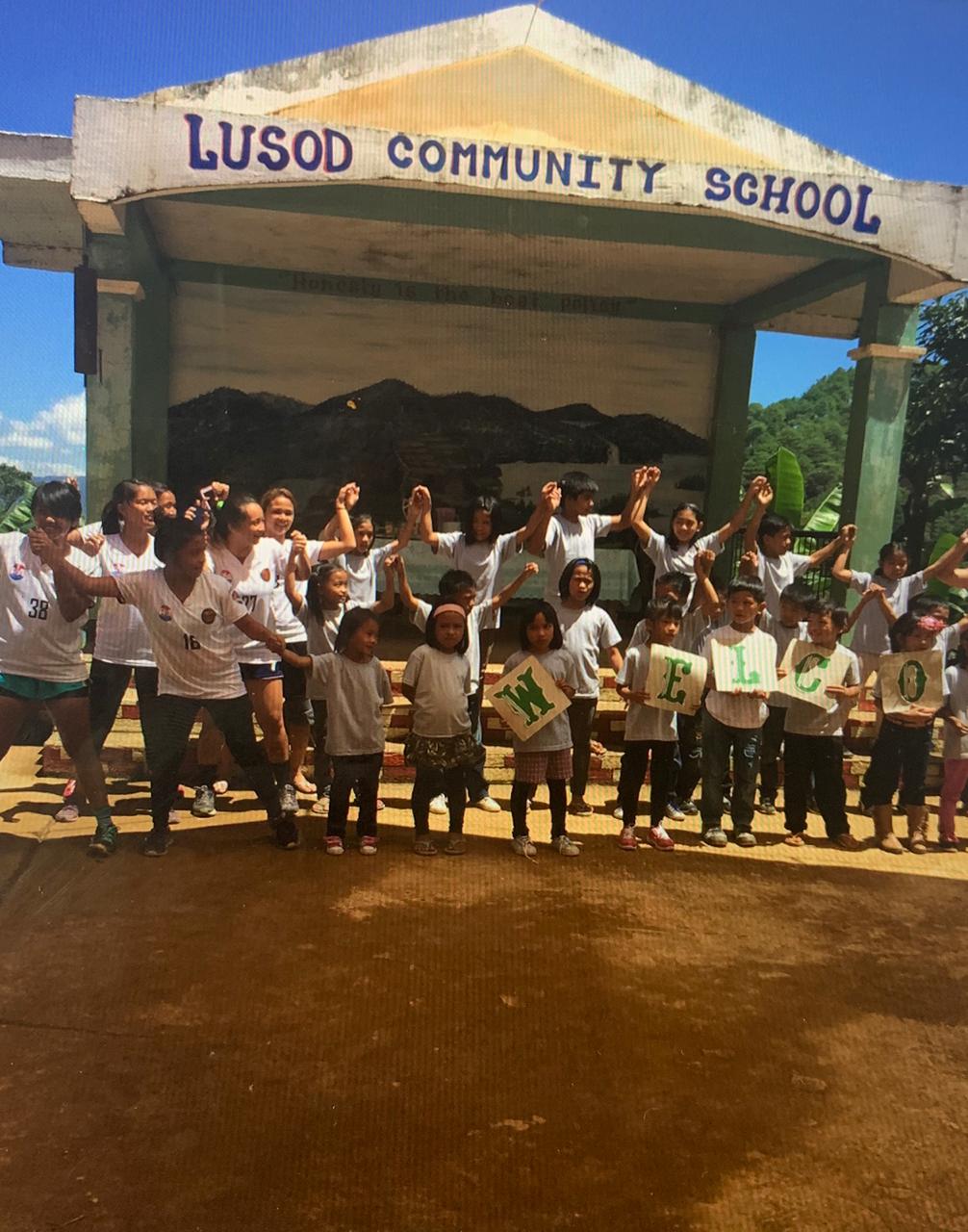
    Pre-pandemic picture from Lusod Community School in Brgy. Tinongdan, Itogon, Benguet. Sitio Lusod is an upland community which Senator Pia Cayetano has visited several times.
  • Nat’l Academy of Sports: Dream comes true for Filipino athletes

    Statement welcoming the signing of the National Academy of Sports Act

    By Senator Pia S. Cayetano
    Principal author and co-sponsor, RA 11470

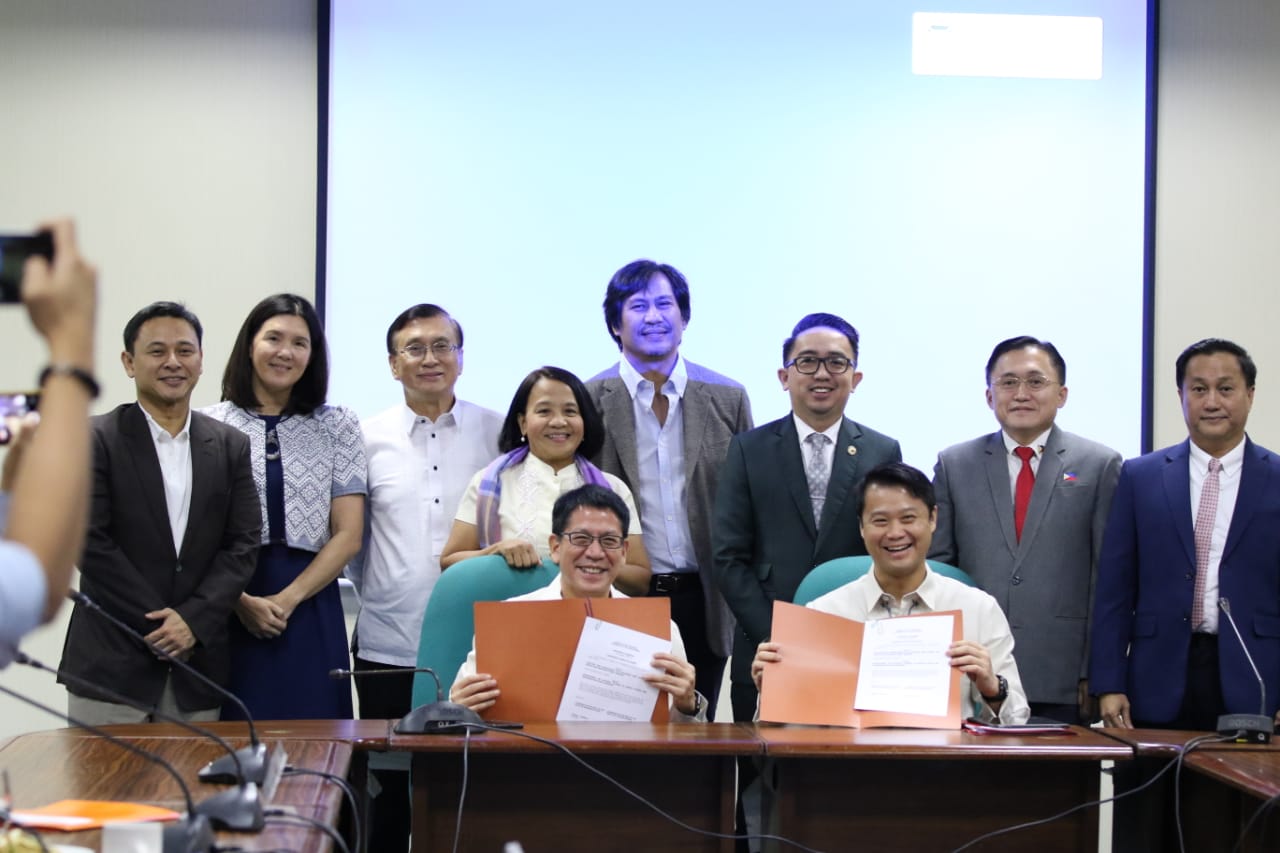
    Ten years after I first filed the Philippine High School for Sports (PHSS) bill, it is now a law! Republic Act No. 11470, renamed as the National Academy of Sports, was signed into law by President Rodrigo Roa Duterte today.

    I thank our President and all my colleagues in the Senate and House who made significant contributions to this law and for making this a reality.

    I have always believed that sports can transform lives and uplift communities. As a former student-athlete and national team player for volleyball, this measure is close to my heart, and has been part of my advocacy for a decade. I remember filing my first version of this proposal back in 2010, based on an idea shared by Fr. Carmelo “Tito” Caluag. Then a member of the House of Representatives, Senator Sonny Angara also filed a similar bill in the Bigger House.

    Over the years, I have visited national training centers and high schools for sports in other countries. These centers have allowed their young student-athletes to pursue their passion in sports, get the training they need, and still stay in school. We have so much talent all over the country, but for many student-athletes, it has always been a choice – to study or to train. Now they can have both!

    With the enactment of this law, we are a step closer towards building a better future for millions of young Filipinos who have the potential to excel both in sports and in life. They can now receive world-class training while pursuing their academic education. The COVID-19 pandemic may have changed much of the way we live, but it will just be a matter of time that our athletes will be back training in full force.

    This law will certainly open more doors for our youth, including opportunities for college scholarships and the chance to represent our country. But beyond this is the opportunity to build their character and teach them values like hard work and discipline through sports, which will prepare them for a brighter future ahead. These young athletes will bring honor to their families and hometowns, and will become our next generation of homegrown heroes!

    The National Academy of Sports will be instrumental in cultivating national pride. Training with the best in the country will elevate our young athletes’ level of  performance in regional and international sports competitions. This will enable us to build on our recent victory in the 30th Southeast Asian (SEA) Games. The foundation has been laid; the time has come to build a nation of winners. And we will continue to win as one! #

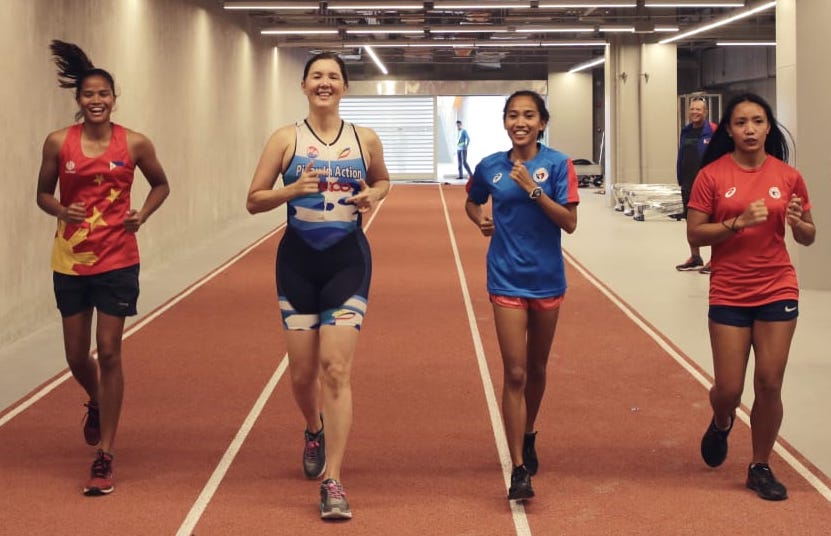
    Senator Pia S. Cayetano trains with female members of the Philippine Heptathlon Team at the indoor track facility of the New Clark City Athletic Stadium.
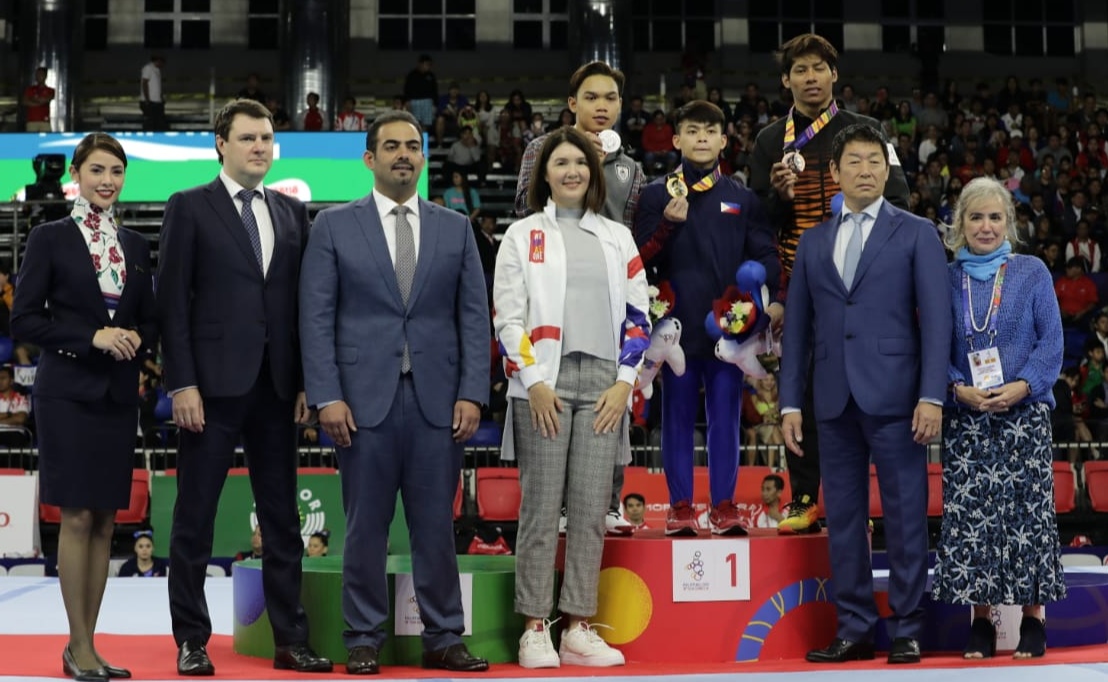
    Senator Pia Cayetano was one of the earliest supporters of the country’s budding national gymnastics program that produced Carlos Yulo, the most bemedalled Filipino athlete of the 2019 Southeast Asian Games.
    With world-class pole-vaulter EJ Obiena, one of the Philippines’ gold medal hopefuls for the Tokyo Olympic games, which have been moved to July 2021 amid the COVID-19 pandemic.
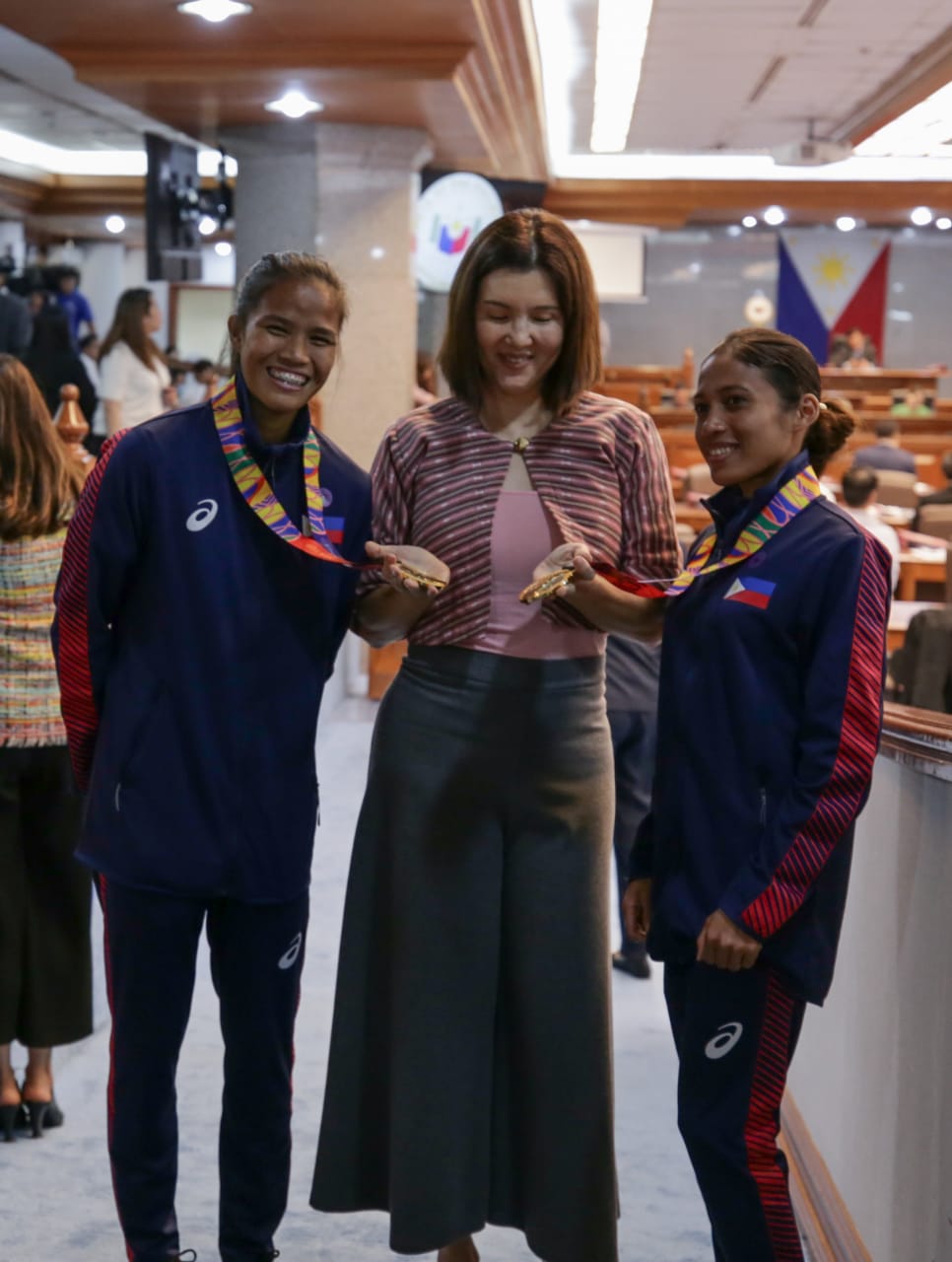
    Bukidnon’s pride heptathlete Sarah Dequinan and long-distance runner Christine Hallasgo personify the wealth of athletic potential among the Filipino youth, especially in the provinces.
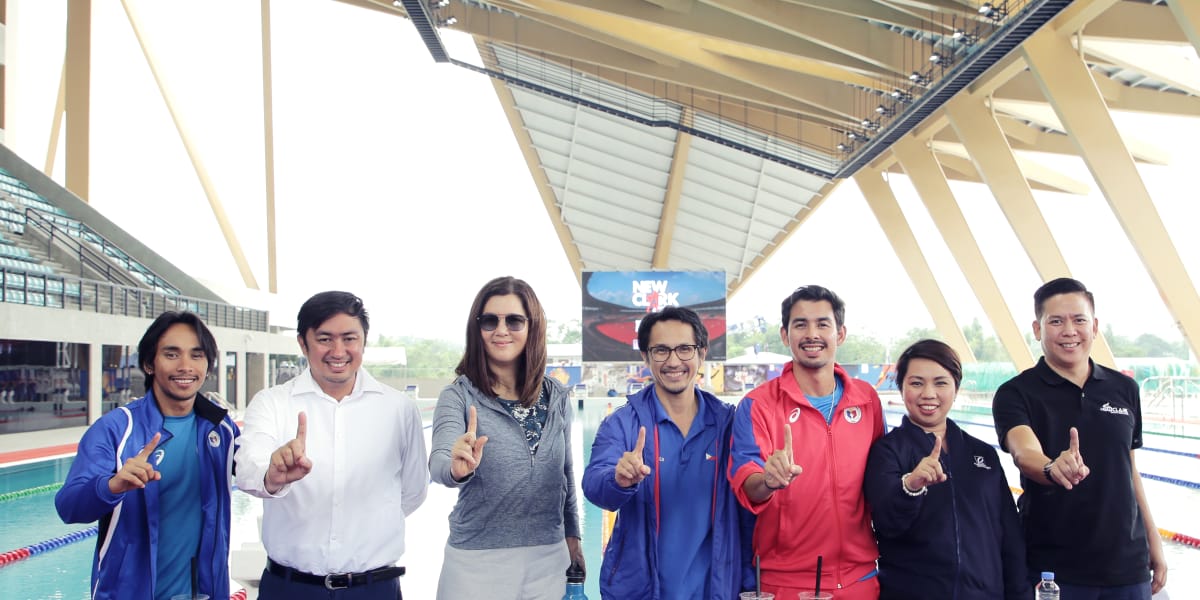
    The National Academy of Sports will rise at the sprawling New Clark City complex in Capas, Tarlac. File photo of Senator Pia Cayetano with triathlete John Chicano, who won the Philippines’ first gold at the 2019 SEA Games, and officials and partners of the Bases Conversion Development Authority (BCDA) led by Chair Vince Dizon at the world-class New Clark City Aquatics Center.
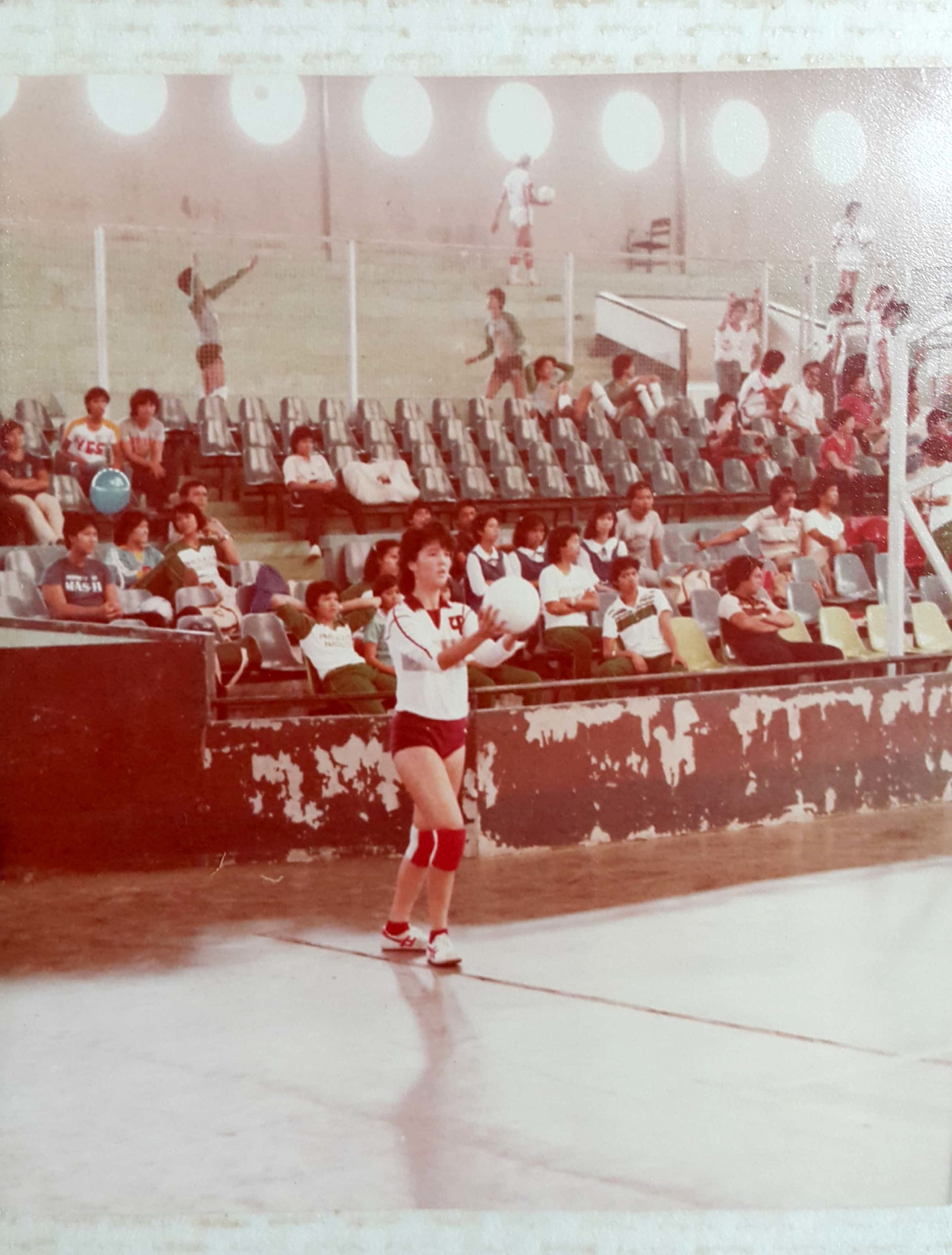
    Serving for Philippine sports then and now: Former national volleyball player-turned-lawyer-and-senator Pia Cayetano credits her sports training for her discipline and character.
    Working with House and Senate colleagues at the bicameral conference committee meeting on the National Academy of Sports bill.

  • Senators cross party-lines to back Pia’s Safe Pathways Act

    Crossing party-lines, members of the majority and minority blocs in the Senate have expressed their support for the “Safe Pathways Act” (SBN 1582), the measure being pushed by Senator Pia S. Cayetano to establish a network of bicycle lanes throughout the country.

    The bill’s supporters include Senator Francis Tolentino, who established bike lanes in Metro Manila during his stint as chairperson of the Metro Manila Development Authority (MMDA). The senator also recently filed Senate Resolution No. 411 urging appropriate government agencies to designate, develop, and improve bicycle lanes in the metropolis during the COVID-19 pandemic.

    “I am more than willing to sponsor this measure [SBN 1582]. I join the good sponsor in dreaming that in the next few weeks [or] days, [we will] have permanent bike lanes in Metro Manila,” Tolentino said following Cayetano’s sponsorship speech on World Bicycle Day (June 3).

    Senate Minority Leader Franklin Drilon, meanwhile, described the bill as a “timely measure”, adding that he has a “personal attachment” to the proposal as his home city, Iloilo, had long established dedicated bicycle lanes, which he hopes to be a model nationwide.

    Senator Ronald dela Rosa, for his part, said: “Like the Chair of the Sustainable Development Goals, Innovation, and Futures Thinking (Cayetano), I am also a cycling enthusiast. I am happy that we are giving priority to our bicycle riders by giving them lanes. This is why I strongly support this bill and I hope we pass this.”

    Senator Richard Gordon also thanked Cayetano for leading the initiative towards promoting bicycles and other modes of sustainable transportation. He said this could be an opportunity for the country to boost its own bicycle industry and in turn create more jobs for Filipinos.

    “I join the lovely sponsor in support of this lovely bill that will make us lovely people,” Gordon stated.

    Another member of the minority bloc, Senator Risa Hontiveros, likewise backed SBN 1582: “I would like to express my support to this bill authored and sponsored by Senator Pia, and join [her] as well in this realizable hope that this act establishing pop-up bike lanes and emergency pathways will help evolve the infrastructure for these bicycle lanes becoming a permanent feature of our urban centers and cities.”

    In addition, Senators Grace Poe, Ralph Recto, Bong Revilla, Manny Pacquiao, Sonny Angara, and Joel Villanueva, have expressed their intent to be co-sponsors and/or co-authors of the bill.#

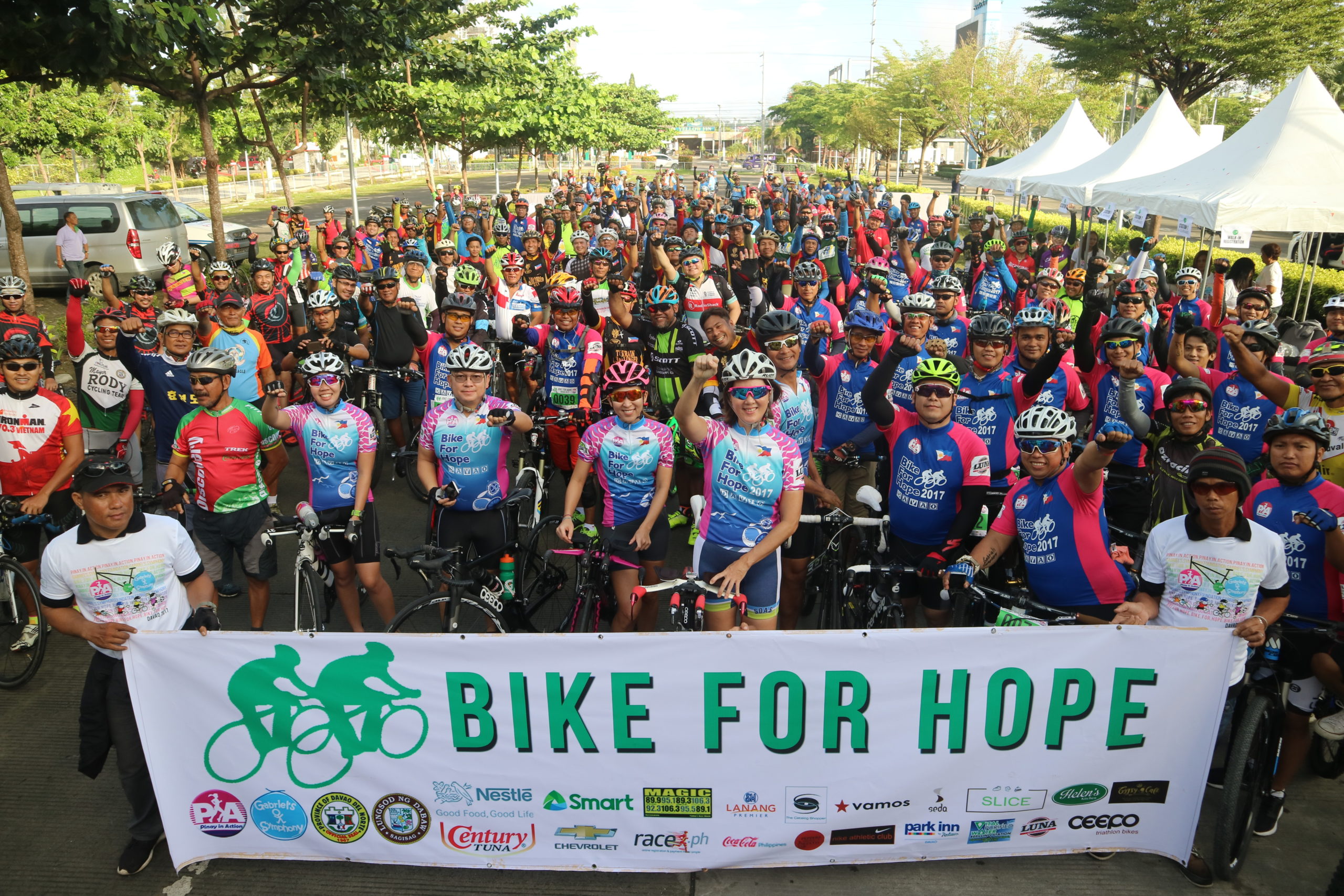
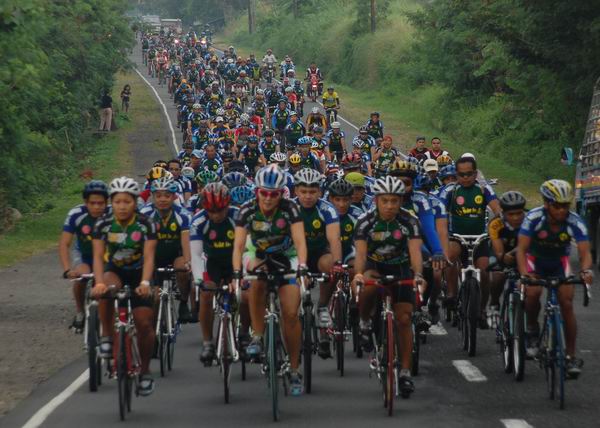
    Bike for Hope across the Davao Region, from Davao City to Davao del Norte, led by then House Deputy Speaker and Taguig 2nd District Representative Pia S. Cayetano. (File photo: January 22, 2017)
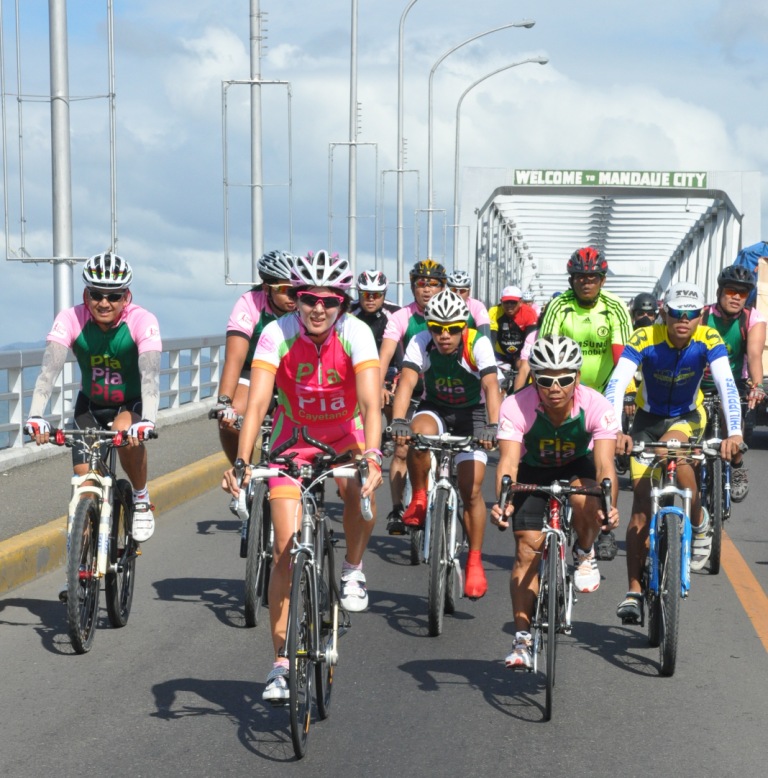
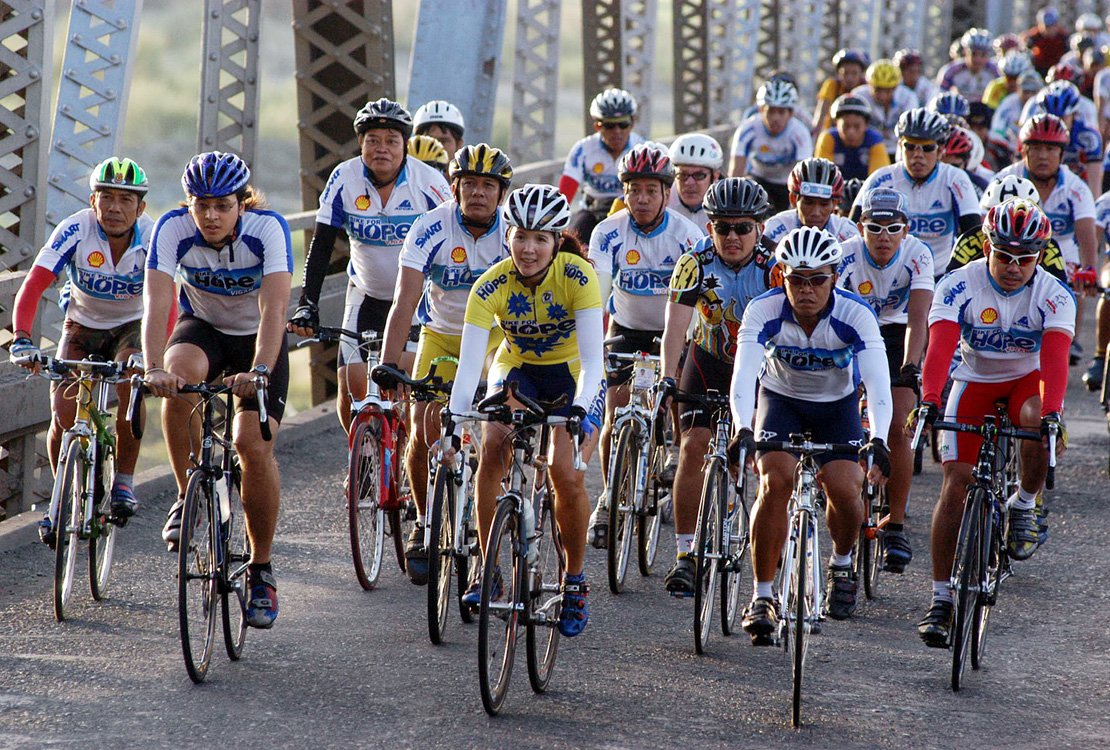
    Senator Pia Cayetano leads bikers across the 1st Mactan-Mandaue bridge en route to Lapu-Lapu City, Cebu. (File photo: January 10, 2010)
    Senator Pia S. Cayetano leads Bike for Hope across the Bicol region from Naga City, Camarines Sur to Legazpi City, Albay. (File photo: February 2, 2008)
    Senator Pia Cayetano (center) and her brother Lino Cayetano (2nd from left) lead more than 300 bikers across one of Ilocos Sur province’s iconic bridges. File photo from the 4th Bike for Hope, a 110-kilometer advocacy bike ride that started in Balaoan, La Union and ended in Vigan City in Ilocos Sur.  (January 21, 2006)
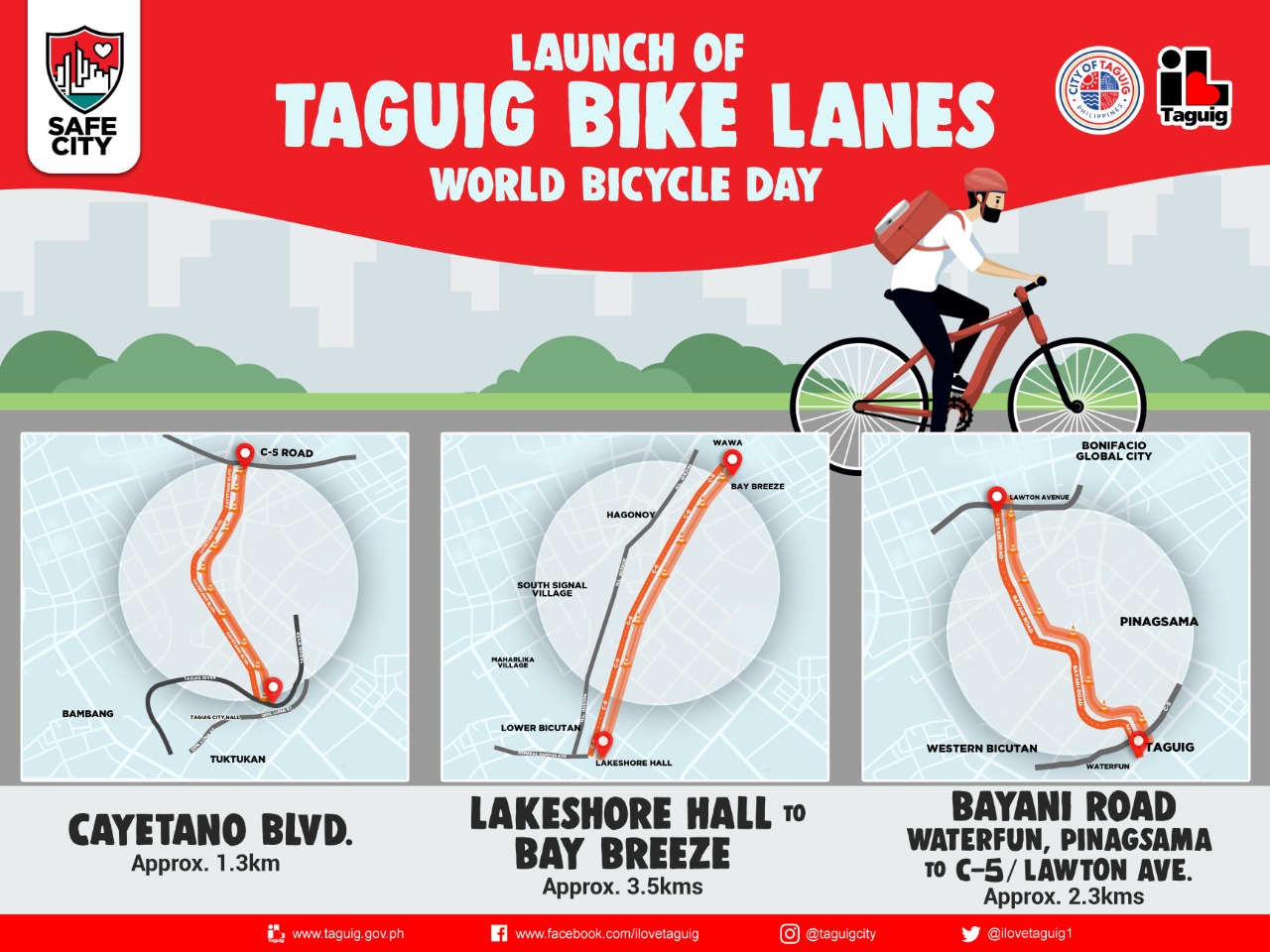
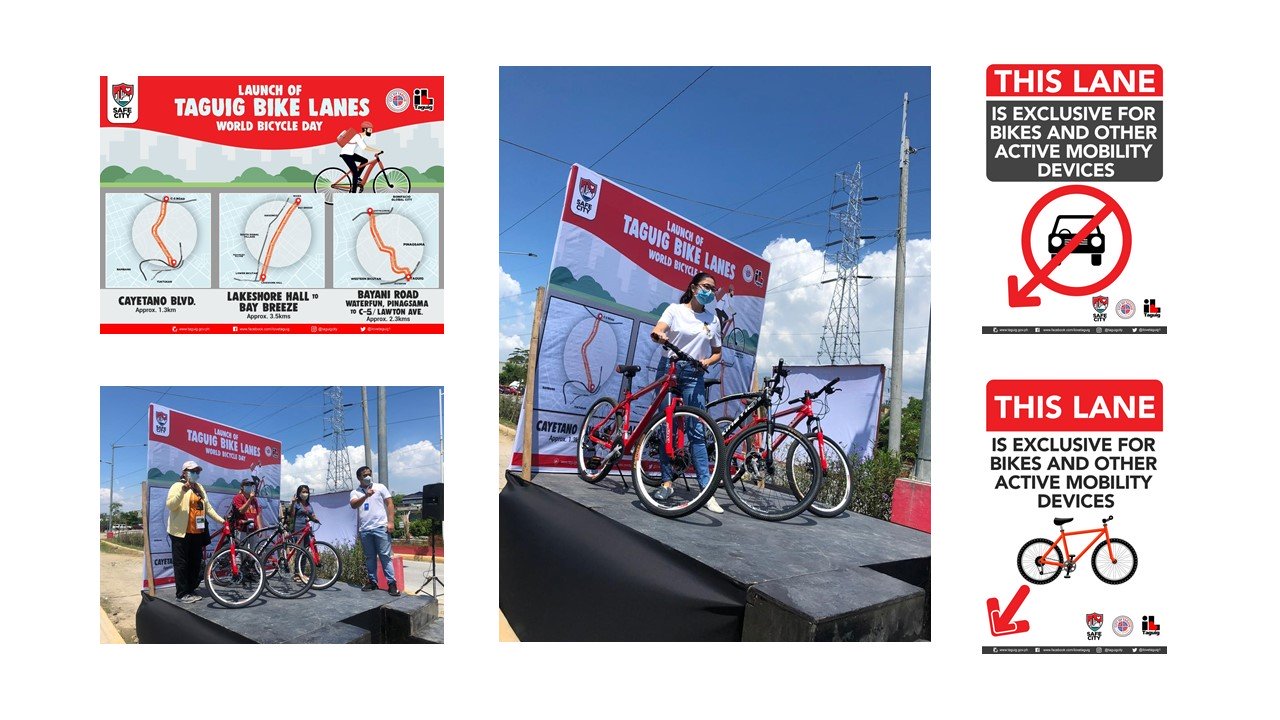
    Taguig City launches bicycle lanes on World Bicycle Day (June 3, 2020).
  • Pia pushes for ‘safe pathways’ for bikers on World Bicycle Day

    “The time is now… We can seize the moment and institutionalize policy changes that will leave our children with cleaner air [and] a healthier future with bike lanes, pedestrian lanes, and emergency pathways.”

    Thus said Senator Pia S. Cayetano as she sponsored a bill seeking to create a network of protected bicycle lanes and walkways for the use of frontliners and essential workers during the COVID-19 pandemic and even beyond.

    The Chair of the Senate Committee on Sustainable Development Goals (SDGs), Innovation, and Futures Thinking, Cayetano sponsored Senate Bill No. 1582 or the “Safe Pathways Act,” in time for the global celebration of World Bicycle Day on June 3 (Wednesday).

    She stressed that now is the best time to push for the passage of the measure promoting sustainable transportation, as the country has been forced into a ‘New Normal’ following the COVID-19 pandemic.

    “In lieu of buses, trains, and cabs, many, including our very own health care workers and frontliners, have turned to more resilient and safer ‘alternatives’ like biking and walking,” the senator said in her sponsorship speech, adding that cities around the world have already set up bike lanes to facilitate people’s mobility during the crisis.

    Following the disruptions caused by COVID-19, Cayetano said there is now an urgent need for the government to ensure the safety of cyclists and pedestrians through proper infrastructure.

    “The fact that most of our healthcare workers and frontliners are using these modes of transportation stresses the urgency of our call. Every day, they face risks apart from COVID-19, as they continue to traverse unsafe roads while going to work. We need to protect them,” she stated.

    Under SBN 1582, a network of pop-up bicycle lanes shall be created to connect users to essential destinations like medical facilities, among others. The bill shall also create a designated network of emergency pathways along local roads, to give pedestrians, cyclists, and non-motorized vehicle users safe and convenient access to frequented destinations.

    Public places, offices, schools, and commercial establishments shall provide adequate parking spaces for bicycles and non-motorized vehicles. The public and private sectors are called to develop other related infrastructure, including parking lots, showers, changing areas, and hydration facilities.

    Finally, appropriate agencies shall be mandated to permanently adopt these networks of bike lanes and walkways even after the pandemic, as part of the government’s long-term solution to address congestion and pollution. #

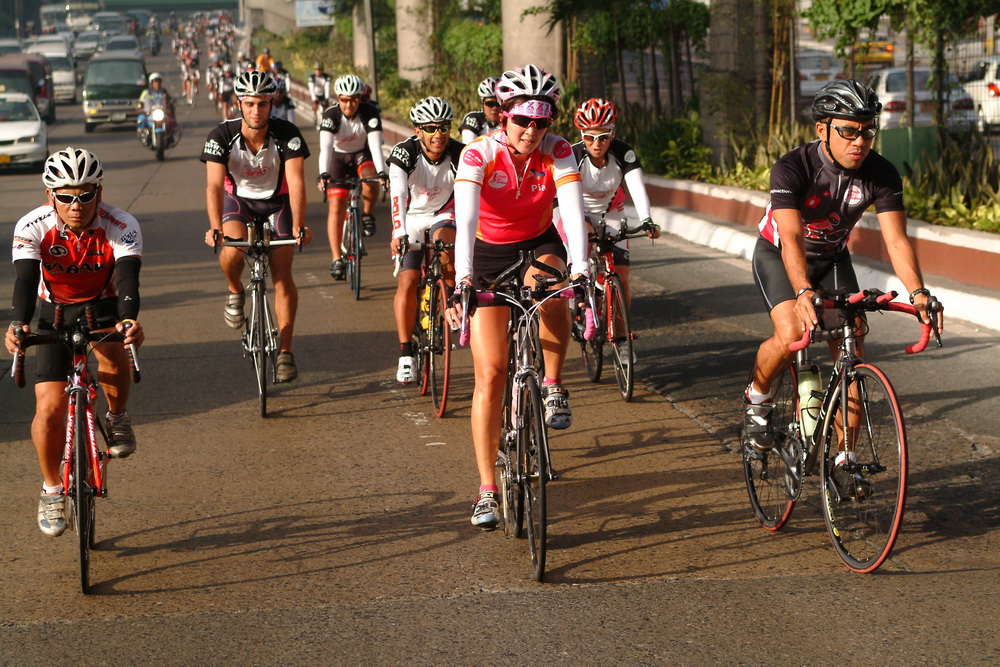
    Reimagining EDSA traffic in the New Normal. Senator Pia S. Cayetano joins the Tour of Hope in 2012 (Route: Guadalupe, Makati City to Baguio City in three days) to help raise awareness on cervical cancer. (File photo: 2012)
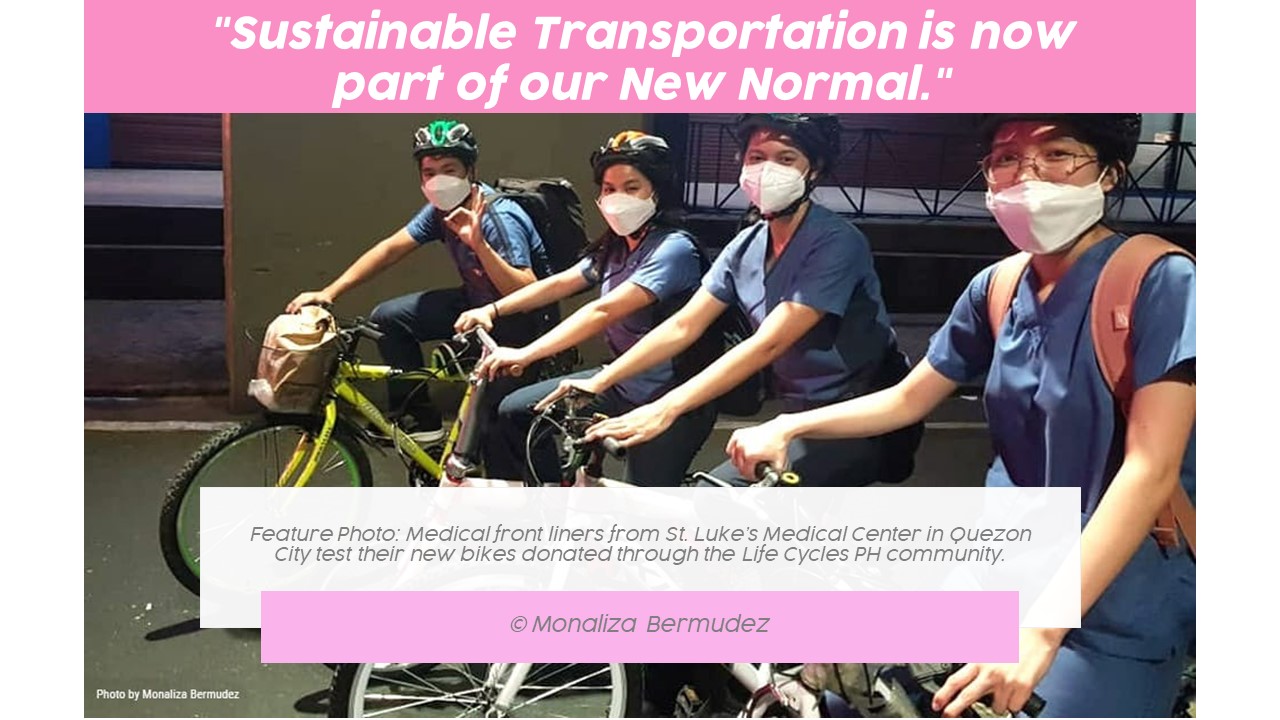
    Healthcare frontliners on two wheels. SBN 1582 is primarily for them. (Photo: Life Cycles PH)
  • Pia: Now is the best time to pass the Safe Pathways Act

    Sponsorship speech on the Safe Pathways Act (SBN 1582 under Committee Report 101) 

    By Senator Pia S. Cayetano

    Delivered on June 3, 2020 (World Bicycle Day)

    Mr. President and my dear colleagues, I come before you today to sponsor Senate Bill No. 1582 under Committee Report No. 101, otherwise known as the “Safe Pathways Act”, taking into consideration Senate Bill No. 1518 filed by this representation, and Senate Resolution No. 411 filed by Senator Francis Tolentino.


    I would like to begin by thanking my colleagues, Senator Grace Poe, who expressed her intent to be a co-author and co-sponsor of this bill, and Senator Francis Tolentino, Senator Manny Pacquiao, and Senator Sonny Angara, who are co-authors of this measure.


    There is no better time to sponsor this measure than today, as we join other nations in celebrating World Bicycle Day (June 3).

    Mr. President, as a health advocate, biker, and triathlete, I have been fighting for this cause for as long as I can remember.

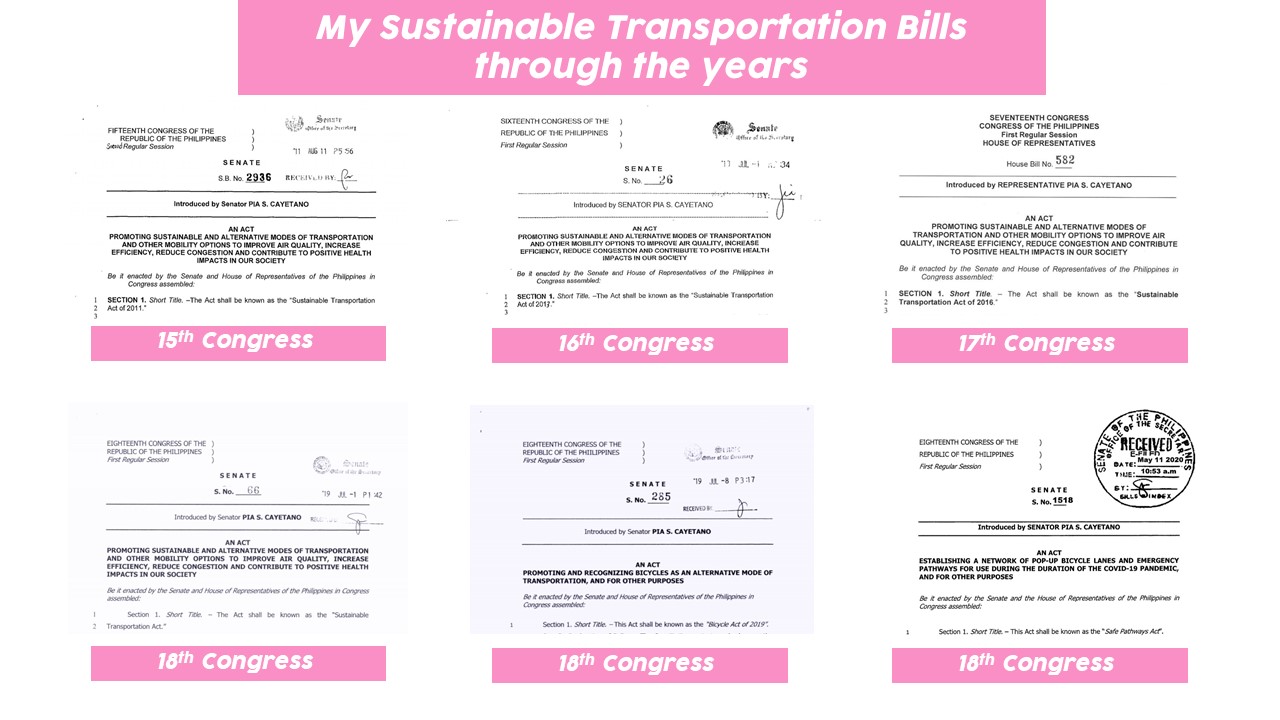
    For almost a decade, I have been advocating for bike lanes and sustainable transportation. I filed my first Sustainable Transportation Bill in this chamber, with the help and support of my fellow advocates in 2011. I refiled similar bills in succeeding Congresses.
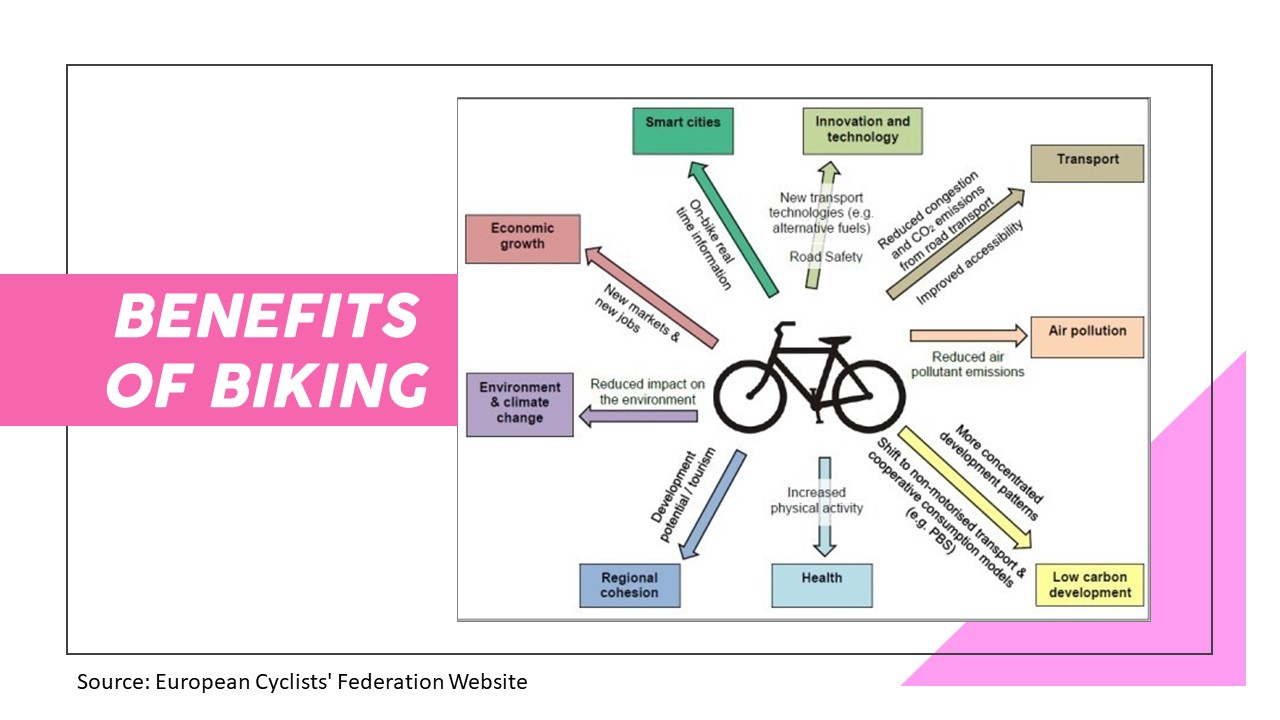
    The benefits of cycling and walking are known to many, if not all, and yet, many metropolitan centers like ours fail to change gears and disrupt the current transportation system, even if that system does not work.
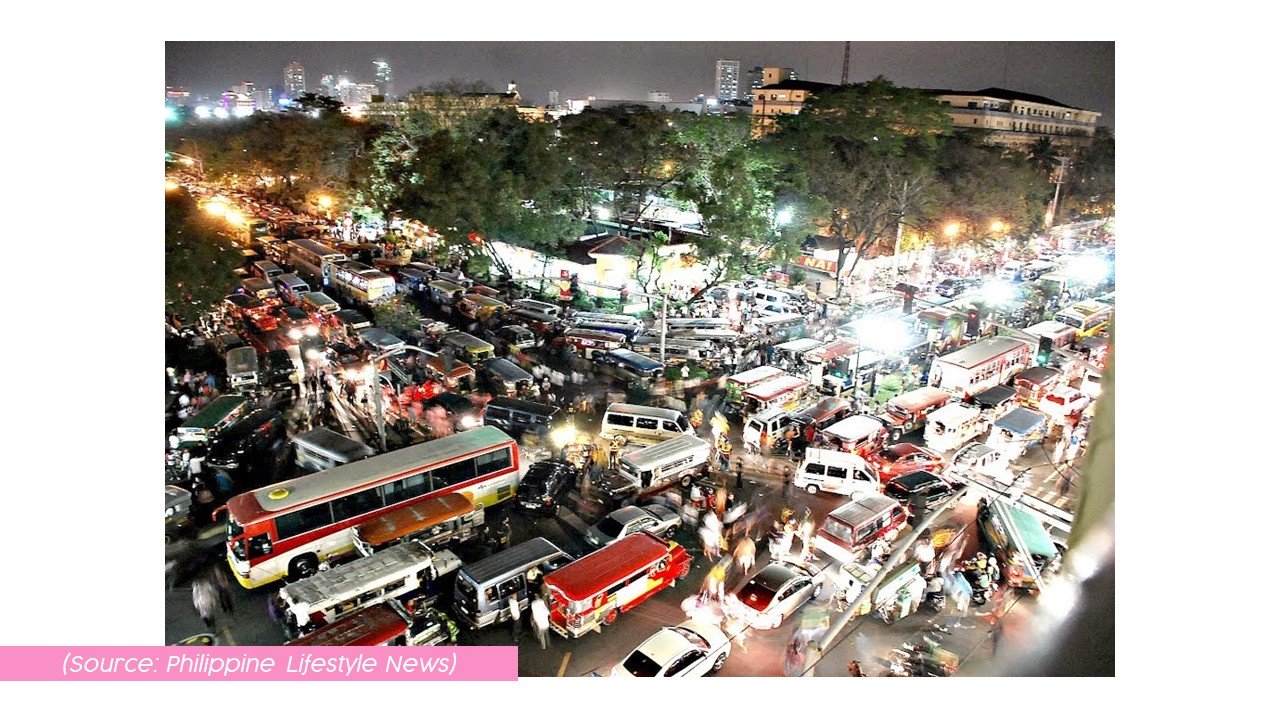
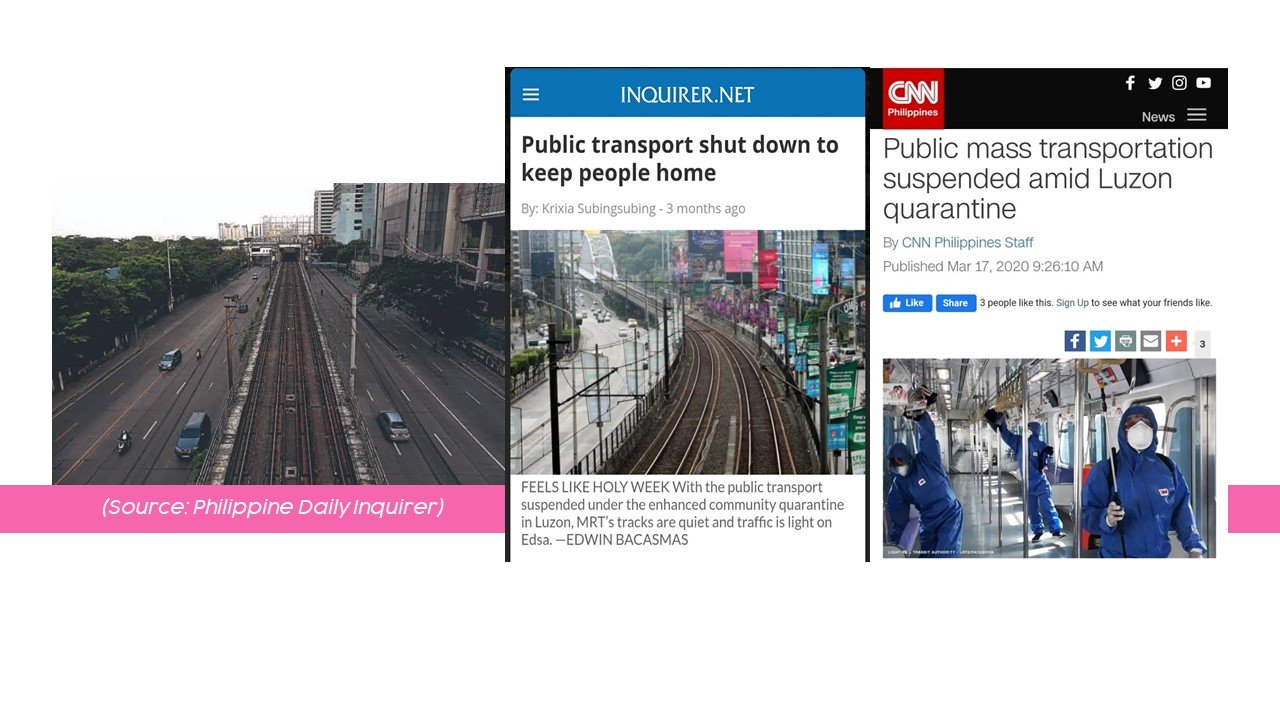
    Fast forward to today… Suddenly, we are living in the time of COVID-19, which has forced us into a new normal. All over the world, public transportation systems were shut down in an effort to flatten the curve. But people have adapted. In lieu of buses, trains, and cabs, many, including our very own health [care] workers and frontliners, have turned to more resilient and safer  ‘alternatives’ like biking and walking.
    The World Health Organization, in its technical guidance on moving around during the pandemic, advocated cycling and walking as an alternative for people to “reach workplaces when possible, meet essential daily needs, or provide assistance to [the] vulnerable.”


    In Europe, China, and the United States, and all over, urban cycling networks surged after lockdowns were imposed. In cities like New York, Mexico, and Berlin, they set up temporary bicycle lanes to facilitate people’s mobility.
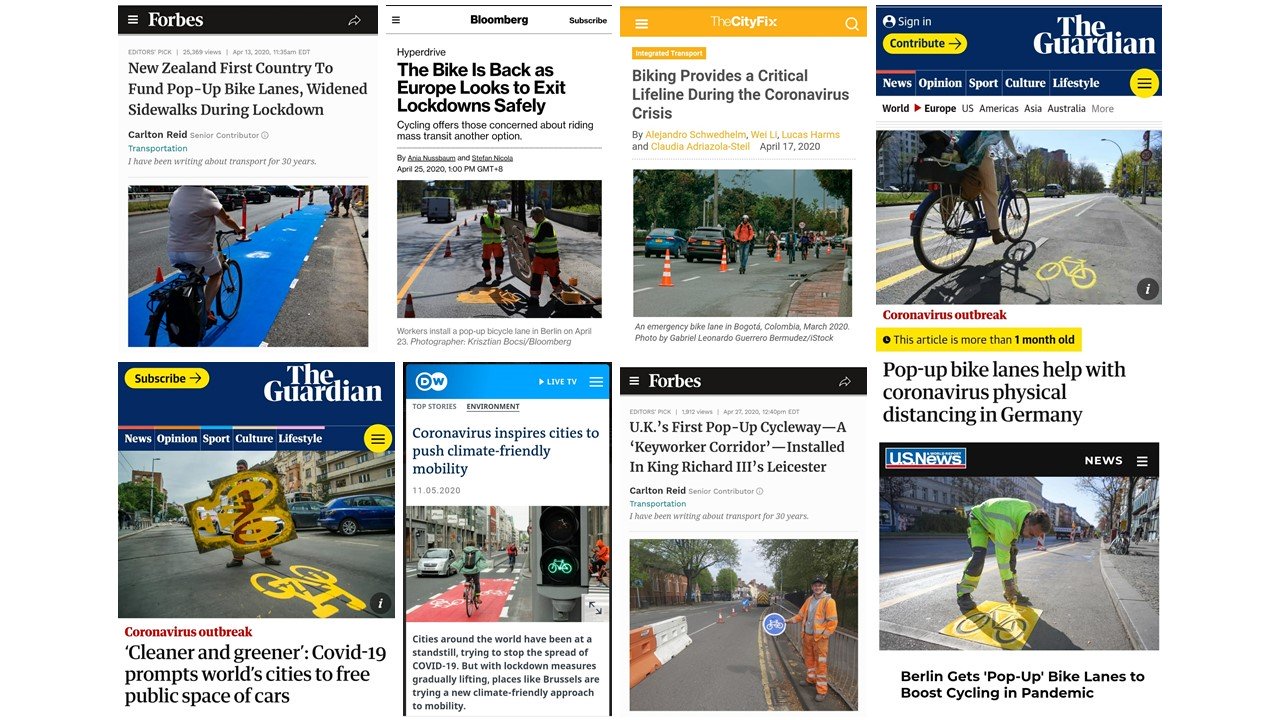
    And Mr. President, amid the continuous threats of COVID-19, we are gradually realizing the upside to our shift towards sustainable transportation.


    The decrease in the number of motorized vehicles has allowed us to see the clear blue skies, a sight we have missed in the cities for years… Environmental groups and government agencies, including our own Department of Environment and Natural Resources, confirm that the air is cleaner.
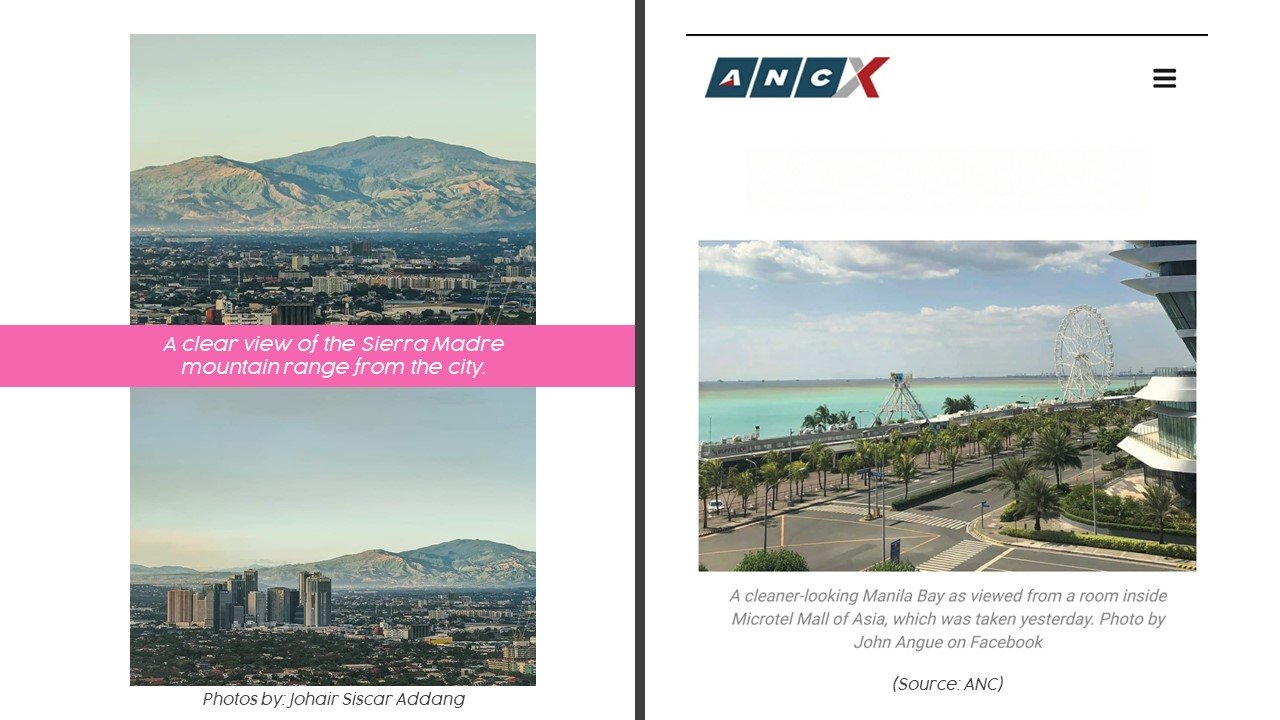
    In a time of high anxiety, biking and walking provide more comfort as it is easier to social distance this way. They also promise better physical and mental wellbeing because of the physical activity involved. Moreover, the cost of buying and maintaining a bike is very low compared to owning a private vehicle and even commuting.

    Sustainable transportation is now part of the new normal, and we welcome this change in people’s mindset. But we cannot simply put cyclists and pedestrians on the road without ensuring their safety. We need to be able to support them with the right infrastructure, which we sadly lack in our car-centric streets.


    I bring the attention of the body to the photo, which is a photo of medical frontliners from St. Luke’s Medical Center in Quezon City. They are testing out the new bicycles donated through the Life Cycles PH community.
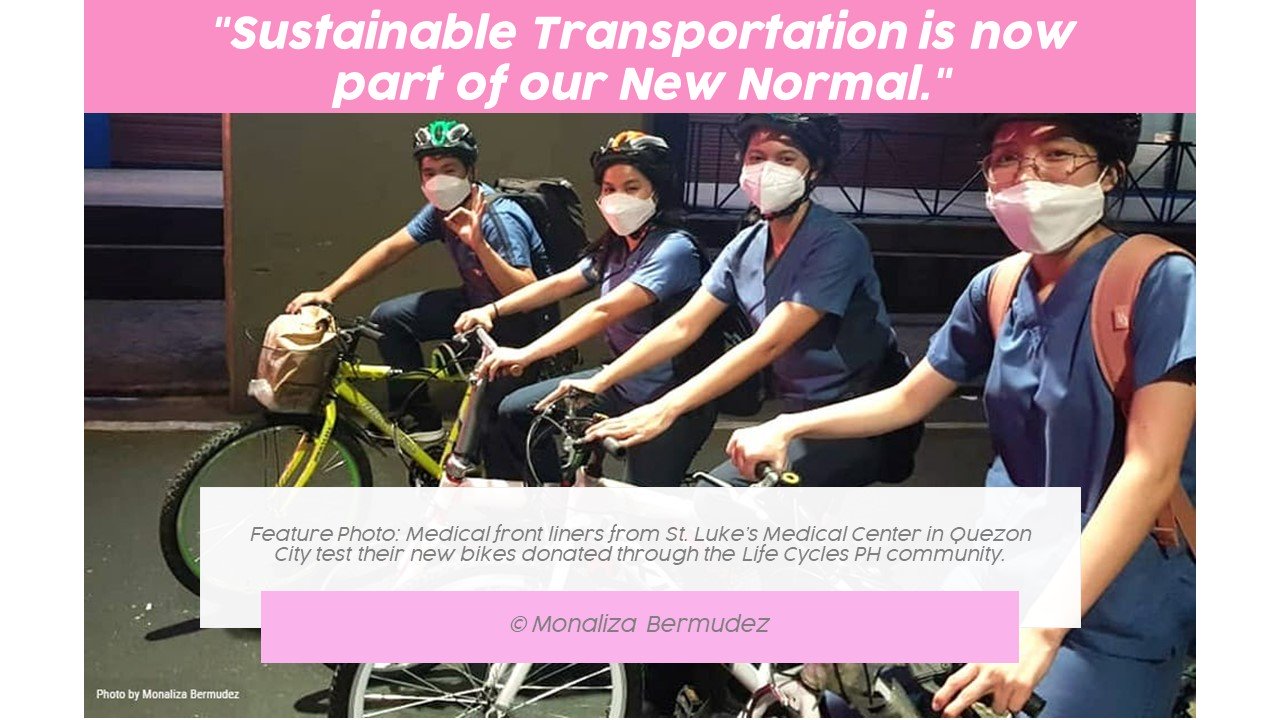
    The fact that most of our healthcare workers and frontliners are using these modes of transportation stresses the urgency of our call. Every day, they face risks apart from COVID-19, as they continue to traverse unsafe roads while going to work. We need to protect them.


    Mr. President, this is the objective of the measure we are proposing today.
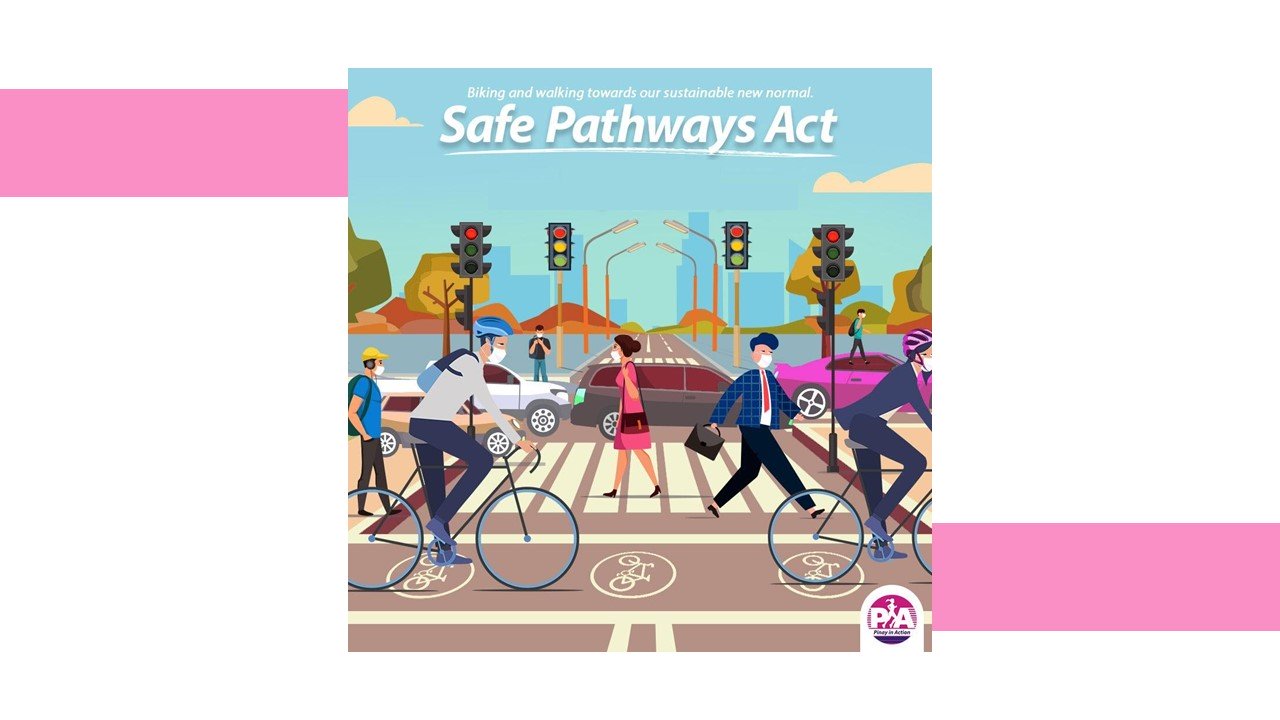
    The Safe Pathways Bill seeks to create a network of pop-up bicycle lanes that can be used by our essential workers during the pandemic. The lanes shall strictly be for bicycles and other non-motorized vehicles, and shall connect users to essential destinations like medical facilities, among others. The lanes shall also have enough space to accommodate one-meter physical distancing.


    One of the recommendations made by Dr. Antonio Dans from the UP College of Medicine is to prioritize building loops of bikeway systems that link roads along hospitals, such as those within the City of Manila. This will guarantee that our frontliners will remain safe even before they reach the hospitals where they work.
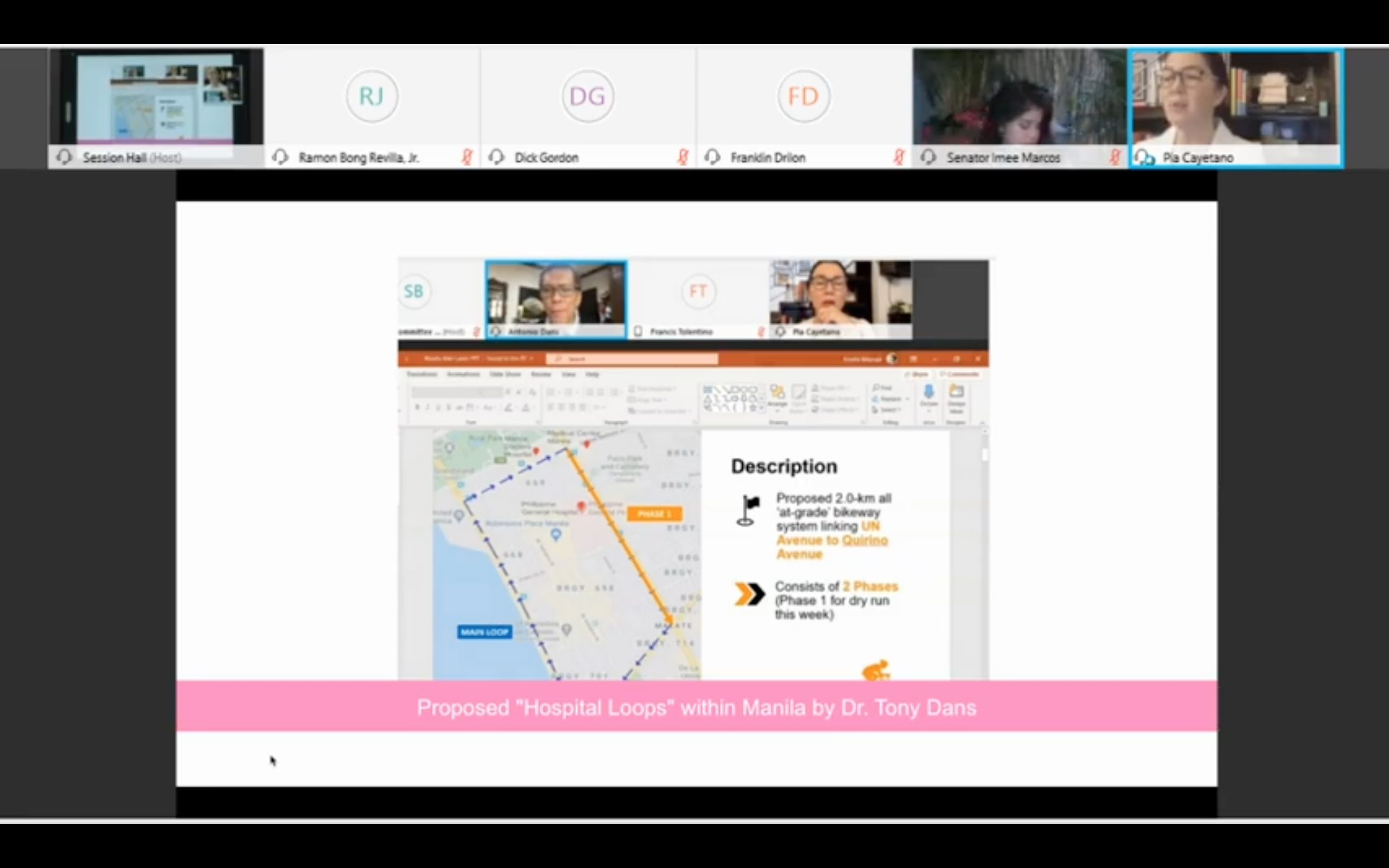
    This objective of our proposed measure is aligned with the call of our colleague, Senator Francis Tolentino, who filed Senate Resolution 411 urging the DPWH, DILG, and MMDA to designate, develop, and improve bicycle lanes in Metro Manila, which transitioned to General Community Quarantine beginning last Monday, June 1.


    The bill shall also create a designated network of emergency pathways along local roads, to give pedestrians, cyclists, and non-motorized vehicle users safe and convenient access to frequented destinations. Motorized vehicle passage shall be restricted in these pathways during peak hours.


    Meanwhile, public places, government offices, schools, places of work, and commercial establishments like malls, banks, and hospitals shall provide adequate parking spaces for bicycles and other non-motorized vehicles.


    The public and private sectors shall develop the necessary infrastructure and facilities to promote the use of these modes of transportation, including parking spaces, showers, changing areas, and hydration facilities.
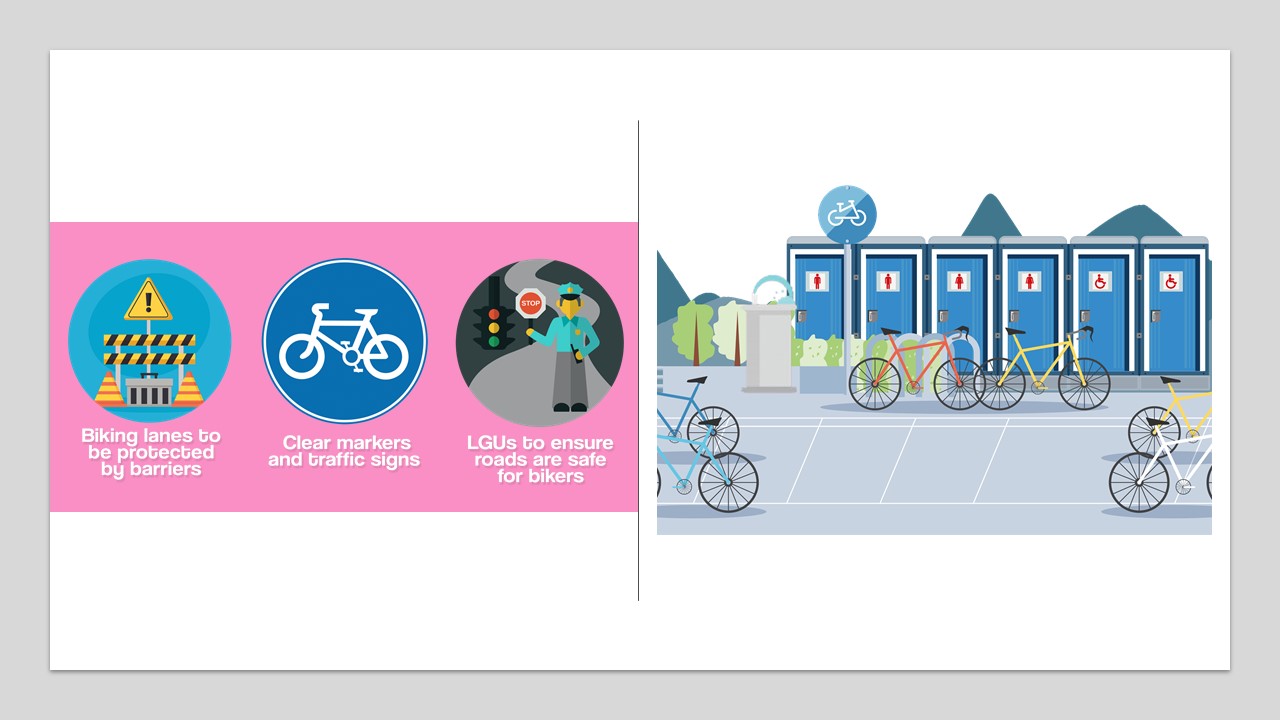
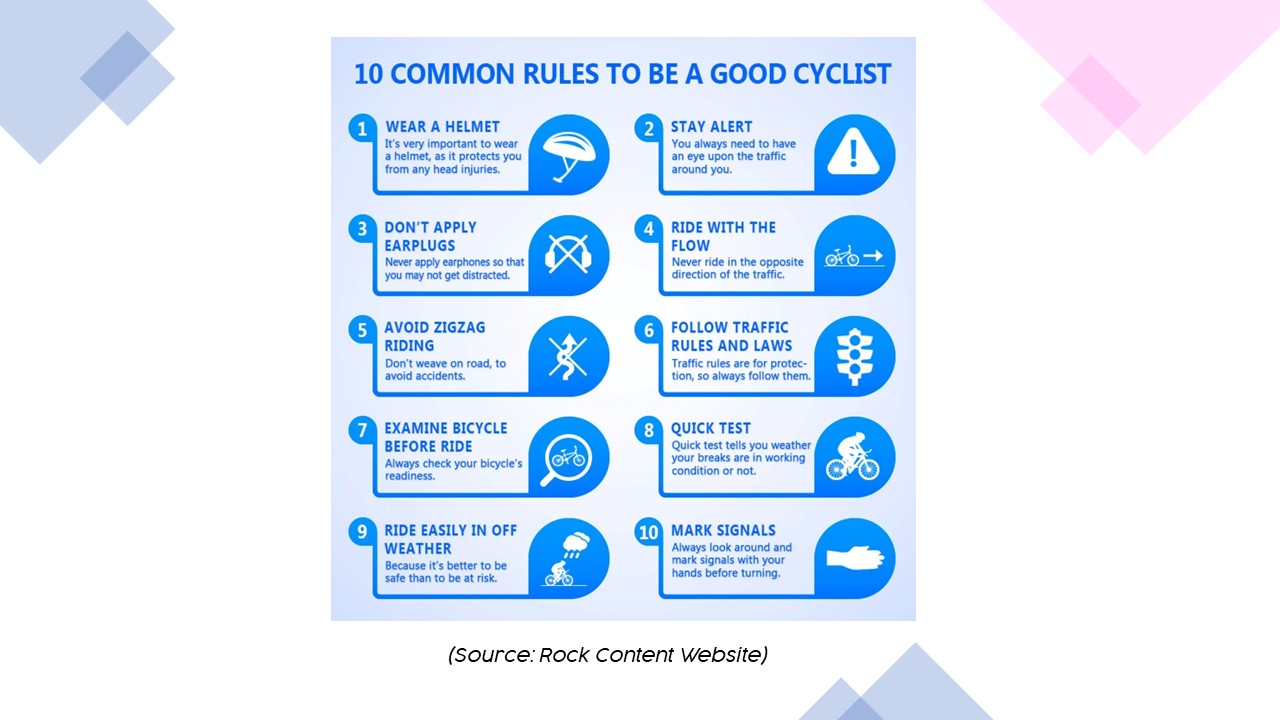
    Furthermore, the bill mandates cyclists and other non-motorized vehicle users to obey existing traffic laws, rules, and regulations.
    As Chair of the Committee on Sustainable Development Goals (SDGs), Innovation, and Futures Thinking, I am also duty-bound to ensure that the government remains cognizant of its goals of creating a more sustainable future for all. This bill shall mandate our appropriate agencies to permanently adopt these networks of bike lanes and walkways even after the pandemic, as part of our long-term solution to address congestion and pollution.


    The call of our advocates in the health, environment, and even sports sectors is stronger now than ever before. Various government agencies, both local and national, have expressed their commitment to immediately implement our proposals; some cities have made their own initiatives, like Taguig and Iloilo.


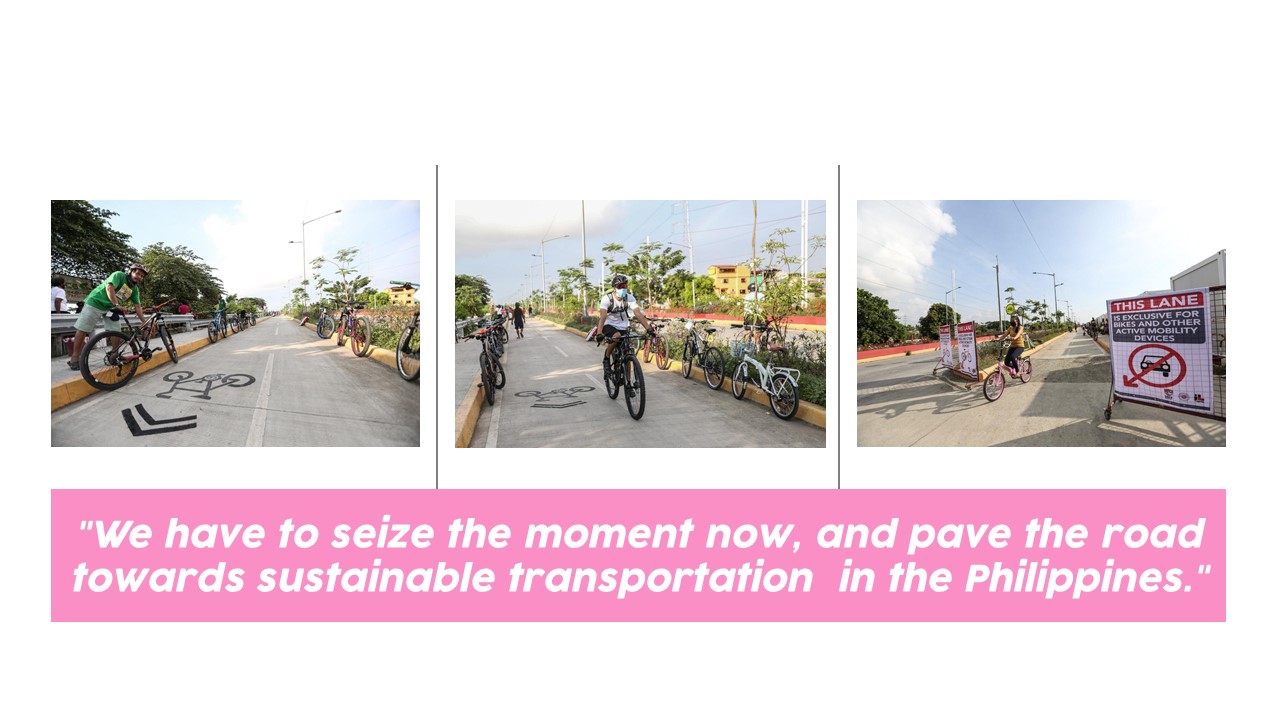
    Iloilo City has a dedicated bike lane along its Diversion Road and on selected thoroughfares in the downtown area. Its bike lane stretches more than 11 kilometers. Taguig City also has a 6.9-kilometer protected bike lane on the stretch of Laguna Lake Highway in Bicutan.
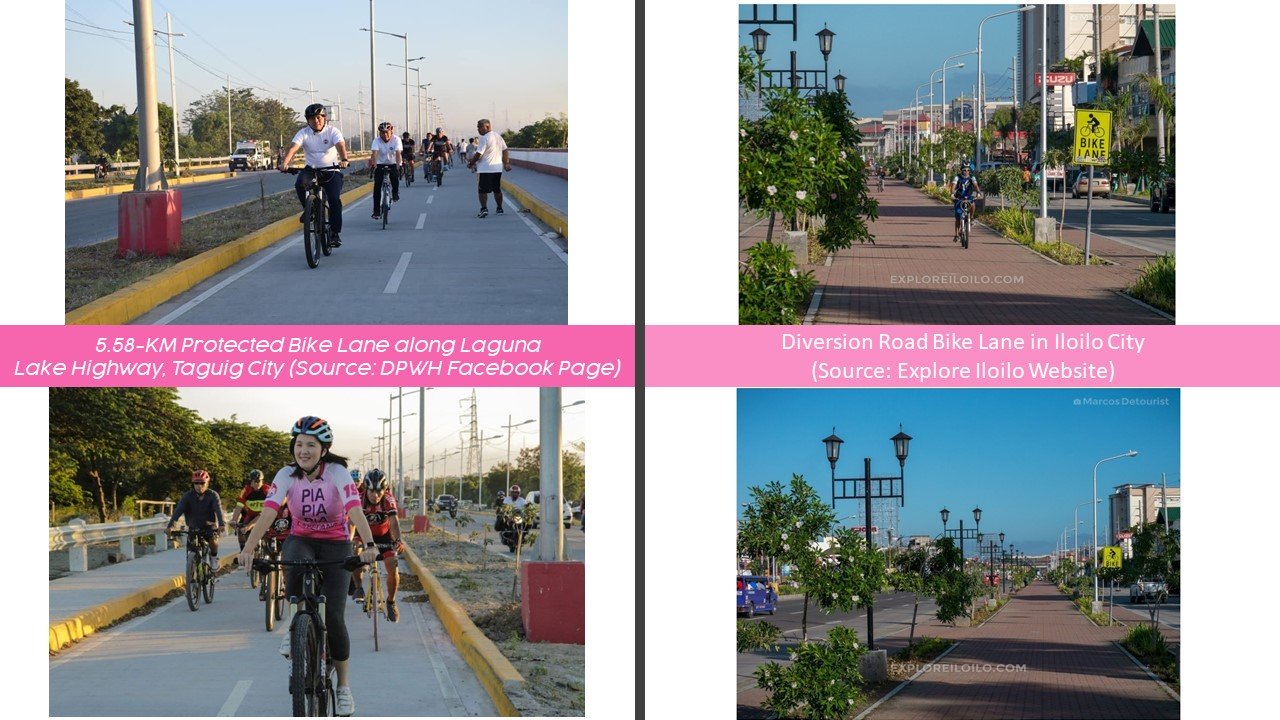
    Our bike lane is also separate from the pedestrian sidewalk, and then there is also a permanent lane that separates these bike lanes from the road used by motor vehicles for protection, as you can see in the photo.

    Moreover, in time for the World Bicycle Day today, the Taguig City government has set up additional bike lanes along Cayetano Boulevard and Bayani Road. It is also set to launch a comprehensive bike program, which includes the creation of an office dedicated to biking, the establishment of new bike routes in the city, and a bike lending program for city employees.
    Mr. President, the time is now. This crisis presents us with opportunities we must take now. We can seize the moment and institutionalize policy changes that will leave our children with cleaner air, a healthier future with bike lanes, pedestrian lanes, and emergency pathways.
    Thank you! #

  • Make ‘bayanihan’ work to revolutionize PH education for our youth

    “The Bayanihan Spirit is called upon now more than ever to make education effective for our young children.”

    Senator Pia S. Cayetano delivered this message to the country’s educators on Monday (June 1), as she called for a whole-of-society approach to address challenges to the basic education sector during COVID-19 and beyond.

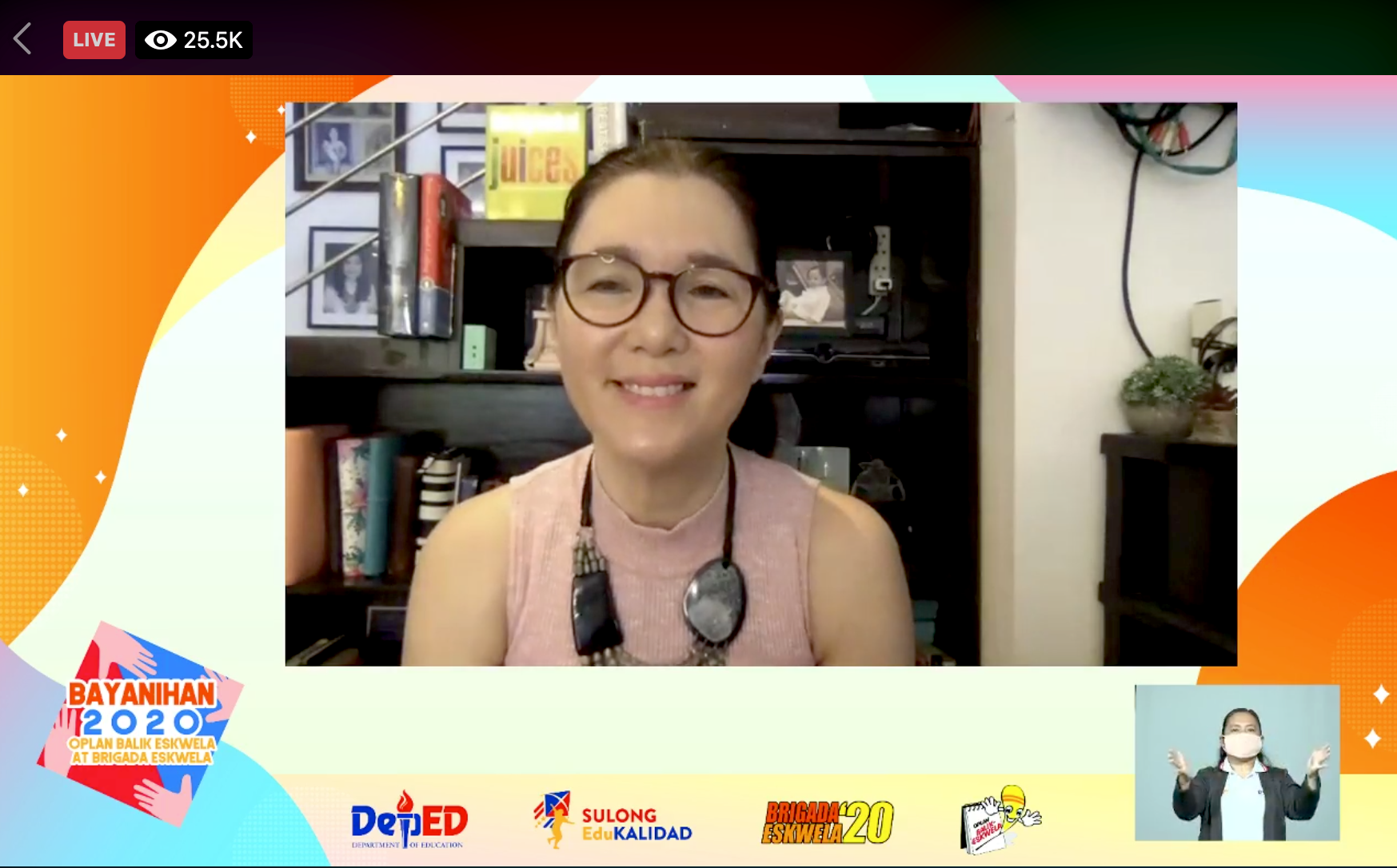
    Speaking before DepEd’s virtual kickoff program of the 2020 Brigada Eskwela and Oplan Balik Eskwela, Cayetano reiterated the importance of blended learning to ensure that no child will get left behind in receiving quality education during the ‘new normal.’

    “The urgent task at hand [is] the delivery of the education materials. So we are now rushing to set into place other modes of delivery because the usual physical classroom setting will not be happening anytime soon,” the senator noted.

    “However, I’d like to include in the discussion that beyond the delivery of education is [the need to] reach every single child with the help of tools available to us, so we can optimize learning for each child,” she added.

    Cayetano said this requires more than just shifting to a different teaching platform – from physical classes to online classes – but a comprehensive ‘blended’ approach, which will employ the participation of parents, teachers, and communities in delivering education to children.

    The Chair of the Senate Committee on Sustainable Development Goals (SDGs), Innovation, and Futures Thinking, Cayetano said educators can turn current challenges into opportunities to jumpstart education for the future.

    “I support the initiatives and at the same time challenge DepEd to make the most of these challenging times and really revolutionize education for our young people today,” she said.

    Senator Pia Cayetano: “Beyond the delivery of education is [the need to] reach every single child with the help of tools available to us, so we can optimize learning for each child.”

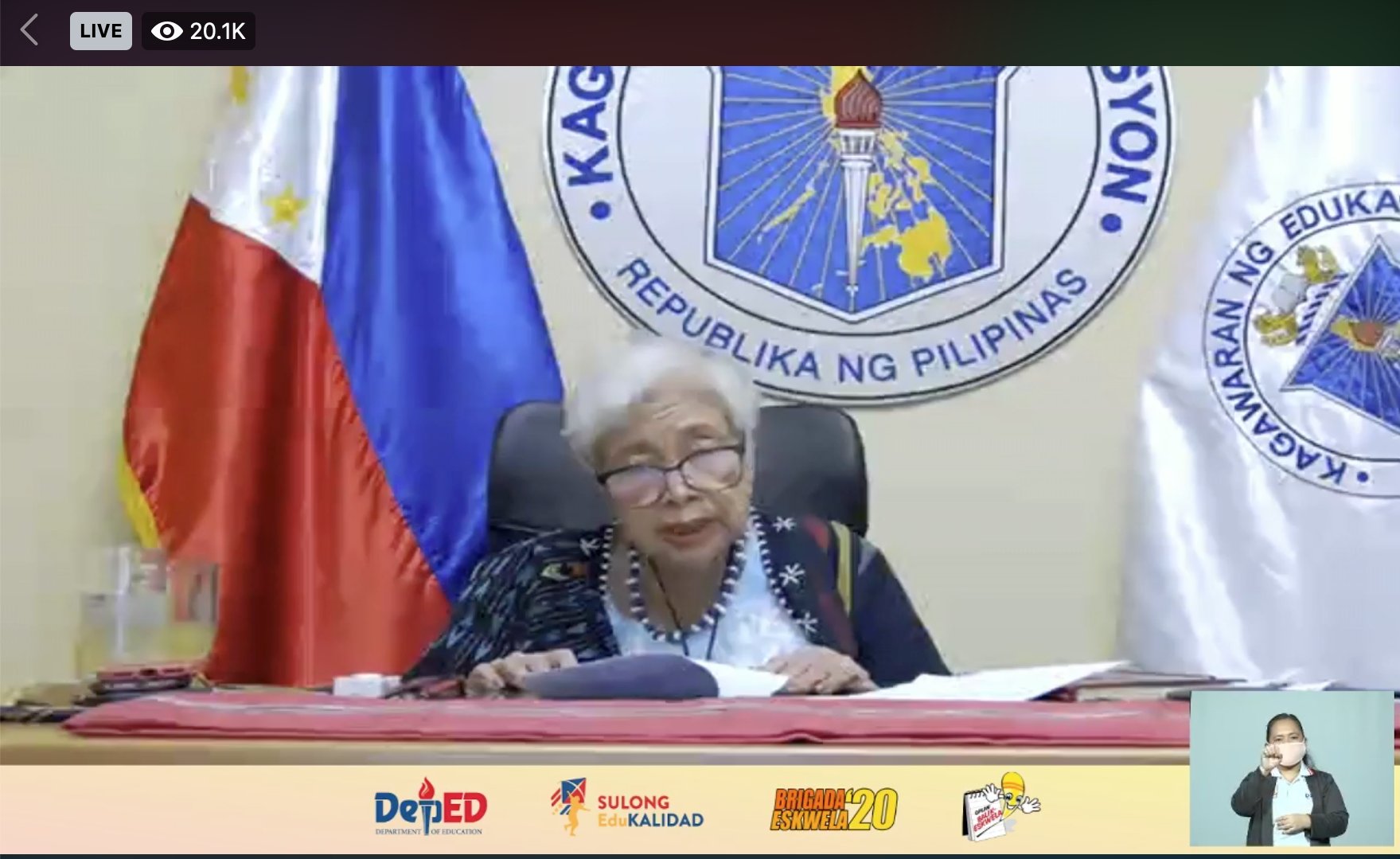
    DepEd Secretary Leonor “Liling” Briones, for her part, echoed the senator’s beliefs, stressing that the agency shares Cayetano’s goal of approaching the sector’s needs using a futures thinking mindset.

    Education Secretary Leonor Briones said the Department of Education shares Sen. Pia Cayetano’s goal of approaching the sector’s needs using a futures thinking mindset.

    Meanwhile, Education Undersecretary Nepomuceno Malaluan also expressed his support for Cayetano’s message. He said there is now a much-needed opportunity to “really transform the [country’s] education system.”

    “Hindi po tatalikuran ng ating pamahalaan at ng Kagawaran ng Edukasyon ang tungkulin na magbigay ng kalidad na edukasyon para sa lahat. Hindi lamang emergency response ito, kundi tulad ng sabi ni Senator Pia, kailangan nakatungtong din ito sa mas pangmatagalang vision at innovation for the future of the education system,” Usec. Malaluan stressed.

    He said the agency is set to implement blended and distance learning systems in line with the agency’s goal of delivering quality education to children that is geared for the future.

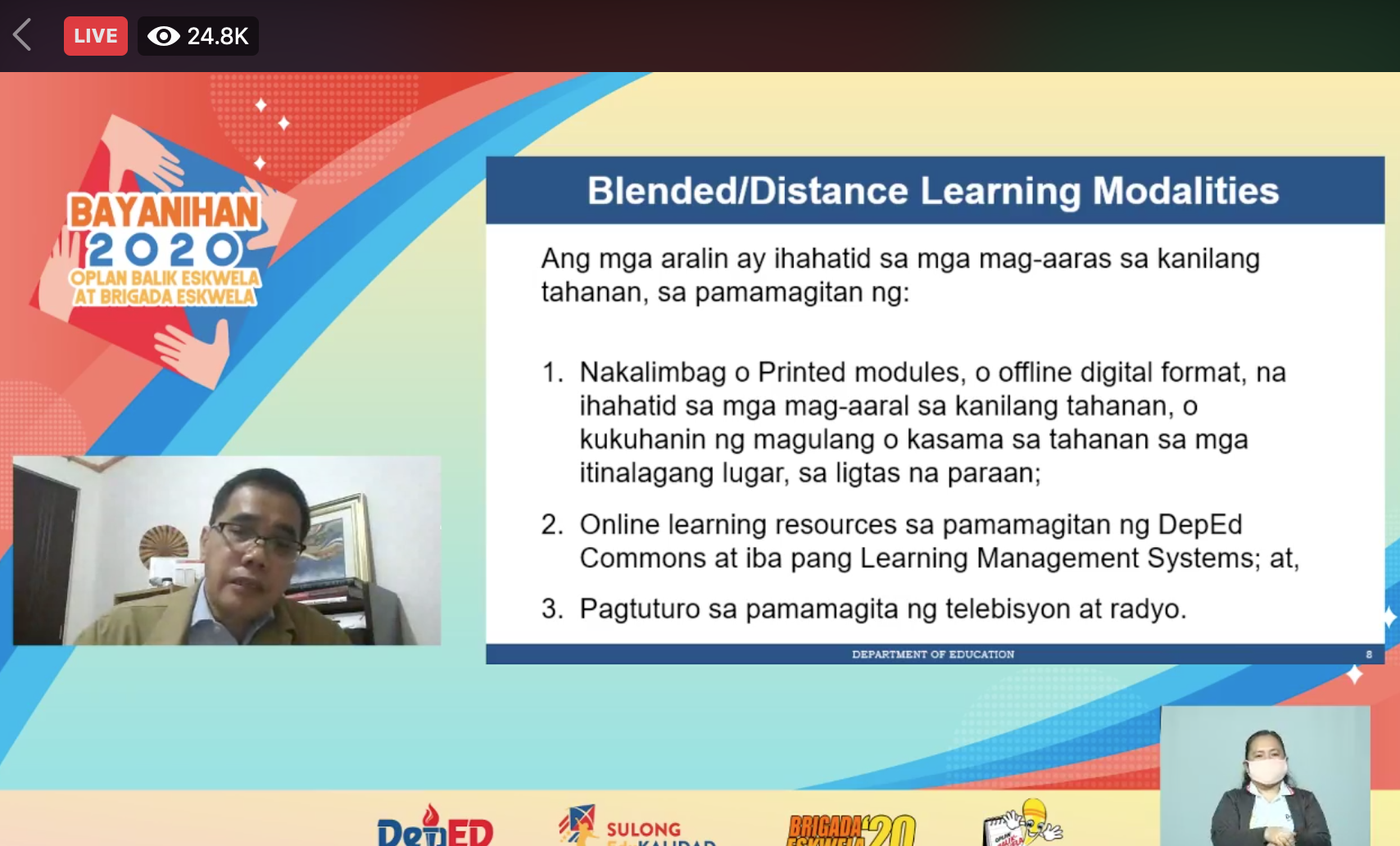
    DepEd Undersecretary Nepo Malaluan: “Tulad ng sabi ni Senator Pia, kailangan nakatungtong din [ang mga pagbabago sa edukasyon] sa mas pangmatagalang vision at innovation for the future of the education system.”

    DepEd is preparing to deliver different learning modalities to children during the crisis, which include printed modules, online learning resources, and television and radio instructions.

    Cayetano added: “I am so happy that [DepEd under] Secretary Briones and I see eye-to-eye on these ideas. But we need to be able to translate this into actual action on the ground with our teachers [and society helping as a whole].”

    “I trust that in the weeks and months to come, [we can cascade] all this information and bring our educators up to speed so the knowledge that [our children] will receive outside of the classroom is maximized,” added Cayetano, the principal author of three laws on flexible learning, including the Open High School System Act (RA 10665), Open Distance Learning Act (RA 10650), and Ladderized Education Act (RA 10647). #