Official Website of Philippine Senator Pia Cayetano

Category: Youth

  • Pia: Let’s build a nation of winners!

    Co-sponsorship speech of Senator Pia S. Cayetano on Senate Bill No. 1086, establishing a Philippine High School for Sports

    Mr. President,

    This is a happy day for me because I drafted and filed this bill 9 years ago. I was so much younger then and ran so much faster. But so did the presiding officer. 

    It is no secret that I am a believer in sports, and I believe that sports can change lives. I am proud to be a member of a Senate where majority of the members include sports in their lives:

    Needless to say, Sen. Manny Pacquaio is considered as one of the greatest professional boxers of all time.

    Senator Manny Pacquiao is the only boxer in history to win world titles in eight different weight divisions.

    The Senate President, Philippine National Team in bowling, garnered gold several times, and currently is a golf enthusiast who still continues to win tournaments.
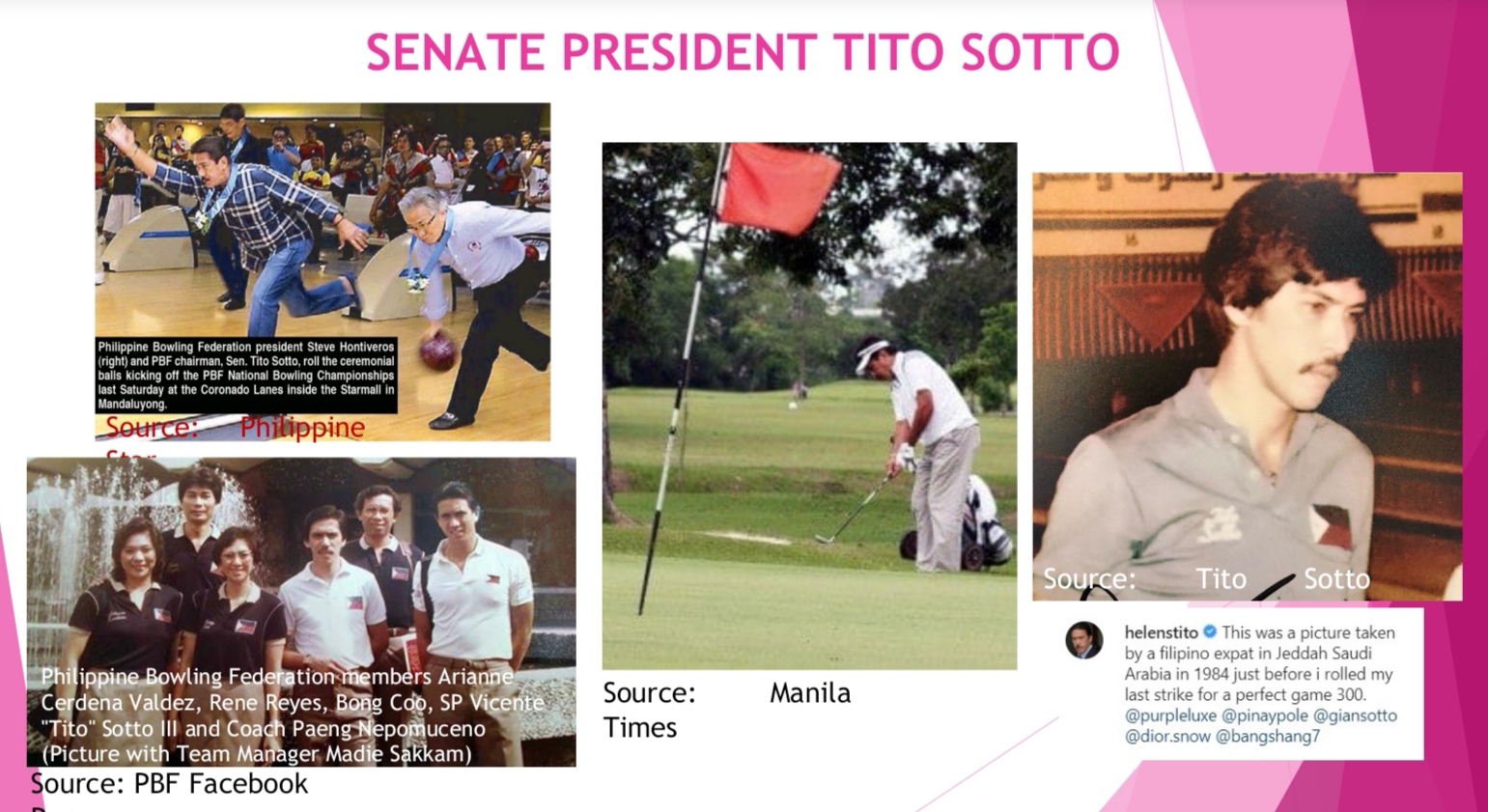
    Senate President Vicente Sotto III was a 7-time member of the Philippine bowling team. He competed twice in the World Cup and was an international gold medalist in ten pin bowling.

    Our Majority Floor Leader, Migz, National Champion and 1989 World Champion. I saw the video and I wish we could play it. But please interpellate me later on so I can play that World Championship… the winning moves. I think a few kilos lighter. 
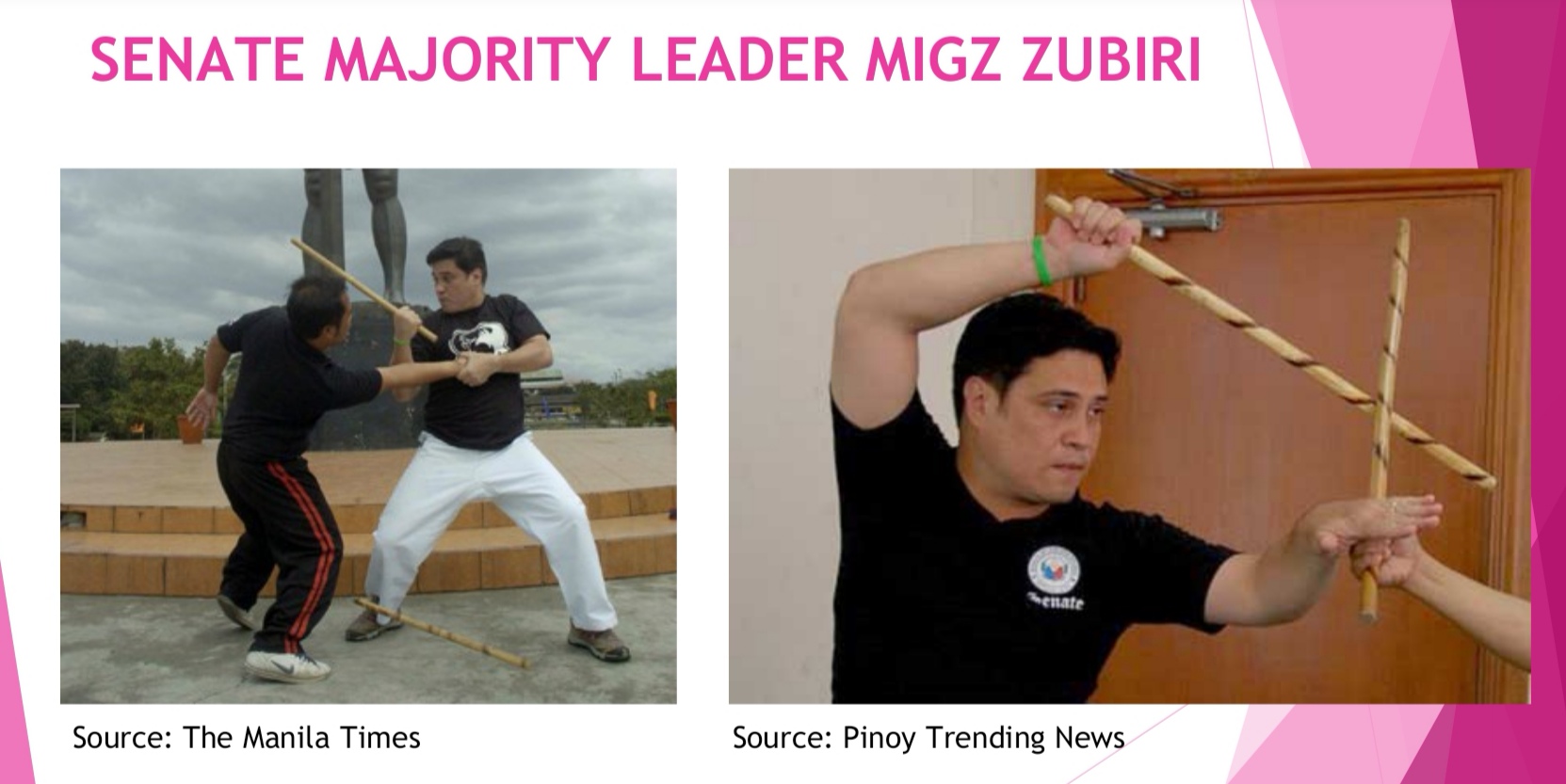
    Senate Majority Leader Migz Zubiri was a world Arnis champion.

    And then we have our “never say die” basketball players. Sen. Joel Villanueva, a UST Growling Tigers UAAP champion 1994-1995 and Philippine national team.

    Senator Joel Villanueva played for the UST Growling Tigers champion team and the Phllippine national basketball team.

    And then Senator Sonny Angara, who is part of the Senate Defenders – that is the official name of our basketball team. 

    Senator Sonny Angara plays for the Senate Defenders. The team actively competes in inter-government agency basketball tournaments, such as the UNTV Cup.

    Sen. Bong Go, who brings serious professionalism to the games that he plays with the likes of my brother. He was part of the roster of the Muntinlupa Cagers in the Maharlika Basketball League, a pro league started by Sen. Manny Pacquiao.

    A known supporter of sports in Davao City and national athletes, Senator Bong Go was part of the Muntinlupa Cagers’ roster in the Maharlika Pilipinas Basketball League (MPBL).

    Sen. Kiko Pangilinan, my batch mate in UP, we were both UP volleyball Maroons. And he was also a track and field runner – a track runner. 

    Senator Francis ‘Kiko’ Pangilinan was a track athlete and volleyball player for the University of the Philippines Fighting Maroons.

    Next is Senate President Pro Tempore Ralph Recto, I approached him to ask for a picture. That is actually not his main sport but that is his current sport. Correct? Am I correct? But his sport as a young athlete included soccer, swimming, and taekwondo. 
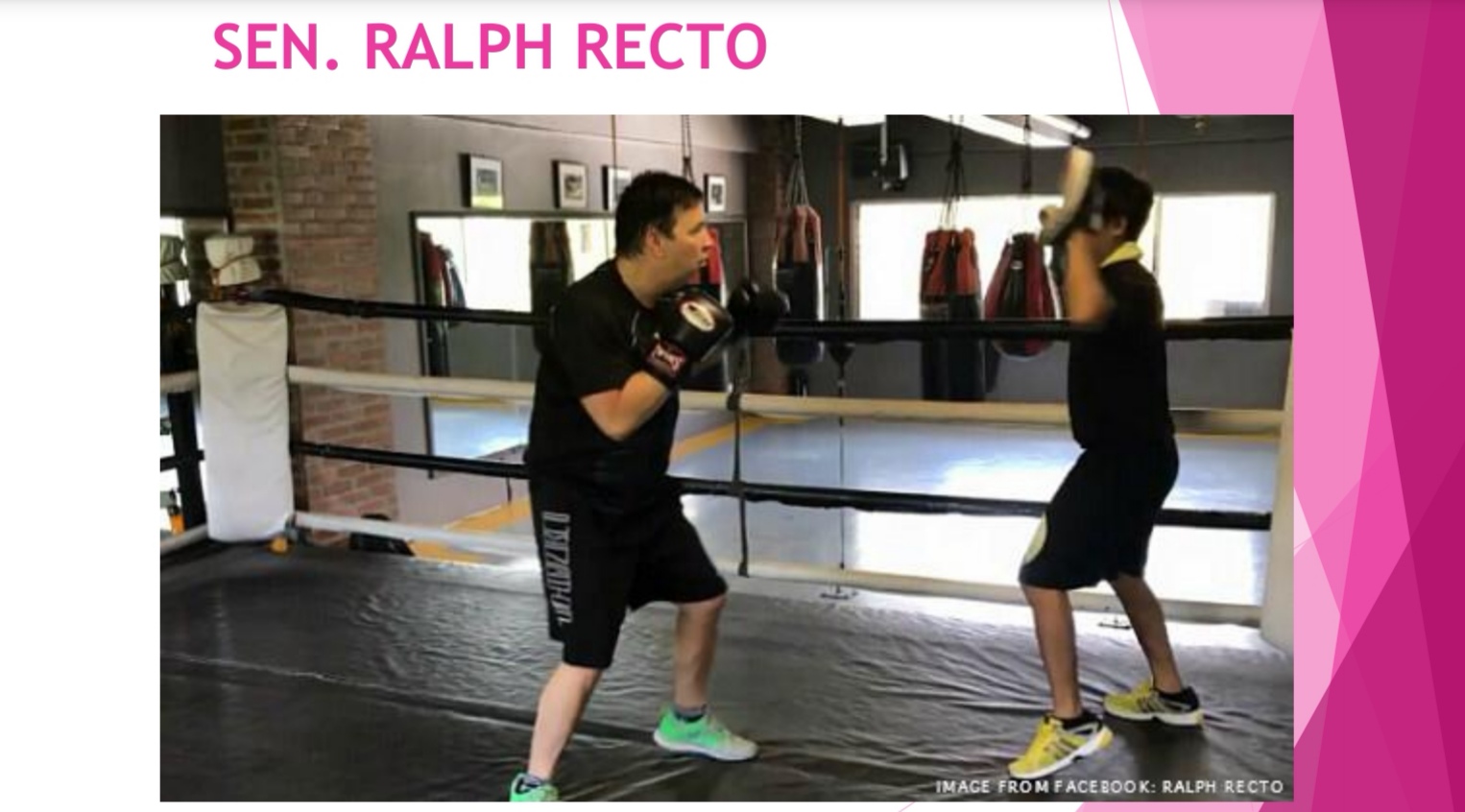
    Young Senator Ralph Recto played football, swimming and taekwondo. His current sport: Boxing.

    So again, please interpellate me so that I can put the pictures – the appropriate pictures of Sen. Recto while I am defending this bill. 

    And then our main sponsor, Sen. Sherwin Gatchalian. That was the… I actually failed to get the full description, but the picture speaks for itself. 
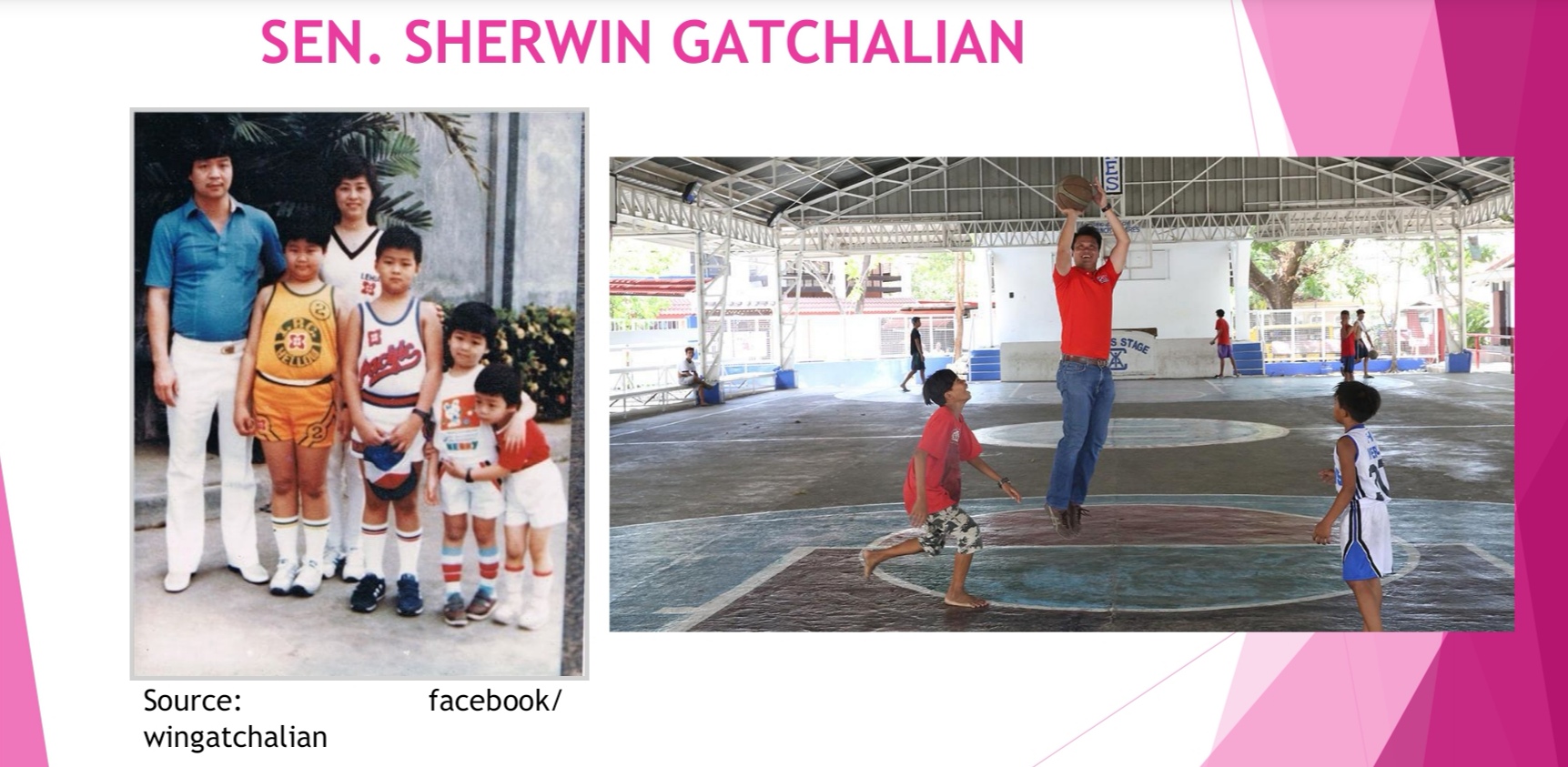
    The principal sponsor of SBN 1086, Senator Win Gatchalian, played basketball in high school at Grace Christian School and in college at Boston University.

    And yours truly, a UP Maroon and National Team Player for Volleyball as well.
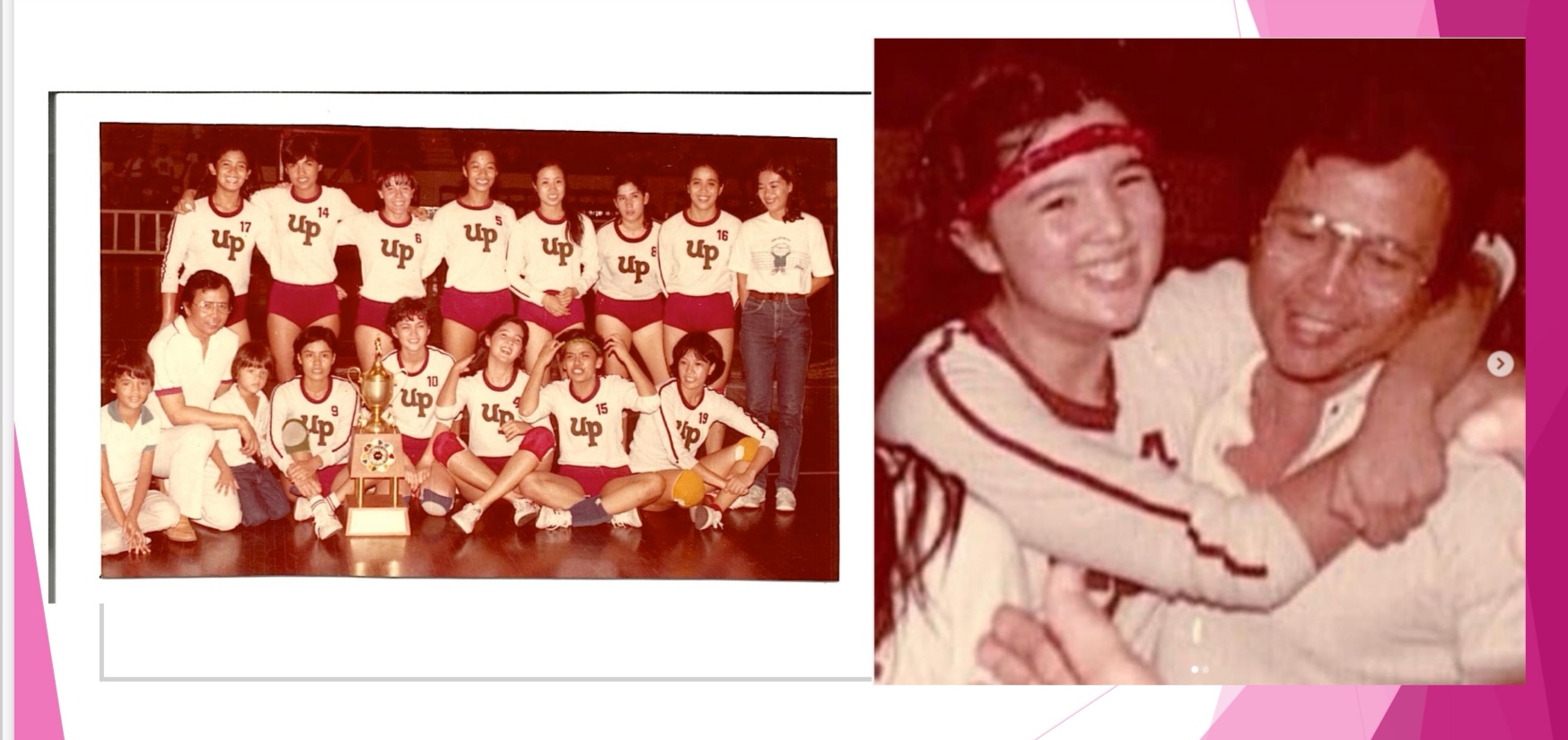
    Senator Pia Cayetano was part of the last UP Lady Maroons squad to win a UAAP championship. She also played for the Philippine National Women’s Volleyball Team.

    Anyway, so now that I have put you all in a better mood, the sad reality we face. Mr. President, is that many of our young athletes who show talent are usually forced to choose between an education and sports. That window where they can shine as an athlete is not open for a long time. They must take advantage of that moment in time. And if they miss it, the moment is gone. 

    Because of that, some choose to give up schooling, others give up their sports.  Those who give up schooling take a huge risk. Betting on sports alone for your future is a shot in the dark.  Not everyone gets to be a Manny Pacquiao. After their moment in the lime light, without an education, they have little to fall back on. 

    I’d like to share another story, which is the story of many athletes today. One of my lawyers, Joei Gana-Teves – she made it to the Philippine volleyball youth team. But her teacher did not believe in sports and considered her absent every time she attended practices and threatened to fail her when she had to leave for one week to participate in the Asian youth games.

    She then made a choice to go to the games and was very much impressed but at the same time saddened that other countries like Singapore and Malaysia, had a national sports high school where they were able to study and do the sport they love at the same time. 

    But this need not happen, Mr. President.

    In countries that take sports seriously, they start at a young age. Those who show talent are given the chance to train with the best coaches and with equally talented and driven athletes. They are able to do that because they have sports centers all over the country and they have sports schools – high schools and universities. National sports schools and universities.

    I had the privilege of visiting some of these sports high schools in Germany and Spain. The young athletes were able to focus on their sport but at the same time continue their studies.

    Fast forward, and obviously, Senator Bong Go and I have the same source. We both have visited New Clark City. This was very early in 2018, when we did some groundbreaking. This is the initial stages of the construction. 

    Construction of New Clark City Athletics Stadium started in 2018.

    Fast forward, not even two years later. This is the New Clark City today….
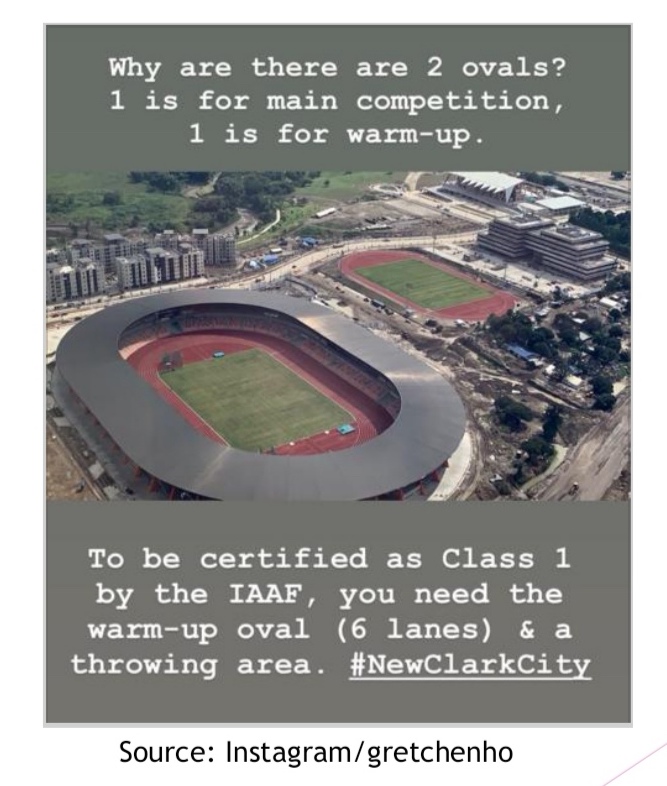
    The New Clark City Athletic Stadium. (September 6, 2019)

    This aerial photo was actually taken from Gretchen Ho. I borrowed that from her. If you look at the main circle, that is the stadium, and the track in the middle is the main track. You will wonder, why is there another track on the upper right side. Well that is the practice track, the warm up track. That is required to have that Class 1 certification. 

    And, if you look at the next picture I am about to show, so this is the picture of the actual track and stadium, the next picture. Okay, the one on the right is an actual requirement also to get that Class 1 certification. It is an 80-meter indoor track where you warm up just before your event is called. So you have those two warm up tracks in addition to the main track. That is air-conditioned by the way. 

    I happened to visit a few weeks ago, and those are national track athletes that I was running with. 

    This is the swimming pool. Take note, that is an 8-lane, 50-meter pool. But that is just the warm up pool. The main pool is 10 lanes and has a bigger capacity. And then on the right side is the diving pool. So together, this is also a world-class certified aqua center, the only one in the country. 

    This is the dormitories, the same photo that Sen. Go showed you. We actually have the national triathlon team and the national track and field team living in these quarters now. And pretty soon, this will be the home of the Southeast Asian Games athletes who will come here to participate in December. 

    New Clark City is a sustainable city that will house our athletes for the SEA Games. And this is also where this sports school will be built.  

    It is envisioned that the students will have access to vocational, sports, and academic tracks so that each of them can still fulfill their own dreams.

    Mr. President, Senate Bill 506, which I filed, is considered in this Committee Report. However, my version, Mr. President, specifically has a provision that says that the track will not be limited to sports. Because there are athletes who dream to be other things, to be more than athletes. They can be an athlete and they can have other professions as well. 

    Just because I am only familiar with the UP graduates, I use them as an example. Mr. President, UP has produced, among others, two summa cum laude graduates, one with a BS in Math, summa cum laude, and another one with a BS in Sports Science who went on and is currently in her third year in med school with PGH UP College of Manila. They did this while being in the varsity of UP. The BS Math major was a Judo player, and the other one was a volleyball player. 

    Assuming that there was a high school for sports when they were younger, it would have been really sad if we limited them to a sports program, because clearly, they had the ability and the desire to do something else as well. 

    And that is why we are also pushing for programs beyond sports to be offered for Senior High here. Mr. President, I call on your support dear colleagues. Let us help make these individual dreams come true and at the same time build a nation of winners.

    Thank you. #
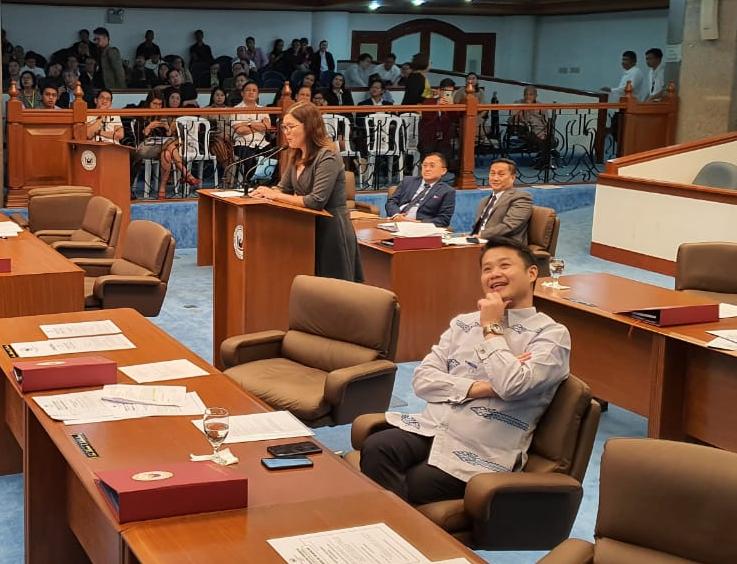
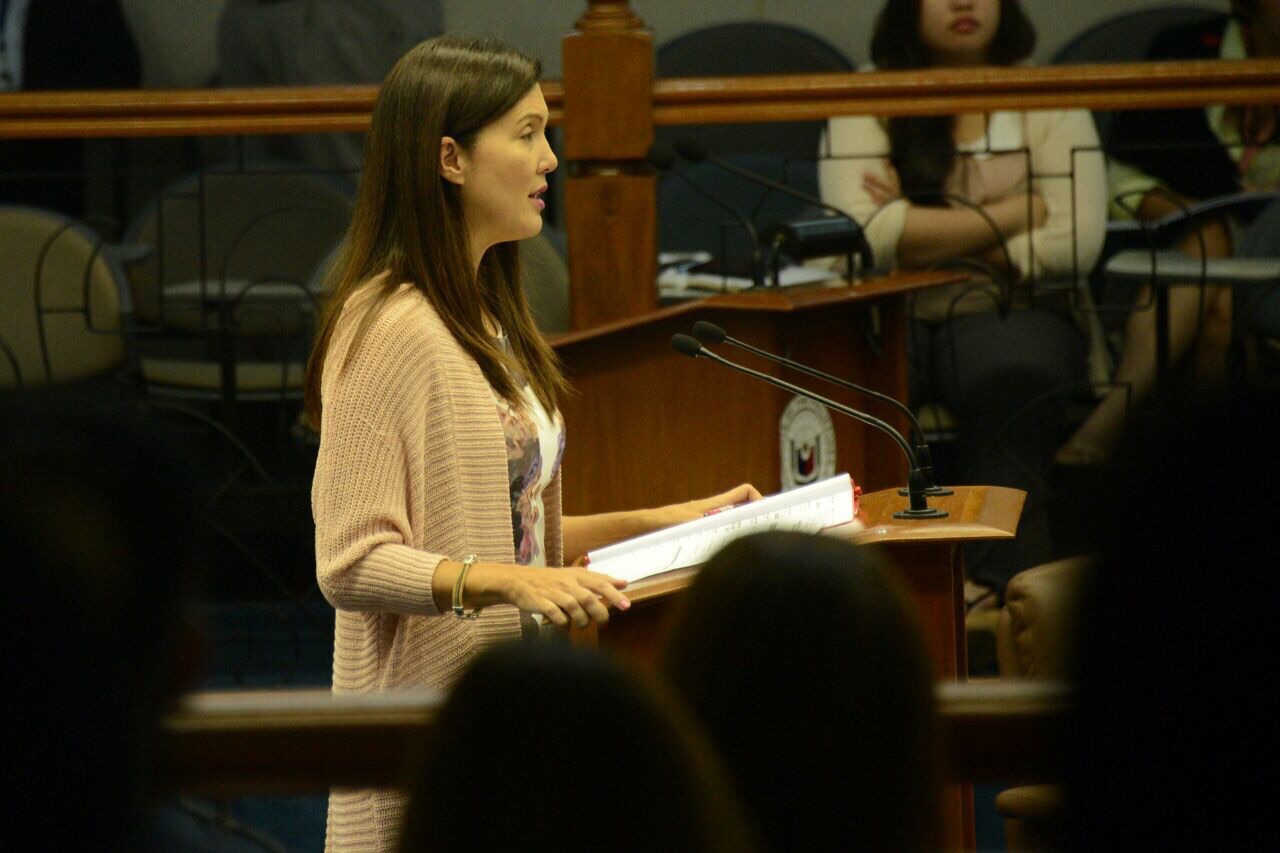
    Senator Pia Cayetano delivers her co-sponsorship speech of the bill seeking to establish a Philippine High School for Sports. She showed throwback photos of senators competing in their favorite/chosen sports – to the delight of her colleagues.
  • Basic education budget hurdles Senate panel

    The Senate Finance Committee has approved on Thursday the proposed P551.72-billion budget for the basic education sector for 2020, following the hearing of Subcommittee ‘D’ led by Senator Pia S. Cayetano, the panel’s vice chairperson. 

    The budget for the Department of Education (DepEd) and its attached agencies, which increased by 3.79% from 2019’s P531.57-billion budget, will now move to the plenary for deliberations. 

    The attached agencies of DepEd include the Philippine High School for the Arts, National Council for Children’s Television, National Book Development Board, National Museum, and Early Childhood Care and Development Council.    

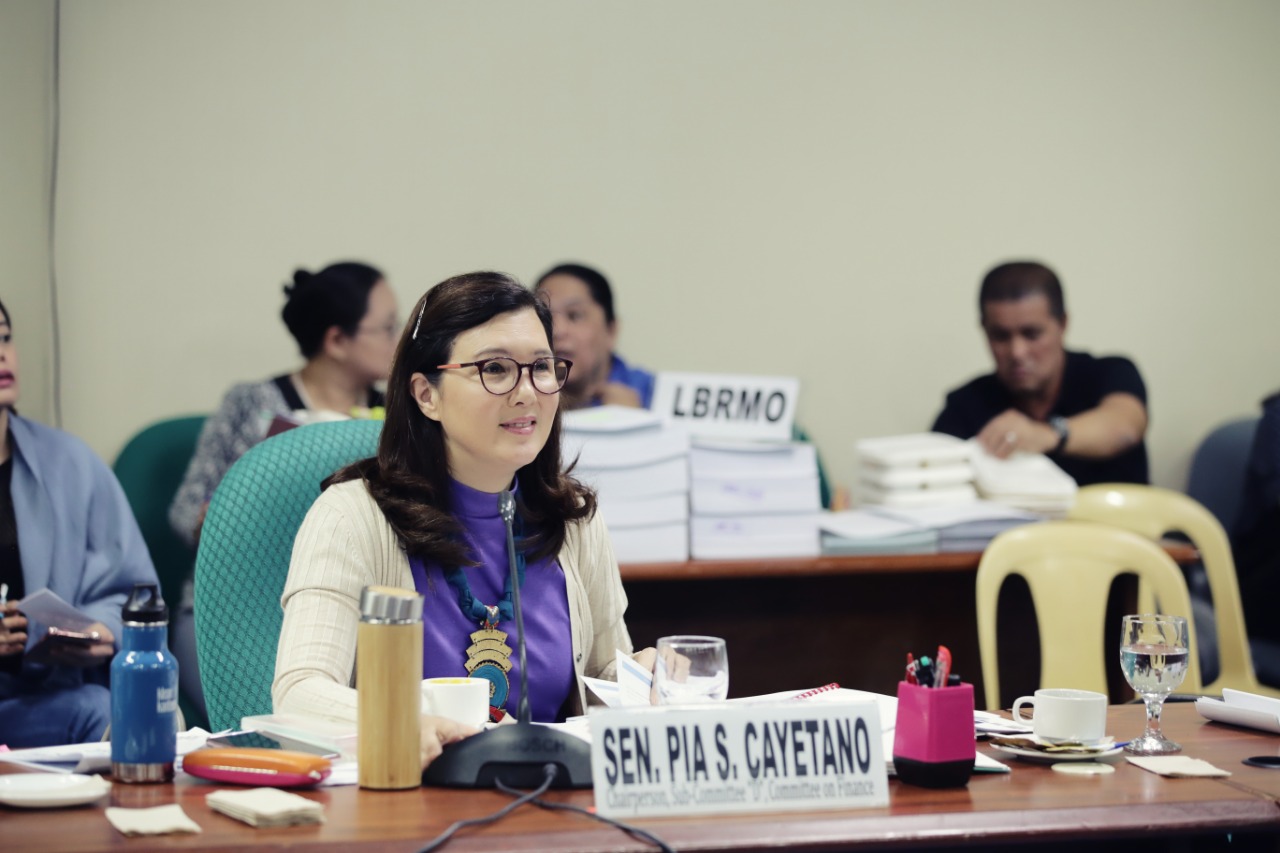
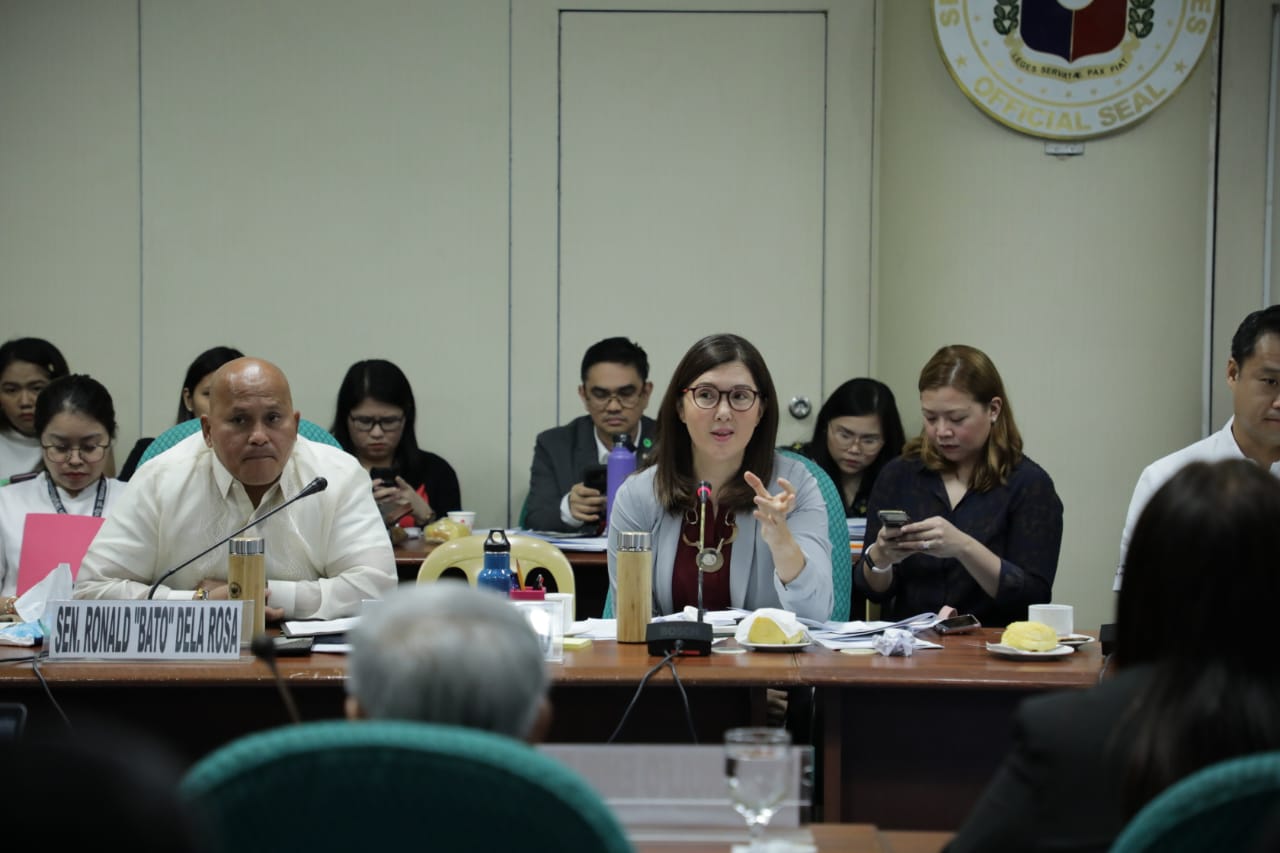
    “We are happy to support your budget. I also thank DepEd for acknowledging my observation to create an office on innovation and futures thinking for education,” said Cayetano, who also chairs the newly created Senate Committee on Sustainable Development Goals (SDGs), Innovation, and Futures Thinking. 

    During the budget hearing, DepEd Secretary Leonor Briones showed support for the proposal to create a separate committee on innovation and futures thinking in order to confront new trends in the sector.

    Cayetano for her part expressed hope that, after receiving the lion’s share of the P4.1-trillion national budget for 2020, the agency would be able to address concerns involving the country’s public education system.

    Among which is the need to improve the teacher-to-student ratio in public schools in the country, by hiring more teachers and adopting learning innovations to oversee the development of students. 

    “To address the issue of classroom sizes and the lack of learning resources, I want to start the discussion on blended learning,” the senator said, referring to the education style where students are taught through traditional face-to-face teaching, as well as via electronic and online media.

    “I am a proponent of multilevel classrooms. I am also a proponent of personalized education… I have yet to go to a public school where the materials available are overflowing,” she added.

    The senator then encouraged DepEd to ensure the full delivery of services under its DepEd Computerization Program (DCP), which gives both public school teachers and students access to multimedia tools and technologies to promote digital literacy.

    “There are many ways to teach a child. We can make it more exciting,” Cayetano said, adding that technology-based blended learning could enable teachers to attend to the needs of each child in their class. 

    Meanwhile, the senator also urged the agency to step up in improving the quality of the country’s public educators.   

    She cited Finland as a model for education reforms, noting that all Finnish teachers have master’s degrees. 

    “We should be looking at similar targets. We could [allot] a fund and divide it geographically to provide Filipino teachers with scholarships,” Cayetano suggested.

    “What I recommend is to have in-house training, as well as scholarships for international training. So that in the coming years, we will have more quality teachers,” she added. 

    Finally, the senator pushed anew for the improvement of Filipino youths’ English proficiency to make them more job-ready and globally competitive. 

    “I want to make sure we have a strategic program on [English proficiency] because [this is] our edge among other countries. English competence should not be set aside just because we are teaching [children]  in the mother tongue,”  Cayetano stressed. #

    Senator Cayetano expressed hope that, after receiving the lion’s share of the P4.1-trillion national budget for 2020, the agency would be able to address urgent concerns involving the country’s public education system.
  • Nurture future heroes among our youth – Pia

    “Let us honor the great men and women who fought for our nation’s freedom by nurturing future heroes among the ranks of our youth.”

    Senator Pia S. Cayetano shared this message to mark this year’s National Heroes’ Day, which is celebrated on Monday, August 26th.

    “Today, we remember the bravery and sacrifices made by our heroes, including prominent figures who led the struggle for independence, and those who remain unnamed and undocumented in history books,” the senator said.

    “May this day remind us of the importance of bridging our current generation of young Filipinos  to our rich and proud past, and cultivating in them love and service to country, the same values which our national heroes embraced and stood up for,” she added. 

    Cayetano said she fully supports President Rodrigo Duterte’s call in his 4th State of the Nation Address (SONA) for Congress to pass a law that shall “invigorate nationalism and patriotism among young Filipinos and further promote their role in nation-building.”  

    To this end, the senator is pushing for Senate Bill No. 925 or the “Youth Patriotism and Bayanihan Act,” which seeks to establish holistic programs in basic education in lieu of proposals to make the Reserve Officers’ Training Corps (ROTC) program mandatory for students.

    The bill introduces a fundamental program and a specialized program, both seeking to develop the values of discipline, patriotism, nationalism, and a strong sense of bayanihan among Grades 1 to 12 students.  

    The fundamental program for Grades 1 to 12 students shall have the following components: Physical Fitness, Arts and Cultural Heritage, Community Outreach, Basic Disaster Risk Reduction and Management, and Basic Security.

    Meanwhile, the specialized program for senior high students shall have advanced and dedicated training to develop skills and knowledge in security, survival, and public service through the following components: Internal Security and Peace and Order, Dedicated Disaster Risk Reduction and Management, Advanced Security, and Career Development.

    Cayetano recognized that military training is vital, but is not the only means to cultivate patriotism and discipline among students. She said a citizenry well-trained in various disciplines like the sciences, medicine, sports, the arts, business, and technical skills, among others, is the best preparation for any external or internal threats to the country’s security and development. 

    “The more holistic way to cultivate our youth’s sense of nationalism and patriotism is by training them early on to study and respond to threats to our sustainability, and by being responsible leaders in their respective fields,” she noted.

    “This way, we can ensure that future generations of Filipinos could turn out to be ‘heroes’ – nation-builders who will excel in their chosen profession or field, and contribute to our country’s sustainable growth, stability, and security,” she concluded. #

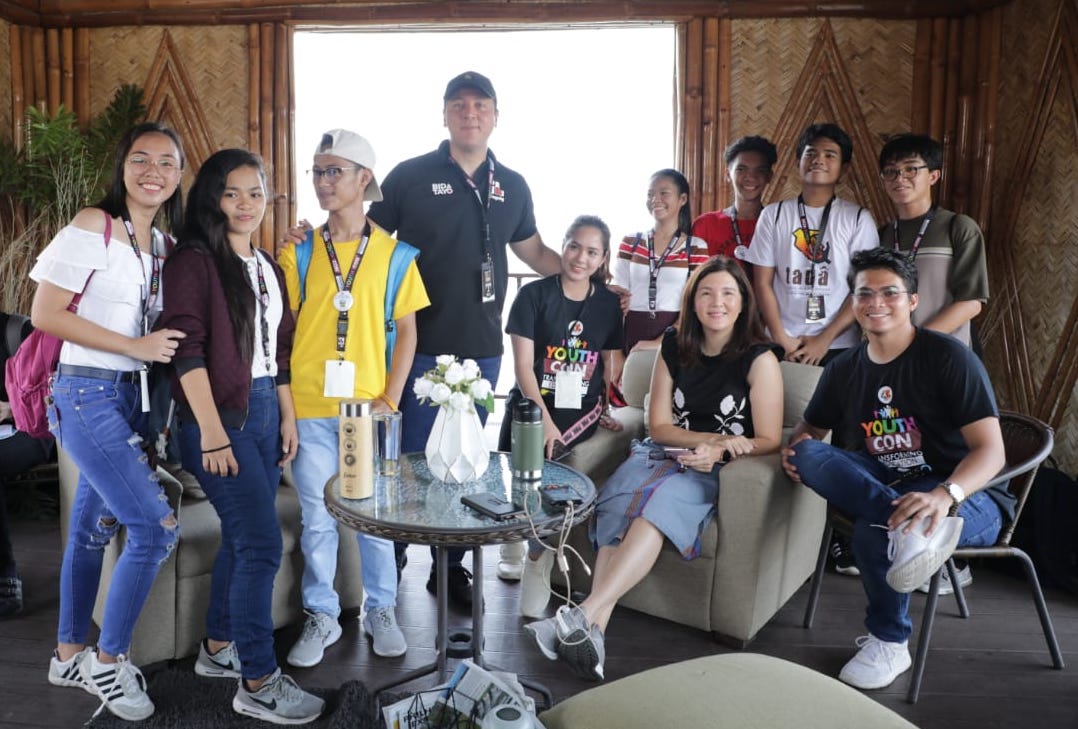
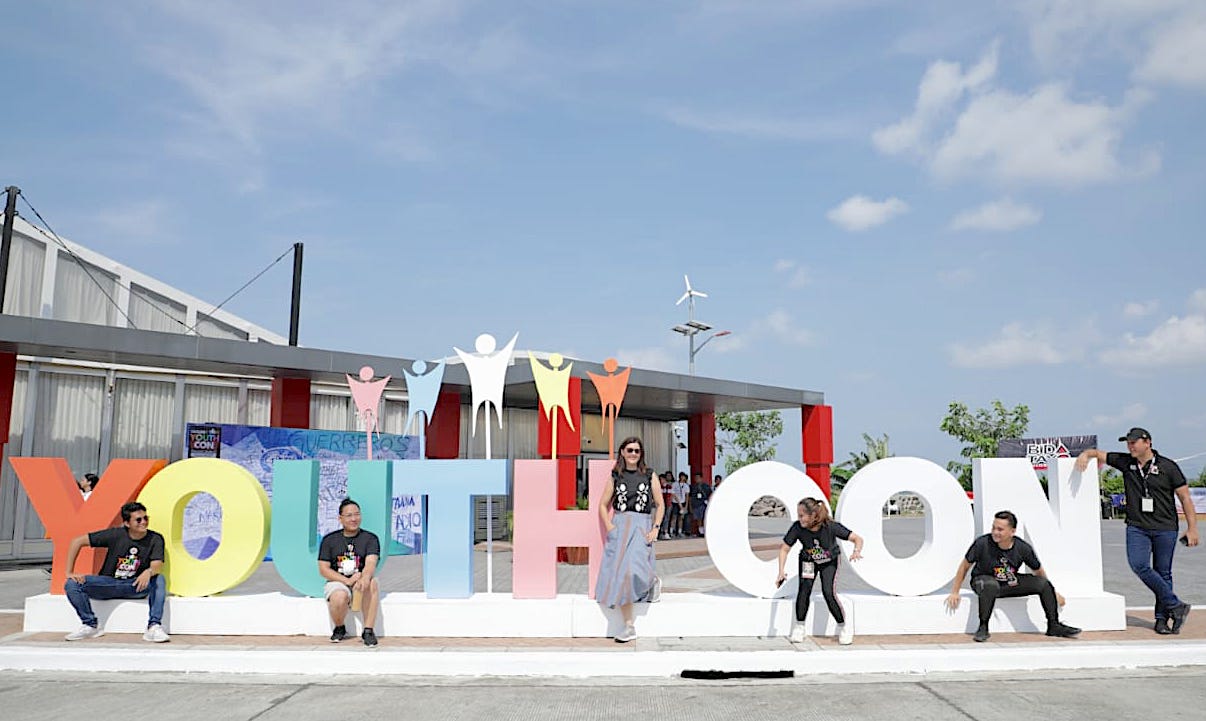
    Senator Pia Cayetano joins youth leaders at the Taguig City Youth Con 2019, an initiative under the leadership of Taguig City Mayor Lino Cayetano aimed to develop skills and knowledge of the city’s next generation of leaders.
    Youth Con 2019 in Taguig City gathered inspirational speakers and experts from different fields to interact with the city’s youth leaders
  • Alternative measure to mandatory ROTC filed

    Senator Pia S. Cayetano is pushing for the establishment of a comprehensive and holistic policy that would strengthen the sense of patriotism and nationalism among Filipino students. 

    The senator filed Senate Bill No. 925 or the ‘Youth Patriotism and Bayanihan Act,’ which is an alternative to the proposal to revive the mandatory Reserve Officers’ Training Corps (ROTC) program for senior high school students.  

    At the Senate Committee on Basic Education’s public hearing on Thursday (August 22), Cayetano stressed that instilling love for country among young Filipinos should start as early as their formative years. 

    “Do the core values of nationalism and patriotism only begin at senior high? That’s the question I pose. This is not just a concept that should be focused on senior high,” she said.

    “I just want to put my point out there, that there are different ways to develop nationalism and there are different components [that should be considered],” she added.

    Earlier this week, the senator filed SB 925, which seeks to institutionalize a two-tiered program to strengthen the values of discipline, patriotism, and nationalism of students from Grades 1 to 12. 

    The first tier is the introduction of a Fundamental Program in the curricula of Grades 1 to 12 in all public and private educational institutions in the country. The components of which shall include Physical Fitness, Arts and Cultural Heritage, Community Outreach, Basic Disaster Risk Reduction and Management, and Basic Security. 

    The second tier is the establishment of a Specialized Program for Senior High School students in public and private educational institutions. This seeks to provide advanced and dedicated training for the development of the students’ skills on security, survival, and public service.

    The Specialized Program shall have the following components: Internal Security and Peace and Order, Dedicated Disaster Risk Reduction and Management, Advanced Security, and Career Development.

    Cayetano said her measure particularly promotes the importance of “soft security,”  which pertains to the ability of citizens to respond to threats to the country’s sustainability through the efficient management of resources and delivery of services.

    In her bill, the senator distinguished ‘soft’ from ‘hard’ security, which refers to the country’s ability to respond to security threats through the use of military force.

    “That’s why my bill includes more components [other than military-based training] because I’d like to think that there is not just one track… We want to be sure that the programs [we will establish] would be suited to the skills that we want our youth to develop,” she said. 

    Furthermore, Cayetano said if the purpose of the mandatory ROTC is to train the youth in helping protect the country from external threats, there are many other ways to do so.

    “If we are preparing for external invasions… should not the preparation be in terms of our students being the best in engineering, psychology, sociology, history, medical care, and the like?” she asked.

    “My point is, we need to strategize where our human resources are needed. And it is essential for the Filipino youth to contribute to the preservation and sustainability of our country’s available resources,” she concluded.  #

    Senator Pia Cayetano: “If we are preparing for external invasions, should not the preparation be in terms of our students being the best in engineering, psychology, sociology, history, medical care, and the like?”
  • Bill seeking to produce globally competitive graduates pushed

    Senator Pia S. Cayetano is pushing for the establishment of a common national policy on education that will train Filipino students to be job-ready and globally competitive.

    In filing Senate Bill No. 62 or the ‘Education Roadmap Act,’ Cayetano aims to institutionalize an education roadmap that incorporates the needed skills and competencies that industries constantly look for in new graduates.

    The senator said her proposal seeks to guarantee gainful employment for Filipino students after graduation by addressing current ‘overlapping and confusing education policies.’ Furthermore, the measure aims to make the Philippines at par with its Southeast Asian neighbors in terms of producing a competitive workforce. 

    Under SBN 62, an Education Roadmap National Coordinating Council shall be created to design, formulate, and monitor implementation of the educational roadmap. 

    The council shall focus on five key components, namely, Global Languages, Graduate Competencies, Teacher Competencies, Capacity Building for Centers of Excellence, and School-to-Work Transition.

    Furthermore, the national policy on global languages shall be aligned with the Common Framework of Reference for Languages to warrant national and global competitiveness, especially in the areas of education and labor. 

    “The roadmap incorporates a careful review of existing curricula so that the skills required by local and international industries from new graduates are integrated in our academic programs,” the senator explained. 

    “This roadmap also aims to strengthen capacity building for teachers so that they could properly equip their students with relevant skills and competencies,” she added. 

    The bill includes a policy for the seamless progression of students from basic education to higher education and, eventually, to employment. This involves strengthening and expanding internship, apprenticeship, and dual-training programs for students, as well as dynamic collaboration among the government, academe, and industry.

    “To ensure that our students’ training are aligned with the requirements of their future employers, industry sector representatives shall be consulted or tapped in developing and implementing the educational roadmap,” Cayetano noted.

    “Our education program must constantly keep up with the changing and growing needs of industries. We must also secure lifelong learning opportunities for our youth so that they will be globally competitive and job-ready upon graduation,” the senator said.

    A staunch advocate of youth empowerment in Congress, Cayetano has championed several measures to improve the quality and accessibility of education. Among her latest proposals is the  Build, Build, Build for Education Bill which lays down a five-year plan to accelerate infrastructure development in Philippine state universities and colleges (SUCs). #

    Senator Pia Cayetano has championed several measures seeking to make quality education accessible to the Filipino youth. (file photo)
  • New law strengthening National Museum hailed

    Senator Pia S. Cayetano has welcomed the signing of the National Museum of the Philippines Act, saying the new law will help bridge generations of young Filipinos to our country’s past to better appreciate our rich history and heritage.

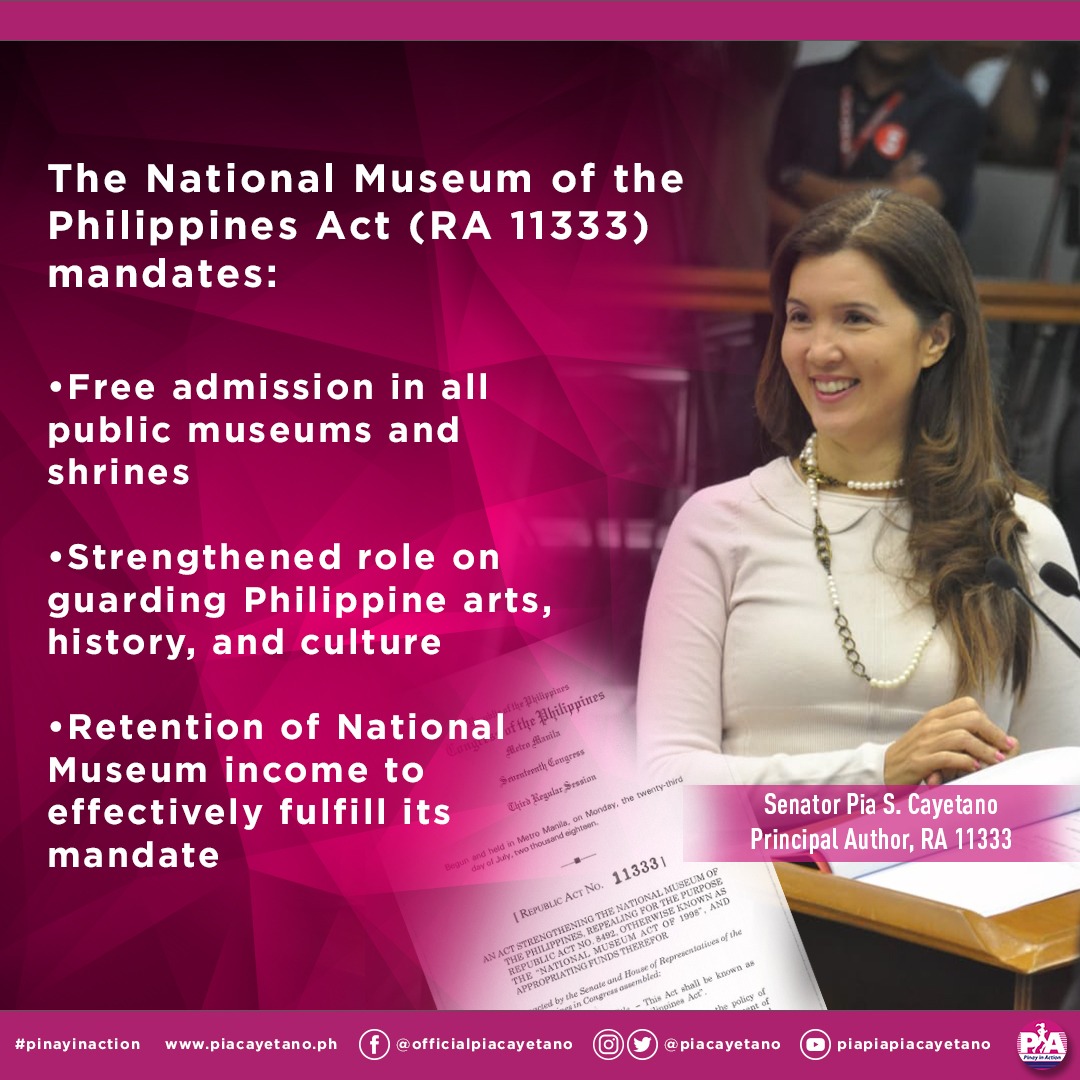
    President Rodrigo Roa Duterte recently signed Republic Act No. 11333, which designates the National Museum as the primary institution to manage and develop museums and collections of national importance across the country.

    The measure’s principal author in the 17th Congress, Cayetano said preserving heritage strengthens our collective sense of history as a people, which is crucial in charting our nation’s future.

    “With the passage of this act, we now have a stronger national policy to protect our heritage. This will help reinforce our sense of nationalism, especially among the youth, and boost sectors like education and tourism, which will provide more opportunities for our people,” she emphasized. 

    The measure authorizes the National Museum of the Philippines to retain the entirety of its income from all sources of its operations nationwide and overseas. It also exempts it from applicable taxes, duties, fees, and charges from donations.

    According to the senator, this provision would enable the agency to better fulfill its mandate to develop the National Museum Complex in Manila, central museums, regional museums, and other facilities it manages. This will also allow the institution to make its services more accessible to the people – and not intended for profit. 

    “This law will allow the public free admission to public museums and national historical shrines and landmarks,” the senator said, adding that “it is always heartening to see students, barkadas, and families coming in droves to visit our public museums as a fun, learning experience.”

    A heritage advocate, Cayetano has championed several measures in Congress seeking to strengthen the government’s efforts to protect the country’s endangered historical landmarks. 

    She was a member of the National Museum Board of Trustees from 2013 to 2016, and a former chairperson of the Senate Committee on Education, Arts, and Culture during the 16th Congress.

    During this time, she led the inquiry into the controversial construction of a high-rise condominium building, which marred the sightline of the historic Rizal Monument at Luneta Park.#

    Highlights of the National Museum of the Philippines Act (Republic Act 11333) authored by Senator Pia S. Cayetano.
  • Pia files inclusive education bill for kids with special needs

    Senator Pia S. Cayetano is affirming her commitment to work for the welfare of children with special needs and afford them the right to accessible quality education.

     The senator has filed the ‘Inclusive Education for Children and Youth with Special Needs Act’ (Senate Bill No. 69) which seeks to establish inclusive learning resource centers for children and youth with special needs (CYSNs) in all public school divisions in the country.

    “Children with disabilities have the same rights as any other child. They deserve access to a kind of education system where their special needs are attended to,” said Cayetano, principal author of RA 10070, which mandates the creation of Persons with Disability Office (PDAO) in every province, city, and municipality.

    “They deserve to learn in an environment with compassion and understanding, and where they can grow as productive members of the community,” she added.

    The proposed measure was first conceptualized by Cayetano, along with special education stakeholders, when she chaired the Senate Committee on Education, Arts, and Culture back in the 16th Congress. 

    Citing records from the Department of Education (DepEd), Cayetano said majority of the country’s 5.5 million CYSNs have limited access to public education due to lack of accessibility features in schools, among other attitudinal and environmental factors.

    “This bill aims to address and remove all these  barriers in our education system to allow CYSNs to participate in the regular school system,” the senator explained. 

    Under SBN 69, the policy of inclusion shall be instituted in all public schools to provide CYSNs with equitable opportunities to educational services. Furthermore, the bill seeks to empower parents and family members of CYSNs with proper information and training.

    All public school divisions of the DepED shall likewise establish an Inclusive Education Learning Resource Center that shall assist in promoting inclusive education to enable regular schools to handle the needs of CYSNs effectively.

    The bill also proposes the formation of an Inter-Agency Coordinating Council on Inclusive Education (IACCIE), which is tasked to integrate and harmonize policies with regard to inclusive education.

    Lastly, SBN 69 mandates the establishment of Child Development Centers (CDCs) near all schools or within existing Inclusive Education Learning Resource Centers. The CDCs will be specially designed for preschool children and their parents, where early identification of disabilities or special needs and intervention programs can be administered.#

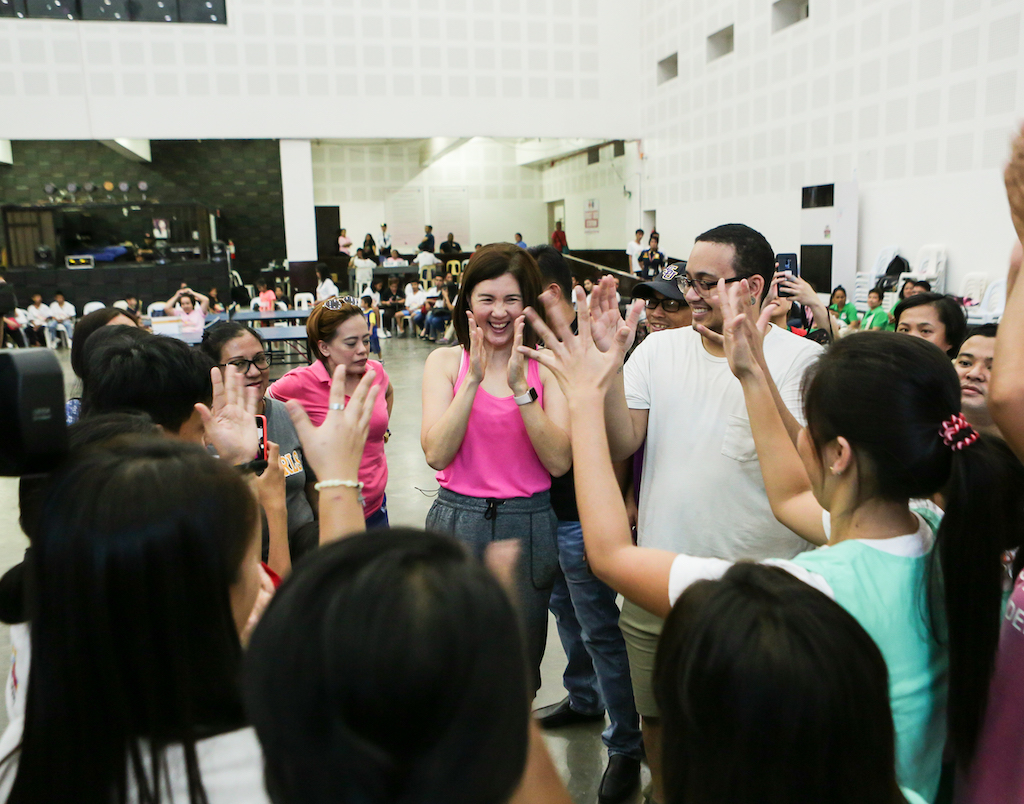
    Senator Pia S. Cayetano is greeted with a waving of hands by hearing impaired youth during a sports clinic for the differently abled in Taguig City earlier this year.
    “This bill aims to address and remove all barriers to allow CYSNs (Children and Youth with Special Needs) to participate in the regular school system.”

  • Pia seeks a loving, caring home for all abandoned, neglected kids

    Senator Pia S. Cayetano has filed a measure to codify the country’s laws on alternative child care with the goal of simplifying the process of giving abandoned and neglected children a second chance at having a loving and caring family.

    Senate Bill No. 61 or the ‘Alternative Child Care Code of the Philippines’ was among the first ten priority bills that the returning senator filed during her first week in the Senate as part of her long-term advocacy to promote children’s rights and welfare. 

    Citing a report by the United Nations’ Children’s Right and Emergency Relief Organization, Cayetano said about 1.8 million Filipino children are abandoned or neglected due to several reasons, including extreme poverty, natural disasters, armed conflicts, and other problems at home.

    “These children are usually placed under institutional care through state-run or accredited residential care facilities, while others end up on the streets,” according to Cayetano, herself a foster parent and eventual adoptive mom to her 8-year-old son, Rene Lucas. 

    “Sadly, there are not enough institutions to attend to their needs, not to mention the fact that these institutions cannot give the warmth and affection only a family could provide,” she lamented. 

    Cayetano’s bill seeks to address the issue by streamlining government policies on alternative child care, such that the out-of-home care provided by residential care facilities shall only be a last resort for the children. 

    “[T]he State shall ensure that a child without parental care or at risk of losing it are provided with alternative care options such as foster care, kinship care, kafalah (Islamic provision of alternative care), guardianship, or residential care, including family-like care,” the measure read.

    SBN 61 likewise makes adoption administrative in nature to effectively streamline its procedures and make formal adoption accessible.

    Furthermore, the bill calls for the establishment of a one-stop agency to improve and expedite the process of all modes of alternative child care. The National Authority for Child Care (NACC) shall be an attached agency of the Department of Social Welfare and Development (DSWD), tasked to formulate and develop policies on pre-adoption, adoption, inter-country adoption, foster care, guardianship leading to adoption, and other alternative child care policies.

    This includes programs that will protect the Filipino child from abuse, exploitation, trafficking, and any adoption practice that is harmful, detrimental and prejudicial to his/her best interests.

    The NACC shall also be in charge of conducting advocacy campaigns on alternative child care, in cooperation with various national government agencies, non-government organizations, peoples’ organizations, faith based organizations, and civil society.

    Moreover, Cayetano’s bill seeks to make Foster Care a mandatory and permanent program of the NACC. The agency shall be tasked to develop programs that will ensure the awareness and responsiveness of local government officials in the promotion of the foster care system in every city, municipality, or barangay.

    The institutionalization of foster care in the country as a preferred way of caring for abused, abandoned, or neglected children is mandated by Republic Act 10165 or the Foster Care Act of 2012, of which Cayetano was the principal author and sponsor.

    “We really need to see more modes of alternative child care working in our communities, as these are proven to be more beneficial than institutional care, in that it provides children with the love and attention that can only be found in a family setting,” Cayetano said, drawing from her own experience as a foster parent and adoptive mom. #

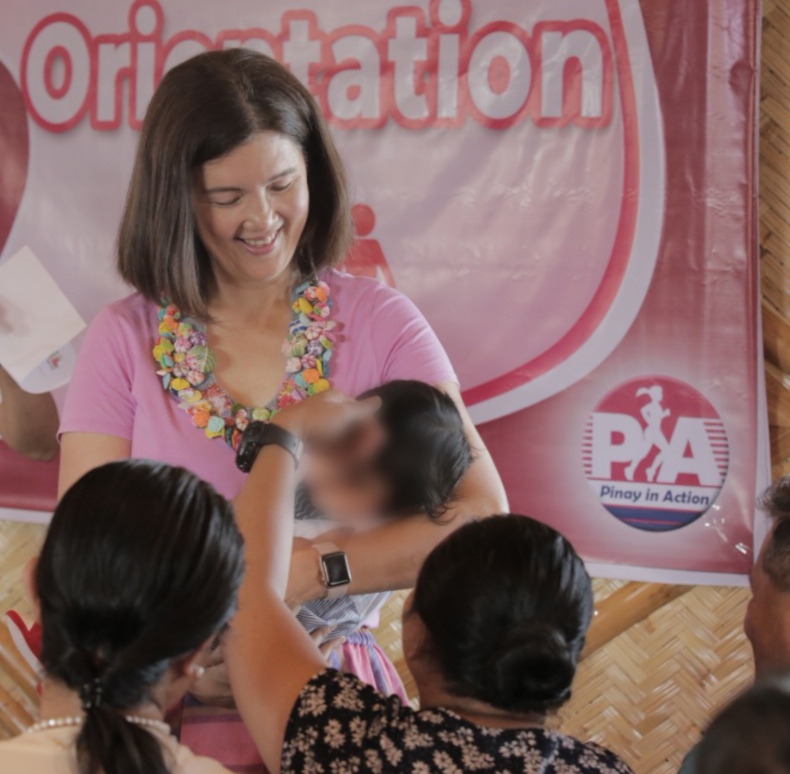
    Senator Pia Cayetano leads dedication rites for abandoned and neglected children in Taguig City during an orientation program for prospective foster families.
  • Pia files ‘Build, Build, Build for Education’ Bill

    Following the economy’s gains from the government’s accelerated infrastructure program, also known as ‘Build, Build, Build,’ Senator Pia S. Cayetano is pushing for a similar initiative to fast-track the progress of quality tertiary education in the country. 

    Cayetano has filed the Priority Infrastructure for Public Higher Education Institutions Act, which she called the ‘Build, Build, Build’ Program for Education Bill.

    The yet-to-be-numbered bill maps out a five-year priority infrastructure plan, with a fixed budget of P10 billion, for the improvement of facilities in State Universities and Colleges (SUCs). 

    The Commission on Higher Education (CHED) will be tasked to identify the priority infrastructure projects based on the needs of the 112 SUCs across the country.

    Cayetano said the government has made notable strides towards giving Filipinos better access to education, especially with the passage the Universal Access to Quality Tertiary Education Act that grants free tuition to students in SUCs.

    However, she lamented that while students have been accorded free tuition, a great number of SUCs in the country still “grieve for educational infrastructure.” 

    “Thus, there is a need to enact a law ensuring that the facilities made available to students are well-equipped and of high quality,” said Cayetano. 

    “Classrooms remain overcrowded and hallways are still being used as classrooms in many SUCs. There is also a shortage of Science and Computer laboratories. These conditions are not optimal for learning and likewise for teaching. Poor educational infrastructure impedes the intellectual growth and health of the youth,” she added. 

    Cayetano said the bill was a fulfillment of her campaign promise to push for a measure that would allow Filipino graduates to be more globally competitive and job-ready. 

    The bill is expected to boost the country’s efforts to ensure quality higher learning and upgrade its education facilities by 2030 under its Sustainable Development Goals. It also seeks to help the government meet its objectives under the Philippine Development Plan 2017-2022, particularly on improving the quality of higher and technical education for global competitiveness. 

    Other education measures that the senator has filed so far in the 18th Congress include the Inclusive Education for Children and Youth with Special Needs Bill, Educational Roadmap Bill, as well as the measure providing for additional support and compensation for educators in Basic Education. 

    The former chairperson of the Senate Education Committee, Cayetano authored laws in previous Congresses promoting the welfare of Filipino students, namely the Unified Student Financial Assistance System for Tertiary Education or Unifast Act (Republic Act 10687), Iskolar ng Bayan Act (Republic Act 10648), Ladderized Education Act (RA 10647), Open Distance Learning Act (RA 10650), and Open High School System Act (RA 10665). #

    File photo: Then Deputy Speaker Pia S. Cayetano (in blue) sits down with students of Pangasinan Sate University in San Carlos City.
  • Let’s make our graduates job-ready – Pia

    In line with this year’s celebration of Labor Day, Senatorial aspirant Pia S. Cayetano vowed to continue fighting for measures that will improve the quality of education in the country and make Filipino graduates job-ready. 

    The congresswoman was in San Fernando Pampanga on Wednesday (May 1) to attend the 117th Labor Day Celebration spearheaded by the Department of Labor and Employment (DOLE).

    During her speech, Cayetano stressed the importance of allocating more budget for the improvement of the Philippine education system in order to prepare young Filipinos to be competitive members of the workforce.

    “I will continue to fight for us to put in more budget for education because the demands that will be put on our labor force will be very high,” she said, particularly stressing Central Luzon’s great potential to be a center of economic growth in the country, owing to the region’s continued infrastructure developments.

    On this note, Cayetano said the government and the private sector should work together to ensure that the youth are ready to take on the challenge of meeting the demands of booming industries.

    “We already have free tertiary education. But the question is, how well does our quality of education compare to our Asian neighbors,” she noted.

    “That is where my education advocacy comes in, because free education alone is not enough. It is our collective responsibility to help young people get the opportunities that they deserve,” she added.

    The Taguig representative urged the Department of Education (DepEd), Technical Education and Skills Development Authority (TESDA), local government units (LGUs), and other concerned agencies to make sure that their Senior High School (SHS) Programs are really training students to be hireable.

    She also pushed for the proper implementation of Republic Act 10687 or the Unified Student Financial Assistance System for Tertiary Education (UniFAST) Act, of which she was an author.

    “I am delighted that one of my laws has already been implemented, which is the UniFAST law. Through this, government can give up to P60,000 worth of financial assistance to poor and deserving students,” Cayetano said.

    A known advocate of the youth sector in Congress, Cayetano authored more laws promoting the welfare of Filipino students, including the Iskolar ng Bayan Act (Republic Act 10648), Ladderized Education Act (RA 10647), Open Distance Learning Act (RA 10650), and Open High School System Act (RA 10665), among others. #

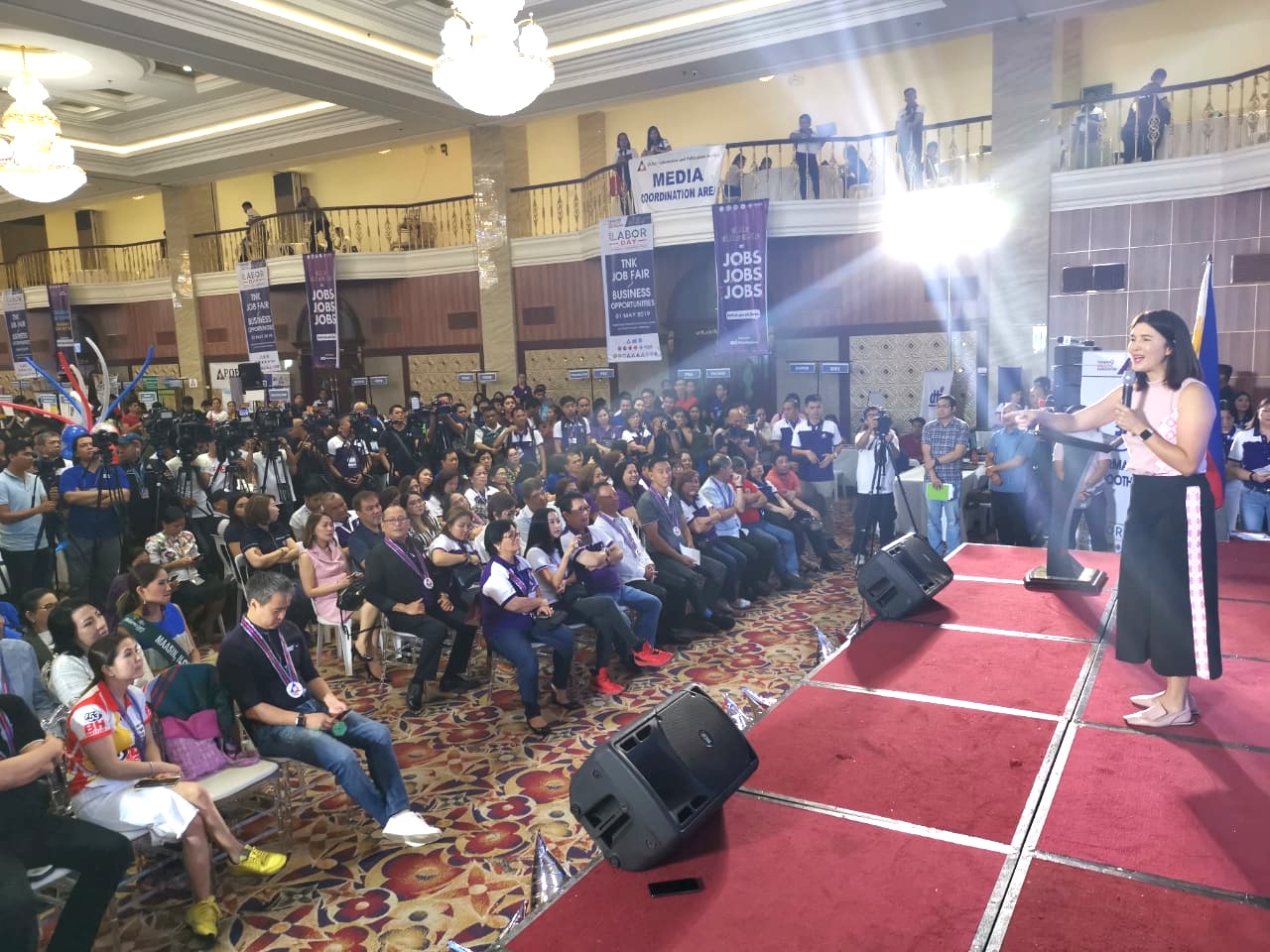
    Senatoriable Pia S. Cayetano speaks before guests and officials present at the 117th Labor Day Celebration spearheaded by the Department of Labor and Employment (DOLE), held in San Fernando, Pampanga on Wednesday (May 1).