
Official Website of Philippine Senator Pia Cayetano

Category: Uncategorized

  • Pia vows to increase funding for ‘Last Mile’ Schools

    Senator Pia S. Cayetano has vowed to increase from P1.5 billion to P15 billion the funding allocation for the Department of Education’s (DepEd) Last Mile Schools (LMS) Program in next year’s proposed P4.1-trillion national government budget. 

    Cayetano, the Senate Finance Committee vice chair, said the tenfold increase will benefit 830 Last Mile Schools located in far-flung and hinterland communities across the country.

    “I have personally visited some of these schools whenever I would hike or bike to upland communities, particularly in the Cordillera Administrative Region,” she shared. 

    A mountain biker and hiking enthusiast, Cayetano regularly visits upland schools in the north to bring learning materials and conduct fitness and football clinics for students. 

    She said that LMS usually have multi-grade level classrooms due to the limited number of classrooms accommodating the communities’ entire student population from different grade levels. 

    “Multi-grade level classrooms are actually an acceptable education model. My children grew up in this kind of setting. What is important is that the teachers are well-trained to handle multi-grade level classrooms and that the class sizes remain small,” Cayetano explained.

    She said the core of DepEd’s LMS Program is ensuring that the schools’ classrooms are made of sturdy material and equipped with the proper learning facilities, including computers that have access to programs complementing the classroom teaching, and electricity. 

    The DepEd had originally asked for a P21.52 billion budget for its LMS program for next year, but only P1.5 billion was approved by the Department of Budget and Management (DBM), based on the 2020 National Expenditure Program. 

    A memorandum issued by the Office of the Deputy Executive Secretary for Finance and Administration last August, however, directed the DBM to include and prioritize the “Last Mile Schools Fund” as a new line item under DepEd’s budget in the 2020 NEP.

    “We should not forget about the Filipino families in far-flung areas who also want the best future for their children,” she stressed. “This is one of my ways to ensure that in our shared goal of fostering growth through education, no Filipino child will get left behind.”

    “I also hope more senators would be willing to go the extra mile to help our last mile schools, and by actively supporting tax reforms, whose proceeds will help fund social services and our Sustainable Development Goals (SDGs),” added Cayetano, who also chairs the Senate Committees on Ways and Means and on SDGs, Innovation, and Futures Thinking. 

    As of September 1, there are about 9,225 schools identified as LMS, with CAR (1,223), Western Visayas (824) and Eastern Visayas (1,076) having the most number – excluding the Bangsamoro Autonomous Region in Muslim Mindanao (BARMM).

    According to DepEd, most LMS are more than an hour away from the town center, in places with problems in peace and order, and which private contractors, suppliers and service providers find difficult to access. 

    LMS have multi-grade level classes, with less than five teachers, and a student population of less than 100, more than 75% of which are usually indigenous people. They have very limited facilities, which had never been repaired in the last four years. #


    Senator Pia S. Cayetano visits students at Lamut Elementary School in La Trinidad, Benguet during her annual trek to far-flung communities in the province. (2014)

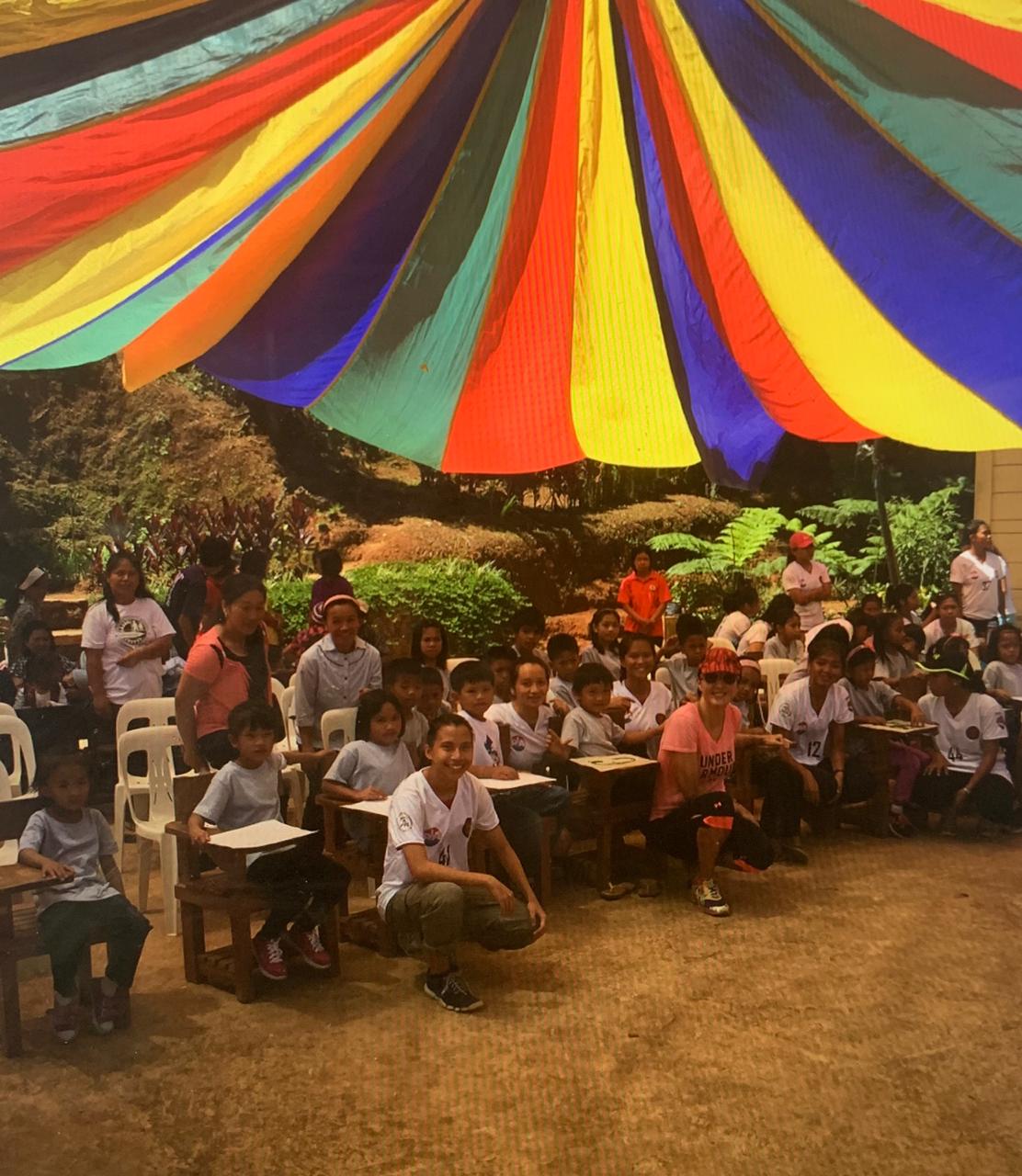
    Senator Pia S. Cayetano is joined by the UP Women’s Football Team (UPWFT) during her annual trek to far-flung communities in Benguet. In 2018, the senator and the student-athletes handed out books, toys, and other learning materials to students studying at the Lusod Community School in Itogon, Benguet.
  • Second batch of bills filed to advance PH development goals

    Senator Pia S. Cayetano on Monday (July 8) filed ten more bills in the Senate to support the Duterte administration’s efforts in attaining the country’s sustainable development goals. 

    The returning senator said her second batch of bills reinforces her vision of helping the country meet its targets in line with the Philippine Development Plan (PDP) 2017-2022 and the United Nations’ (UN) Sustainable Development Goals (SDGs).

    In pursuit of Goal 3 of the SDGs, which is to ensure healthy lives and promote the wellbeing for all, Cayetano is pushing for programs to provide better healthcare services and facilities to Filipinos, particularly on reproductive, maternal, newborn, and child health. 

    These include three bills seeking to provide one midwife in every barangay; establish specialty centers in government hospitals and medical centers; and the promotion of Folic Acid food fortification and supplementation.

    Furthermore, the senator filed measures aimed at upholding the country’s commitment to Goal 13 of the SDGs, which is to implement policies towards climate change mitigation.

    Among these is the bill establishing the Department of Disaster Resilience, which will become the country’s primary agency in charge of responding to disasters and mitigating its impacts.

    Other pro-environmental bills filed by Cayetano include the proposed ‘Sustainable Forest Management Act,’ which provides for the conservation of the country’s forest lands and resources; and the ‘Bicycle Act of 2019,’ which proposes to recognize bicycles as an alternative and sustainable mode of transportation.

    Apart from these, Cayetano is pushing for the ‘Tulong Puhunan’ bill to institutionalize nationwide microfinance programs for the development of Micro and Small Enterprises (MSEs). This is in line with Goal 8 of the SDGs – to promote sustained, inclusive, and sustainable economic growth and decent work for all. The measure is also inspired by the success of the Presyo Trabaho Kita (PTK) program, a brainchild of the senator’s brother, Taguig Representative Alan Cayetano, which helps provide seed capital to people’s organizations across different sectors nationwide. 

    “Let this be a testament of our continued commitment to achieve the collective aspirations of Filipinos, as embodied in the government’s ‘Ambisyon Natin 2040’ vision, where every family enjoys ‘Matatag, Maginhawa, at Panatag na Buhay,’” the senator stressed.

    Cayetano likewise filed pro-youth and -family measures during the second week, including the Magna Carta of Student-Athletes; Increasing the Maximum Value of the Family Home; as well as an Act Instituting Absolute Divorce and Dissolution of Marriage in the Philippines.

    “My objective is to keep championing the rights and welfare of every member of the family. This has been my fight ever since. Hopefully, with the help of our colleagues in Congress, our legislative action plans can help us attain our shared vision for a better country,” the senator concluded. #

  • Pia: Better intervention needed for child offenders

    House Deputy Speaker Pia S. Cayetano is open to amending the Juvenile Justice and Welfare Act of 2006, on the condition that alternative methods of intervention, other than criminal penalty, would be considered in holding child offenders accountable.

    Cayetano made the statement during an event at the Batangas State University – Lipa Campus on Thursday, where she was asked about her stand on proposals to lower the Minimum Age of Criminal Responsibility (MACR) in the country, which is currently 15 years old. A staunch advocate of the Filipino family and children’s welfare, the congresswoman responded by saying she supports calls to amend the 2006 measure, stressing that the gaps in the existing law has become a “fundamental problem” that needs to be addressed.

    “I have a fundamental problem with the law. Kaya open ako sa amendment. The problem with things now is that a lot of criminal syndicates are taking advantage of young children. Ang problema doon sa current na batas natin, may nakalagay doon na ‘pag nalaman na iyong batang iyon is under 15 years old, kailangan ibalik siya kaagad sa parents,” Cayetano cited.

    The Taguig representative said a comprehensive policy should be implemented by the government to prevent criminal syndicates from taking advantage of such gaps in the law and exploiting young children to mobilize their criminal activities. Cayetano said more should be done to protect the youth from a life of crime, other than just lowering the MACR to nine years old or 12 years old.

    She said the focus should be on ensuring that every child receives the proper support and guidance s/he can get from a “loving family.” “It’s not just a matter of 12 years old, 15 years old. It’s a matter of what kind of support every child has, such that they can grow up knowing what is right and what is wrong. If you do wrong, may kaparusahan, but it doesn’t have to be a criminal penalty,” she noted.

    The congresswoman, who was the principal author and sponsor of the Foster Care Act of 2012 (Republic Act 10165), said key factors affecting a child’s growth, including family life and home environment, should first be considered before determining which interventions are most effective in dealing with children in conflict with the law.

    “In the first place, iyong mga batang nagagamit ng mga sindikato, my question is, ano kaya ang family life nila? May parents ba siya na nagmamahal sa kanya, na nagtuturo sa kanya ng right or wrong? There’s a big chance na may problem doon sa family. We have to understand these fundamental issues that affect children so we can decide what is the best kind of intervention for them. That is, to me, the bigger problem,” Cayetano concluded.#

    Photo: Deputy Speaker Pia Cayetano with officials, faculty and students of Batangas State university (Lipa City campus)