Official Website of Philippine Senator Pia Cayetano

Tag: Universal Healthcare

  • NEWS RELEASE: Zero-Balance Billing only possible with fully funded PhilHealth — Cayetano

    NEWS RELEASE: Zero-Balance Billing only possible with fully funded PhilHealth — Cayetano

    Senator Pia S. Cayetano stressed that the highly-publicized Zero-Balance Billing (ZBB) policy might just work as intended should the billions in legally earmarked PhilHealth funds be properly allocated to the agency.

    “If PhilHealth were given every peso intended for it, the promise of Zero-Balance Billing would not be limited to a few hospitals. It could be a real, functioning guarantee for every Filipino patient,” Cayetano said.

    Her statement follows the Supreme Court’s ruling on the illegal transfer of P60 billion in PhilHealth funds to the National Treasury in 2024. Explaining her reservations during the third reading of the 2026 GAA, Cayetano said, “This is not a matter of an unfunded law. This is earmarked. So saan napunta yun? What is clear is that the Sin Tax Reform Act of 2019 (RA 11346) earmarks the proceeds of the sin tax for Philhealth. If this is not delivered to Philhealth, I do not want this body to be complicit in this act.”

    The Senator said that while the Supreme Court’s ruling is a welcome correction, it also highlights a deeper problem: even with the ruling, much remains to be fixed both in the budget and in the way the budget is put together.

    During the 2026 budget deliberations, she presented the deficits in sin tax allocations earmarked for PhilHealth from 2023 to 2026, amounting to ₱129.96 billion:

    • 2023: ₱83.9B was earmarked, only ₱79B appeared in the GAA (₱4.9B deficit)
    • 2024: ₱79.01B was earmarked, only ₱40.28B made it to the GAA (₱38.73B deficit)
    • 2025: ₱69.81B was earmarked, but the bicameral conference committee removed the allocation entirely (₱69.81B deficit)
    • 2026: ₱69.78B is earmarked, but only ₱53.26B is in the NEP (₱16.52B potential deficit)

    Cayetano also pointed out that ₱106.95 billion in PCSO and PAGCOR revenues were legally intended for PhilHealth between 2019 and 2025, on top of the ₱60 billion covered by the Supreme Court ruling. “These gaps are not technicalities,” she said. “They are the reason ZBB has not become fully operational.”

    PhilHealth has estimated that it needs at least ₱147 billion more to subsidize indirect contributors and achieve ZBB coverage across DOH hospitals, specialty institutions, and LGU facilities.

    “We cannot celebrate the Supreme Court ruling and then continue underfunding PhilHealth in the very same budget cycle,” she said. “If we want Zero-Balance Billing to work, we must restore every peso legally intended for the health of our people — and fix the process that keeps taking those pesos away.”
  • NEWS RELEASE: As it should be — Sen. Pia says SC Ruling Confirms Long-Standing Legal Mandate on PhilHealth Funds

    NEWS RELEASE: As it should be — Sen. Pia says SC Ruling Confirms Long-Standing Legal Mandate on PhilHealth Funds

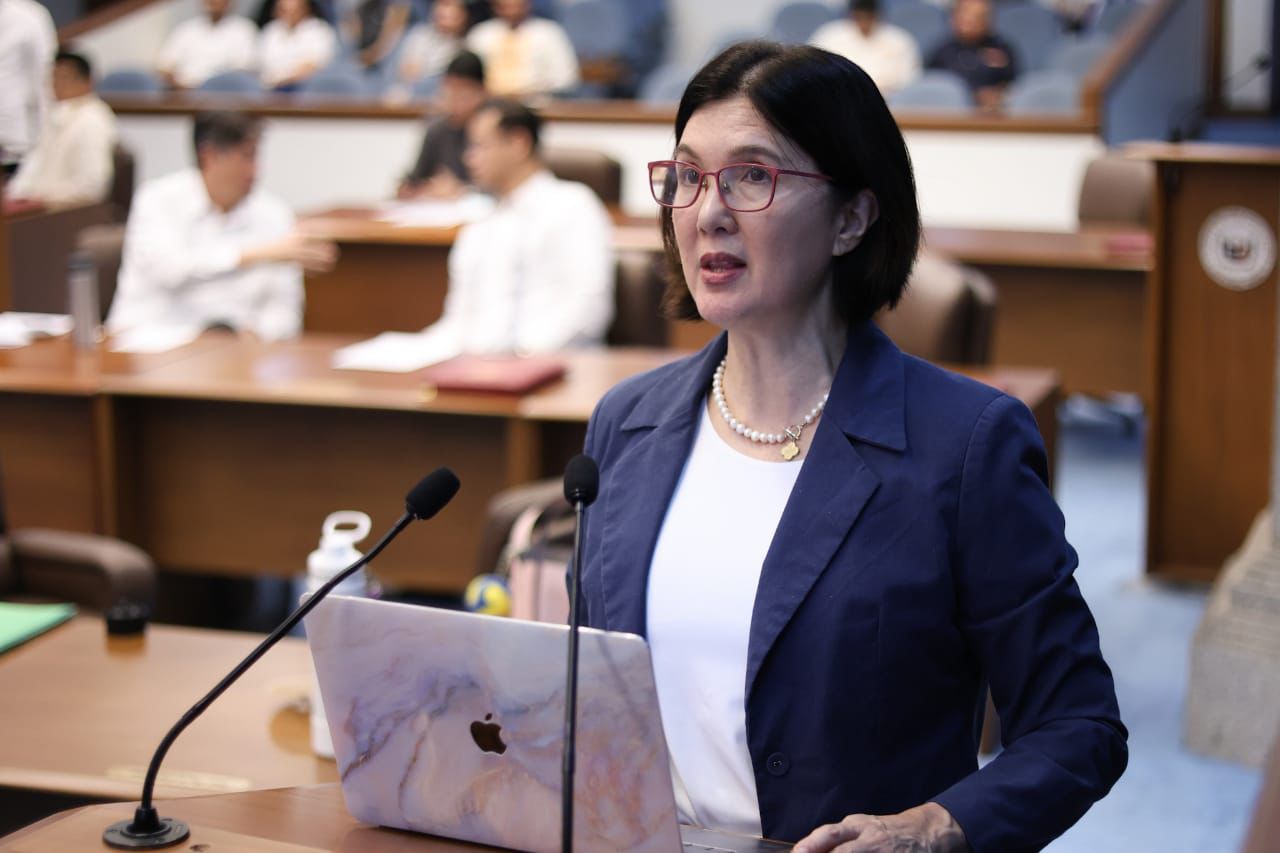
    Senator Pia S. Cayetano said the Supreme Court’s ruling striking down the transfer of PhilHealth funds confirms what she has repeatedly stressed: that the law leaves no room for diversion and that PhilHealth funds must remain dedicated to the healthcare of Filipinos. “PhilHealth funds exist for the health of the Filipino people and cannot be used for any other purpose,” Cayetano said.

    From the outset of the 2026 budget deliberations, Cayetano repeatedly cautioned that years of underfunding PhilHealth ran counter to the letter and intent of existing laws. In her interpellation on the General Principles of the 2026 national budget, she presented a four-year deficit of 129.96 billion pesos between sin tax revenues mandated for PhilHealth and the amounts actually released. She also highlighted 106.95 billion pesos in Philippine Charity Sweepstakes Office (PCSO) and Philippine Amusement and Gaming Corporation (PAGCOR) earmarked funds that had not been transmitted since 2019, noting that the removal of 60 billion pesos from PhilHealth’s subsidy only deepened the gap. She stressed that 296.91 billion – almost 300 billion – pesos in legally earmarked health funds had not reached PhilHealth despite explicit statutory requirements.

    “It shall be allocated and used exclusively in the following manner. What else is there to say? As lawmakers, ano pang language ang kailangang gamitin para siguraduhin na ganito ang paggamit ng pondong ito?” she said, underscoring that the mandates of the Sin Tax laws and the Universal Health Care Act leave no room for administrative reinterpretation.

    As Senior Vice-Chairperson of the Senate Committee on Finance, which handles the health budget, Cayetano had objected to the removal of PhilHealth’s government subsidy in 2025. Her objection ultimately prompted her to sign the bicameral report of the 2025 General Appropriations Act with reservations, making clear that the issue of PhilHealth’s excess funds should be addressed separately.

    “This is about upholding the law and protecting the rights of millions of Filipinos who rely on PhilHealth coverage,” Cayetano emphasized.

    For the Senator, the Supreme Court’s decision strengthens these protections and ensures that the legal framework supporting the Universal Health Care Act is upheld. “As we welcome this decision, we celebrate it together with the advocates who fought for it, but above all, with the Filipino people who stand to benefit the most,” she said. “Our responsibility now is to ensure that every peso ordered returned remains in the final General Appropriations Act and fulfills its purpose of improving the health and lives of our people.”#

  • Sen. Cayetano urges support for stronger preventive and universal healthcare

    Sen. Cayetano urges support for stronger preventive and universal healthcare

    Senior Finance Vice Chairperson Sen. Pia S. Cayetano pushed for stronger support for preventive and universal healthcare as she opened deliberations on the 2026 budget of the Department of Health. She raised concern over the under-allocation of sin tax revenues intended for Philhealth, urging that the full amount mandated by law be remitted. For 2026, she noted that only ₱53.26 billion was included in the National Expenditure Program, despite certifications from the BIR and BOC showing that ₱69.78 billion should have been allocated by law.

    Cayetano, who is the Committee on Sustainable Development Goals (SDGs), Innovation, and Futures Thinking Chairperson, also stressed the need to align the health budget with SDG 3: Good Health and Well-Being, calling for better hospital infrastructure, more health workers, and interventions to reduce out-of-pocket expenses. She likewise acknowledged the recent Cebu earthquake and urged DOH to record its response and mobilize volunteers.

  • Cayetano raises Sin Tax revenue concerns in Universal Healthcare Interpellation

    Cayetano raises Sin Tax revenue concerns in Universal Healthcare Interpellation

    Senator Pia S. Cayetano, in her interpellation on Sen. JV Ejercito’s privilege speech on the Universal Healthcare program, explained how the risk-sharing scheme under PhilHealth’s YAKAP package works. She explained how P1,700 per person is pooled for an entire community and spent according to members’ varying health needs, “similar to how an HMO works.” The senator also cited the model of a U.S.-based HMO, Kaiser Permanente, which rewards members for engaging in healthy activities, noting that “the aim is to keep people healthy before they become patients.”

    FInally, Cayetano raised the failure to appropriate the earmarked sin tax revenues to PhilHealth. “For 2025, P69.81 billion ang sin tax collection para sa PhilHealth, pero ang pumasok sa GAA is zero,” she said, adding that she will file as an intervenor in the pending Supreme Court case. “Kaya natin inearmark yon dahil nga yung mga bisyo na nakakasama sa tao, sana man lang may nakukuha doon pambayad sa gamot nila. Tapos hindi natin nakukuha.”