Senator Pia S. Cayetano welcomed the formation of a new standing committee that would oversee the country’s progress in achieving its commitments to the United Nations’ (UN) Sustainable Development Goals (SDGs) by the year 2030.
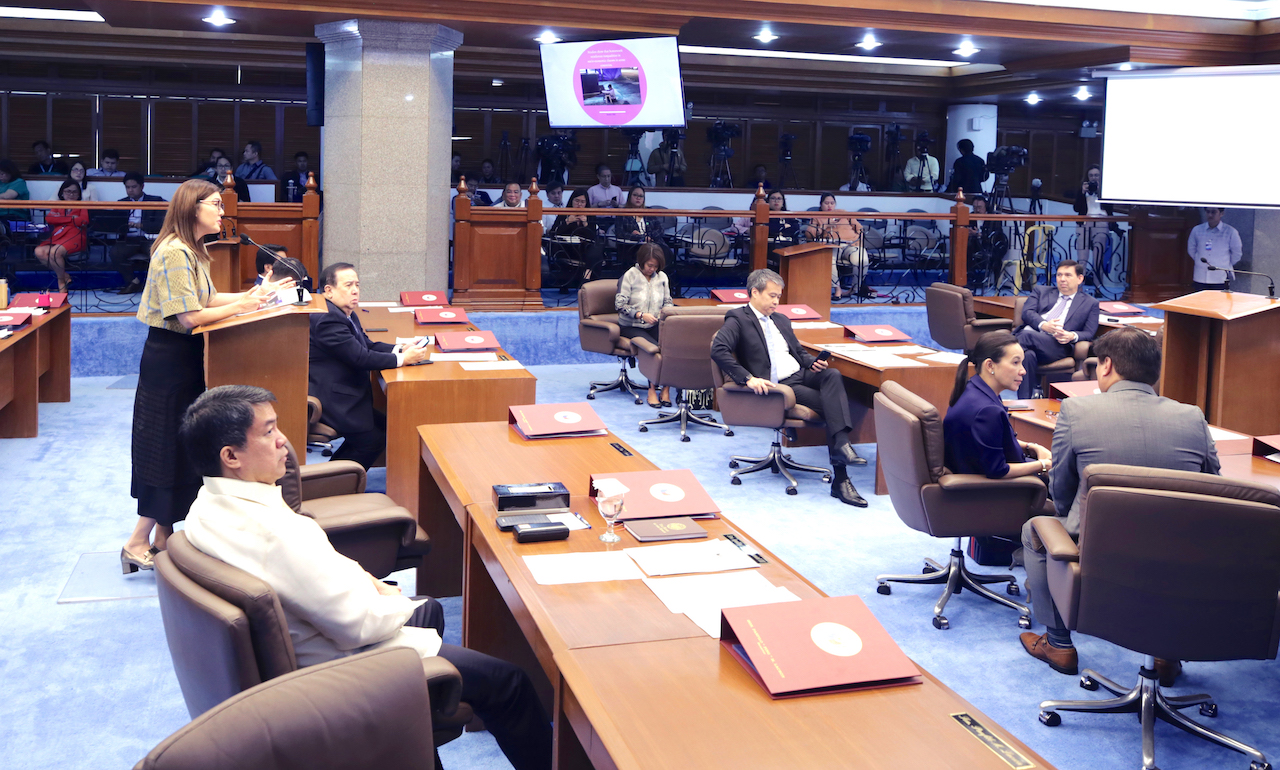
The Senate on Tuesday (September 3) adopted Philippine Senate Resolution (PSR) 122 creating the Committee on SDGs, Innovations, and Futures Thinking, while merging two other panels in line with the objective of streamlining the number of standing committees of the Senate.
The resolution was sponsored by Senate Majority Floor Leader Juan Miguel Zubiri and adopted unanimously by the senators.
Cayetano said the formation of the new panel would help ensure that the Institution shall be “cognizant and conscious” of the 17 SDGs agreed upon by member-countries of the UN, including the Philippines. The SDGs seek to end poverty, protect the planet, and ensure that all people enjoy peace and prosperity by 2030.
“It would be the responsibility of the Committee to at least make sure that the body knows that there are such goals that need to be achieved by way of prioritizing,” the senator stressed.
“I believe that the biggest contribution of the [SDGs] Committee would be on [tackling] overlapping goals… Many times, a committee is left within the confines of a bill pending before it… That’s why the SDGs Committee is secondarily referred to ensure that we take a bigger picture,” she added.
Furthermore, Cayetano pointed out that the new committee would oblige the Senate to allot the needed time and resources in addressing issues that can generally affect the next generation of Filipinos. Thus, the term “Futures Thinking.”
“That is something that we tend to neglect precisely because by human nature and survival, we tend to focus on the problems on hand. The objective here is to be planning for the future, to think out of the box,” she noted.
Aside from creating the new committee, PSR 122 merged several standing committees of the Senate, namely: the Committee on Agriculture and Food with the Committee on Agrarian Reform; the Committee on National Defense and Security with the Committee on Peace, Unification, and Reconciliation; and the Committee on Environment and Natural Resources with the Committee on Climate Change.
The reorganization reduced the number of standing committees of the Senate from 41 to 39, which Zubiri said had been the chamber’s average number of committees in the last four Congresses. #
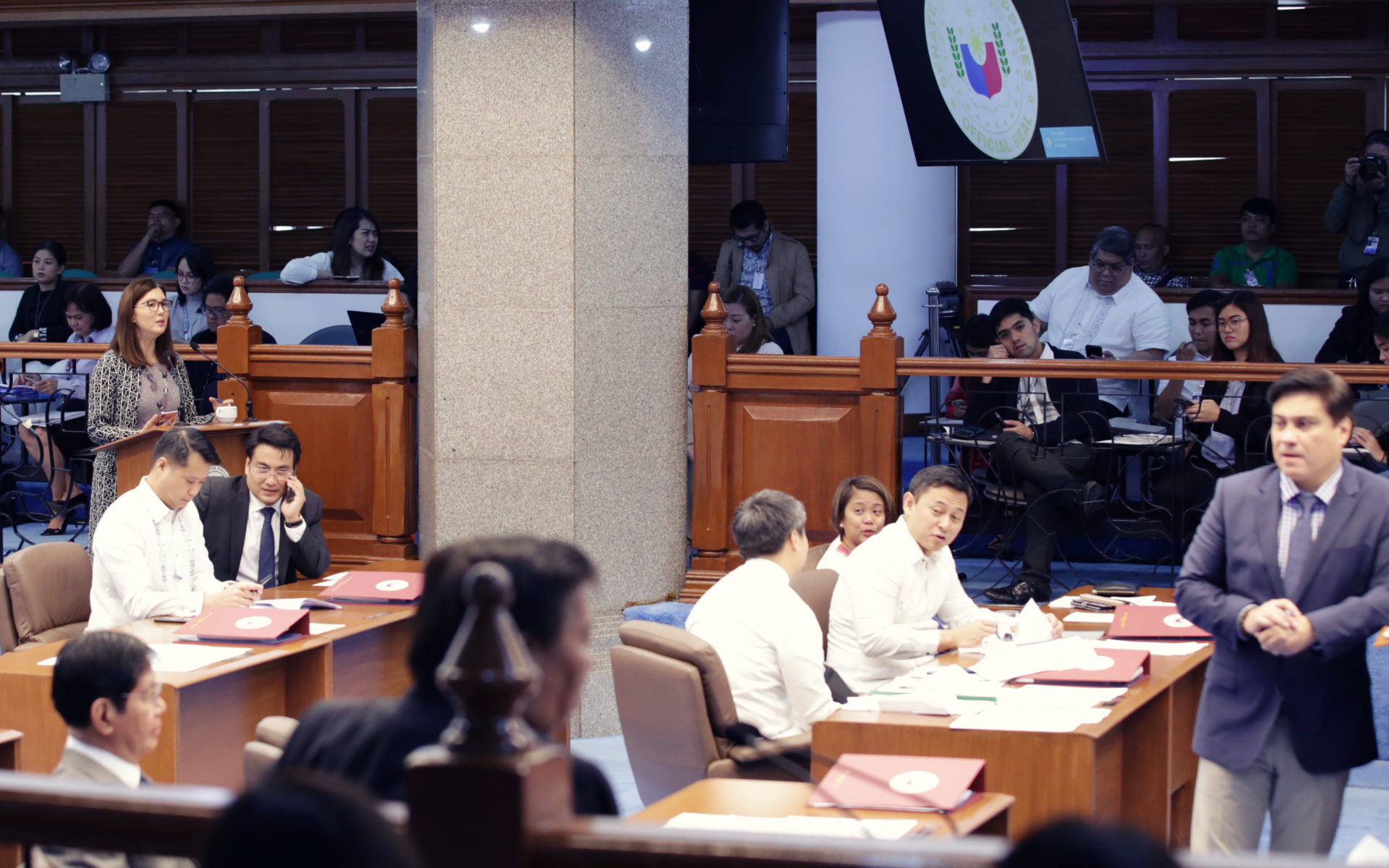
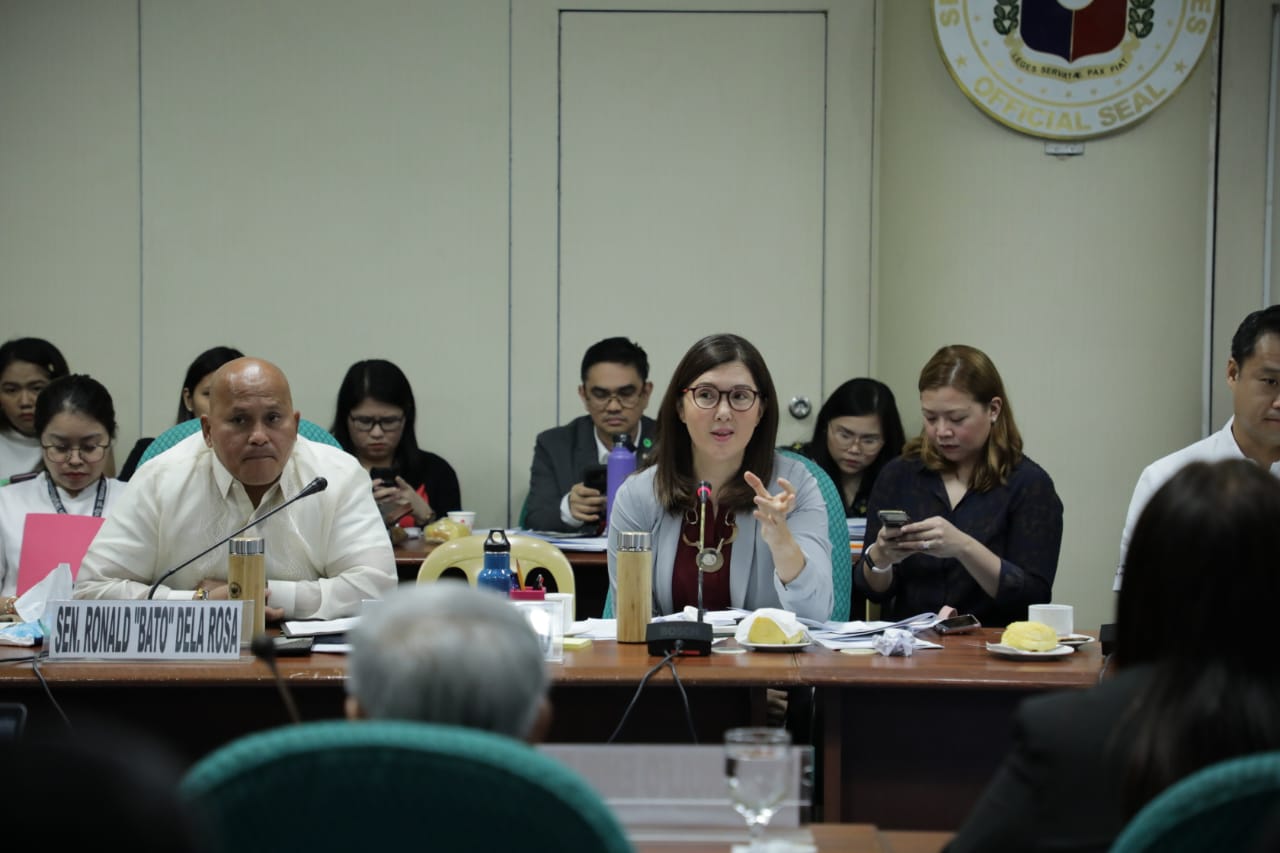
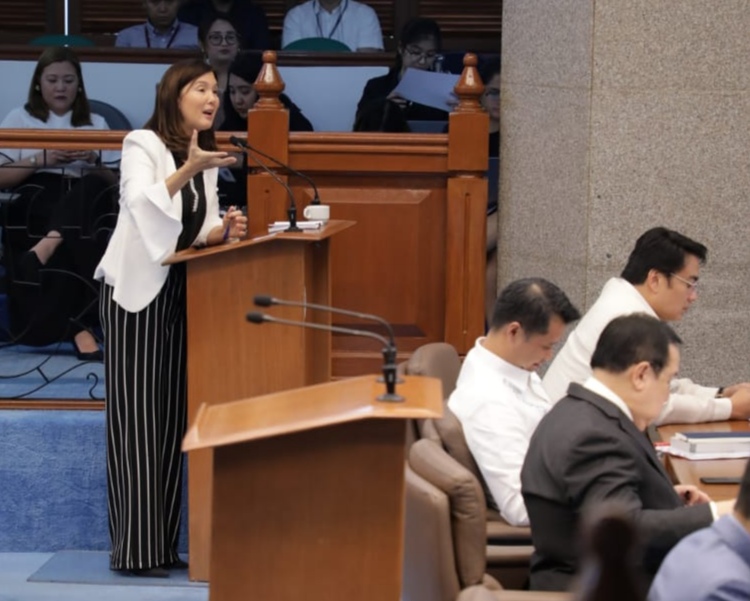
Senator Pia Cayetano, Senate Majority Floor Leader Juan Miguel Zubiri, and Senate Minority Floor Leader Franklin Drilon (foreground) discuss the rationale for the creation of the Senate Committee on Sustainable Development Goals, Innovations, and Futures Thinking during Tuesday’s session. (Sept.3)
Senator Pia S. Cayetano weighed in on the “no-homework policy” being proposed by fellow lawmakers for basic and secondary education, saying that teachers should be given the freedom to choose the most effective teaching methods for their students.
“No disrespect to the authors of the bills. Being a teacher is a very specific calling, and to be an effective teacher, you need the kind of latitude to decide what is best for your students,” Cayetano said, in response to Senator Richard Gordon’s interpellation after she delivered a privilege speech on Monday (September 2).
“A good teacher will not just go by the books. A good teacher will identify the strengths and weaknesses of their students. And this is where the correlation [of effective learning] to homework comes in,“ she explained.
“To dictate upon a teacher a blanket prohibition against assignments, or a mandate of exactly how much time to give a student in terms of homework would restrain his or her ability to provide for the needs of his or her students,” added the senator.
“I do believe that the Department of Education can step up and come up with better guidelines. But as to legislation, I would really worry, Mr. President, if we even have the time… to focus on something as specific as this, as to legislate number of hours [for homework].”
“I am all for studying the effects of homework [on the educational development of students]. But I would like to ask this body to approach this not in isolation. It can’t be [a choice between] homework or no homework only,” Cayetano said, as she enjoined fellow senators to consider measures that can provide more holistic learning environments for Filipino children.
“[We must work for] an environment that promotes learning in the classroom, outside of the classroom, in the homes, in the communities, and wherever they are in the Philippines,” she added.
Cayetano said she believes younger students should be given less homework, but clarified that she would first want to study proposals carefully before making an informed decision.
Meanwhile, the senator said numerous studies have shown that homework reinforces inequalities in some countries’ socio-economic classes. She said students belonging to upper and lower classes benefit differently from homework policies since they do not enjoy the same privileges when it comes to education.
Cayetano lamented that students in lower classes have less access to after-school academic and non-academic programs, a conducive environment for studying, and proper support from their families and caregivers.
Lastly, the senator expressed her reservation about actually enacting a law that could restrain the teachers’ ability to attend to the needs of their students, particularly those who need to put in extra work for certain subjects.
“Let’s say a student is struggling when it comes to Math[ematics]. The teacher may require that the student does extra work. If we prohibit that, then we effectively ban that student from getting extra work from his/her teacher,” she cited.
In line with this, Cayetano stressed the need to give more support to the country’s educators, with the goal of attracting the best and the brightest into the teaching profession.
“I know that our teachers are hardworking, a lot of them were scholars on their own. But the reality is, we could do better in terms of making that career track more effective and more attractive,” she said.
“I want to be able to leave that kind of legacy to our children, that they go to any school in the Philippines, and they will get the best education,” added Cayetano, who filed a bill in the 18th Congress seeking to grant additional compensation for teachers in the basic education. #
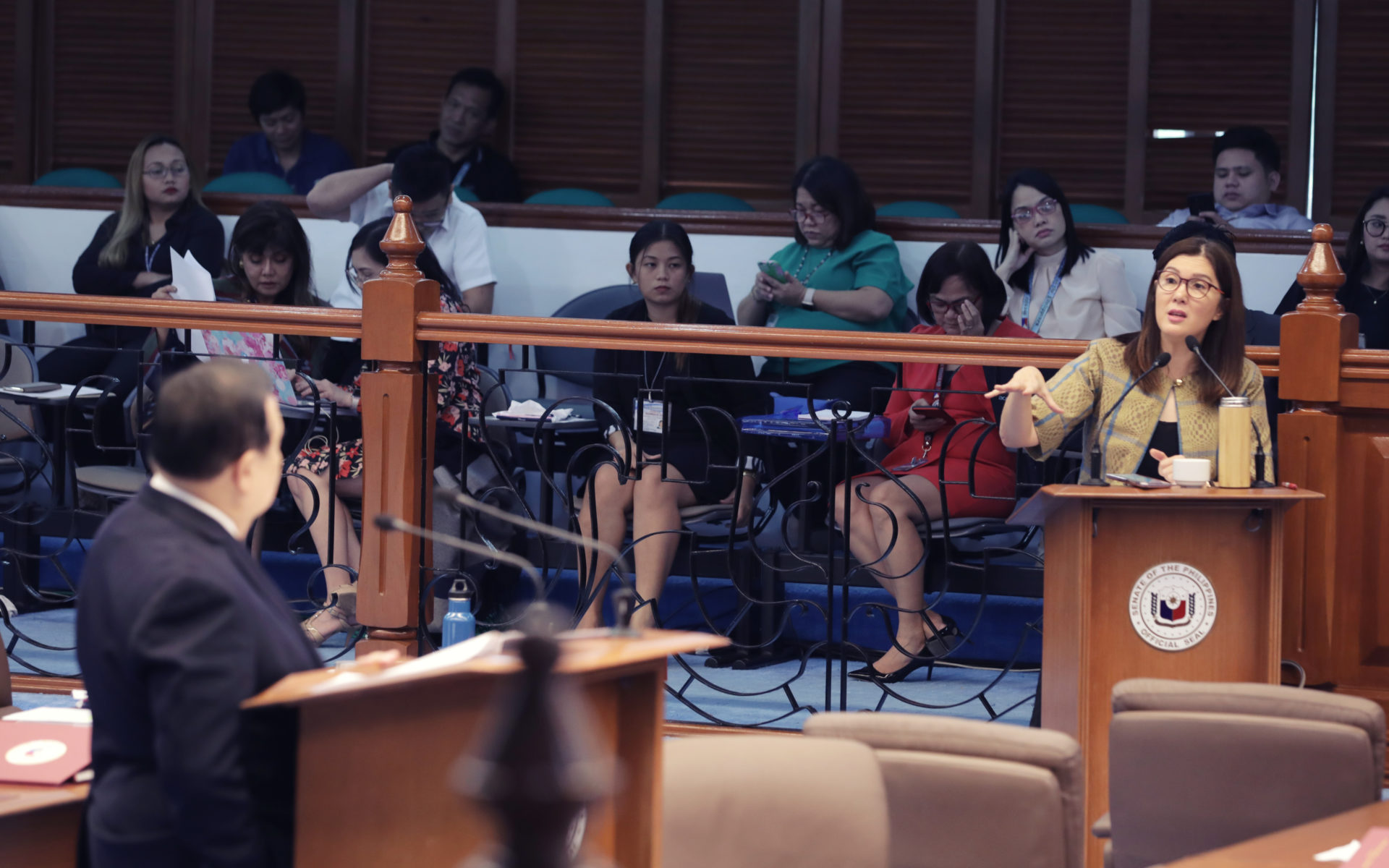
Senator Richard Gordon interpellates Senator Pia Cayetano after the latter delivered a privilege speech on the ‘no-homework’ policy during Monday’s session.
Mr. President, the title of my privilege speech is, “What is the purpose of homework? Do we need more or less?”
So I ask all of you to remember your grade school days. I’m just curious to know if our colleagues have experienced a lot of homework, a little homework, or no homework. May I ask for a very informal survey from my colleagues?
So, no homework, raise your hand. Minimal homework, ayan, si Joel. Homework, minimal?
So, a lot of homework? Did anyone experience? Ah, si Grace, a lot. Okay, Senator Grace and Senator Risa answered a lot of homework.
Si Senator Sherwin, hindi sumagot. Okay.
So, clearly, we all come from a different background, Mr. President, when it comes to our education experience. Because whether you come from a private school or a public school, there’s also a lot of latitude given to our teachers.
So in the news for the past few weeks were articles on bills that have been filed to drastically lessen or even ban homework during the weekends. But before we decide, and before I hope that the Senate as a body starts discussing the issue of homework, let’s understand first what is the purpose of homework.
So this is a summary that we culled from various sources. The purpose of homework is to help reinforce what was taught in class; to gather extra info beyond what was taught; to enhance a student’s knowledge on the subject; and to help struggling students improve their grasp of the topic.
So nowhere there says that the student is meant to study alone. That’s not the purpose of homework, or to learn on their own. It’s really to reinforce, to increase, and enhance their knowledge.
But when we discuss whether we will increase or decrease homework, the question we need to ask ourselves is: Is there a correlation between top performing countries when it comes to education standards and their homework hours?
So, I chose five countries to present to you, I’ll show you the slide. So these are the top 5 countries that will be shown to you are Finland, South Korea, Brazil, Argentina, and Japan.
So interestingly, these five countries are the top 5 in the least number of homework hours in a week. Finland has 2.8, South Korea has 2.9, all the way to Japan, 3.8. So that’s less than one hour a day of homework.
What is now their ranking in the educational system ranking? This happens to be a 2014 ranking, there are updates, but I’ll tell you that these countries are more or less still in the top.
So in terms of the best education system ranking, Finland is top 5, South Korea is number 1, and Japan is number 2. So for the top 5 countries in terms of less homework… you can conclude that there is a correlation if you look at the three.
But the other two are not in the top, they’re not even in the top 30. So I have more data, but I am keeping you at five to keep the discussion simple. So you can’t really say there’s a correlation because Brazil and Argentina that have very minimal homework are in the top 40 only, not in the top 1, 2, 3, 4, or 5.
Well the reason for that is because there are many other factors that go into the success of an educational program. And I’ll quickly walk you through it. Let’s look at South Korea that has consistently been in the top. Only 2.9 hours of homework per week. However – and I apologize that the print is so small so I will have to read to all of you – that’s a little bit misleading because they only have 2.9 hours of homework, but they have hours and hours of private study time. They have a lot of after-school work, either in the school or outside of the school. That is typical to many, if not all, of the Korean students. And the classrooms have all the amenities of smart technology, high-speed internet, etc. And they also have summer school. So that’s the situation in South Korea.
Japan, I would say, is similar in the sense that they have very low homework but they also have so much after-school activities, both academic and non-academic. In fact, the teachers and the students are in charge of cleaning their own schools. That’s a major part of their daily activities. They clean their own school. Some schools require that they come in on Saturdays for studies, and they give a lot of time for both academic and non-academic activities after school.
Finland is actually my favorite. Only 2.8 hours of homework per week. But, let me walk you through all the other amenities and support that Finland gives to their students. School actually starts at [age] 7. So what does that mean? They don’t have to go to school? It’s not required. But they have a very strong early childhood education system in every community. And I think the figure is like, 90% send their children to early childhood education even though it is not required.
Their schools have free meals, they have easy access to healthcare, they have psychological counseling, and the teachers – this is the best part, as far as I am concerned – all of the teachers teaching basic ed are required to have a master’s degree. It is an honor to become a teacher in Finland. It is one of the most prestigious jobs, to be a teacher in Finland.
And I watched TED Talks, I would be very happy to share it with you, I’ve watched videos, I’ve read books on the Finnish education. It really was a country-wide decision to make their education system this way. And one last point. There are no private schools. If I say none, maybe there’s one or two, because it says basically there are none. They’re all public schools. So, the conclusion is, no matter how rich you are, you are forced to support a public school system because your kids will go to public school. So that’s how it is in Finland.
I also want to emphasize that they are very big on giving latitude to the teachers to decide on how to teach. And when they’re questioned, this is based on a US comparative study, would a Finnish family want to transfer to another community or cross-town because there’s a better school, there’s no such thing daw like that in Finland because all the schools are created the same. They have such high respect for the teachers that they will not even think that mas magaling yung teacher dun kaysa sa teacher dito. So ganun po dun.
Now, this is the sad thing about homework that I want to point out. There are numerous studies that show that homework reinforces inequalities in socio-economic classes in some countries. How does this happen?
In many countries in the world, those who belong to the upper socio-economic class go to private schools, and they do a lot of homework compared to those who go to public schools. And the outcomes are very different. Those kids in the private schools with a lot of homework end up faring better. So if you look at that study in isolation, you will conclude that more homework is better. I am not prepared to make that conclusion. I’m just pointing out studies that show in a country, there are these inequities that are brought about [by] the different kinds of education that children can avail of.
Let’s dissect that. What difference is there between a private school, where you pay, and where a child will go to, versus a public school? I don’t have a slide to show you, but I can tell you from experience, and I’ve been talking to a lot of parents, and to visiting a lot of schools.
Number one, it would be access to after-school programs in and outside of school, both academic and non-academic. Let me give you a moment to think about that. All of you who have children have to know that either your child would be involved in glee club, in sports, in arts, in music, in debate, and so on and so forth.
The school that my daughters went to, which is La Salle Zobel High School, they are very known for sports, so a lot of the kids there excel in sports, and a lot of them go on to participate in… the Atenista sitting beside me is nagkakamot, wala akong plug tungkol sa Ateneo kasi wala akong anak na nag-Ateneo, but I will give you the floor later on.
But my point is, go to a private school and access to activities, both academic and non-academic are never ever wanting. Sometimes, it is subsidized, or the parents will pay extra. The point is, there is access. That is not so in many public schools.
The other difference between socio-economic classes when it comes to education is the proper environment. Many children coming from an upper class would be able to go home and either quietly study in their dining table or quietly study in their own bedroom, or some would even have a study room.
Most people who send their children to public schools do not have that. Salo-salo na ho yung dining table, yung living room, nanonood ng kung anuman pinapanood, wala hong opportunity to concentrate. And that has been identified as a major problem in making homework effective. They cannot even focus when they are in an environment like that.
And third is the support from family and caregivers. Whether it’s a parent or a substitute parent when parents are working and they can afford to hire a tutor, there is support given when you come from a higher socio-economic bracket. Those who come from a lower economic bracket have more difficulty because probably the working mom and dad cannot afford to get a tutor. Baka wala rin naman tita o lola na magtuturo. So wala na ngang magandang environment, wala rin hong support na naibibigay.
So without that, it becomes extremely difficult to have an effective homework program.
Meanwhile, I also want to point out the situation of teachers. I am so envious of the reality that in Finland, teachers are one of the highest paid. Why? Because I want to be able to leave that kind of legacy to our children, that you go to any school in the Philippines, and you will get the best education.
I know that our teachers are hardworking, a lot of them were scholars on their own, but the reality is, we could do better in terms of making that career track more effective and more attractive to teachers. We could do better in trying to pull the best and the brightest into the teaching profession.
Now, why is it so important to have a good teacher? Well, a good teacher will not just go by the books. A good teacher will identify the strengths and weaknesses of their students. And this is where the correlation to homework comes in. To dictate upon a teacher a blanket prohibition against assignments or a mandate of exactly how much time to give a student in terms of homework would restrain his or her ability to provide for the needs of his or her students.
So before anyone concludes that I am pro-homework, I want to put on record that I come from a no-homework background. My mother is a preschool teacher, and I went to a school that had basically no homework for the entire grade school. And I loved it. Maybe because my background comes from being with my mother all the time, I studied on my own.
And if you look at the successful programs in other countries, that’s what it is all about. It’s providing a learning environment wherever you are, not ABC types of homework. So I am not against homework per se, but I am definitely for creating the best kind of learning environments for our students.
If we dictate a number of hours, what about those who follow an academic track? My children did not go to an international school. They went to a private school, but not an international school. So I don’t have personal experience with the IB program, maybe somebody here has, want to share it. But all I know is, for those who have sent their children to the IB program, it is extremely tedious and these kids study all day, every day, Saturday and Sunday, kulang na kulang sa tulog.
But they do that because that is what is required to enter a prestigious school abroad. So how can we now say, “Huwag kang mag-homework” kung yun yung requirement para matapos mo yung academic track na yun? Paano natin ili-limit yung…
Or let’s say, a student is struggling when it comes to Math. Pero desidido siya to pursue a career in Science, but there are Math requirements. So, the teacher may require that that student does extra work. So if you prohibit that, then we effectively banned that student from getting extra work from their teacher.
And I actually had told my kids in high school, “Ask your teacher for more work.” Kasi nga, kapag walang homework, I love it, but if they’re struggling, then they need extra work so that they can catch up.
So that’s my only concern here, Mr. President. I am such a believer of no homework, I am such a believer. I will end my privilege speech with a photo of a holistic child, because I am in full support of limiting and only focusing on quality homework, because we want a holistic child. That is our objective.
I made this up. In fact, kulang pa nga kasi meron pa akong dagdag na community and church. But basically, this is what we want for our children. That they learn outside of school. And there are also tried and tested results showing that if you study continuously, you do not give your brain a chance to recover and come back fresh.
It is actually recommended, before you take exams, that you take a nap, you have a good sleep, because that’s how the brain works. It can only retain memory when it’s given a chance to take a break. So, I repeat that I am all for studying the effect of homework. But I would like to ask this body to approach this not in isolation. Let us look into what we need to do to provide our children with a holistic learning environment.
It cannot be homework or no homework only. It has to be an environment that promotes learning in the classroom, outside of the classroom, in the homes, in the communities, and wherever they are in the Philippines.
So, I end on that note, Mr. President, knowing that everybody here genuinely wants to be able to provide the best for our young children.
Thank you!
*Privilege speech delivered at the Senate session on September 2, 2019 (Monday)
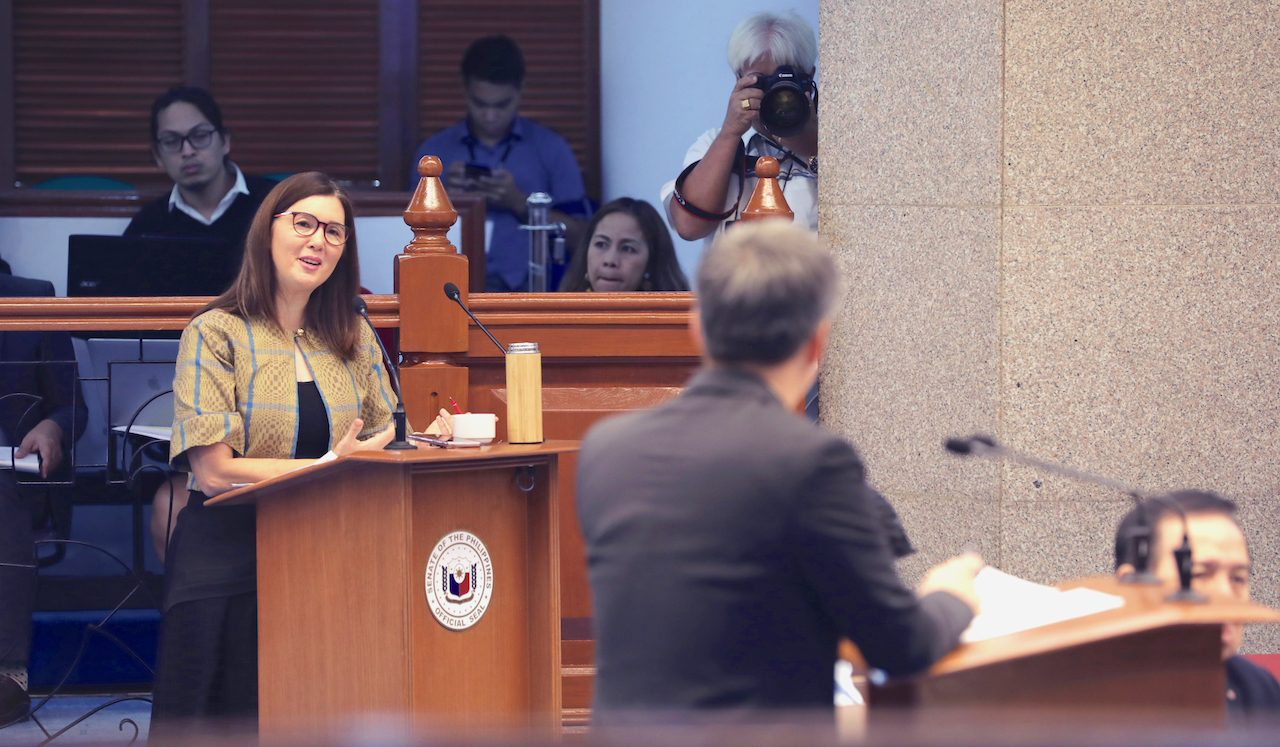
Senator Pia S. Cayetano being interpellated by Senator Joel Villanueva. Cayetano: “I am not against homework per se, but I am definitely for creating the best kind of learning environments for our students.”
Senator Pia S. Cayetano appealed to alcohol industry players to refrain from misleading the public into thinking that raising ‘sin’ taxes on alcoholic beverages, which would also increase the cost of these products, is detrimental to Filipinos, particularly the poor.
“When we’re talking about [taxing] sin products, please do not scare the people into thinking that what [the government is] trying to do is harmful to the Filipino people,” the senator stressed in an interview at the Senate.
Cayetano chairs the Senate Ways and Means Committee that tackles the proposed measures seeking to increase sin taxes on alcohol and e-cigarette products (Package 2+ of the Comprehensive Tax Reform Program or CTRP).
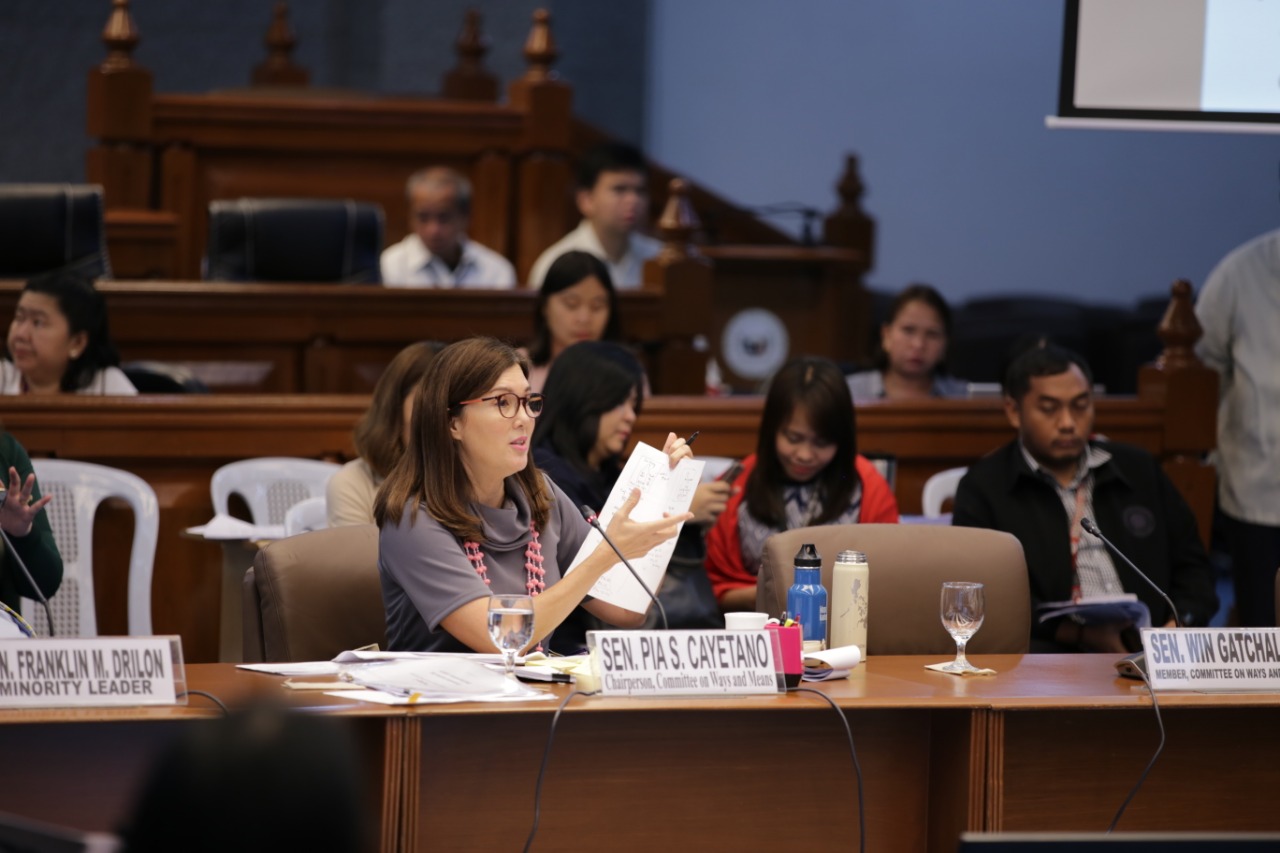
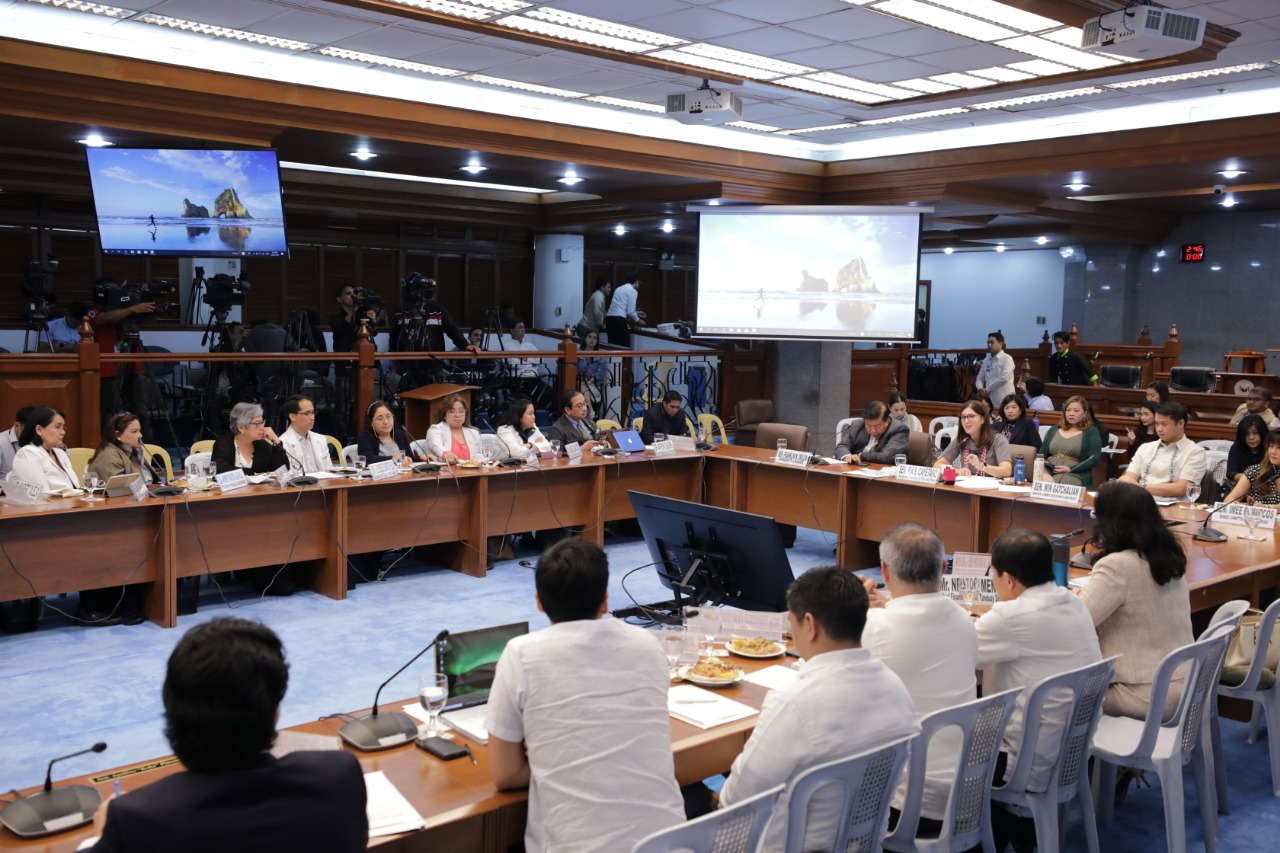
The panel on Thursday (August 29) conducted its second public hearing on Senate Bill No. 383 and House Bill No. 1026 – Increasing the Excise Tax Rates on Alcohol Products and E-Cigarettes.
Industry leaders were given the opportunity to present their position on proposals to raise taxes on alcohol products to augment funds for the government’s universal health care program. A particular argument raised by Distilled Spirits Association of the Phililpines (DSAP) President Olivia Limpe-aw was that hiking taxes on their products would “deprive the poor of their little happiness.”
Cayetano, in response, stressed that the poor deserve a “better kind of happiness” – one which will not cost them their health and their families’ wellbeing.
“I would often hear, ‘Do not deprive the poor of the things that make them happy,’ supposedly alcohol and cigarettes. That is such a sad, sad fact. Because in the long run, that is what causes them so much misery,” she said.
“If it is our goal to become an upper-middle income country, can we not leave our poor with this kind of happiness [harmful vices like smoking and excessive drinking]? Can we offer them instead a better kind of happiness, including educating them as to the right choices they could make?” she asked.
Furthermore, the senator warned industry players against painting a false picture that the proposed sin taxes would lead to job losses.
More than anything, Cayetano said the country’s alcohol problem causes more damage to millions of Filipino families in terms of related diseases, road crashes, domestic abuse, and crimes, and therefore should be addressed through a variety of public health interventions and social reforms, including taxation.
“If you’re going to say that there’s X amount of people to lose jobs, then I am going to dig up all the figures to show how many families are affected by the same sin products – how many deaths, how many battered women, how many neglected children,” she emphasized.
The senator, a staunch health advocate, also had this appeal to members of media: “Ang pakiusap ko sa inyo, don’t use these [one-sided] stories without also including stories about the deaths [caused by alcohol consumption], the children who are violated, and the women who are left homeless or who have to give up food on the table [in favor of spending on alcohol].”
Meanwhile, the senator said she would continue to keep open mind in considering certain concerns raised by industry during the hearing. The Ways and Means Chair plans to create a technical working group to reconcile the positions of the Finance department with other stakeholders before finalizing the committee report next month. #
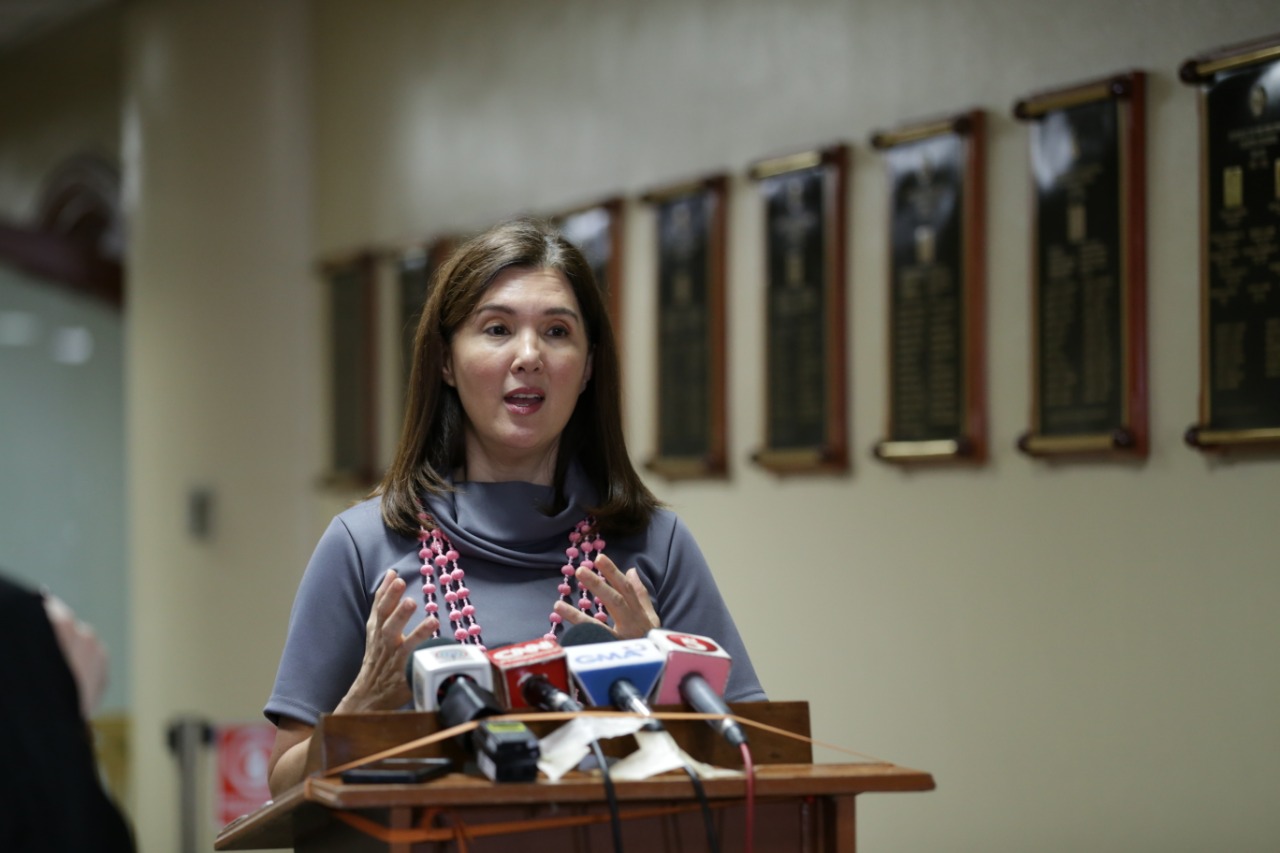
Senate Ways and Means Committee Chair Pia S. Cayetano leads the panel’s second public hearing on sin taxes on alcohol products on Thursday, August 29. In a media briefing, Senator Pia S. Cayetano rejected the argument raised by an industry representative that raising sin taxes would deprive the poor of their ‘little happiness’ [alcohol and cigarettes]: “That is so sad. Can’t we offer them instead a better kind of happiness?” The second public hearing of the Senate Committee on Ways and Means gathered alcohol industry leaders, health advocates, civil society groups, and government agencies to deliberate on proposals to raise taxes on alcoholic beverages.
“Let us honor the great men and women who fought for our nation’s freedom by nurturing future heroes among the ranks of our youth.”
Senator Pia S. Cayetano shared this message to mark this year’s National Heroes’ Day, which is celebrated on Monday, August 26th.
“Today, we remember the bravery and sacrifices made by our heroes, including prominent figures who led the struggle for independence, and those who remain unnamed and undocumented in history books,” the senator said.
“May this day remind us of the importance of bridging our current generation of young Filipinos to our rich and proud past, and cultivating in them love and service to country, the same values which our national heroes embraced and stood up for,” she added.
Cayetano said she fully supports President Rodrigo Duterte’s call in his 4th State of the Nation Address (SONA) for Congress to pass a law that shall “invigorate nationalism and patriotism among young Filipinos and further promote their role in nation-building.”
To this end, the senator is pushing for Senate Bill No. 925 or the “Youth Patriotism and Bayanihan Act,” which seeks to establish holistic programs in basic education in lieu of proposals to make the Reserve Officers’ Training Corps (ROTC) program mandatory for students.
The bill introduces a fundamental program and a specialized program, both seeking to develop the values of discipline, patriotism, nationalism, and a strong sense of bayanihan among Grades 1 to 12 students.
The fundamental program for Grades 1 to 12 students shall have the following components: Physical Fitness, Arts and Cultural Heritage, Community Outreach, Basic Disaster Risk Reduction and Management, and Basic Security.
Meanwhile, the specialized program for senior high students shall have advanced and dedicated training to develop skills and knowledge in security, survival, and public service through the following components: Internal Security and Peace and Order, Dedicated Disaster Risk Reduction and Management, Advanced Security, and Career Development.
Cayetano recognized that military training is vital, but is not the only means to cultivate patriotism and discipline among students. She said a citizenry well-trained in various disciplines like the sciences, medicine, sports, the arts, business, and technical skills, among others, is the best preparation for any external or internal threats to the country’s security and development.
“The more holistic way to cultivate our youth’s sense of nationalism and patriotism is by training them early on to study and respond to threats to our sustainability, and by being responsible leaders in their respective fields,” she noted.
“This way, we can ensure that future generations of Filipinos could turn out to be ‘heroes’ – nation-builders who will excel in their chosen profession or field, and contribute to our country’s sustainable growth, stability, and security,” she concluded. #
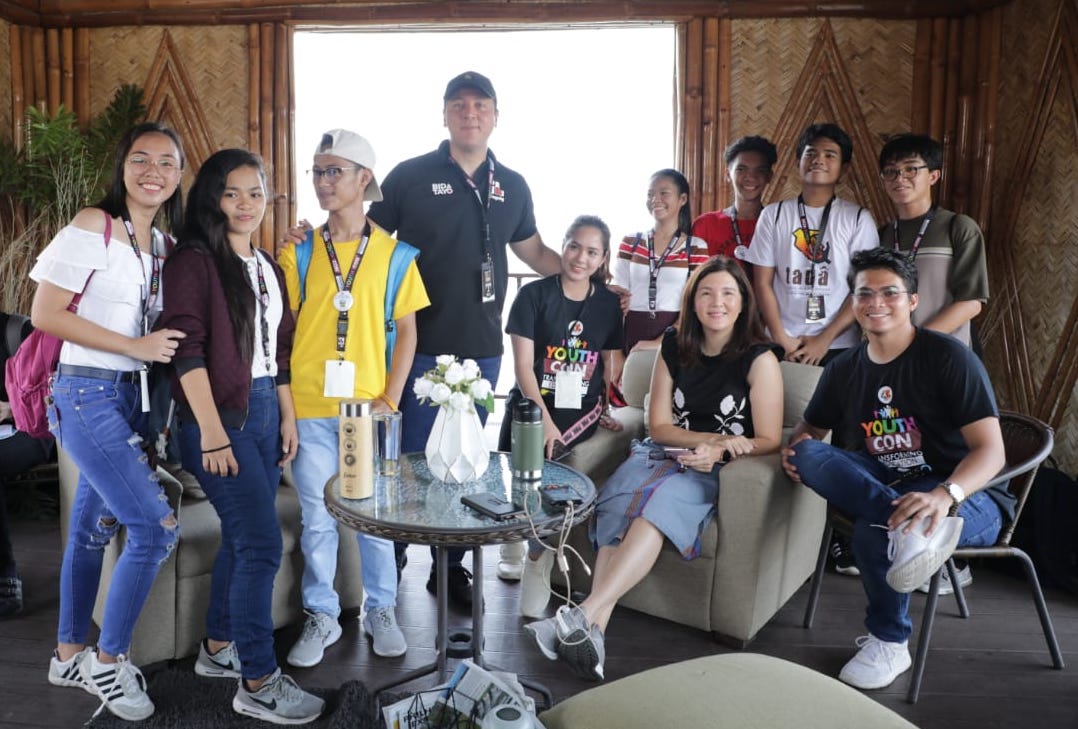
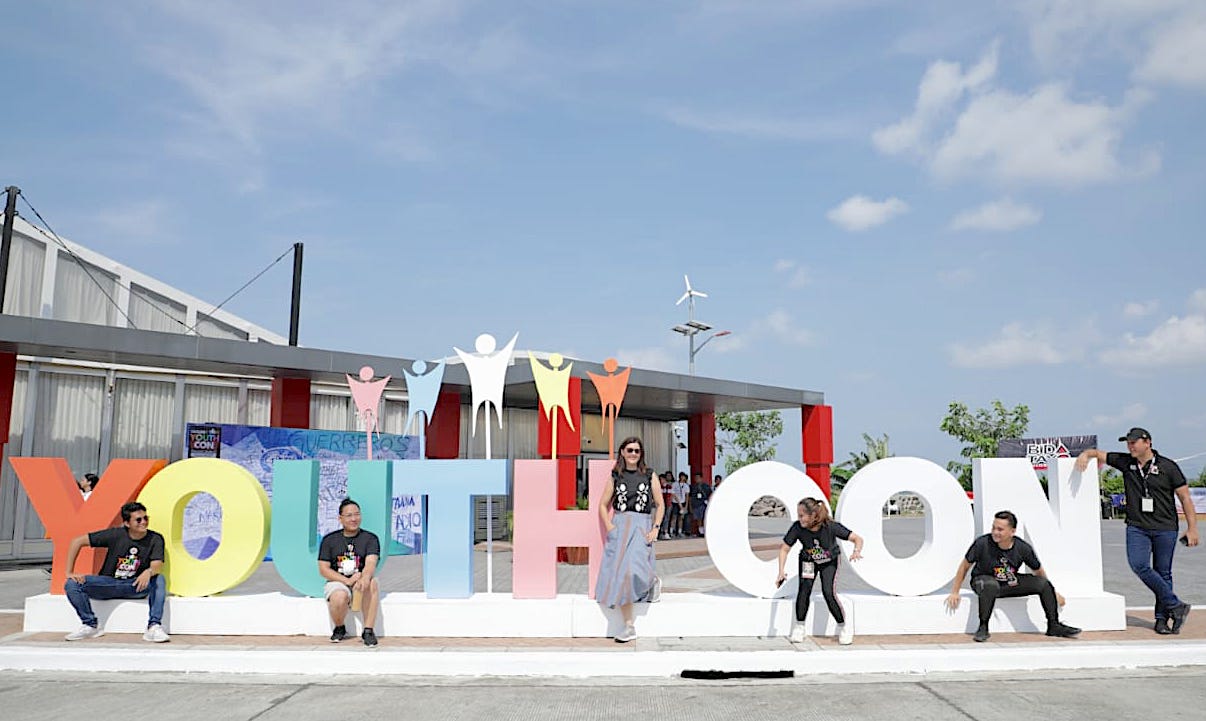
Senator Pia Cayetano joins youth leaders at the Taguig City Youth Con 2019, an initiative under the leadership of Taguig City Mayor Lino Cayetano aimed to develop skills and knowledge of the city’s next generation of leaders.Youth Con 2019 in Taguig City gathered inspirational speakers and experts from different fields to interact with the city’s youth leaders
Senator Pia S. Cayetano is pushing for the establishment of a comprehensive and holistic policy that would strengthen the sense of patriotism and nationalism among Filipino students.
The senator filed Senate Bill No. 925 or the ‘Youth Patriotism and Bayanihan Act,’ which is an alternative to the proposal to revive the mandatory Reserve Officers’ Training Corps (ROTC) program for senior high school students.
At the Senate Committee on Basic Education’s public hearing on Thursday (August 22), Cayetano stressed that instilling love for country among young Filipinos should start as early as their formative years.
“Do the core values of nationalism and patriotism only begin at senior high? That’s the question I pose. This is not just a concept that should be focused on senior high,” she said.
“I just want to put my point out there, that there are different ways to develop nationalism and there are different components [that should be considered],” she added.
Earlier this week, the senator filed SB 925, which seeks to institutionalize a two-tiered program to strengthen the values of discipline, patriotism, and nationalism of students from Grades 1 to 12.
The first tier is the introduction of a Fundamental Program in the curricula of Grades 1 to 12 in all public and private educational institutions in the country. The components of which shall include Physical Fitness, Arts and Cultural Heritage, Community Outreach, Basic Disaster Risk Reduction and Management, and Basic Security.
The second tier is the establishment of a Specialized Program for Senior High School students in public and private educational institutions. This seeks to provide advanced and dedicated training for the development of the students’ skills on security, survival, and public service.
The Specialized Program shall have the following components: Internal Security and Peace and Order, Dedicated Disaster Risk Reduction and Management, Advanced Security, and Career Development.
Cayetano said her measure particularly promotes the importance of “soft security,” which pertains to the ability of citizens to respond to threats to the country’s sustainability through the efficient management of resources and delivery of services.
In her bill, the senator distinguished ‘soft’ from ‘hard’ security, which refers to the country’s ability to respond to security threats through the use of military force.
“That’s why my bill includes more components [other than military-based training] because I’d like to think that there is not just one track… We want to be sure that the programs [we will establish] would be suited to the skills that we want our youth to develop,” she said.
Furthermore, Cayetano said if the purpose of the mandatory ROTC is to train the youth in helping protect the country from external threats, there are many other ways to do so.
“If we are preparing for external invasions… should not the preparation be in terms of our students being the best in engineering, psychology, sociology, history, medical care, and the like?” she asked.
“My point is, we need to strategize where our human resources are needed. And it is essential for the Filipino youth to contribute to the preservation and sustainability of our country’s available resources,” she concluded. #
Senator Pia Cayetano: “If we are preparing for external invasions, should not the preparation be in terms of our students being the best in engineering, psychology, sociology, history, medical care, and the like?”
Senate Ways and Means Chair Pia S. Cayetano on Wednesday (August 21) said she is inclined to go with the Department of Finance’s (DOF) proposal to raise excise taxes on alcoholic beverages, with the goal of generating more funds for the Universal Health Care (UHC) Program.
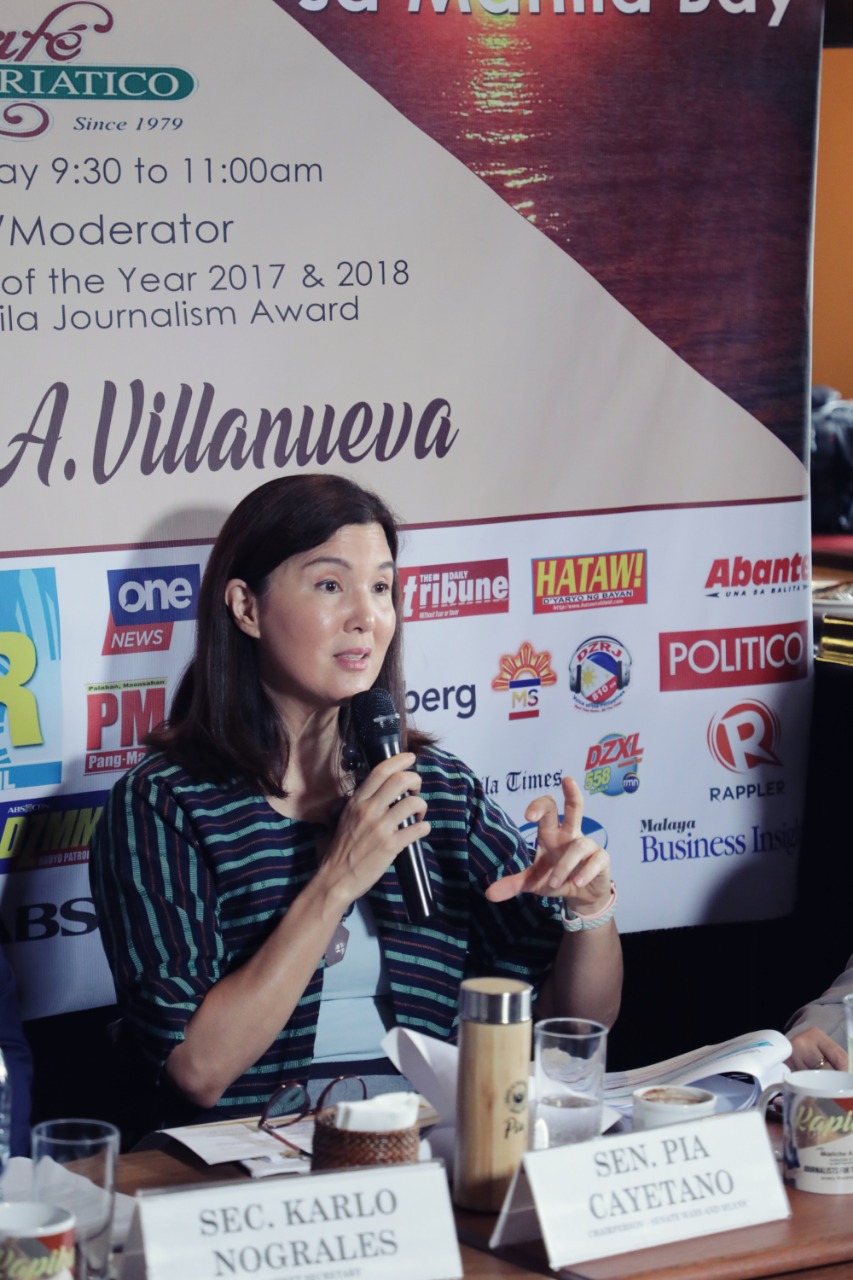
“Technically, I have not adopted anything yet. But I have an open mind to go towards the version of the DOF,” the senator said during the Kapihan sa Manila Bay press briefing in Cafe Adriatico, hosted by journalist Marichu Villanueva.
This was in reaction to questions on whether her committee would push for higher sin taxes on alcohol compared to the recently approved House version of the measure.
House Bill No. 1026 was passed on third and final reading on Tuesday (August 20), seeking to impose higher excise taxes on alcohol, heated tobacco, and vape products.
The measure proposes to increase specific taxes on distilled spirits to P35 per liter in 2020, with an ad valorem tax of 22 percent. It also seeks to hike specific taxes on fermented liquors to P32 per liter starting 2020.
The DOF, however, wants to pass a higher version of excise tax rates on alcohol products.
Under their proposal, specific taxes on distilled spirits will be raised to P40 per liter starting 2020, with an ad valorem tax of 25 percent; while specific taxes on fermented liquors, including alcopops, will be raised to P40 per liter by 2020.
The DOF version is targeted to generate P33 billion worth of revenues to fund the UHC program. This is double the amount that the House version is expected to collect, which is P17 billion in one year.
“The primary objective of [increasing excise taxes on sin products] is to support our Universal Health Care program… That’s where my passion is coming from to make these [tax reforms] happen,” Cayetano said.
“If it will be brought to my attention that it’s excessive and not reasonable, then we will have to adjust. But until then, those are the figures that I am looking at,” she added.
Meanwhile, the senator assured that her committee will give all stakeholders the opportunity to explain their position in the Senate hearings before she finalizes the committee report.
“Ang goal ko is to have hearings every week. I just want to be sure that all the stakeholders have a chance to be heard on record,” she stressed.#
“The primary objective of [increasing excise taxes on sin products] is to support our Universal Health Care program. That’s where my passion is coming from to make these [tax reforms] happen.” – Senator Pia Cayetano
Improving the government’s delivery of services to Filipino families is the primary goal of reforming the country’s tax measures, Senator Pia S. Cayetano reiterated on Wednesday (August 21).
“We’re passing taxation measures not because it is being imposed upon us by any international body. We’re in a position where we are cleaning up our [own] house, not because we have to but because it’s the best thing to do,” Cayetano told media members at the Kapihan sa Manila Bay in Cafe Adriatico, hosted by journalist Marichu Villanueva.
The senator currently chairs the Senate Committee on Ways and Means, which is tasked to tackle the Comprehensive Tax Reform Program (CTRP) as part of government’s effort to achieve its targets under the United Nations’ Sustainable Development Goals (SDGs).
The CTRP includes proposals seeking to lower the corporate income tax (CIT) and rationalize tax incentives of businesses (Package 2); impose higher excise taxes on alcohol products and e-cigarettes (Package 2+); reform the property valuation system (Package 3); and rationalize capital income taxation (Package 4).
Cayetano said she plans to conduct a hearing every week to discuss the tax measures. The panel’s discussion on hiking excise taxes on alcohol is set to resume next week, followed by two to three more hearings on e-cigarettes and vape products.
“I want to be sure that all stakeholders have a chance to be heard on record,” Cayetano noted.
The senator said her primary duty as ways and means chair is to ensure that the government will generate enough revenues to fund its social services on health, education, and the environment.
Package 2+ in particular seeks to bridge the current funding gap of the Universal Health Care (UHC) Program.
“Our UHC program is moving forward. But I really want to see it further funded. That’s where my passion is coming from to make these [tax reforms] happen. We want to be able to help our people feel the effects [of UHC],” Cayetano said.
“At the end of the day, taxation is not just to raise funds. It’s also to protect the health of Filipinos,” she added.
Package 2: CITIRA bill
Meanwhile, the senator said she is also keen on proposals to lower the country’s corporate income taxes (CIT) and rationalize incentives given to investors.
“We have one of the highest tax rates in corporate Asia. That paints a not very inviting picture to investors. If we want to be competitive with our ASEAN neighbors, one thing that we can do is to reduce the corporate income tax rate,” Cayetano cited.
She said the government is also losing revenues due to the gaps in our policies on granting incentives to different businesses.
“We have so many agencies offering different kinds of [incentives] packages. Tayo lang pala ang may forever. In other countries, they put a timeline. And despite our incentives, we are still not the go-to place of investors in Southeast Asia,” Cayetano said, stressing the need to rationalize such grants.
Package 3: reforming the Property Valuation System
Another tax measure awaiting passage is Package 3 of the CTRP, which seeks to introduce reforms to develop “a just, equitable, and efficient real property valuation system.”
Cayetano stressed that the country’s outdated property valuation system is “impairing our ability to conduct business well.”
“Imagine, hindi natin nalalagay sa tamang value ang mga [land resources] natin. That’s something that I do hope we can address through a tax reform measure,” she said. #
“Our UHC program is moving forward. But I really want to see it further funded.” – Senate Ways and Means Chair Senator Pia S. Cayetano
Senator Pia S. Cayetano is fully supportive of the proposal to build elevated walkways and bike lanes along major roads in the country, stressing that this would help transform Philippine cities into sustainable communities.
During her interpellation of Senate Majority Leader Juan Miguel Zubiri’s privilege speech on Tuesday (August 20), Cayetano stressed the importance of creating alternative mobility options in urban areas to reduce traffic congestion, improve people’s health, and preserve the environment.
“This is a necessity that millions and millions of [Filipinos] will appreciate,” Cayetano said in response to Zubiri’s suggestion to construct elevated walkways along EDSA for the use of pedestrians and bikers.
“These are the things that we would like to bring to our people’s consciousness. Making our communities livable will also help protect Filipino families’ health and well being,” she added.
The senator has filed several measures in the 18th Congress towards this objective.
Senate Bill No.65 or the ‘Sustainable Cities and Communities Act’ directs local governments to ensure public access to social services, preferential use of renewable resources, efficient waste management systems, and reliable mass transport, among others.
Meanwhile, Senate Bill No.66 or the ‘Sustainable Transportation Act’ mandates the Department of Transportation (DOTr) to come up with a Sustainable Transport Action Plan that shall lay down the roadmap for national and local transportation systems throughout the country.
Apart from these, Cayetano filed the ‘National Bicycle Act of 2019,’ seeking to officially recognize bicycles as an alternative mode of transportation in the country.
These measures, the senator stressed, are in line with the country’s commitment to the United Nations’ (UN) Sustainable Development Goals (SDGs), particularly on making cities and human settlements inclusive, safe, resilient and sustainable.
“The budget for these programs is really something that I feel is an absolute need,” Cayetano said, while expressing her plan to file a ‘Build, Build, Build’ counterpart program for non-motorized vehicles.
A known biking enthusiast and triathlete, Cayetano has been encouraging local governments to put up additional protected bike lanes in their cities and municipalities, similar to Taguig City’s 5.58-kilometer bicycle lane along Laguna Lake Highway. #
During her interpellation on the speech of Senate Majority Leader Juan Miguel Zubiri, Senator Pia Cayetano stressed the importance of creating alternative mobility options for people living and working in urban centers.
Transcript of interview with Senator Pia S. Cayetano on sin taxes on alcoholic drinks
Reporter: There was an issue raised about corruption in PhiHealth. Sen. Gatchalian said before we hike taxes anew, why not reform that first? What can you say about that observation?
PSC: That’s why we have multiple committees in the Senate. One committee, which is the Blue Ribbon Committee, looks into that and the reason I accepted the position as chairman of the Committee on Ways and Means is because it is this time in our life span that we have a President that is very anti-corruption.
So if there’s any chance that this corruption issue should be addressed, it would be under this administration. So I am hopeful that as I take on the task to look for funding for our social programs, there are committees within the Senate and then there are agencies in the government that are addressing corruption issues that are very important.
Reporter: You don’t think that’s going to be a roadblock, that some senators might be hesitant?
PSC: It has never worked that way. My task in my committee is to hear the presentation of DOF on taxation and to hear the issues surrounding taxation. That is one issue but it’s not the only issue that I have to confront.
Reporter: The DOF said that the expected revenue from the House version is P16.6 billion. Are you likely to push for something higher for the Senate?
PSC: Well for me, as long as I am convinced about the goals set by DOH, the funding that they want to raise, and the other issues raised by the industries and other concerned parties are addressed, I am more than happy to target the goal of DOF.Because I work with the administration. So that is my goal. As to whether I’ll be able to deliver that, that we have to see.
Reporter: Ma’am you also asked a checklist from PhilHealth and DOH because you said you were concerned about what’s covered by the no-balance billing etc. to justify to the people the tax raise.
PSC: Actually, I am aware. Because my team and I are very much. We always check with DOH and PhiHealth what are the changes in their coverage. So I want it to be available to other legislators, both houses of Congress, even media, even other influencers when it comes to health.
Like I was talking to Dr. Willie Ong [Note: He was a guest in the Senate gallery during Tuesday’s session], he has such a huge following. Dapat alam namin itong lahat. So that when people ask, covered ba yan o hindi, alam na natin. Hindi na issue dapat kasi yung kung what is covered or not. The issue would be, when will something else be covered next, right?
I mean, that should be information at our fingertips. So we should be able to know that vaccination is covered. You go to the healthcare center, that is covered by DOH. That’s preventive medicine.
I know for a fact, appendicitis is covered. Pero certain cancers, I remember na-lobby namin na ma-include ang breast cancer. But I don’t think they are able to cover the entire treatment.
So we need to know that so that we can understand how much work we have to do para ma-complete pa yun. Kasi even in the most developed countries, wala pa naman akong nakita na lahat ng klase ng sakit, andami mong nakita nagfa-fundraising ng patakbo, ng mga bake sale, kasi healthcare is very expensive.
Reporter: As far as your advocacies are concerned, what is your wish list, conditions, accommodations, which should be under the no-balance billing?
PSC: Ang advocacy ko kasi is healthcare in general. Syempre may mga personal pa ako dun. Pero, it’s my job to detach myself from my advocacy and decide what is the best. The best is preventive healthcare.
So a big budget should be going to promoting the use of vaccination. That was my privilege speech yesterday. You know, we can talk about these catastrophic diseases – the reason you call it catastrophic is because minsan lang yan tumama, maliit lang ang percentage ng tinatamaan nito, pero mabigat, yun ang masakit, mabigat. Ito yung mga iba’t ibang klase ng cancer, ganun.
But if you compare that to vaccination, na-eradicate na nga yung polio, tapos ngayon babalik dahil ang mga nanay hindi pinapabakunahan ang mga anak, yun para sa akin very important.
It’s not just an advocacy, it’s preventive healthcare that will prevent the comeback of an ailment that was already eradicated from the Philippines. So that’s what we should focus on. We should put more funding into ensuring that this information penetrates through every mother who has to make that decision.
That’s very important. Inasmuch as my heart breaks, because my father had liver cancer. So pwede kong sagot sayo advocacy ko, liver cancer, diba? Marami ho akong kilala na nagkaroon din ng breast cancer. Pwede ko rin ipaglaban na yan ang advocacy ko.
But the reality is you have to look at the facts and the figures kung ano yung pinaka-prevalent na mga health issues. And that’s available naman sa DOH. But kaming mga legislators and other public figures who dispense our knowledge to the public should have that information para nase-share din nila ng tama.
Reporter: Regarding reduction in alcohol consumption… [Inaudible question / Note: Is there proof that raising taxes on alcoholic drinks really discourages drinking?]
PSC: Ako personally, I want to see the studies that really show us at what point does an increase in price affect the consumption. Of course we want to see that. Studies naman yan, data naman yan. We want to see that.
But on the other hand, I think it’s proven, I mean, you don’t have to be a social welfare expert. You just need to hear the stories to know that alcohol abuse is correlated to a lot of domestic violence, with your partner, with children, unhealthy home environments. That’s why it was made very clear that it was a public health issue.
Alcoholism is not just a social issue. It’s not just a problem of your neighbor. It’s a public health issue. When you have communities where children walk around and kaliwa’t kanan inuman ang vibe, that’s not a healthy environment for children to grow up with, right?
So these are really serious public health issues that we need to address. And is it partly because alcohol is easily available? Could be. I’ll tell you why. One of the arguments that they always tell us is don’t make it expensive so that it’s very easily available and affordable to the poorest of the poor.
And that sadly is an argument always in poor countries. So para na lang sinabi mo porke mahirap sila, sige lahat ng bisyo sa kanila ibigay. Pero yung mga ibang benefit na nakukuha ng may kaya, hindi naman binibigay sa kanila. Hindi naman tama yun, diba?
What you make available to them are the products that are harmful to them? How sad is that?
Reporter: Sa plain packaging proposal [for alcohol products], are you bent on that? Could you give us an overview?
PSC: I just came up with that because I was so disgusted by the fact that there is packaging for alcoholic beverages that clearly to me is attractive to children. [Questioning manufacturers] Why did you do that to children, to teenagers?
The fact that a grown man, like my colleague, Senator Bong Go, would say, “Wala bang ibang kulay nito?” It means cute siya. It means cute yung packaging. So kung ganyan lang gagawin nila, and to think that they cannot even think that it is irresponsible to package it that way, I’m gonna make it white and black packaging.
I will file a bill. I would say nga, this is inspired by the plain packaging that is already practiced I think in Australia? Canada? Plain packaging of cigarettes… My idea to recommend plain packaging for alcoholic beverages is inspired by plain packaging for cigarettes, which I believe is practiced in Canada or Australia.
Reporter: So for the Philippines, alcohol and cigarettes po ang magiging plain packaging?
PSC: Binabato ko lang naman yun kasi naiinis ako na hindi ko nakikita yung responsible standards na dapat nanggagaling mismo sa mga manufacturers. For me, hindi ko naman kailangan sabihin sa inyo na ba’t masyadong pa-cute yang packaging niyo?
Kung matanda umiinom niyan kailangan ba pa-cute yung packaging? Of course not. So that’s why sinasabi ko na if they cannot even moderate or police themselves, then I’m going to propose something like that.
Kasi for me it’s common sense. Sasabihin naman nila, “We’re not targeting the youth, nakalagay dun [sa package], ‘for 18 years and above.’” Ba’t ganun yung packaging? #
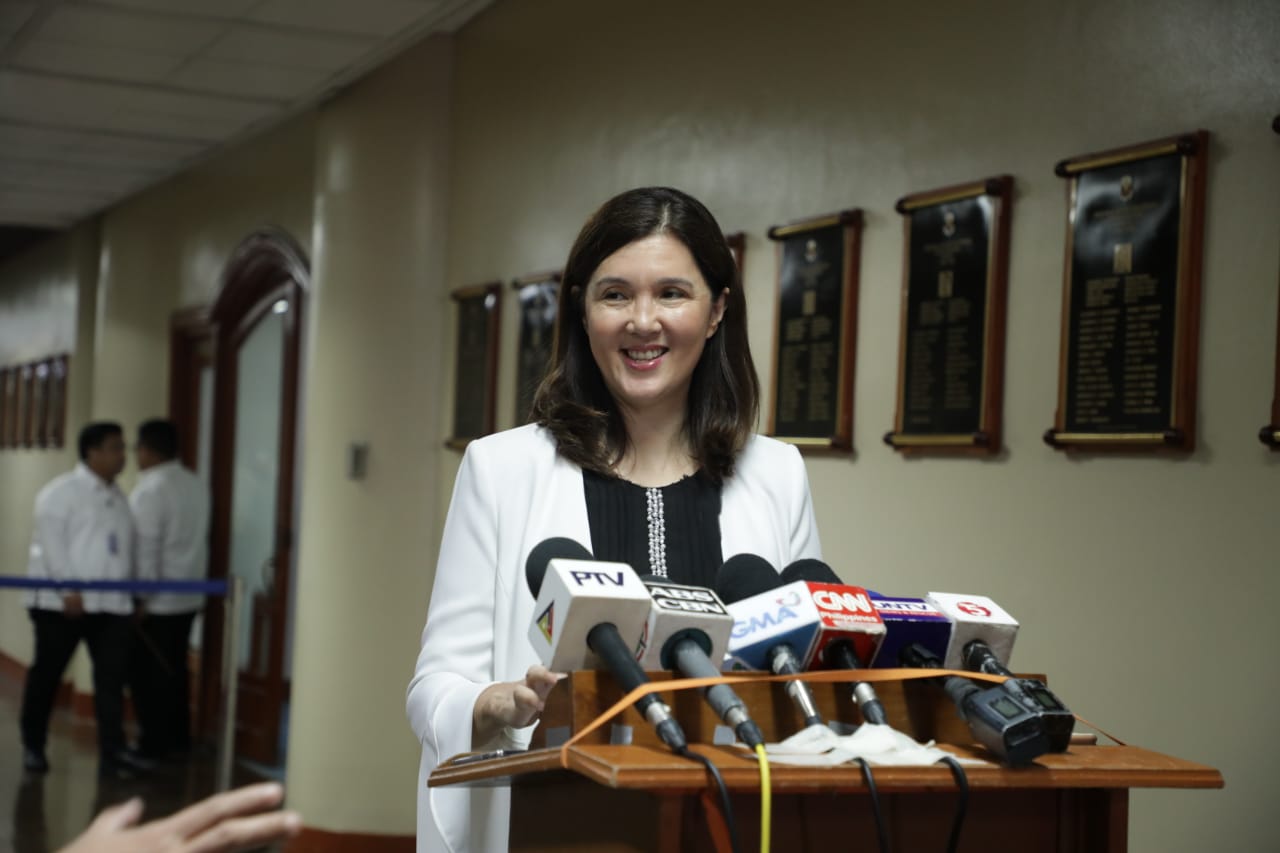
Senator Pia Cayetano holds a media briefing following the second hearing of the Senate Committee on Ways and Means, which took up the proposal to hike excise taxes on alcoholic beverages.