Official Website of Philippine Senator Pia Cayetano

Category: COVID-19

  • Pia to DBM: don’t slash SUCs’ budget for infra dev’t

    Senator Pia S. Cayetano is imploring the budget department to ensure adequate funding for the infrastructure projects of state universities and colleges (SUCs) amid the urgency to realign government funds for the country’s COVID-19 response.
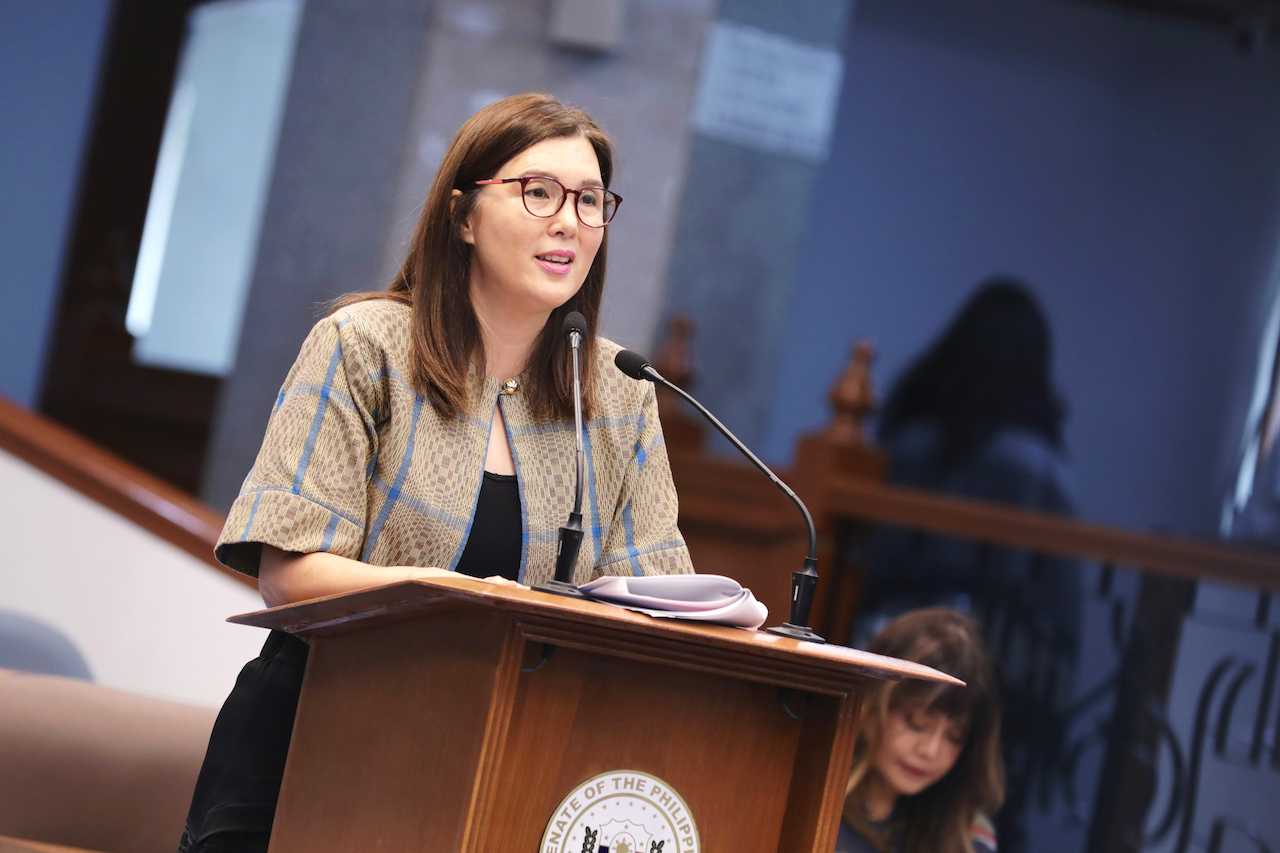
    The senator made the pronouncement on Tuesday (May 19) during the Senate Committee of the Whole inquiry into the government’s response to the coronavirus pandemic.
    “Just to put on record my concern for our budget of higher education. They are very underfunded to begin with, and we’re very slow to provide infrastructure funding for our SUCs,” Cayetano told Secretary Wendel Avisado of the Department of Budget and Management (DBM).
    “If we look at the record, we give them funds not on a continuing basis, but based on a request that they make, which takes many years to be granted. And then we do not give the succeeding funds because we say that the project is already fulfilled. But we know that they get one project at a time, if at all,” she lamented.
    The senator further stressed the need to prioritize education, saying that promoting innovations in higher education is essential in adapting to the ‘new normal.’ She added that supporting education is also aligned with the President’s directive to restart and accelerate the Build, Build, Build infrastructure program to reboot the country’s economy.
    “It is really a deep appeal that I have for the administration to consider this because it is a win-win [solution]. We know [that the administration is bent on accelerating] Build, Build, Build. So why don’t we also keep building on infrastructure needed for higher education? We hope that we can really make it happen,” she said.
    In response, Sec. Avisado assured Cayetano that the budget department will give prime importance to education in terms of budgeting.
    The senator filed last year Senate Bill No. 64 or the Build, Build, Build Program for Education bill (Public Higher Education Institutions Act), which maps out a five-year priority infrastructure plan for the improvement of facilities in tertiary education.
    She also filed SBN 62 or the ‘Educational Roadmap Act,’ which seeks to institutionalize an education roadmap that incorporates the needed skills and competencies that industries constantly look for in new graduates.
    The senator said by ensuring proper funding for the infrastructure needs of SUCs, the government will not lose track of delivering quality education under Sustainable Development Goal (SDG) 4 despite the pandemic.
    “Saan po ba manggagaling ang innovation natin kung hindi sa mga kabataan? Futures Thinking, which is a different way of thinking, is really a skill and an academic pursuit [that requires that our students have access to quality education.] So it is really something that I feel strongly about,” stressed Cayetano, chairperson of the Senate Committee on SDGs, Innovation, and Futures Thinking.
    The senator is promoting Futures Literacy among the youth to help the country prepare for future pandemics and other emergencies.
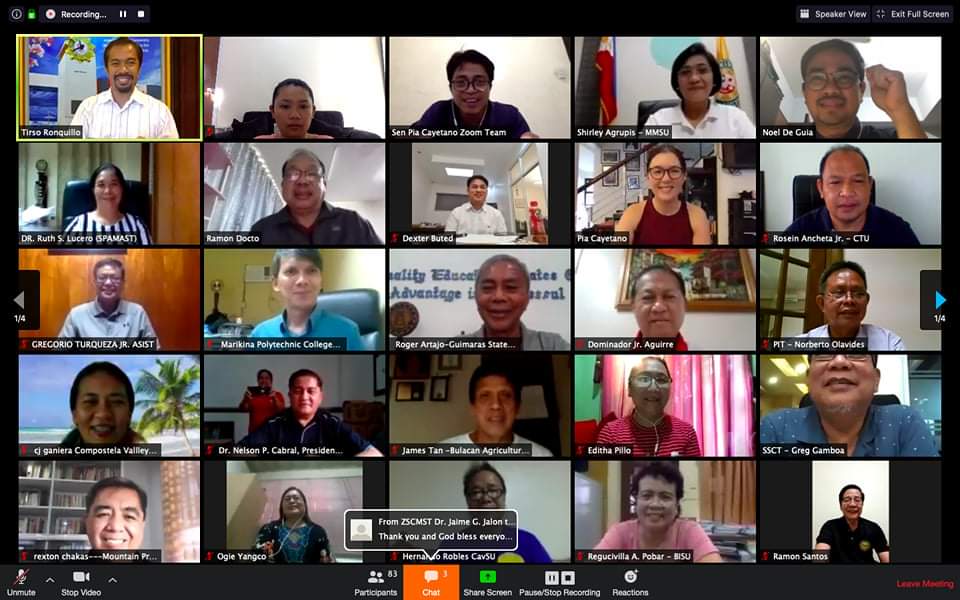
    Last May 2, Cayetano hosted a virtual consultation with more than 80 SUC presidents from the Philippine Association of State Universities and Colleges (PASUC) to listen to their concerns and recommendations in pushing for alternative learning systems for tertiary students during the ‘new normal.’ #
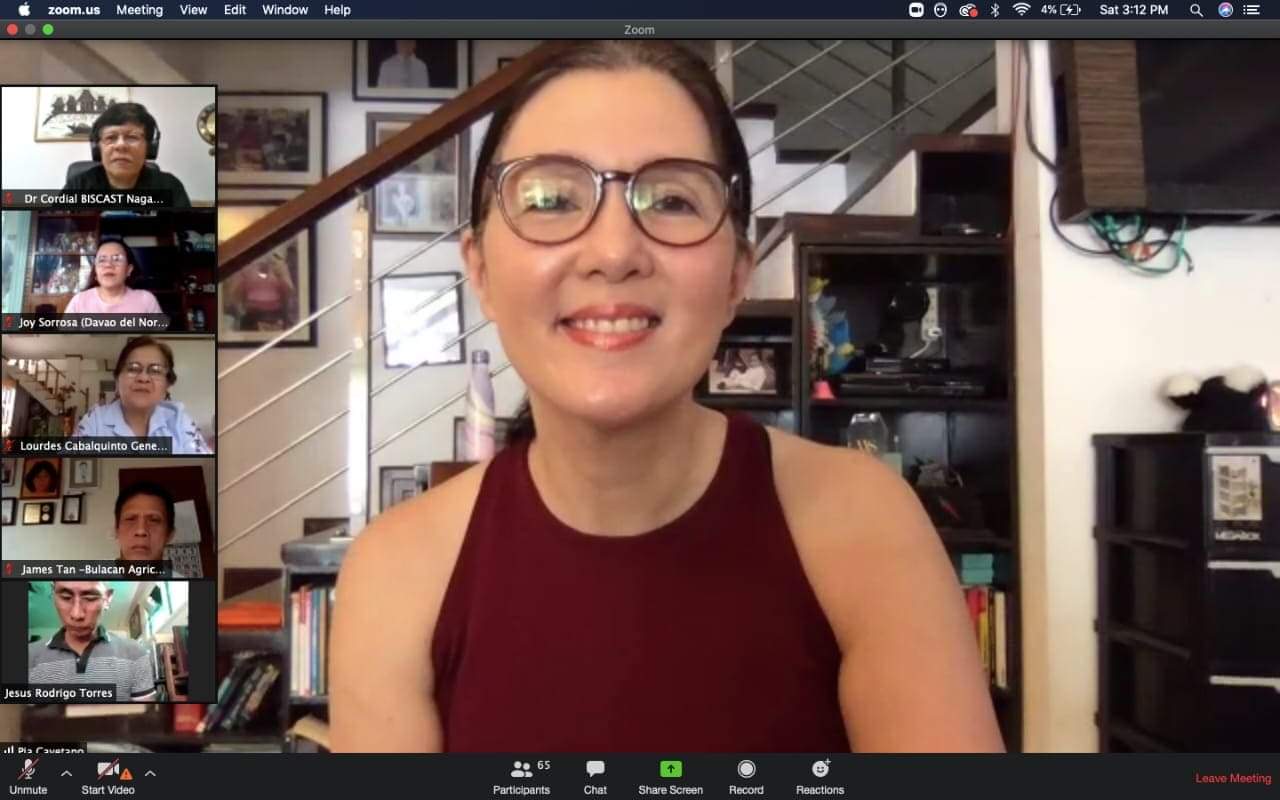
    Senator Pia S. Cayetano hosts a virtual consultation with SUC presidents from the Philippine Association of State Universities and Colleges (PASUC) to listen to their concerns and recommendations in pushing for alternative learning systems for tertiary students during the ‘new normal.’ (May 2, 2020)
    Postscript:
    In a letter dated May 20, the  Philippine Association of State Universities and Colleges (PASUC) thanked Senator Cayetano for her “efforts in tackling our pressing concerns regarding the continuance of the P17.3 billion Programmed Appropriations for Capital Outlays (COs) under FY 2020 GAA relative to DBM NBC No. 580.” 
    “Your manifestations and inquiry during the Senate Hearing yesterday were truly reflective of your relentless support towards adequate funding of higher education for its transformation and resiliency during the COVID-19 pandemic and beyond. The way you emphasized the role of SUCs in the attainment of ‘innovations and futures thinking’ was remarkable. It heightens the need for greater funding support for higher education,” read the letter signed by PASUC President Dr. Tirso A. Ronquillo.
    “It is with optimism that, through your representation, our request to Secretary Avisado will be favorably considered.”
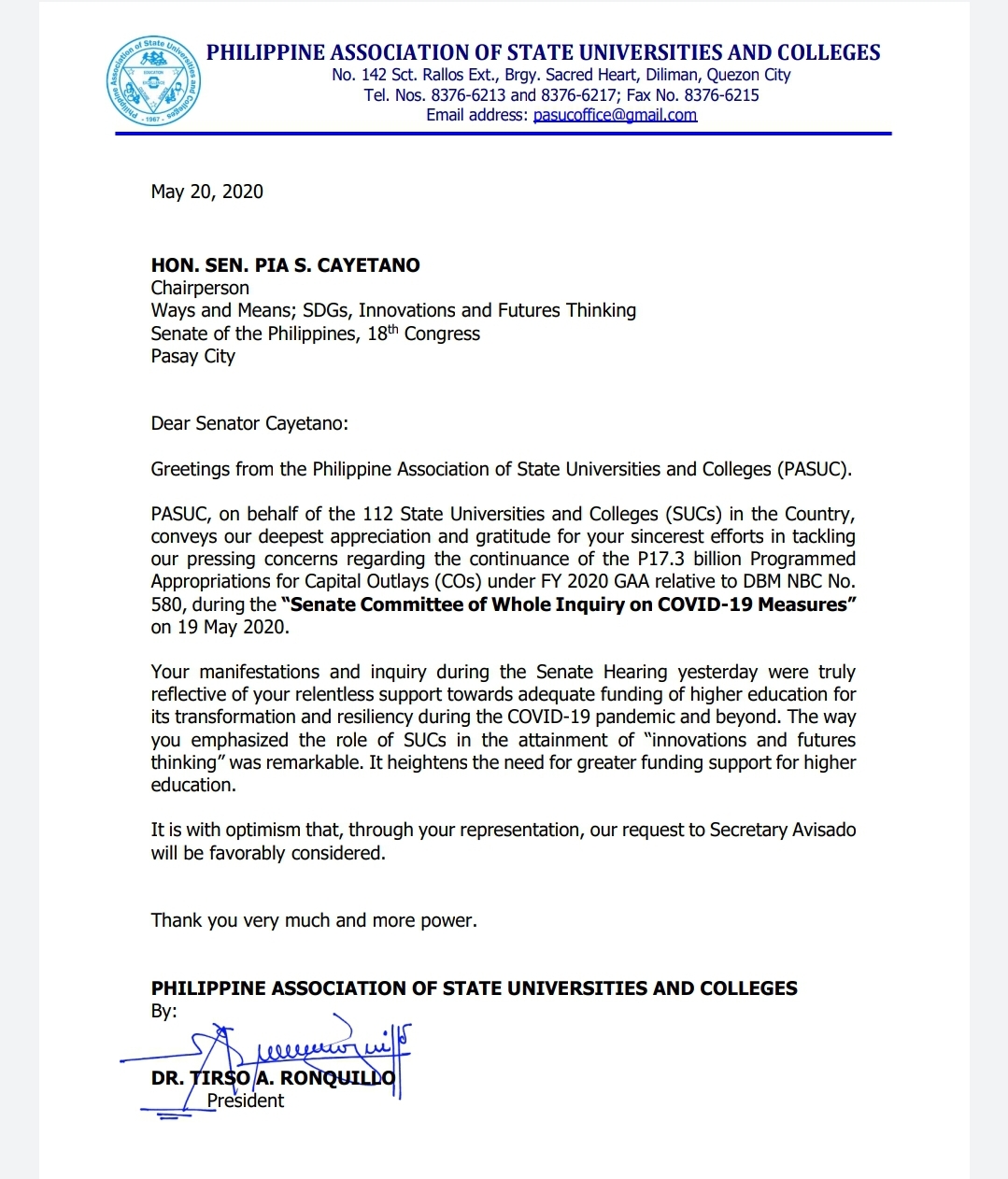
    Letter of the Philippine Association of State Universities and Colleges (PASUC) thanking Senator Pia S. Cayetano for raising the issue of the infrastructure budget of SUCs at the Senate Committee of the Whole hearing on May 19.
  • Pia files medical reserve corps bill

    Senator Pia S. Cayetano has filed a measure seeking to establish a national reserve force of healthcare professionals that can be immediately deployed in times of disasters and public health emergencies.

    The senator on Wednesday (May 13) filed Senate Bill No. 1527, or the Medical Reserve Corps Act, which shall establish a Medical Reserve Corps (MRC) specifically trained to supplement the country’s human health resources in delivering urgent services to areas affected by disasters and health emergencies.

    “The COVID-19 pandemic has exposed the weaknesses of the country’s healthcare system, among them is the inability to cope with the surge of patients needing medical care due to lack of medically-trained personnel,” Cayetano pointed out.

    “Like a highly-skilled reserve force that has been trained to assist the standing and regular military force as needed, the country can likewise benefit from a similar reserve force for our healthcare system,” she added.

    The MRC will be composed of licensed healthcare service practitioners, medical reservists of the Armed Forces of the Philippines (AFP), public health experts, scientists, and non-medical volunteers trained for health emergencies and other necessary services.

    The medical reservists will be placed under the Health Emergency Management Bureau of the Department of Health (DOH), and will be given compulsory basic training and continuing training programs on responding to different national and local health emergency scenarios.

    Under Cayetano’s proposal, the DOH may enlist the assistance of the AFP in organizing the paramilitary structure of the MRC for its efficient, effective, and swift deployment, and provide further training for medical reservists in disaster and emergency response.

    The medical reservists can be mobilized to conduct contact-tracing and monitor suspected cases during disease outbreaks, help ensure quarantine measures, and provide logistics and manpower support for large-scale disaster and health emergency operations.

    “The MRC may be mobilized partially or in full as may be necessary. All members when called to service shall continue to receive all pay, allowances, and other privileges and benefits from his/her regular employment during the mobilization period,” the bill read.

    SBN 1527 also proposes the establishment of mobilization centers in every province, where MRC members can register for duty. The centers should be adequate enough to house the MRC members, equipment and facilities, and other supplies needed during their period of deployment. #

    File photo: Senator Pia S. Cayetano


  • Futures Thinking will be crucial in the post-COVID world

    “A Futures Thinking mindset is crucial in the post-COVID world.”

    This was the key takeaway of Senator Pia S. Cayetano from the first virtual public hearing she conducted in the Senate which invited futures thinking experts who talked about the effects of the COVID-19 pandemic and what the future holds for the Philippines and the world.

    The Senate Committee on Sustainable Development Goals (SDGs), Innovation, and Futures Thinking, which Cayetano chairs, held a hearing on Tuesday (May 12) to discuss with experts the necessary innovations and strategies in adapting to the ‘new normal’ amid the health crisis which severely disrupted lives, economies, and institutions across the globe.

    “We all know that these are very challenging times for all of us. And it’s really important that the different sectors in government, our NGOs [non-government organizations], and private citizens are able to avail of the best information there is worldwide to help us better understand what it means to use Futures Thinking as a tool to effectively plan for the new normal,” Cayetano stressed.

    Leading the panel of experts in the hearing was futurist professor Dr. Sohail Inayatullah, who was awarded the first United Nations Educational, Scientific and Cultural Organization (UNESCO) Chairmanship in Futures Studies in 2015.  Also invited were Dr. Tuomo Kuosa and Saku Koskinen, directors of Futures Platform, a Helsinki, Finland-based technology company that specializes in futures thinking and foresight analyses.

    The resource persons offered insights on how governments and decision-makers can analyze possible post-COVID outcomes based on available technologies and intelligence worldwide.

    Dr. Inayatullah described the COVID-19 pandemic as a “hammer that forced us to change,” stressing the present need for people and governments to develop new skills sets that will help them thrive in the new normal.

    “We are all in this situation together… We all have to learn new skills sets [and create] Futures Literacy, which will help us be far more prepared for the futures we wish to see,” he stated, adding that Futures Thinking brings together citizens, academic experts, political leaders, and businesses towards a shared vision of the future they want to achieve.

    Meanwhile, experts from Futures Platform shared their expertise on the use of Artificial Intelligence (AI) in monitoring and detecting trends and phenomena that might have an impact on the future to help form sound action plans.

    The team particularly created a free online radar where people can “view the world after COVID-19.” It displays a holistic view of the world after the pandemic, which shows various drivers of change and the latest news and updates on them. The initiative seeks to help decision-makers plan for specific futures that they envision. https://www.futuresplatform.com

    “We believe in foresight as a process, a methodology, and a great way to navigate environments. There is a need to make long-lasting plans for the government and understand the future to the best extent… These are challenges we see globally and we try to address them through technology, expert foresight, and knowledge,” Futures Platform Sales Director Saku Koskinen said.

    “This is why we created the Futures Platform as a technical solution,” he added.

    Cayetano supported the experts’ view that Futures Thinking is an integral part of thriving in the new normal. She stressed that having foresight based on big data and technology can help policymakers get a better grasp of “ever-changing environments” and be more prepared to make important decisions for the future.

    “This is why I strongly advocate Futures Literacy among Filipinos, especially among our decision-makers,” the senator noted. #

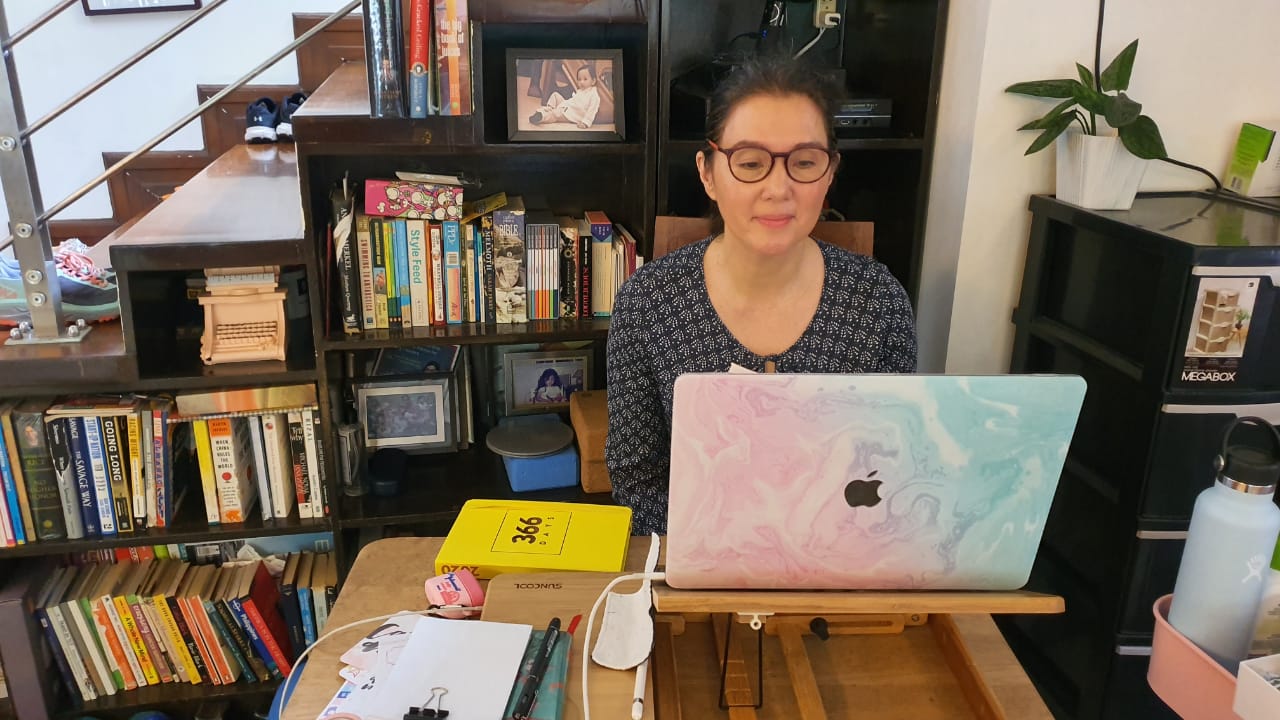
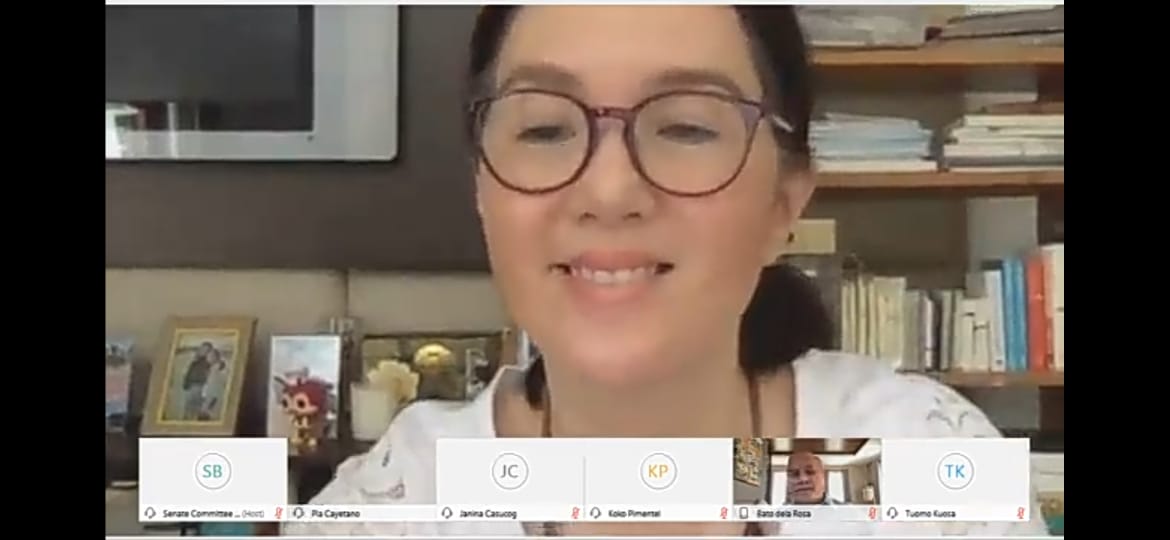
    Senator Pia S. Cayetano presides over a virtual hearing that invited acknowledged futures thinking experts to talk about post-COVID scenarios and trends for the Philippines and the world.
  • Pia seeks probe on readiness of PH health system for the ‘new normal’

    Senator Pia S. Cayetano seeks to conduct legislative inquiries into the current state of the country’s public health infrastructure and health service delivery, with the end goal of improving our responsiveness to the COVID-19 pandemic and other future health emergencies.

    The senator on Wednesday (May 13) filed two Senate resolutions urging the appropriate committees to conduct an inquiry, in aid of legislation, on the future of our public health system in preparation for the ‘new normal.’

    Senate Resolution No. (SRN) 403 seeks to assess the capacity of the “public health infrastructure and the accessibility of vital medical equipment and supplies” to respond to the current pandemic and future health emergencies.

    While acknowledging that supplemental measures allowed the government to reinforce the healthcare system for COVID-19, Cayetano noted that mounting cases continue to push our healthcare facilities to their capacity limits.

    “Modeling forecasts show that the number of COVID-19 cases in the country may peak towards 70,000 to 75,000 cases within the next three months,” the senator noted, citing a report by the Department of Health (DOH).

    “Despite having 68 percent of the country’s hospital beds in Level 2 and Level 3 hospitals where COVID-19 patients can be treated… recent estimates [still] show that hospitals in the country fall relatively short from the optimal 42,856 beds, with one hospital bed available for every 1,121 Filipino patients,” she further cited.

    Furthermore, Cayetano mentioned the lack of basic sanitation facilities in the country’s healthcare centers. A 2019 World Health Organization study revealed that four percent of health facilities in the Philippines have no toilets, while 23 percent utilize unsanitary toilets, thus allowing the spread of infection among communities.

    The senator also pointed the need to address lack of access to medical equipment in the country, stating that the ‘new normal’ requires that we have an adequate supply of vital medical equipment and materials to meet both medical and public consumption needs.

    “Recent reports show that there are 1,937 mechanical ventilators for COVID-19 patients, which remains relatively insufficient given the standing 8,361 active cases in hospitals as of 11 May 2020…  The alarming number of COVID-19 cases among health workers [also] highlights the lack of personal protective equipment (PPE)… with hospitals estimated to use an average of 200 to 500 PPEs per day,” Cayetano noted.

    “These aspects of the country’s health system, if remained unchecked amid the projected trends of this virus, may strain our capacity to effectively control and prevent the spread of the disease and to significantly transition to an imminent new state of normalcy,” the senator said, as she pushed to review existing policies on public health infrastructure and access to vital medical supplies, to ensure the country’s healthcare capacity and self-sufficiency.

    Meanwhile, Cayetano also filed SRN 404, calling for a hearing by the Committee on Sustainable Development Goals (SDGs), Innovation, and Futures Thinking, which she chairs, on the effects of COVID-19 on the future of our health service delivery.

    “With the onset of the New Normal, existing practices and systems in health service delivery, such as physical clinics, face-to-face triage, and paper-based prescriptions, may be ineffective in responding to the need for stricter respiratory hygiene and physical distancing measures,” she stressed.

    As such, the senator said different sectors – the academe, private sector, and government – should collaborate to explore possible outcomes, emerging ideas, and innovative opportunities and strategies for a better delivery of health services during the ‘new normal.’

    “We should employ futures thinking as an essential strategy in dealing with this issue. It is a method of informed reflections on the possible futures of various aspects of life,” said Cayetano, who is an advocate for Futures Literacy among Filipinos, especially among policymakers. #

    Senator Pia S. Cayetano, chairperson of the Senate Committee on SDGs, Innovation, and Futures Thinking, presides over the panel’s virtual hearing on the necessary innovations and strategies in adapting to the ‘new normal’ following the COVID-19 pandemic.
  • Innovations needed to educate students in the new normal

    “We must take advantage of this crisis and come up with innovative ways to educate our kids during this time of COVID-19.”

    Thus said Senator Pia S. Cayetano as she pushed for the establishment of more “blended learning models” to educate Filipino children during the ‘new normal’, amid the disruption of schools due to the pandemic.

    The Chair of the Senate Committee on Sustainable Development Goals (SDGs), Innovation, and Futures Thinking, Cayetano welcomed the plan of the Department of Education (DepEd) to use different learning modalities – including in-classroom study and individual study or online classroom work – for the basic education sector.

    “Clearly, the  internet will play a vital role in this proposal, as online teaching is a key component of effective blended learning. So the improvement of internet access in schools and the provision of necessary equipment for teachers to conduct online classes is imperative,” she said.

    But the senator also noted that the reality is not all Filipino households have access to the internet. Thus, the need to come up with other alternative modes of learning that can be accessible to more students.

    “We tend to reject new ideas during ‘normal times.’ But a crisis is a perfect time to explore other options,” she stressed.

    “Why don’t we explore and tap government channels – like PTV 4, IBC 13, and RPN 9 in various provinces – to air more educational shows? There is so much content out there that can be used to educate millions of Filipino children all over the country,” she suggested, adding that the channels can allot regular block time for subjects like history, science, geography, music, art, and more, in between broadcasting relevant news programs and official press conferences of the government.

    “I would even recommend that English programs should not be dubbed and kept as is, to give our young learners the opportunity to hone their English communication skills while learning at home,” Cayetano further pointed out.

    Meanwhile, in the recommendations she sent Malacañang pursuant to the Bayanihan to Heal as One Act, Cayetano noted: “DepEd should provide an update on their preparation in the integration of blended learning in the curriculum, as it is not as simple as using the internet. It includes time in school, provided it is safe to return to school, and social distancing measures are put into place – such as having a smaller number of students attend a few days a week on a rotational basis for interaction with their teachers.”

    The senator further suggests that around 20-30 percent of students per class may be allowed to go to school in areas where it is safe for children to go out. She added that the smaller classroom size will promote better interaction and make learning easier for the children.

    Cayetano said DepEd can seek assistance from the University of the Philippines (UP) in further exploring online education as part of  its proposed blended learning systems. UP is mandated to share its knowledge and assist national agencies and educational institutions in developing distance education programs – including online learning management systems – under the Open Distance Learning Act (RA 10650), which the senator sponsored as former chair of the Senate Committee on Education.

    “We need a Futures Thinking mindset to educate our children during the ‘new normal.’ Access to quality education is a vital tool in nation-building, and we must use this crisis as an opportunity to innovate and reinvent our education,” Cayetano said, stressing that inclusive and equitable quality education for all is one of the 17 SDGs that the Philippines seeks to achieve by 2030. #

    Senator Pia Cayetano and DepEd Secretary Leonor Briones
    File photo: Senator Pia S. Cayetano, vice chair of the Senate Committee on Finance, leads a hearing on the basic education budget with Department of Education Secretary Leonor Briones (back to camera) on the foreground.
  • Pia files Safe Pathways Act to support biking, walking in the new normal

    Senator Pia S. Cayetano says biking and walking as a means of travel are bound to become an integral part of the ‘new normal’ to keep more people safe from COVID-19.

    The senator on Monday (May 11) filed Senate Bill No. 1518 or the “Safe Pathways Act” to create a network of pop-up bicycle lanes and emergency pathways that would connect people to essential destinations during the pandemic, all while ensuring that physical distancing is maintained.

    Cayetano said there is well-founded fear that the cramped buses, jeeps and trains are hot-spots for the spread of COVID-19.  Thus, these “people-oriented and pedestrian-friendly” bike lanes and emergency pathways will help augment the limited forms of transportation and mobility allowed under the community quarantines, and may also be adopted in the long term to help decongest roads and reduce pollution in the country.

    “As our cities see air quality improve during the lockdowns, there’s an incentive not to return to the pre-lockdown air pollution levels,” she said, citing the reported 180% decrease in particulate matter (PM2.5) in NCR since the enhanced community quarantine was imposed last March 16.

    Particulate matter (PM) refers to the mixture of all solid particles and liquid droplets suspended in the atmosphere, many of which are hazardous.

    Overall, Cayetano said walking, biking, and the use of other non-motorized vehicles reduce carbon emissions, use less energy and resources, and provide multiple health benefits that increase people’s quality of life. SBN 1518 particularly promotes the use of these modes of transportation as the primary means of travel in the time of COVID-19.

    “As we adjust to the new normal, it is inconceivable to just go back to the way we were. This health crisis forces us to rethink our way of life and explore changes that will improve our overall health and quality of life. Planning our cities and transport system require a Futures Thinking frame of mind,” said Cayetano.

    Under the bill, the Department of Transportation (DOTr) and the Department of Public Works and Highways (DPWH), in coordination with Local Government Units (LGUs), shall establish pop-up bike lanes with necessary space to accommodate the one-meter physical distancing rule.

    LGUs shall also create designated emergency pathways along local roads that will give pedestrians, cyclists, and other non-motorized vehicle users access to frequented destinations by restricting motorized vehicle passage during peak hours.

    Moreover, adequate parking spaces for bicycles and non-motorized vehicles shall be set up in all public places, government offices, schools, places of work, and commercial establishments, including malls, banks, and hospitals. The private sector is also encouraged to develop infrastructure and programs for the same purposes.

    Lastly, the bill shall mandate DOTr and DPWH, in coordination with appropriate agencies, to prepare the permanent adoption of the established bike lanes, emergency pathways, non-motorized parking spaces, and other appropriate infrastructure, after COVID-19 is no longer a threat.

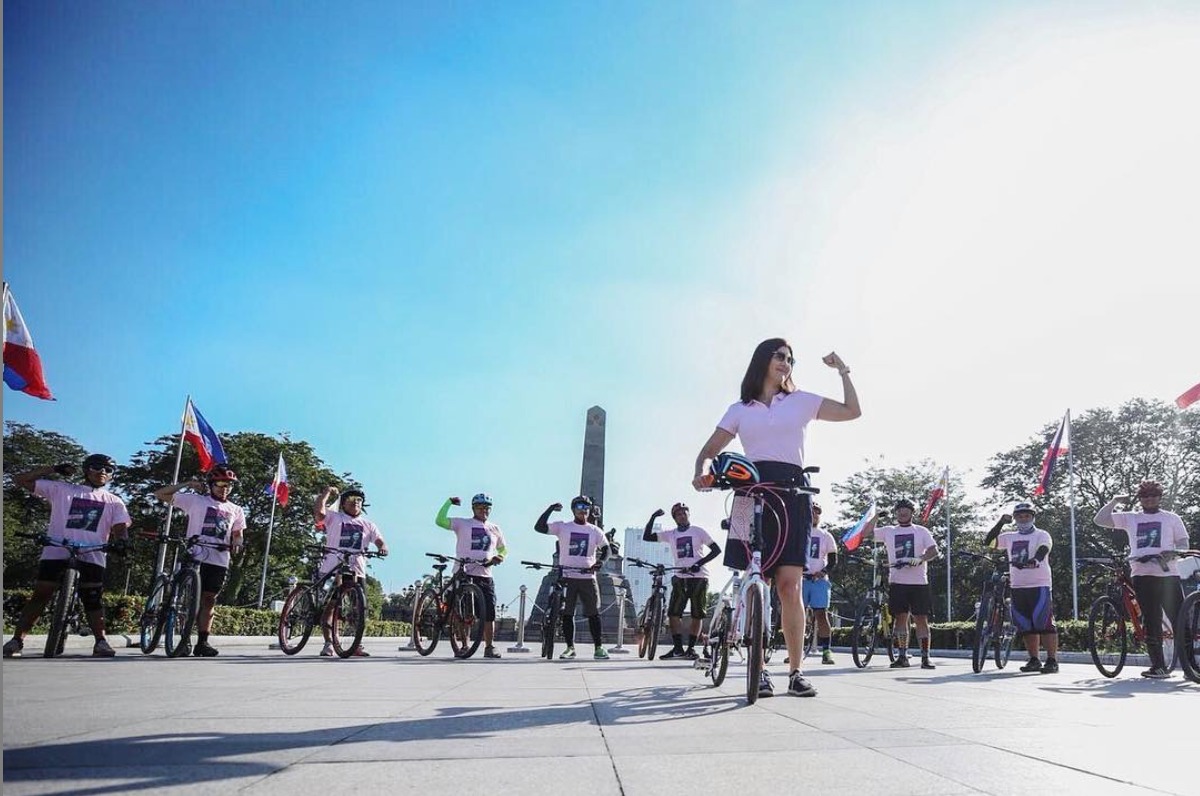
    A biking and fitness enthusiast, Cayetano earlier filed the ‘National Bicycle Act of 2019,’ seeking to institutionalize policies, infrastructure, and facilities to properly integrate bicycles as part of our public transportation system.

    All these efforts are in line with the country’s commitment to the Sustainable Development Goals (SDGs), in particular: SDG 3 (Good Health and Well-Being); SDG 7 (Affordable and Clean Energy); SDG 9 (Industry, Innovation and Infrastructure); SDG 11 (Sustainable Cities and Communities); SDG 13 (Climate Action); and SDG 17 (Partnerships for the Goals). #

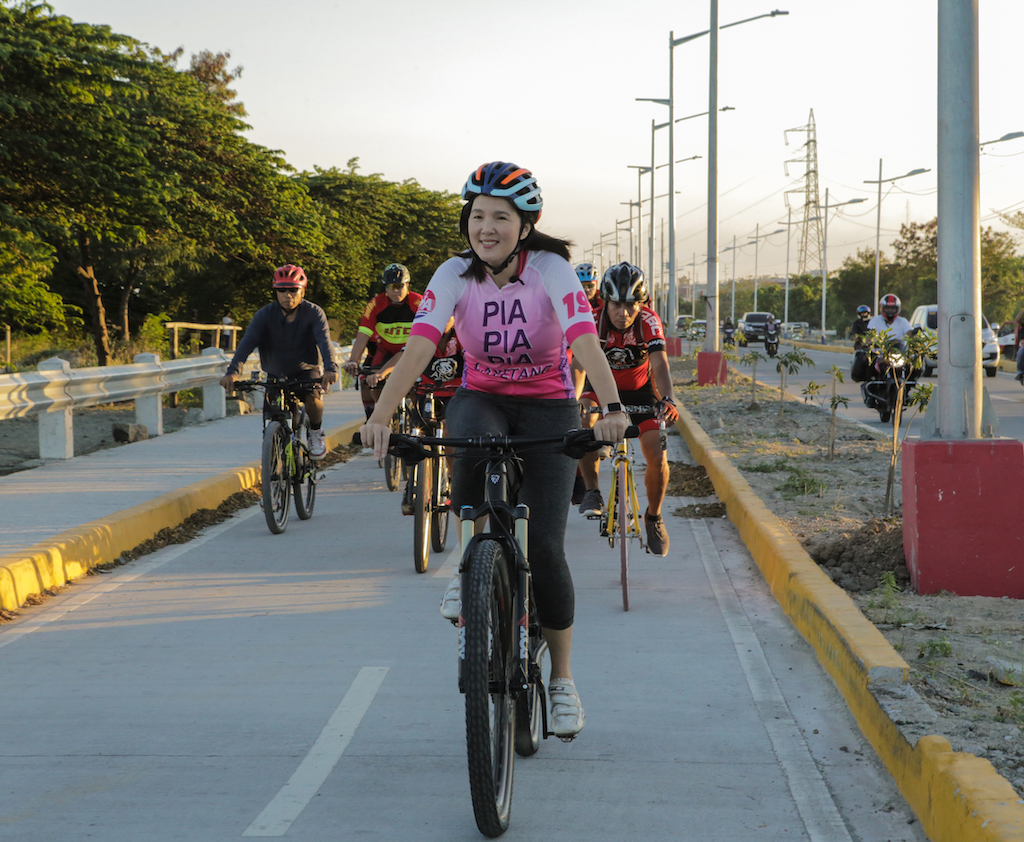
    File Photo: Senator Pia S. Cayetano bikes along the protected bike lane in Laguna Lake Highway (C6). The highway which connects Taytay, Rizal to Taguig City also has a separate protected lane for pedestrians and joggers.
    File Photo: Senator Pia S. Cayetano has always advocated bikers’ safety. She is the author of the National Bicycle Act (Senate Bill No.285), which seeks the recognition of biking as an alternative mode of transportation in government policy and programs.
  • Emergency subsidy for 18-M poor families amid COVID-19 quarantine

    The main objective of Senate Bill No. 1418 is to provide immediate assistance to 18 million Filipinos who belong to the poor and informal sectors. They are also the most vulnerable in this time of crisis.

    We need P200 billion to ensure that the most basic necessities are provided to them, including food, medicine, and other subsidies. When we look after them and care for their needs, these people would be encouraged to remain in their homes, not worry where to get their next meal, and be one with our government in fighting the COVID-19 virus.

    The bill also provides emergency funding to allow the government to adopt and implement measures to suppress the spread of the virus. This will be done by expanding access to testing centers, providing adequate support, including PPEs for our health workers, strengthening support to medical facilities, and intensifying public education campaigns on prevention.

    We have the funds. Our economic managers have assured us on this. Some P175 billion cash and its equivalent can be accessed from various GOCC accounts. We also have some P100 billion in various national government agencies’ accounts outside the Treasury Single Account.

    This brings the total amount available – off-budget – at around P275 billion. This can be made available quickly to finance the Emergency Subsidy Program without affecting our national government’s fiscal position.

    The 2020 spending program of P4.1 trillion will therefore remain intact, but we are ready to give the President the power, as needed, to repurpose funds within the General Appropriations Act from non-essential to essential items that are required for fighting COVID-19.

    Other world leaders have already called for urgent emergency measures because this virus has been projected to infect anywhere between 40 percent and 70 percent of the world’s entire adult population. That’s at least three billion people, according to experts at Harvard University.

    It is time to put our political affiliation aside and act together fast. Let us not sit idly and argue endlessly, lest we want COVID-19 overwhelm us. #

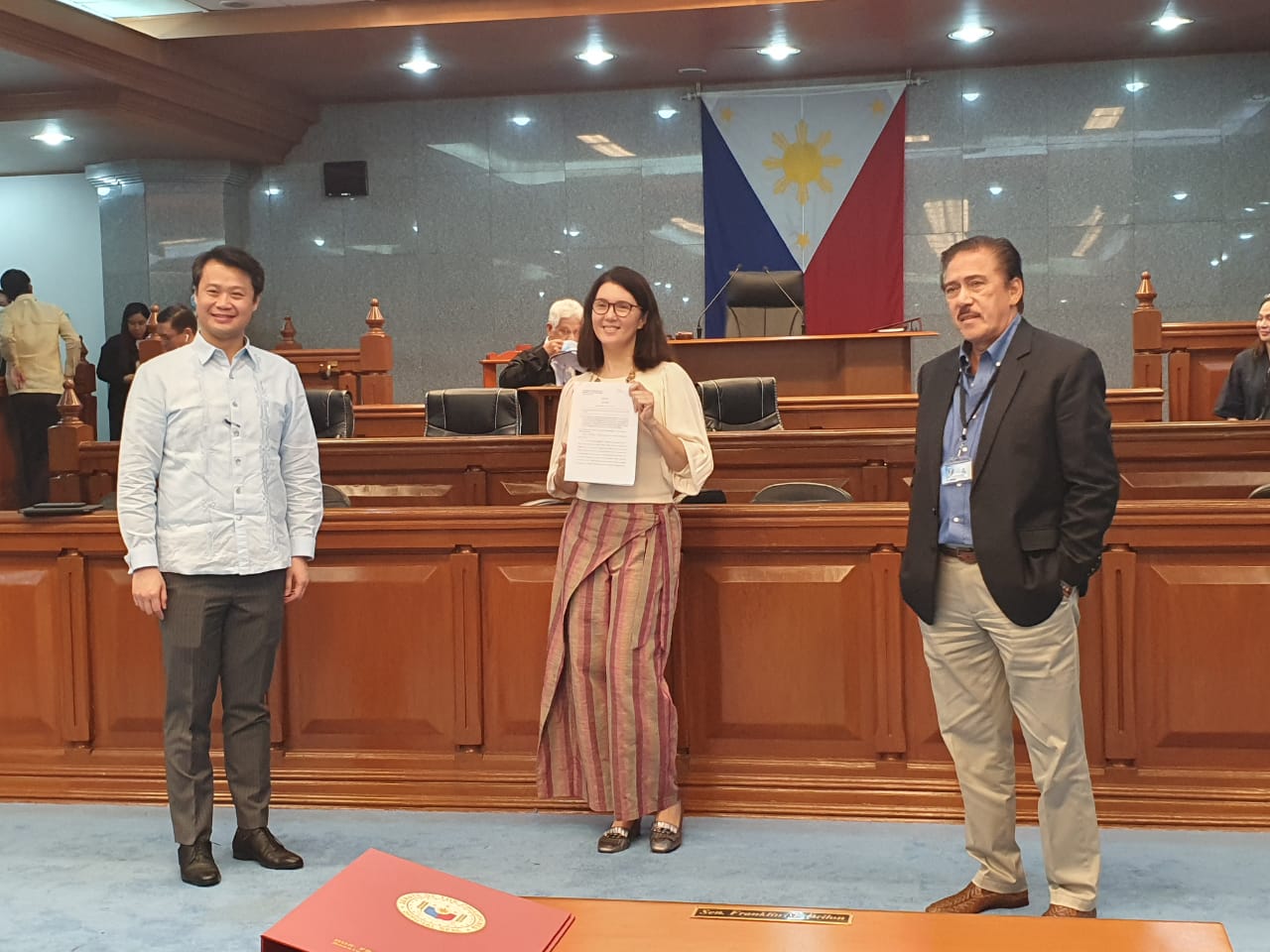
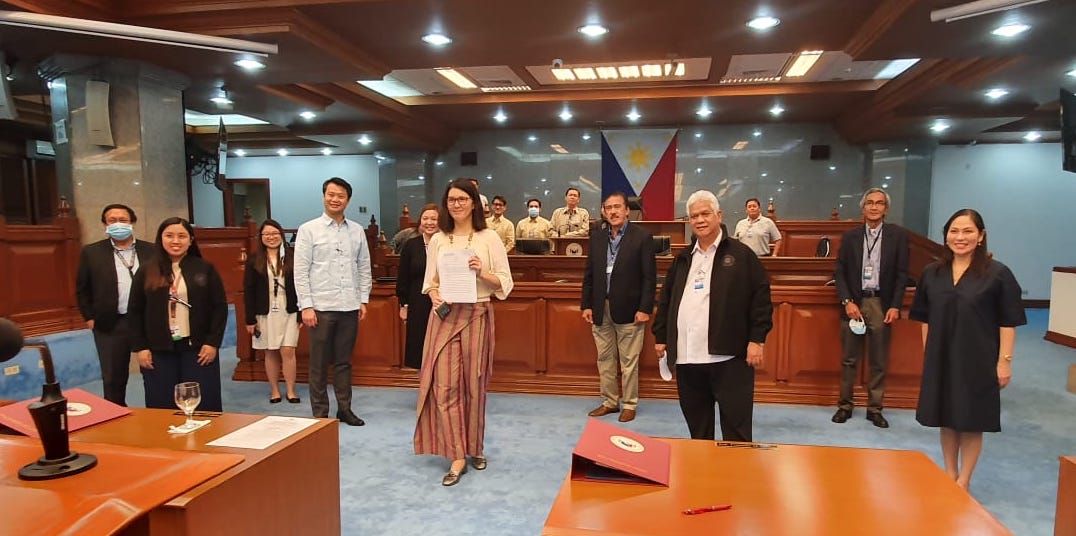
    Passed! SB 1418 principal sponsor Senator Pia S. Cayetano with Senate President Vicente Sotto III, Acting Majority Leader Sherwin Gatchalian, and Senate secretariat officers and staff.
  • Legislation to outline PH action vs COVID-19

    A report to the people

    By Senator Pia S. Cayetano
    Chair, Ways and Means
    Chair, Sustainable Dev’t Goals, Innovation, and Futures Thinking

    On Saturday, March 21, I went to Malacañang to discuss the urgent legislation needed in the time of COVID-19. A lot of people live day-to-day and the loss of income hits them the hardest.

    We will work towards legislation that will make available P200 billion, mostly as financial assistance to the 16 million families – mostly coming from the informal sector like street and market vendors, agri workers etc., to allow them to buy food and other essentials.

    We also discussed the funds available for medical supplies and equipment.

    We ended the day with hope knowing that we can beat COVID-19 if we all work together. God bless and protect the Philippines and our people.

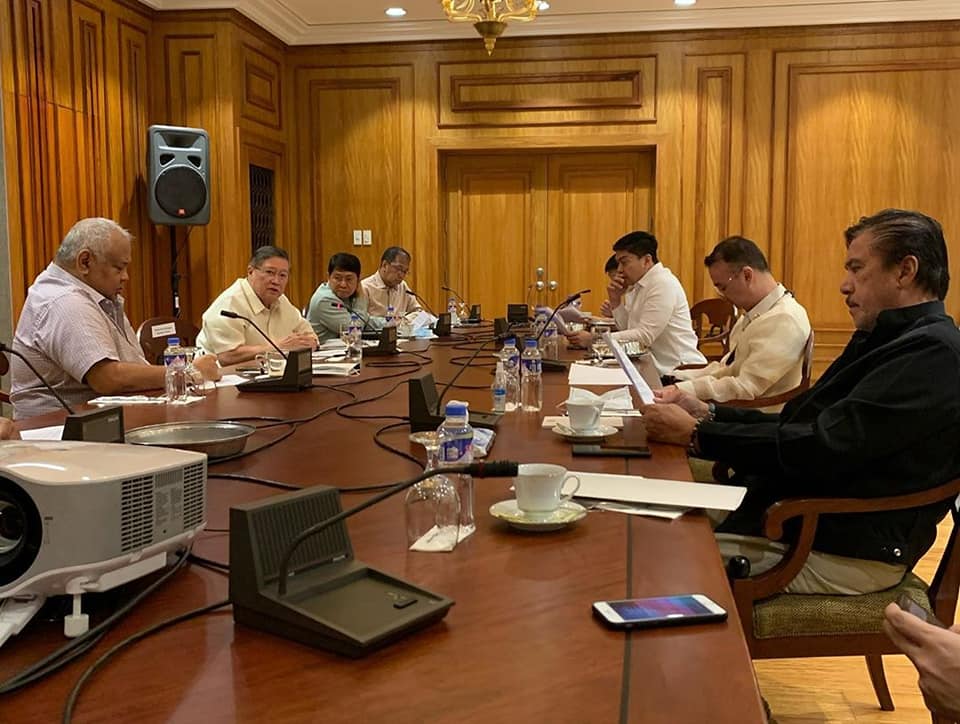
    View from where I sat: Social distancing was observed as the panel from the Executive Branch, led by Executive Secretary Salvador Medialdea and Finance Secretary Carlos Dominguez III discusses the proposed Bayanihan to Heal as One Act with the Legislative panel represented by Senate President Vicente Sotto III and House Speaker Alan Cayetano.
    Executive-Legislative Meeting in Malacanang
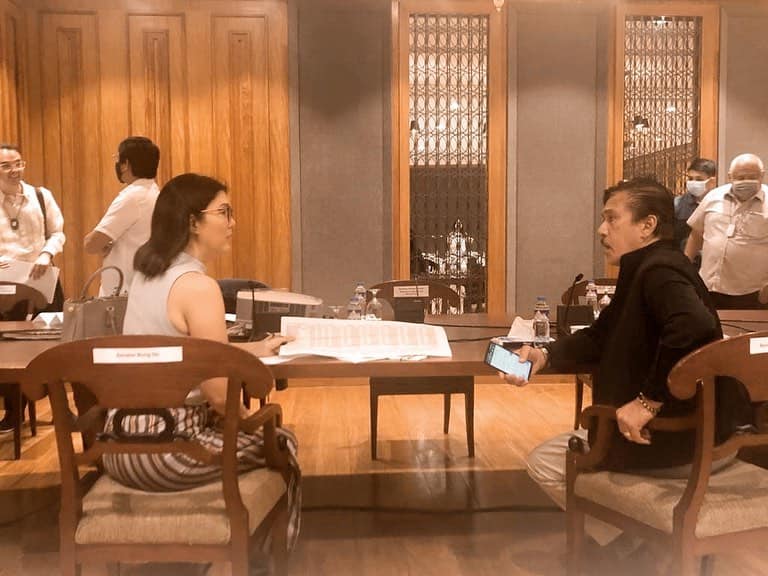
    Discussing the proposed bill to outline government’s comprehensive action vs COVID-19 with Senate President Vicente Sotto III.